Los Angeles, CA
Outdoor kitchen repair in Los Angeles County.
94 cities and neighborhoods across Los Angeles County, part of Los Angeles — 14 with a page on what that place does to an outdoor kitchen.
Mon–Sat, 8am–8pm
- 94 places covered
- 14 with a page
- 10 repairs we do here
Book a visit
Three short steps, about a minute.
or call (844) 449-0269
Loading appointment form…
The appointment form couldn’t load. Please try again.
What Los Angeles County does
to an outdoor kitchen.
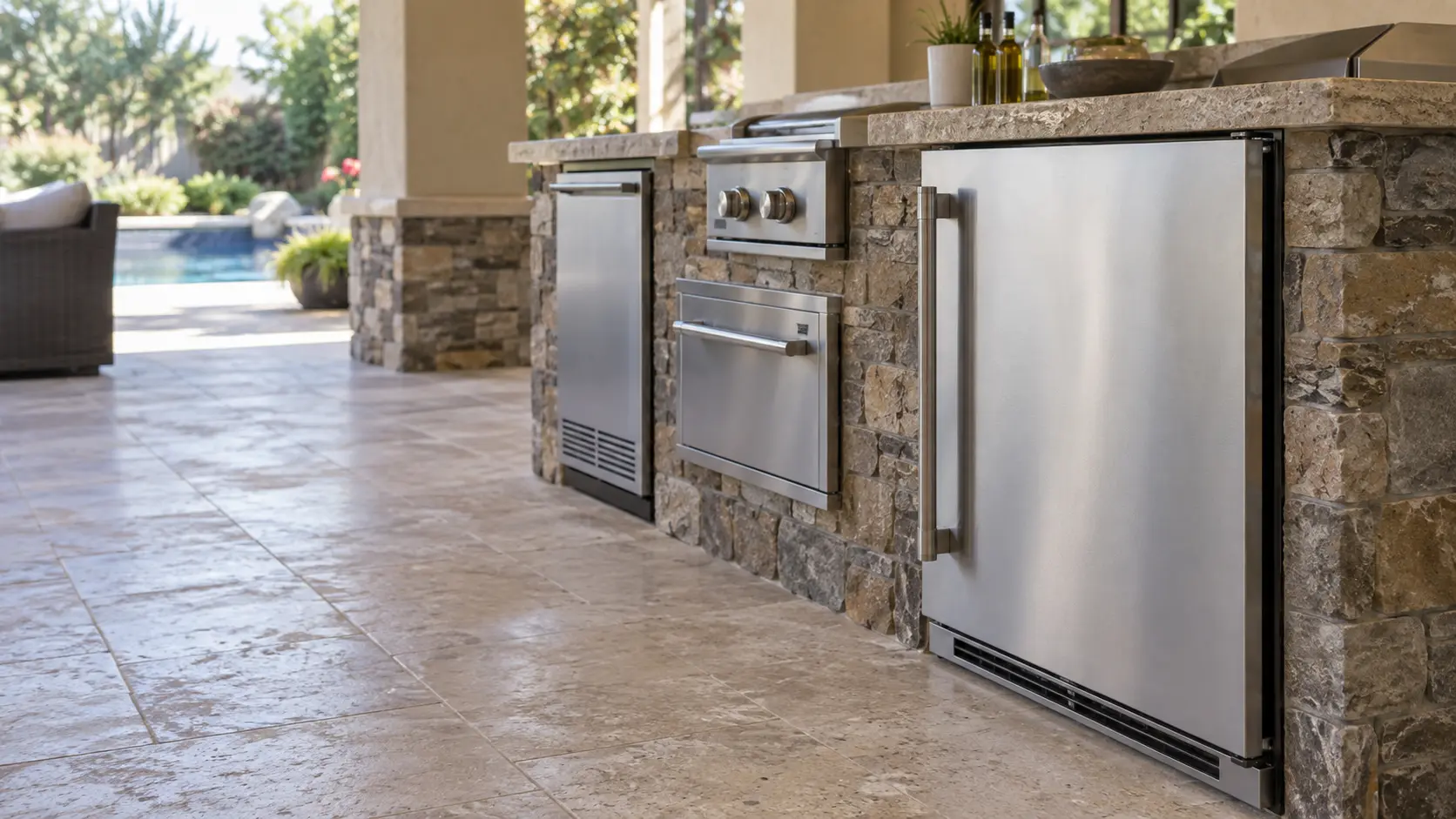
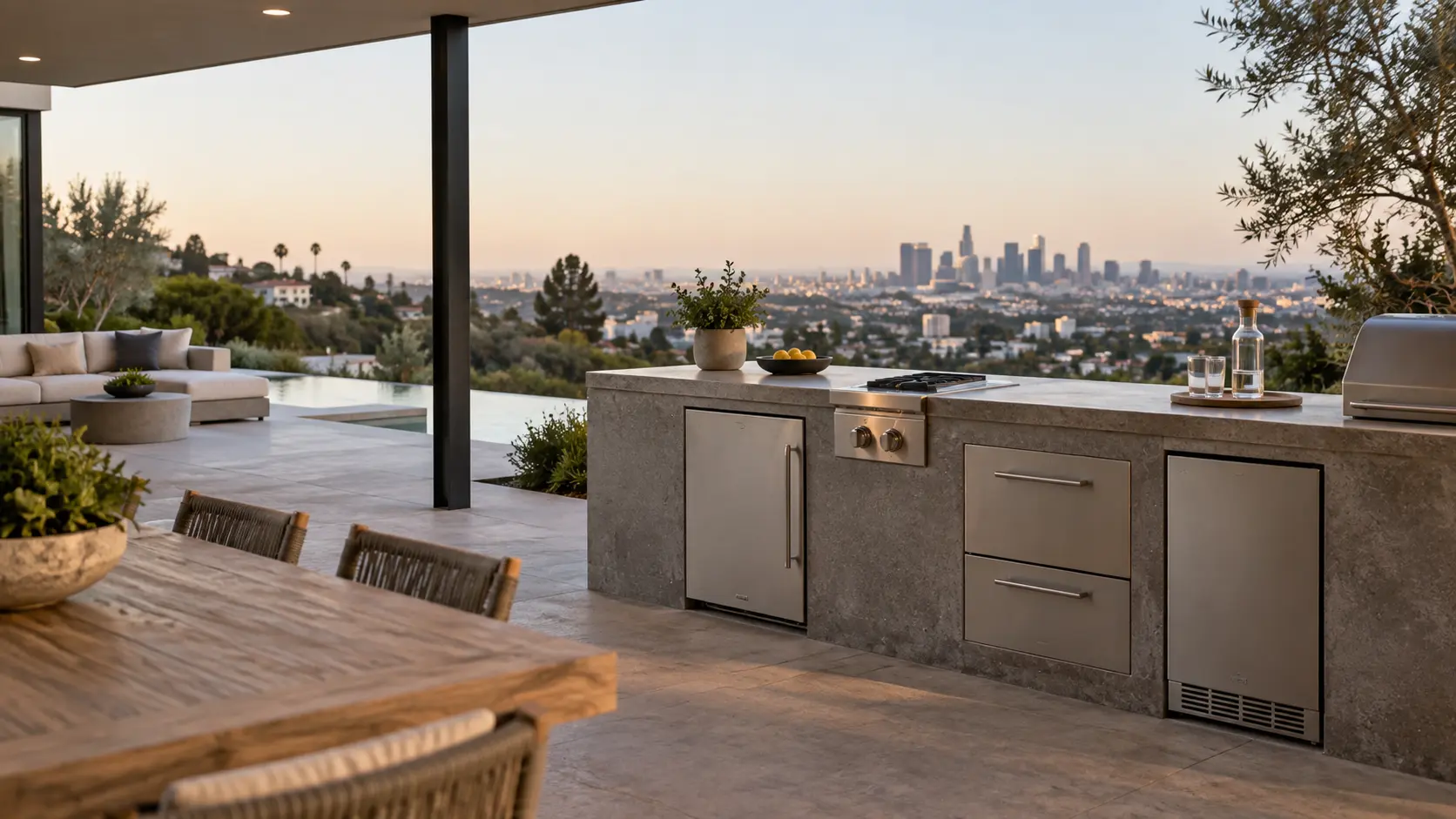
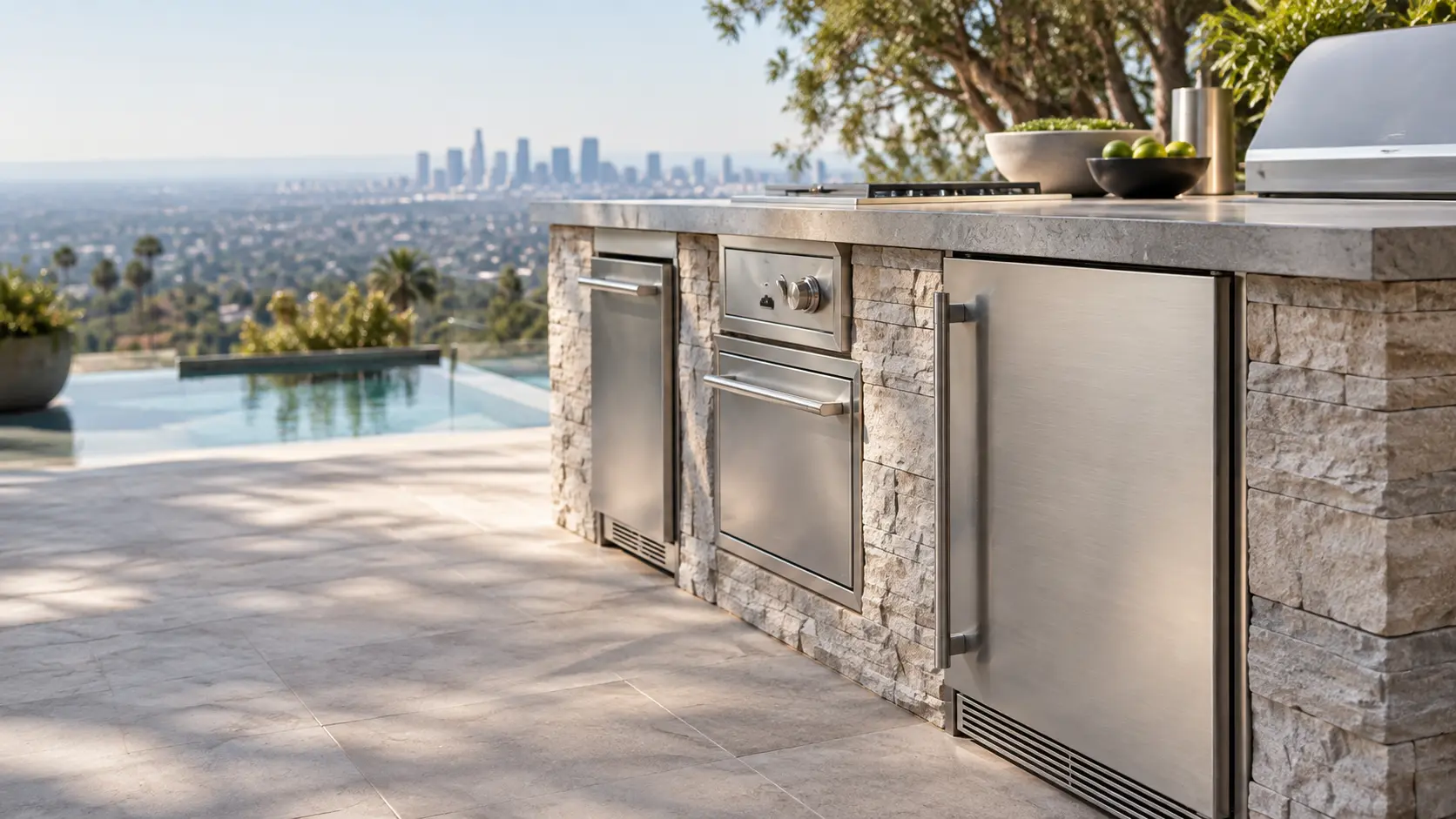
Where outdoor kitchens sit in Los Angeles County: designed backyard islands, islands by the pool, gated communities.
All of Los AngelesDesigned backyard islands
High-end islands may mix several makes, a cooler from one, the burners from another and an ice maker from a third, each with its own manual and parts, so the technician reads every model plate before planning the repair.
Islands by the pool
Chlorine and salt from pool water drift onto an island near the deck and pit its stainless, so on these patios the hinges, drawer slides and burner grates are checked for corrosion on every visit, not only when they start to stick.
Gated communities
Gated communities often set rules on what may stand in a backyard and when contractors may enter, so an outdoor kitchen repair is booked through the gate with the vehicle and the time listed, and larger parts arrive the same way.
Where we go
in Los Angeles County.
94 cities and neighborhoods across Los Angeles County, part of Los Angeles, 14 of them with a page on what that place does to an outdoor kitchen. The same visit in each.
Bel Air
About 12 miles west of downtown, Bel Air is set completely inside the Santa Monica Mountains.
Beverly Hills
Beverly Hills estates often build the outdoor kitchen as a full pavilion by the pool, with a cooler, an ice maker, a warming drawer and a power burner under one roof, and the staff who host there usually notice first when a drawer runs cold or a burner lights late.
Brentwood
Brentwood's canyon-side yards sit close to brush that burns in fire season, so outdoor kitchens there are kept clear of dry leaves at the island vents and the gas shutoff, while the cooler and ice maker are checked after each planned power shutoff.
Calabasas
Summers in Calabasas are hot and dry and its winters mild and fairly wet, the pattern Köppen calls hot-summer Mediterranean.
Hancock Park
All of Hancock Park falls under a Historic Preservation Overlay Zone that the City Council adopted in 2008.
Holmby Hills
Lots in Holmby Hills may run as large as 4 acres under zoning laid out for the community on both sides of Sunset.
Malibu
Malibu outdoor kitchens face salt spray from the ocean and wildfire risk from the mountains behind, so stainless here pits quickly, and during a planned power shutoff the cooler and ice maker warm up and are cleaned before food and ice go back in.
Manhattan Beach
The Pacific keeps Manhattan Beach mild, with an average year-round high of 69.1°F and an average low of 56.4°F.
Pacific Palisades
Many Pacific Palisades houses rebuilt after the January 2025 fire include new outdoor kitchens, whose first seasons bring questions about gas connections, GFCI circuits and settings, while islands that survived nearby were cleaned of ash and checked before use.
Palos Verdes Estates
In 1923 some 3,200 acres of the former Rancho de los Palos Verdes were set aside for the planned community of Palos Verdes Estates.
Pasadena
Pasadena's older gardens and Craftsman backyards hold outdoor kitchens added long after the houses were built, and inland summer heat pushes an outdoor cooler hard there while oak and sycamore leaves fill its grille and the burner ports.
San Marino
San Marino's smallest lots are about 4,500 square feet, and many average more than 30,000.
Santa Monica
Thirty-year NOAA normals for the Santa Monica Pier put the typical daily high near 65.5°F, and a 90°F day turns up only about once every two years.
Studio City
Two watercourses cross Studio City: the Los Angeles River and the Tujunga Wash.
Also covered in Los Angeles County
- Agoura HillsBy 1900 Agoura Hills was a stage stop thanks to its natural spring, and in the 1920s a Paramount filming ranch earned it the name Picture City.
- AlhambraAlhambra is promoted as a city of homes, with Craftsman, bungalow, Spanish Colonial Revival and Italian Beaux-Arts houses among its historic stock.
- ArcadiaArcadia's story runs through Rancho Santa Anita, 8,000 acres of which Lucky Baldwin bought in 1875.
- Beverly GroveThe 2020 census counted 25,430 residents in Beverly Grove's 1.65 square miles, or about 15,412 people per square mile.
- BeverlywoodBeverlywood Homes Association rules cap house size and govern style, color, design and landscaping, with a review committee enforcing them.
- BradburyBradbury Estates is a gated enclave of 5-acre minimum estates, and much of it is zoned for horses.
- BurbankBurbank runs its own utility, Burbank Water and Power, which is working with a contractor to inspect about 1,000 wood power poles in the city during 2026.
- Canoga ParkThe Los Angeles River begins in Canoga Park, where the average July high reaches about 95°F against 70°F at the Santa Monica Pier 15 miles away.
- CarthayThree separate preservation overlay zones, Carthay Circle, South Carthay and Carthay Square, fall within this roughly half-square-mile neighborhood.
- Century CityBefore the office towers, Century City's 176 acres were a ranch belonging to cowboy star Tom Mix.
- ChatsworthAverage summer highs in Chatsworth sit between 90 and 100°F, and in 2000 it had about 2,301 residents per square mile, one of the city's lowest densities.
- Cheviot HillsCalifornia Country Club Estates, built in 1952 on the old country club grounds, keeps its own homeowners association with binding CC&Rs on every lot.
- Culver CityCulver City's NOAA station records about 6.5 days of 90°F heat and some 14 inches of rain in a typical year of the 1991–2020 period.
- Del ReyDel Rey, bordered on three sides by Culver City, was centered on market gardens well into the 1950s.
- Echo ParkIn 1891 the four owners around the reservoir gave 33 acres to the city for a park, and Echo Park Lake still anchors the neighborhood.
- El SegundoAbout 75 percent of El Segundo's land is reserved for industry and commerce, and the Chevron refinery covers over a quarter of the city.
- EncinoEncino sits on the north slope of the Santa Monica Mountains, and its name comes from Rancho Los Encinos, now kept as Los Encinos State Historic Park.
- FairfaxIn 2019 the city designated the Beverly Fairfax Historic District, a cluster of apartments from the 1920s north of Beverly Boulevard and east of Fairfax Avenue.
- GlendaleGlendale Water and Power keeps the city in Phase III of its mandatory conservation ordinance, which limits outdoor watering to Tuesdays and Saturdays for no more than 10 minutes per station.
- Granada HillsGranada Hills started out as the Sunshine Ranch, and orange, lemon and grapefruit trees left from its groves still grow in many residential yards.
- Hermosa BeachHermosa Beach averages about 325 days of sunshine a year and usually runs 5 to 10°F cooler than inland areas.
- Hidden HillsThere are no sidewalks or streetlights in gated Hidden Hills, a city of about 1.7 square miles where white three-rail fences ring many of the 2-acre lots.
- HollywoodIn 1900 Hollywood already had a post office, a newspaper, a hotel and two markets, while Los Angeles lay 10 miles to the east across vineyards, barley fields and citrus groves.
- Hollywood / Central LARoughly 81 percent of the people in Central Los Angeles, the city's historic urban core, rent their homes.
- Hollywood HillsBeachwood Canyon, Hollywoodland and Whitley Heights are among the enclaves of the Hollywood Hills, which sit astride the Cahuenga Pass.
- Hollywood Hills WestThe 2000 census found about 14,860 people spread over the 4.87 square miles of Hollywood Hills West, among the lowest densities in the city.
- KoreatownKoreans arriving in larger numbers from the 1960s found housing in the Mid-Wilshire area, and two-thirds of Koreatown's residents were born outside the United States.
- La Cañada FlintridgeLa Cañada Flintridge has the mild winters and hot summers of a Southern California inland valley, and most of the city drains southeast toward the Arroyo Seco.
- Lake BalboaReclaimed water from the Tillman plant fills Lake Balboa, the 27-acre centerpiece of Beilenson Park.
- Larchmont VillageLarchmont covers about half a square mile between Melrose Avenue, Wilton Place, Beverly Boulevard and Arden Boulevard, with three schools and a single small park.
- Laurel CanyonLaurel Canyon is a mountainous neighborhood of the Hollywood Hills whose main road, Laurel Canyon Boulevard, links Ventura Boulevard with Hollywood Boulevard.
- Los FelizLos Feliz is a hillside neighborhood reaching into the Santa Monica Mountains, with the hot-summer Mediterranean (Csa) climate of most of Central Los Angeles.
- Malibu / Santa Monica MountainsApart from coastal fog the Santa Monica Mountains are dry in summer, which leaves them prone to wildfire during Santa Ana wind events, while their lower slopes average 15 to 20 inches of rain a year.
- Mar VistaNorth of Venice Boulevard, Mar Vista filled in with single-family homes, and many mid-century modern houses still stand along Beethoven, Meier and Moore streets.
- Marina del ReyBefore it became a small-craft harbor, the ground under Marina del Rey was a salt marsh fed by fresh water from Ballona Creek.
- Mid-WilshireIn Oxford Square, developer Emil Firth sold unimproved lots with 50 to 100 feet of street frontage and a depth of 171 feet.
- Miracle MileDeveloper A. W. Ross made merchants on this stretch of Wilshire provide parking lots and had building facades engineered to be seen best through a windshield.
- MonroviaIncorporated in 1887, Monrovia grew from a scattering of orange ranches in the foothills into a residential city of more than 37,000.
- Mount OlympusMount Olympus is a 300-acre Laurel Canyon subdistrict built in the 1960s, with wide streets named for Greco-Roman figures such as Apollo and Zeus.
- Nichols CanyonNichols Canyon climbs from Hollywood Boulevard to Mulholland Drive between Laurel and Runyon canyons, and avocado pioneer Jacob Miller bought 70 acres there in 1879.
- North HollywoodFounded in 1887 by the Lankershim Ranch Land and Water Company, North Hollywood has the hot summers of a Csa Mediterranean climate.
- NorthridgeThe NOAA station at Cal State Northridge averages about 76 days a year at 90°F or more and nearly 14 at 100°F or above in its 1991–2020 normals.
- PalmsPalms dates to an 1886 tract and is the oldest community Los Angeles has annexed, taken in during 1915; apartments now dominate, with single-family streets in the northwest corner.
- Pico-RobertsonThe South Robertson neighborhood council area groups several city neighborhoods, Beverlywood and Castle Heights among them.
- Playa del ReyLower Playa del Rey began as wetlands and dune soil, and levees of earth, boulders and reinforced concrete now hold back the natural flooding.
- Playa VistaSince 2002 the city's Department of Building and Safety has required gas mitigation systems at Playa Vista, made up of a membrane shield under the buildings, vents and alarms.
- Porter RanchThe Aliso Canyon gas leak, found on October 23, 2015 at a SoCalGas underground storage field in the hills near Porter Ranch, was declared permanently plugged in February 2016.
- Rancho Palos VerdesLandslides have shaped the Portuguese Bend section of Rancho Palos Verdes for some 250,000 years.
- Rancho ParkRancho Park grew in the 1920s as a middle-class area, and its houses are mostly Spanish Colonial bungalows and ranch homes.
- Redondo BeachAlong the southern curve of Santa Monica Bay, Redondo Beach has mild winters and warm summers with almost no rain.
- ResedaReseda takes its name from mignonette, a fragrant garden plant native to many places with a Mediterranean climate.
- Rolling HillsRolling Hills is a gated city of private roads, no traffic lights and multi-acre lots, and homeowners must keep horse property or at least room for stalls.
- Rolling Hills EstatesHorse paths run all through Rolling Hills Estates, a 1957 city on the northern side of the Palos Verdes Peninsula, where landslides are documented.
- San Fernando ValleyVan Nuys Airport's NOAA station, in the middle of the valley, averages about 77 days a year of 90°F heat and nearly 15 days of 100°F or more.
- San GabrielWeather records kept at the San Gabriel Fire Department average about 64 days a year of 90°F heat and roughly 15.7 inches of rain in NOAA's 1991–2020 set.
- San Gabriel ValleyUnofficial estimates put about 2 million people in the San Gabriel Valley, roughly a fifth of Los Angeles County, and statewide droughts have strained its water security.
- SawtelleSawtelle incorporated as a city in 1899 around a federal home for disabled soldiers and stayed independent for fewer than 30 years.
- Sherman OaksSherman Oaks climbs into part of the Santa Monica Mountains, on 1,000 acres first subdivided by the Los Angeles Suburban Homes Company.
- Sierra MadreSummers in Sierra Madre are warm and dry and winters cool and wet, and the town began with 1,103 acres Nathaniel Carter bought in 1881.
- Silver LakeSilver Lake is named for the reservoir the Los Angeles Water Department built in 1907, which honored water commissioner Herman Silver.
- South BayHawthorne Municipal Airport, one of the South Bay's weather stations, averages only about 9 days a year of 90°F heat and roughly 11.8 inches of rain over 1991–2020.
- South PasadenaSouth Pasadena, joined by other groups, opposed extending the I-710 freeway north from Alhambra to the Foothill Freeway in Pasadena.
- Sunset StripRunning 1.7 miles through West Hollywood, the Sunset Strip sat on unincorporated county land until the city was formed in 1984.
- TarzanaTarzana has a hot-summer Mediterranean climate, and Los Angeles Times publisher Harrison Gray Otis once held 550 acres at its center.
- Temple CityAfter the state's SB9 let single-family owners split their houses into duplexes, Temple City adopted rules meant to discourage those conversions.
- Toluca LakeToluca Lake shares its name with a private natural lake fed by wells and maintained by the property owners around it.
- TopangaTopanga fills Topanga Canyon and the hills around it, and the 2025 Palisades Fire destroyed structures there and forced evacuations and road closures.
- TorranceTorrance's climate is warm-summer Mediterranean bordering on semi-arid, with milder pockets upslope of the airport and in western blocks next to the beach towns.
- Valley GlenThe Great Wall of Los Angeles, a half-mile mural painted on the concrete sides of the Tujunga Wash, runs through Valley Glen.
- Valley VillageValley Village broke away from North Hollywood after about 300 homeowners met in December 1985 to fight what they called stucco mountains of large apartment and office buildings.
- Van NuysIn 1917 day trips ran from as far away as Alhambra for buyers of five-acre farms in Van Nuys, a town founded in 1911.
- VeniceAbbot Kinney dug several miles of canals to drain the marshes for Venice's residential area before the resort opened on July 4, 1905.
- West HillsAugust is the hottest stretch in West Hills, when average highs top out near 96°F.
- West HollywoodWest Hollywood is classed as cool semi-arid with a Mediterranean rain pattern, and it has recorded 111°F in September 1963 and 24°F in January 1949.
- WestchesterWestchester's housing began late in the 1930s, when Fritz Burns and Fred Marlow put up inexpensive prefabricated houses on an old hog farm at Manchester and Sepulveda.
- Westlake VillageAbout two-thirds of the Westlake community lies across the county line in the Ventura County city of Thousand Oaks.
- WestsideThe Westside has no official boundary, though the Los Angeles Times' Mapping L.A. survey puts it on the western side of the basin south of the Santa Monica Mountains, mixing city neighborhoods, separate cities and county land.
- WestwoodWestwood's Köppen Csb climate brings dry summers, wetter winters and mild temperatures all year, with the ocean moderating it more than places inland.
- Windsor SquareWhen Windsor Square was laid out in 1911, it became the first area of the city to run its power lines below grade.
- Woodland HillsWoodland Hills swings hard between seasons: its Pierce College station averages about 115 days a year of 90°F heat, some 36 above 100°F, and close to 11 frosty nights at or below freezing.
A visit in
Los Angeles County.
Four steps from the call to a working outdoor kitchen, the same in all 94 places of Los Angeles County.
What repairs cost- 01The island, looked over first
- 02The reason, then the price
- 03Parts in the van
- 04Running before we leave
When an outdoor kitchen
cannot wait in Los Angeles County.
Across Los Angeles County, the four problems where an outdoor kitchen smells of gas, shows flame inside the island, gives off a burning smell or trips its GFCI with water nearby.
All 17 problems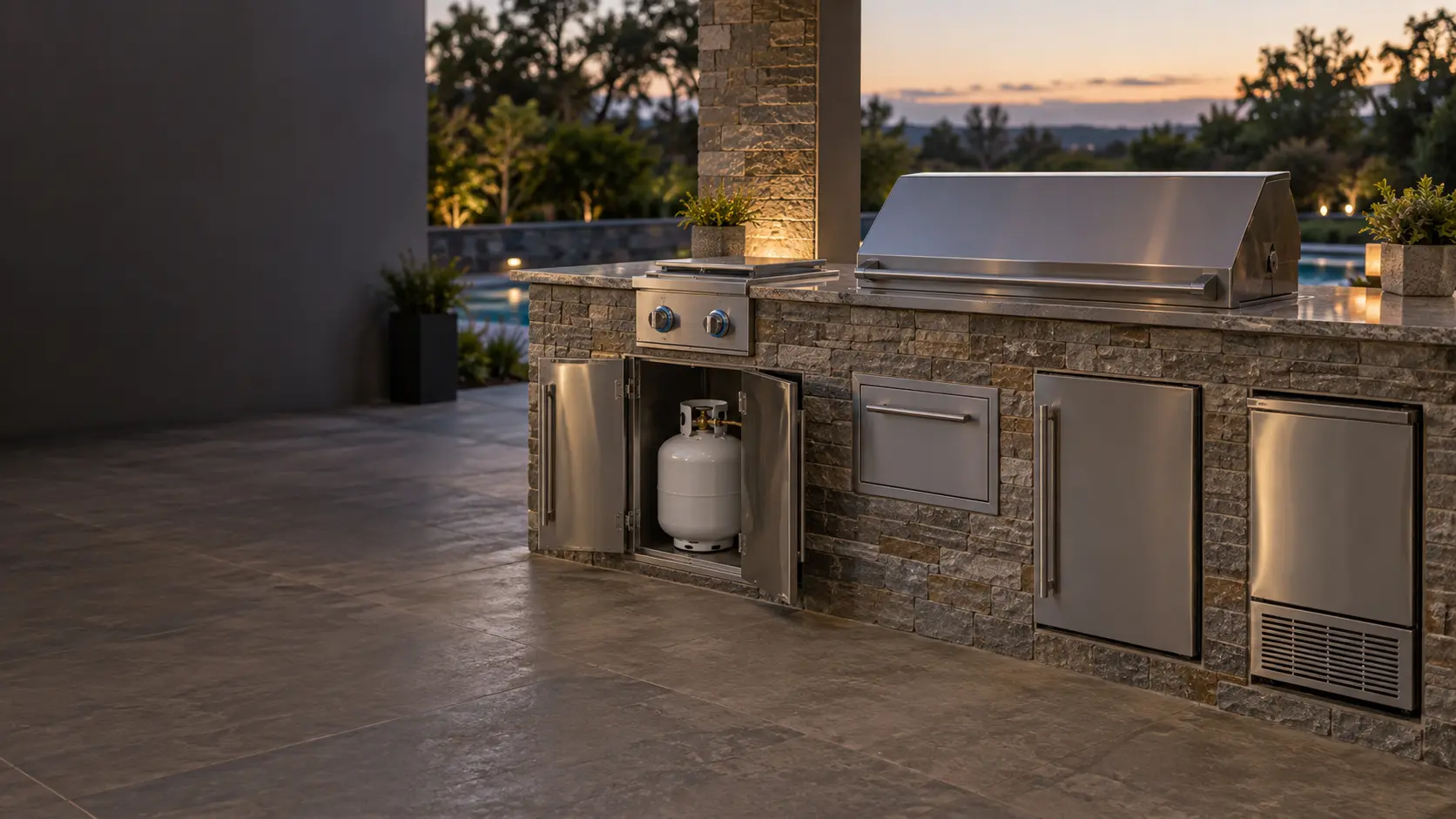
Gas Smell at the Outdoor Kitchen Island: Shut It Down First
6 causes, cheapest first
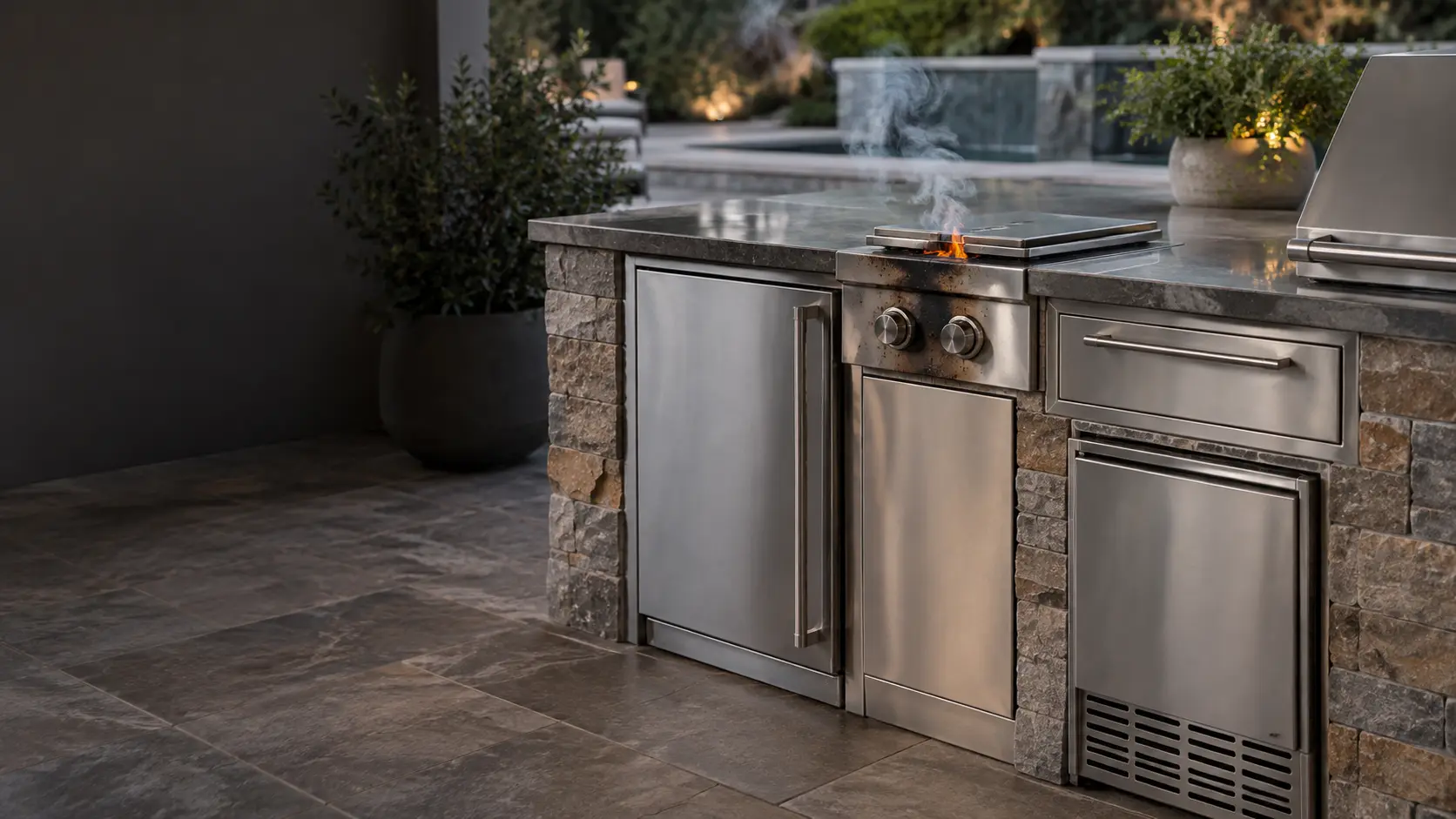
Fire Under the Counter or Inside an Outdoor Kitchen Island
5 causes, cheapest first
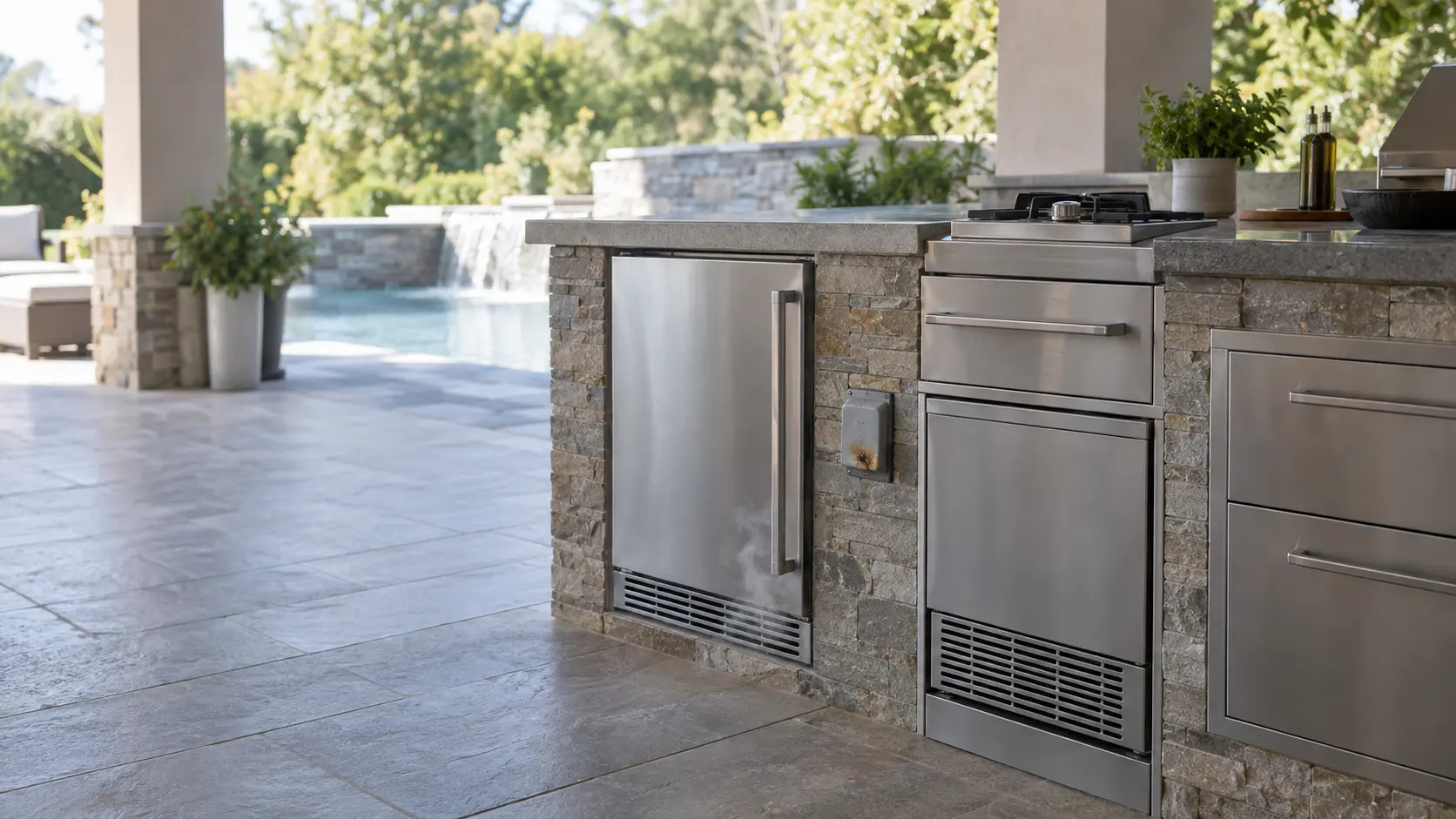
Hot Wire or Burning Smell Around an Outdoor Kitchen
6 causes, cheapest first
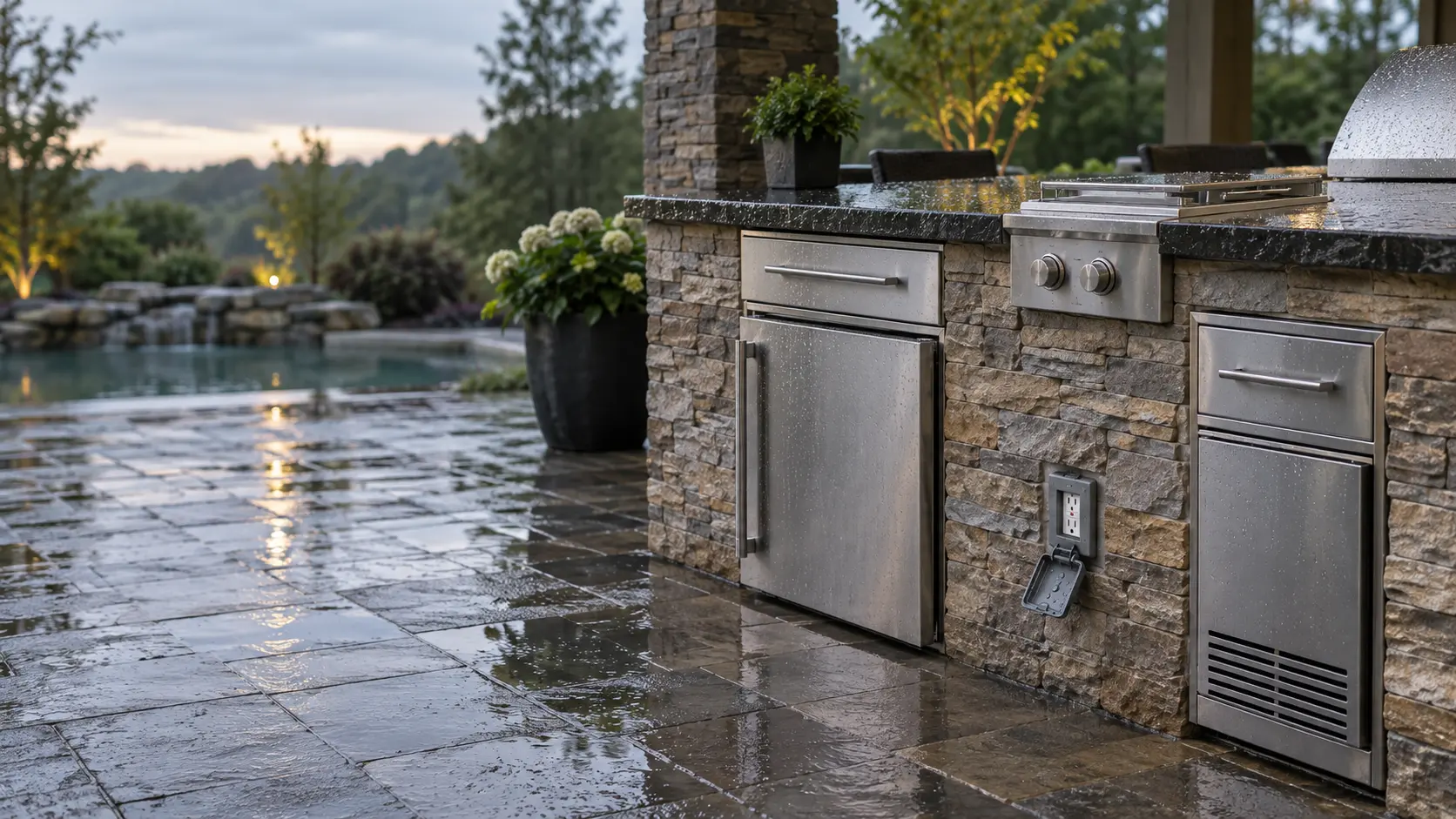
Outdoor Kitchen GFCI Keeps Tripping When It Rains
6 causes, cheapest first
All of
Los Angeles.
Los Angeles County is the county where we repair outdoor kitchens in Los Angeles.
All of Los AngelesBack to your everyday
Outdoor kitchen trouble in Los Angeles County?
Book with the town, what you are seeing and the model number — 94 places across Los Angeles County, the same outdoor kitchen visit in each.