
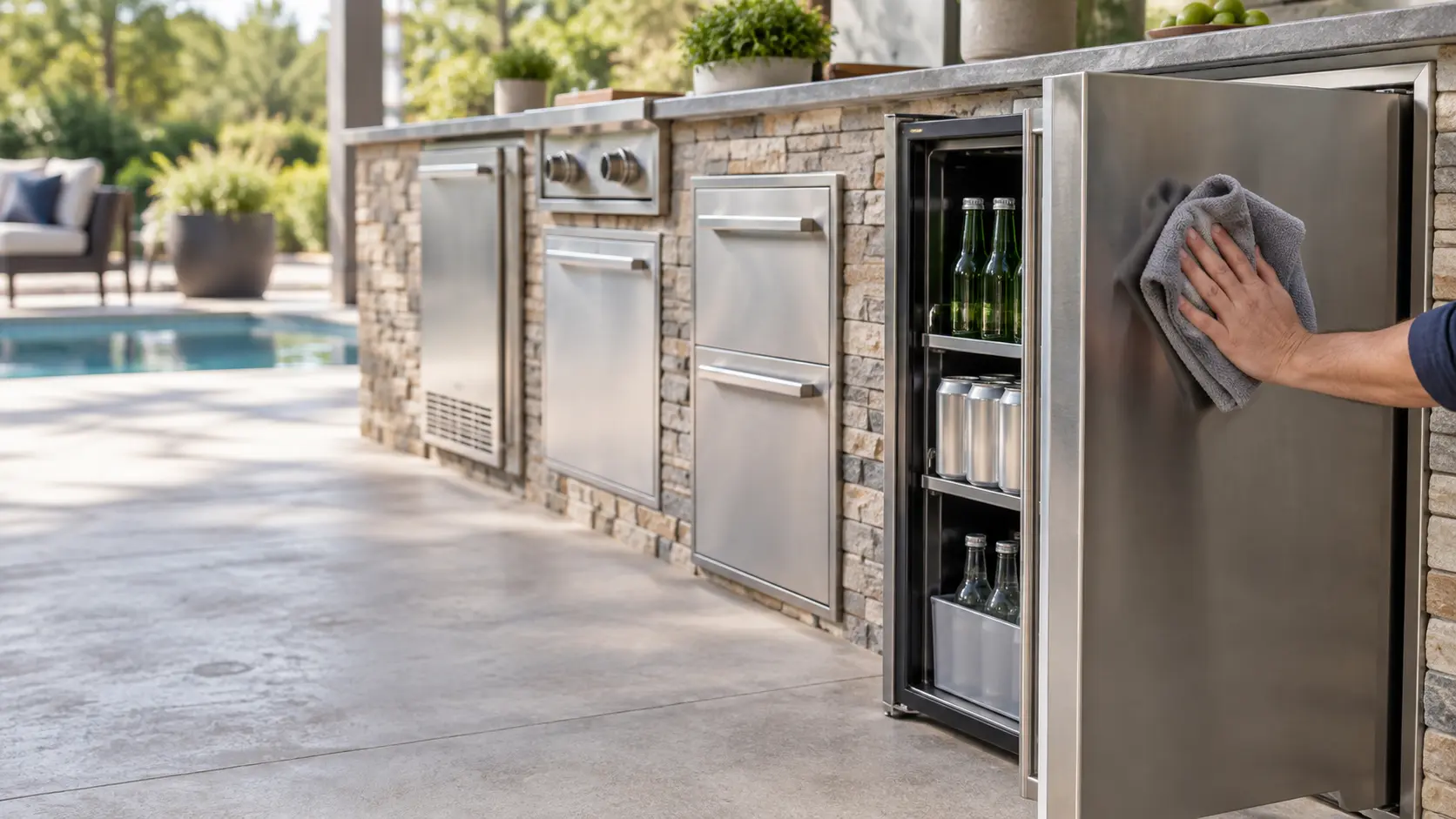

Read first, book second
Outdoor kitchen
guides,
read first.
An outdoor kitchen repair guide is only useful if it answers the question you actually have, so these are split by what you are trying to find out — is this worth paying for, what is that noise, what can I check myself — rather than by which part of the appliance it concerns.
Mon–Sat, 8am–8pm
- 27 guides
- 6 sections
- No booking needed
Book a visit
Three short steps, about a minute.
or call (844) 449-0269
Loading appointment form…
The appointment form couldn’t load. Please try again.
Work out what
you are dealing with.
Split by what you are trying to find out rather than by what part of the appliance it concerns.
All 27 guides
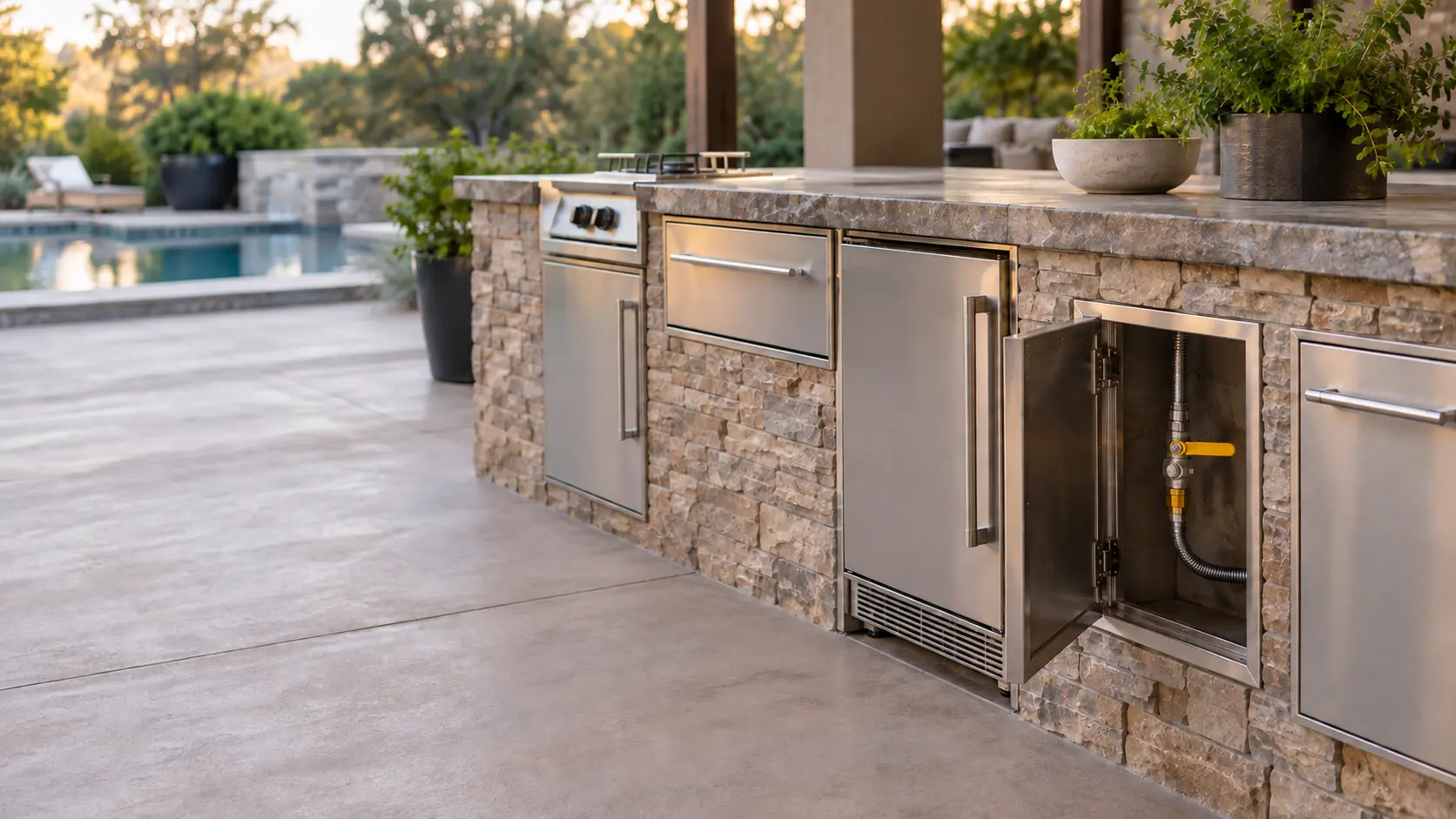

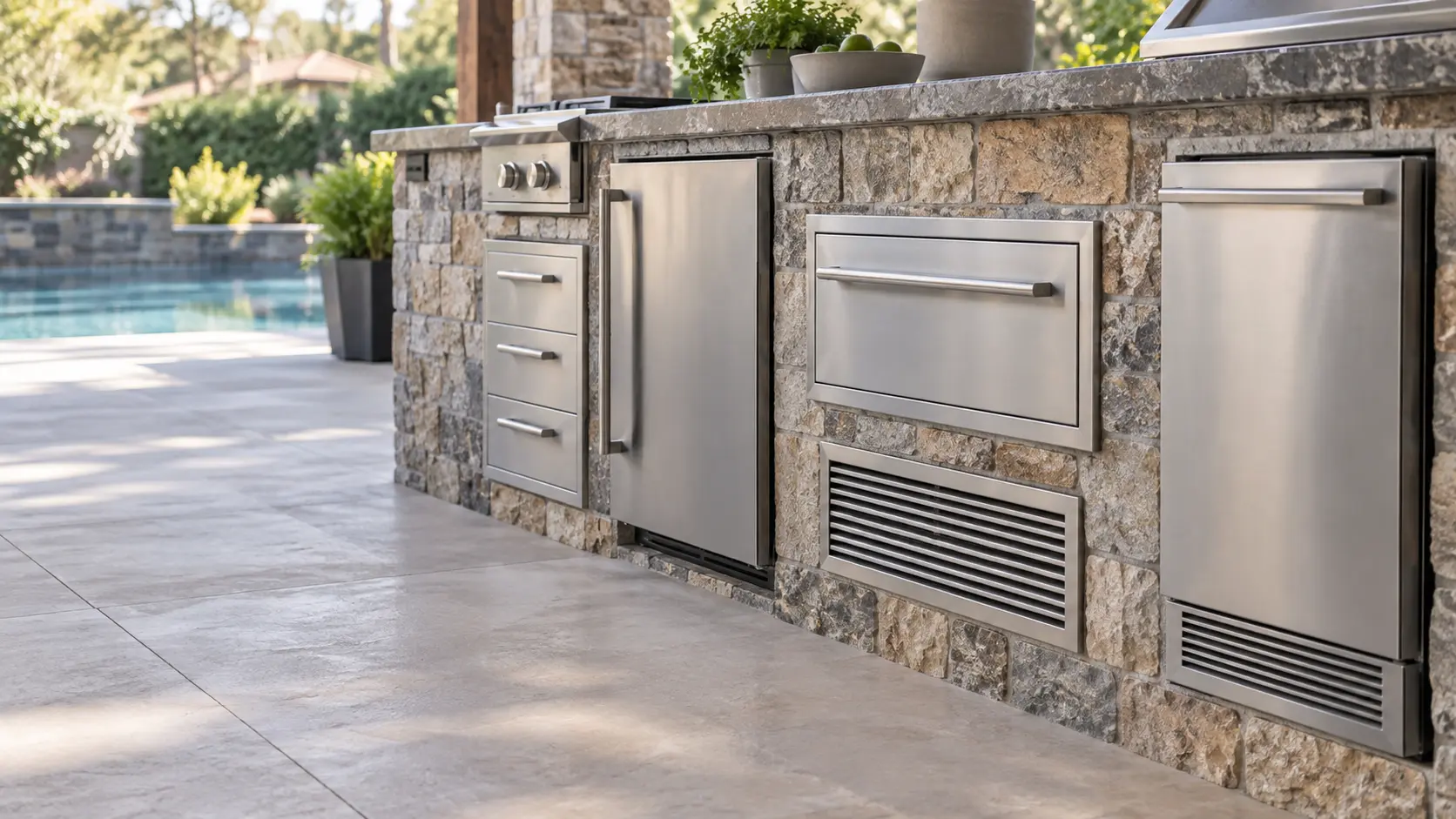
Wondering what the bill might come to? That has a page of its own, because no fair number exists until someone has watched the unit run out in the yard — outdoor kitchen repair cost.
Not sure
where to start?
A few questions come up in nearly every outdoor kitchen booking. The four guides below are for whoever is standing at the island with warm drinks, a burner that will not catch or a first frost on the forecast, and more than one of them ends with no visit needed.
Or start from the symptomGas in the air by the islandA Gas Smell at the Outdoor Kitchen Island: Knobs Off, Gas Closed, Step Away
The order that matters in the first minute, where the island's shutoff usually sits, who to call and from how far, and the one leak check the makers leave to owners.
Warm drinks by midafternoonWhy an outdoor kitchen cooler runs warm by afternoon: sun, the toe grille and a busy door
Read it at dawn, then again at five o'clock. The heat the unit is rated for, the vent at shin height, a hardened gasket and the readings that mean a technician.
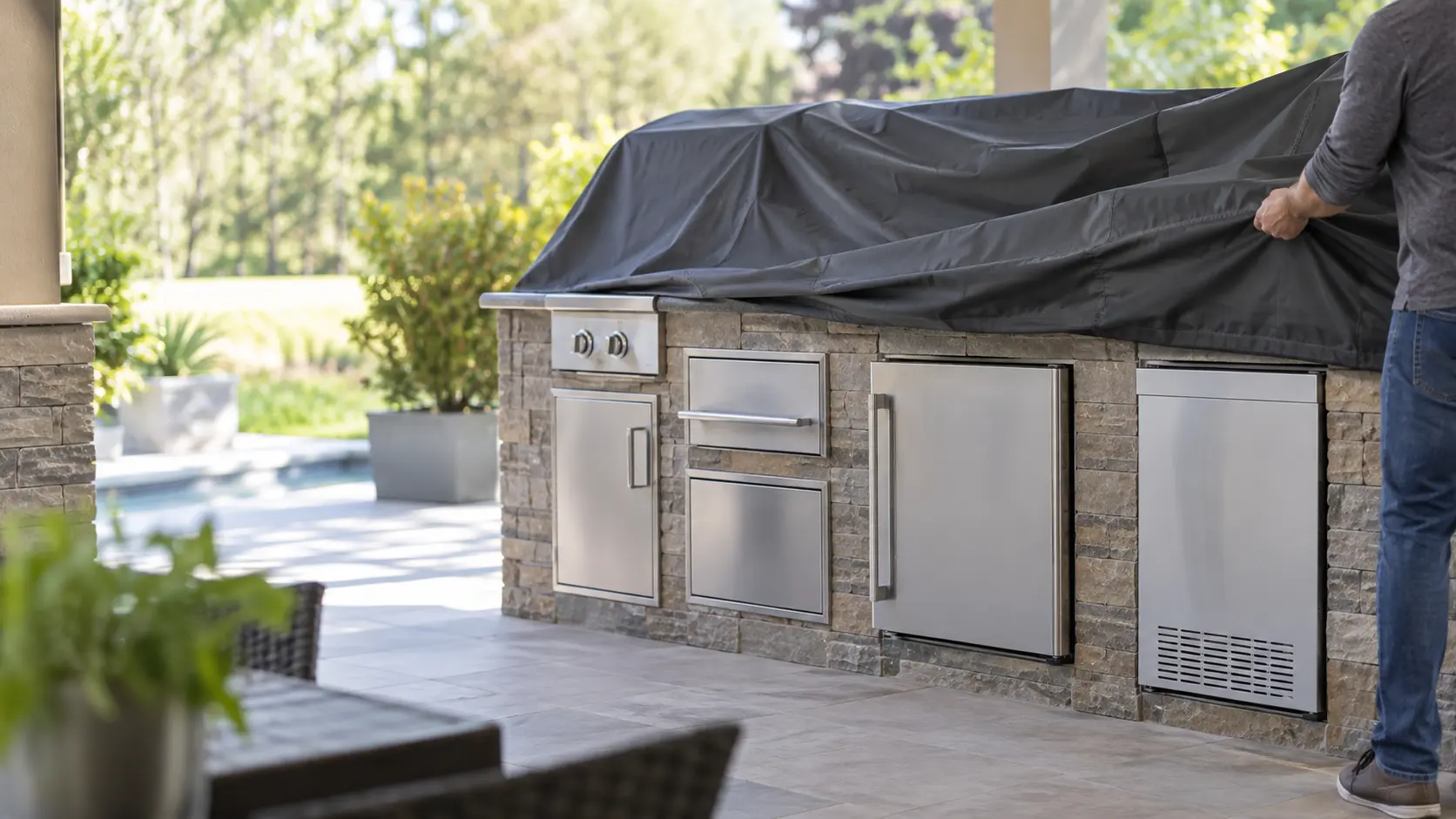
Shutting the island down before a freezeWinterizing an Outdoor Kitchen: Each Maker's Shutdown, Unit by Unit
The temperature each maker names, Perlick and True on cold units and covers, the Scotsman ice maker drain-down step by step, and burners, gas and the warming drawer.
Fix the weathered unit or start overRepair or Replace an Outdoor Kitchen Appliance: Weather, Rust-Through and the Cutout
Telling weather from a worn part, the routine repairs that pay off, when rust-through or freeze damage tips the balance, and why the island opening often decides.
When reading
is not enough.
If the checks in a guide did not settle it, a technician picks up from there. The visit, stop by stop.
What repairs cost- 01The island, looked over first
- 02The reason, then the price
- 03Parts in the van
- 04Running before we leave
When there is
no time to read.
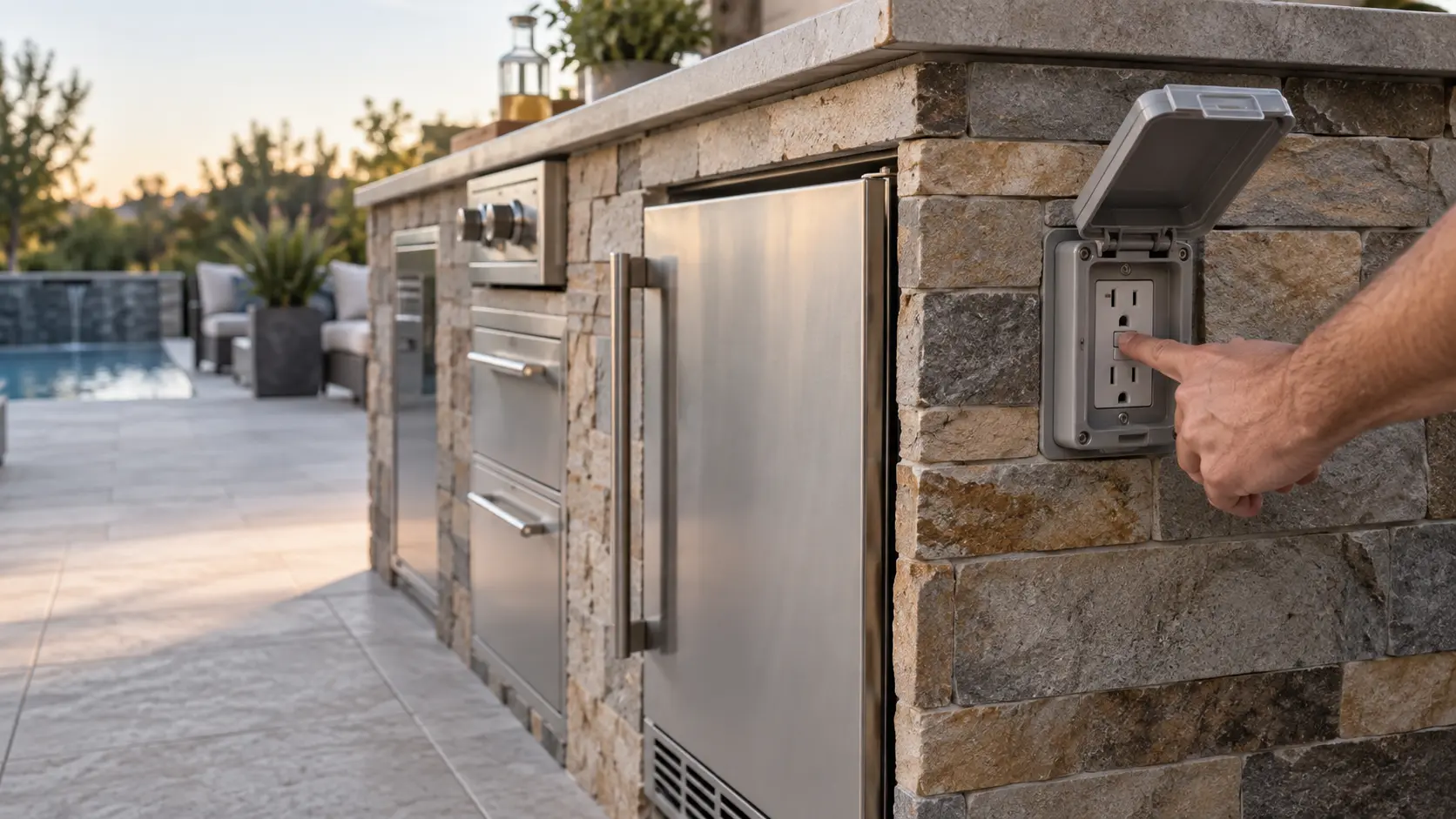
These four put people on the patio at risk and call for the island to be shut down until we arrive: a smell of gas at a burner or inside the island, flame or smoke where no flame belongs, a hot electrical or burning smell, or a GFCI that keeps tripping with water around the outlets. Each page puts the causes in the order worth checking, and says when to stop and book.
All 17 problems
Gas Smell at the Outdoor Kitchen Island: Shut It Down First
6 causes, cheapest first
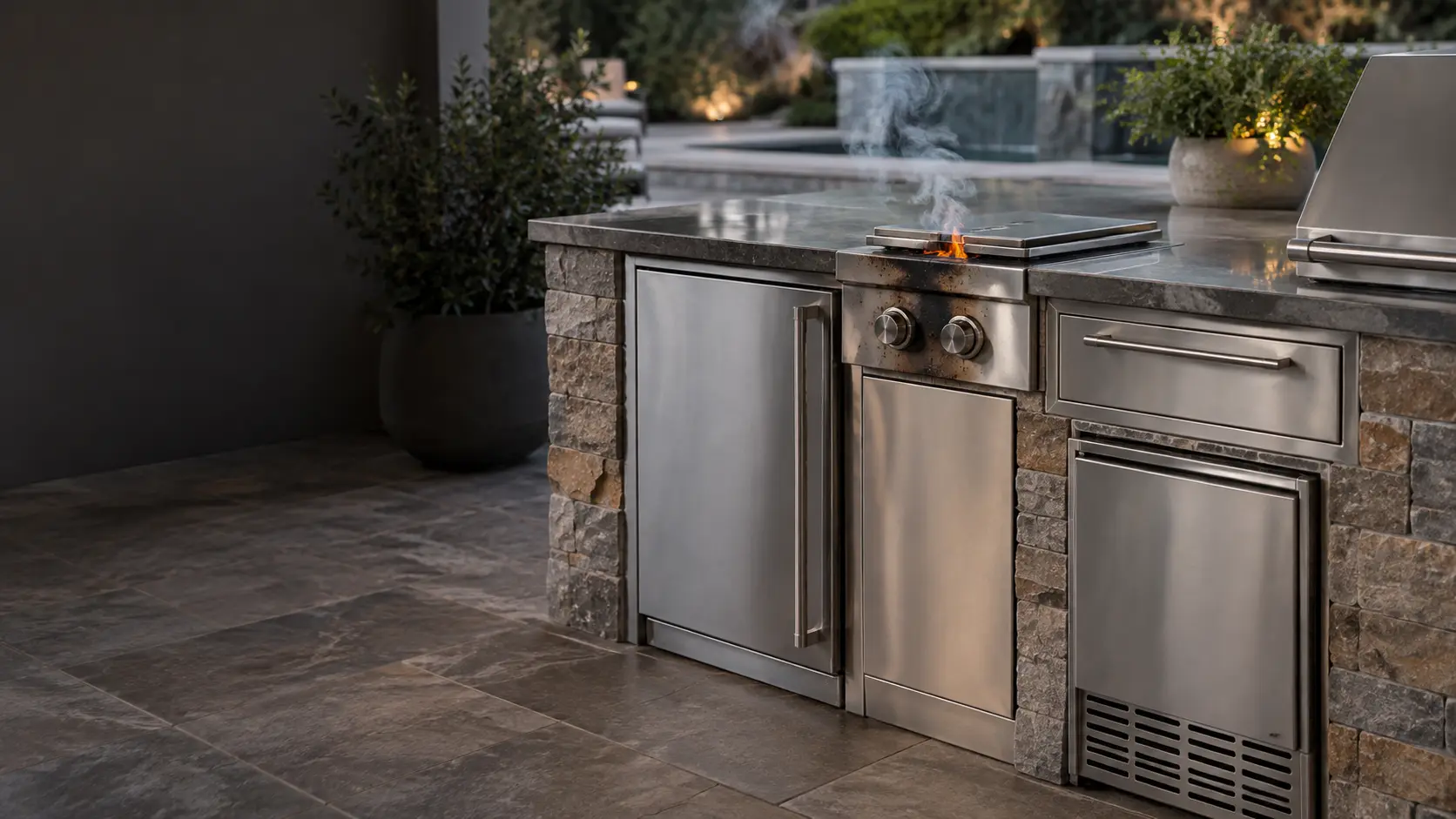
Fire Under the Counter or Inside an Outdoor Kitchen Island
5 causes, cheapest first
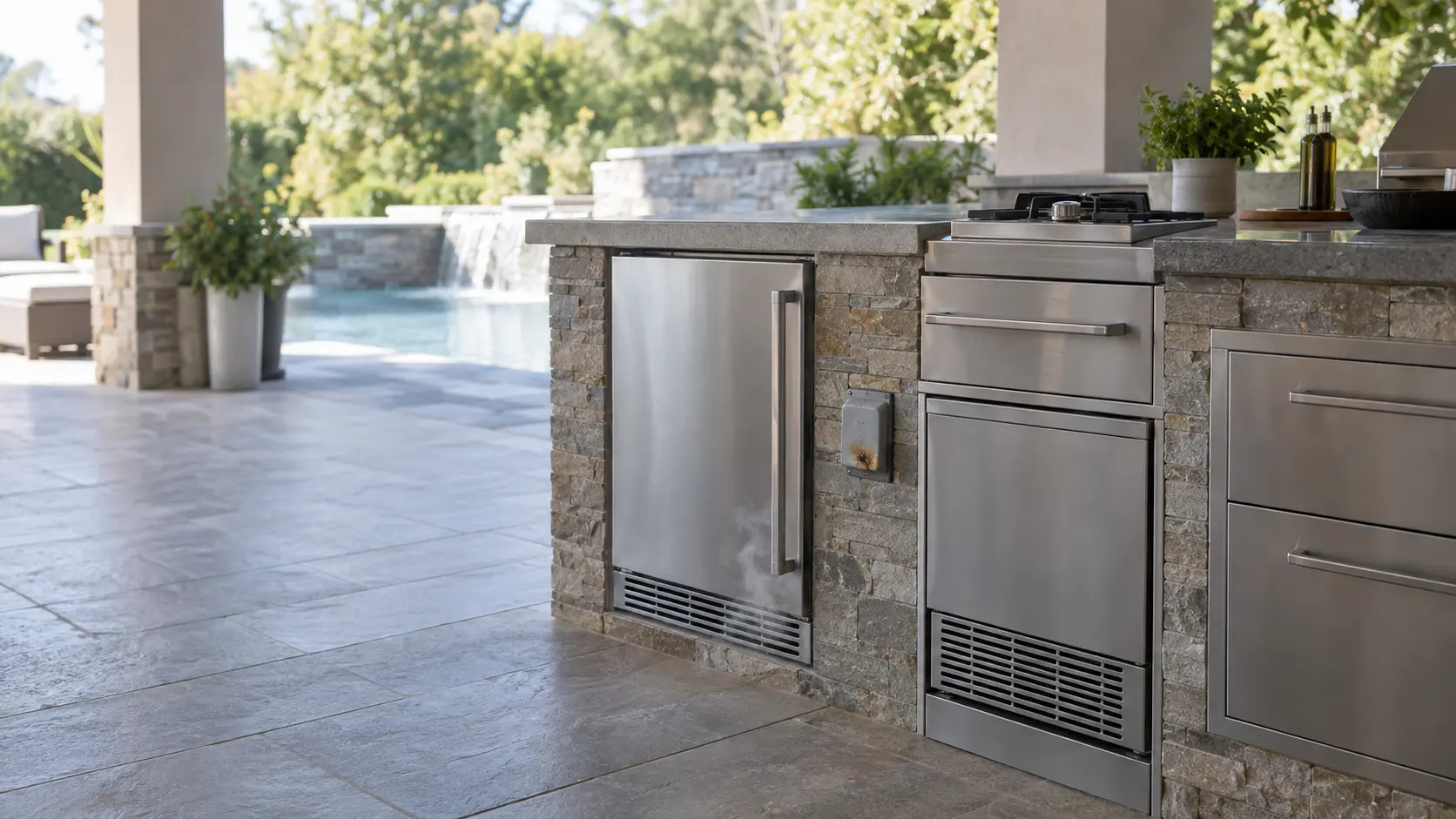
Hot Wire or Burning Smell Around an Outdoor Kitchen
6 causes, cheapest first
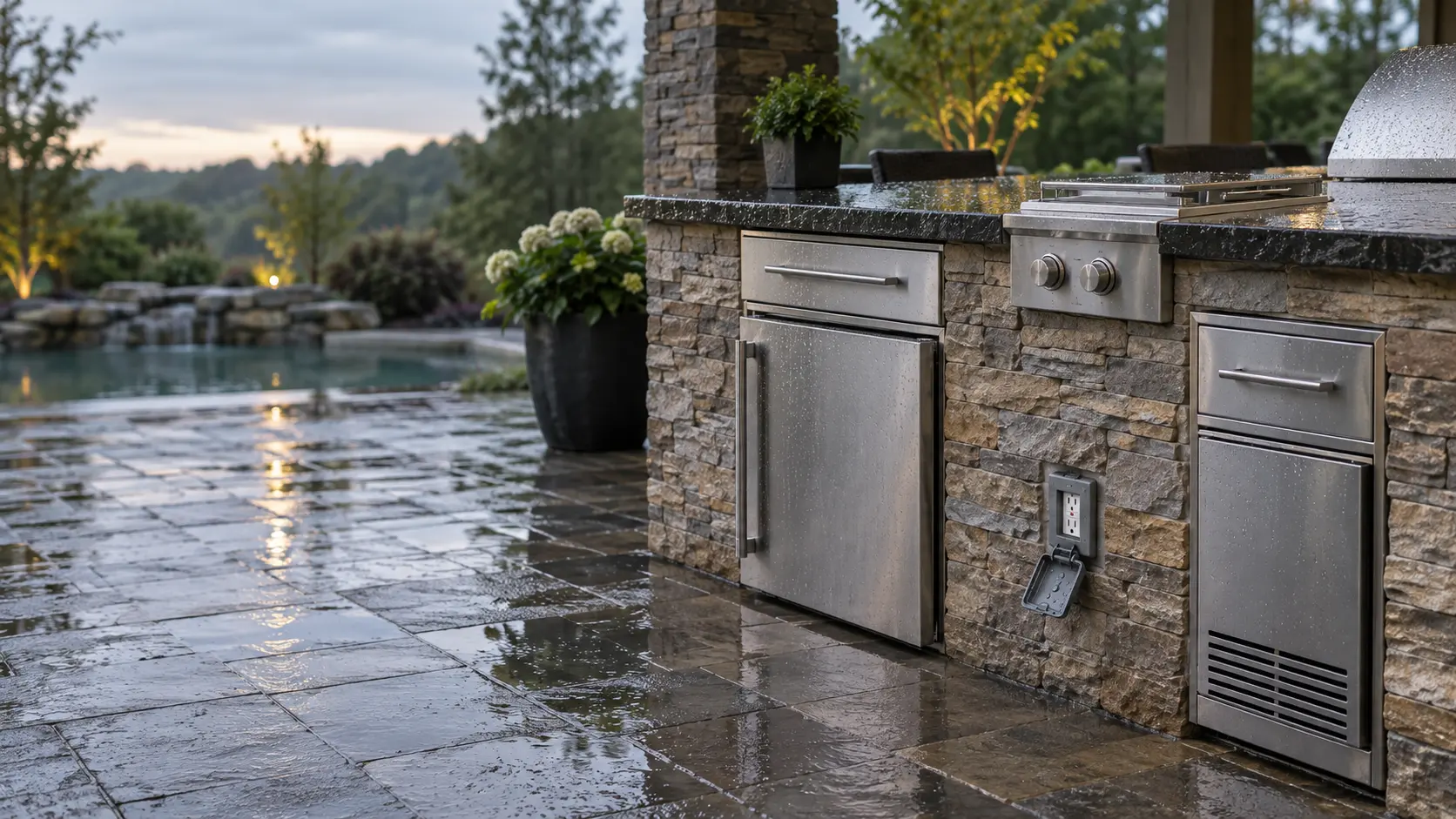
Outdoor Kitchen GFCI Keeps Tripping When It Rains
6 causes, cheapest first

Questions about
the guides.
Can an outdoor kitchen guide save me a visit?
Are the outdoor kitchen guides written for one make?
Guide or problem page: where should an outdoor kitchen owner begin?
Where do the facts in the outdoor kitchen guides come from?
Back to your everyday
Let’s get your outdoor kitchen working again.
Three short steps online, or one call. Tell us what you are seeing and pick a window that works.