Why do some parts crack first?
Water expands about nine percent when it freezes, and the parts that give way first are the ones that hold water with nowhere for the ice to push. A line that was open at one end usually survives; a short dead-end section that was full and sealed does not.
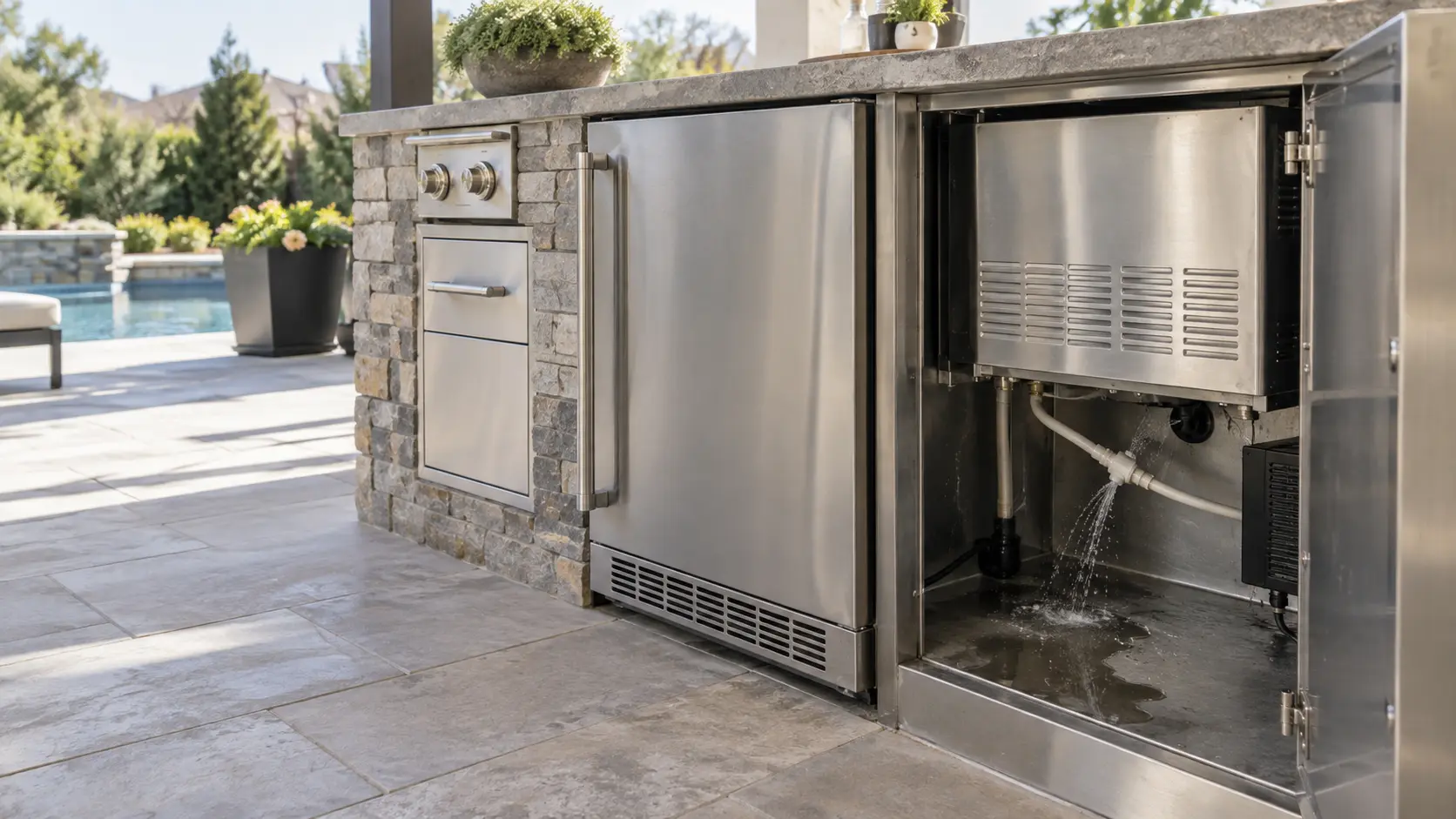
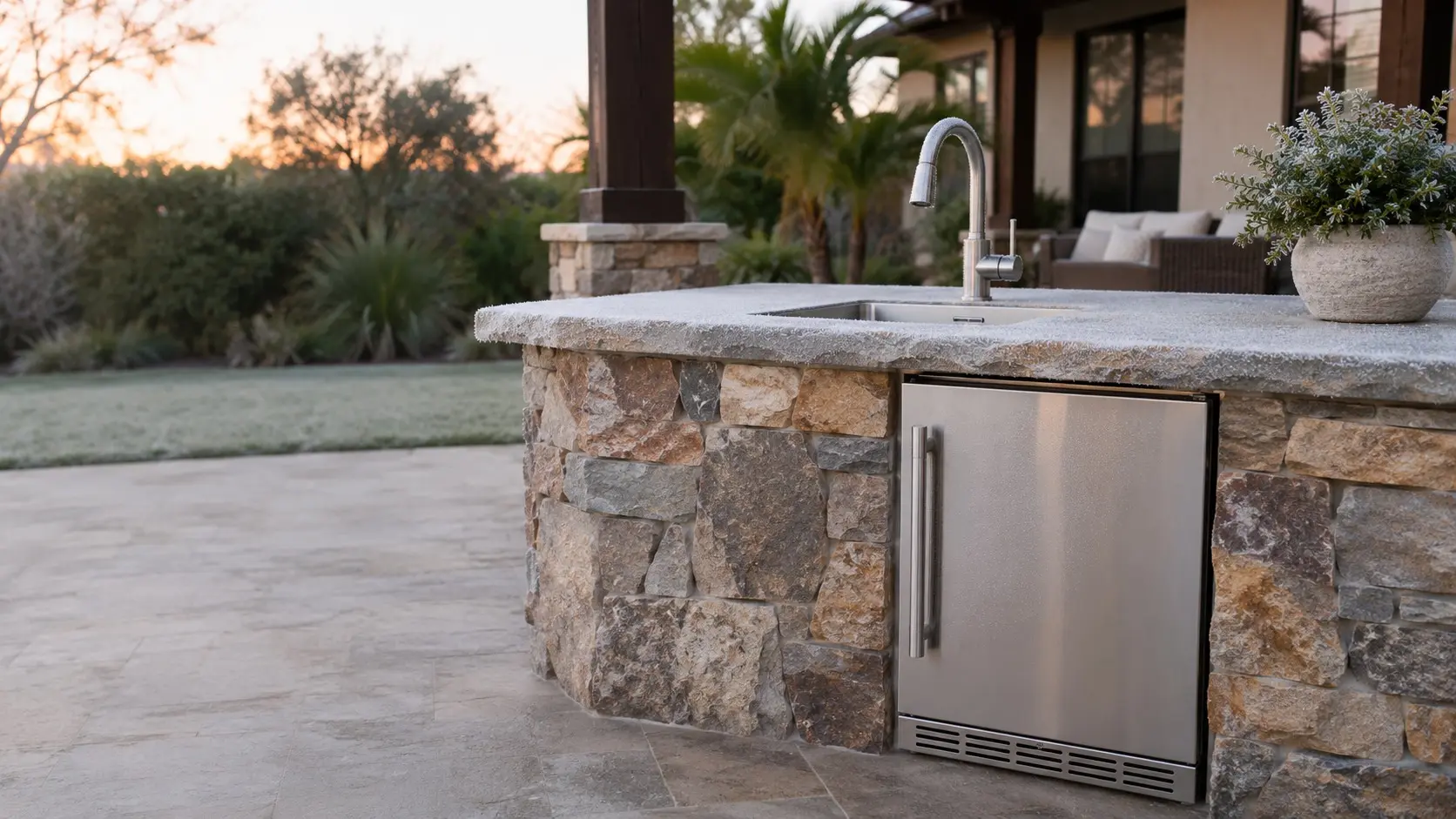
In an outdoor kitchen that means the low points and the small parts: the faucet body, the stub of line behind the sink, the tiny valve on an ice maker, the drain pump housing and the water filter canister. A freeze does not need days. One hard night below 32°F can be enough when the island is on an exposed, windy side of the house.
Why the damage hides until the thaw
Ice plugs the crack it makes. The line holds pressure while it is frozen, and the leak starts when the plug softens. That is why a patio can look fine at 7 a.m. and be wet by noon.
Which islands are most exposed
Exposure matters more than the thermometer reading on the porch.
Lines that run close to an outer wall of the island, or up into a sink on the windward end, freeze sooner than lines buried in the middle or below the slab. Short runs with no insulation and no way to drain are the usual case.
What should I look at right after the freeze?
Start with the water you can see, and do it before anyone opens a tap. Turn the supply valve to the island off first, then look.
- Faucet spout or handle that is stiff, bulged or weeping at the base.
- A fitting under the sink with a bright line, a white crust or a bulge.
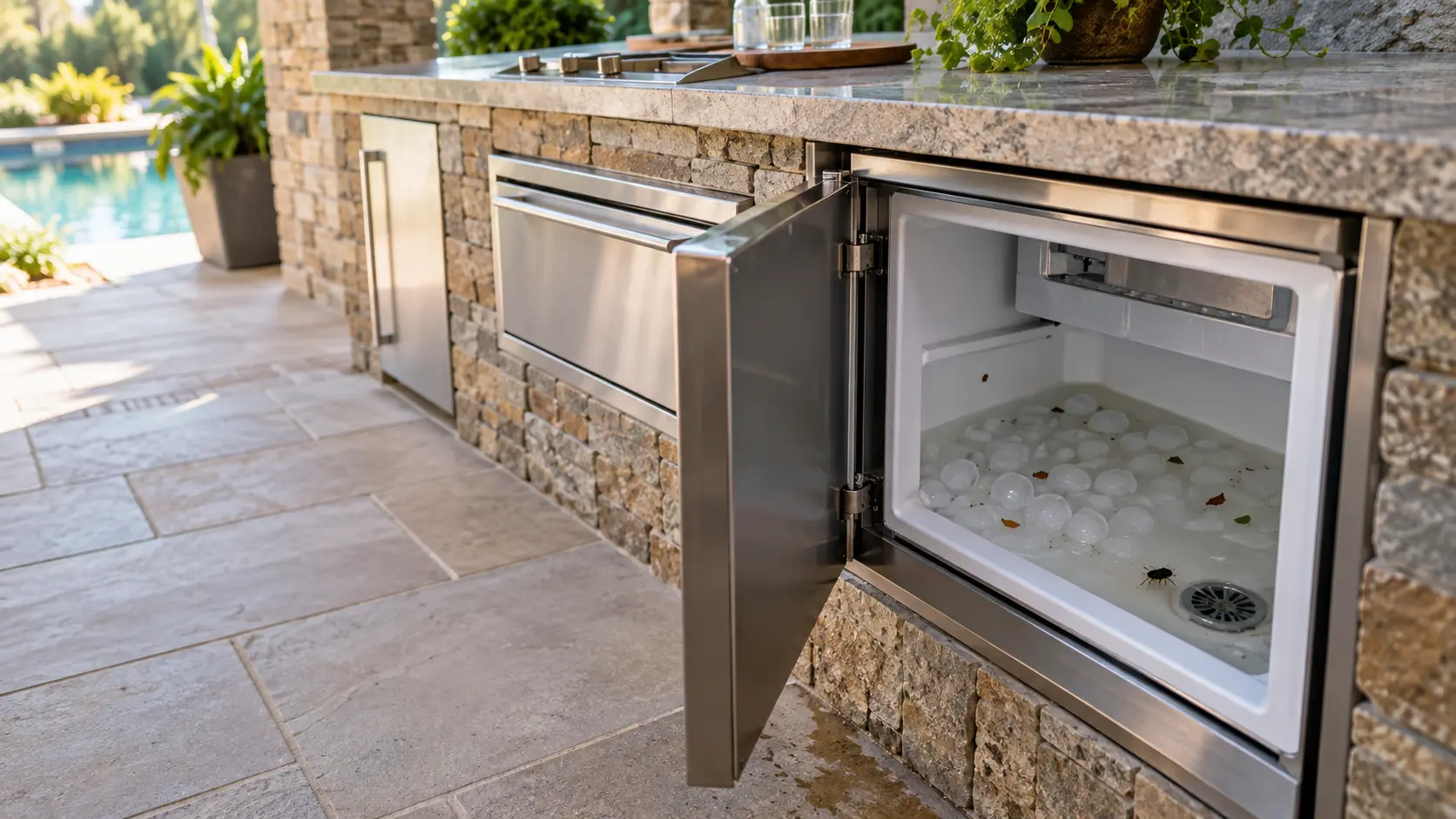
- The cooler door gasket and the ice maker drain tray, for standing ice.
- The floor of the sink cabinet, for a damp stain that was not there yesterday.
- The pump housing on a drain-pump ice maker, for a hairline split.
Walk the whole run you can see, from the shutoff to the faucet, without pulling or bending lines; a fitting with frost on it is still frozen. Write down what you saw and photograph it. A short list helps whoever comes out, and it helps you remember which tap you left open.
What a split looks like on each part
| Part | What the freeze does | How it shows |
|---|---|---|
| Faucet body | Splits along the casting | Drip from the neck or the base once the water is on |
| Supply line or stub | Opens a seam in the pipe or a fitting | Spray or a steady wet patch under the sink |
| Ice maker inlet valve | Cracks the plastic or brass body | Slow leak, or no water to the tray |
| Drain pump | Splits the housing | Water under the unit, ice that drains badly |
| Filter canister | Cracks the shell | A wet cabinet floor and a missing cartridge seal |

How do I stop a small crack becoming a flood?
Shut the supply valve to the island and leave it shut until the cracked part has been replaced. If that valve is inside the house, closing it is the first and the cheapest move you have.
- Close the supply valve to the island and open the faucet to relieve pressure.
- Switch off the ice maker, the pump and any wet-cabinet outlet at the breaker; if you would have to stand in water or reach into a wet cabinet to do it, leave it and call an electrician.
- Let ice thaw on its own; a heat gun or torch on a pipe near a cabinet is a fire hazard.
- Mop up water and prop the cabinet doors so the inside can dry.
What not to do in the first hour
Do not run the ice maker "to see if it works." A cracked inlet valve will leak into the cabinet the moment the tray calls for water. Do not use a propane torch on any line. Do not tighten a weeping fitting against ice; it will crack further.
Which freeze damage can I handle, and which cannot?
You can dry a cabinet, replace a hose washer, swap a faucet aerator and clear a frozen drain tray. A split pipe or fitting is a plumbing repair, and a freeze split in an ice maker valve or pump is work for a service visit rather than a guess.
The line that matters is the wet side of the island against the live side. A cracked part beside outlets or wiring is an electrician's call, and anything that touched the gas run is a gas fitter's. The GFCI and power repair page explains what that visit looks at when water has been inside a cabinet.
When the ice maker is the casualty
An undercounter ice maker keeps water in its inlet valve, tray and drain, and a freeze often does its harm to the valve. If the machine now fills slowly or drains badly, see outdoor ice maker service and the slow drain problem before running a cycle.
How do I prevent the next one?
Drain the island before the first hard freeze and leave taps open. The winterizing guide lists each maker's shutdown steps, and winterizing and spring startup books the work if the island has lines you cannot reach.
A few habits help in a mild climate too:
- Watch the overnight low, not the daytime high.
- Drain the island again after any spring or fall use that refilled the lines.
- Keep the shutoff for the island labeled and easy to reach.
- Do not count on a dripping tap in place of draining; an outdoor line that is not drained can still freeze.
Then, in spring, follow the spring startup checklist and bring water back slowly, watching each joint. The freeze damage problem page covers the signs again if you are comparing notes.