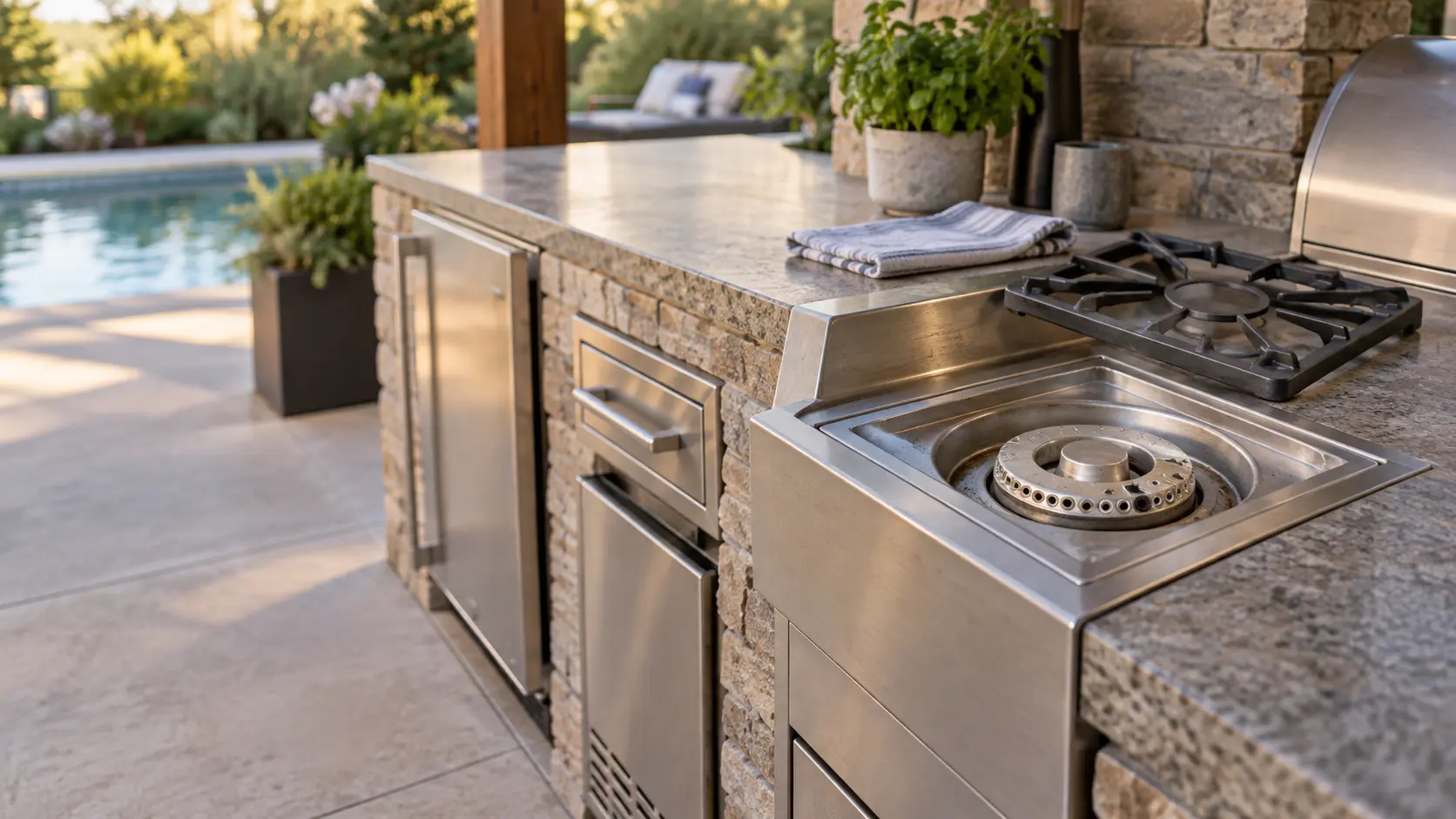
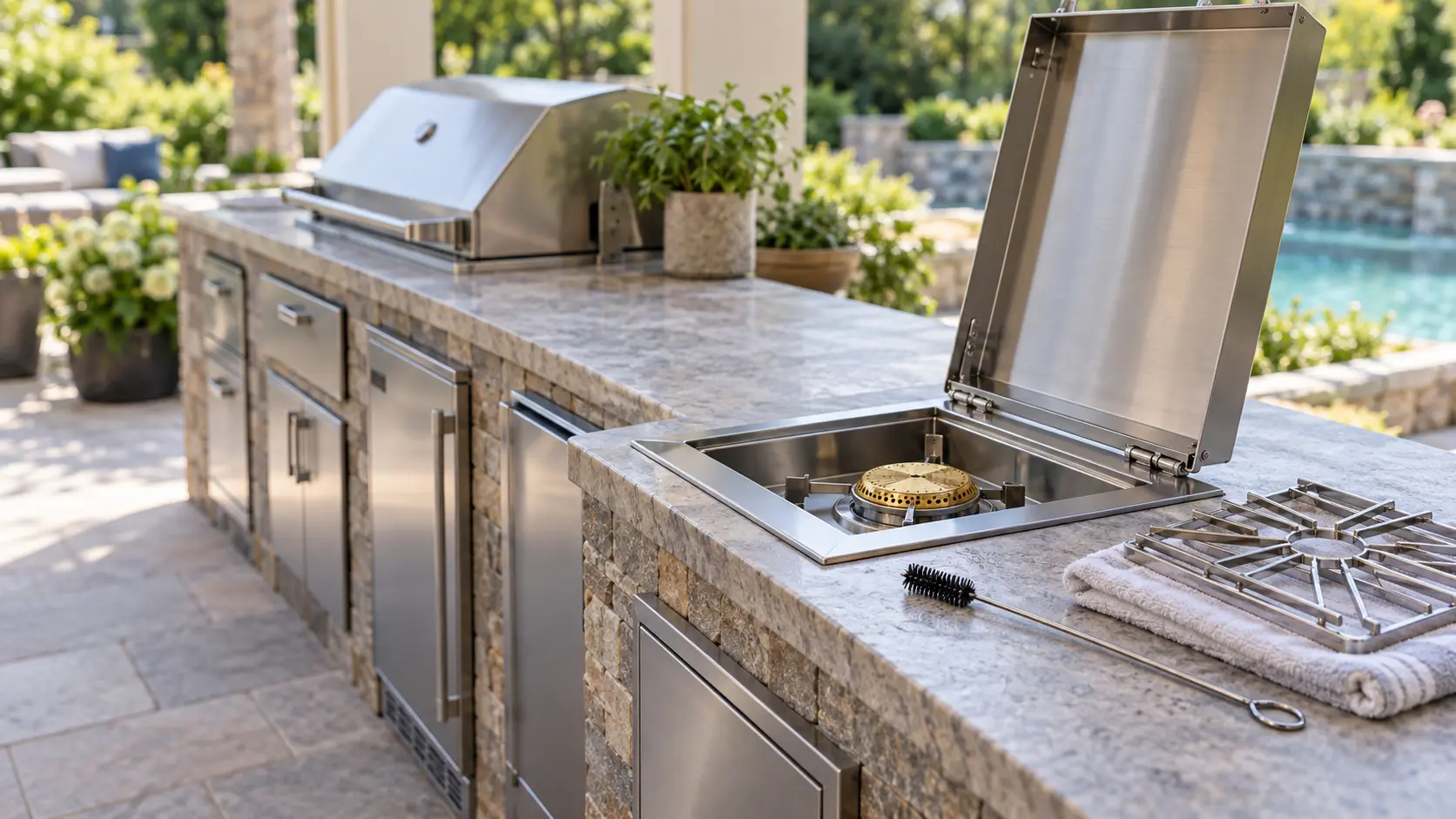
Why insects move into a quiet burner
Each burner on an outdoor kitchen draws air through an opening at the front of its tube, where the gas jet from the brass orifice enters, and mixes the two on the way to the ports. The tube is about as wide as a finger, sheltered from rain and quiet for days between uses. Spiders spin across it, wasps build mud cells in it, and small beetles and earwigs wedge themselves in for the winter.
The side burner is the one most often blocked, simply because it is lit less often than the main burners at the far end. An island closed up from October to April gives insects a whole season, and the first lighting of spring is when blocked tubes show themselves.
What flashback is
Blaze's side burner manual explains the risk plainly: webs and nests obstruct the gas flow, gas escapes at the front of the tube instead of reaching the burner, and it can catch there. The maker calls this flashback, says it can start a fire behind the valve panel and damage the appliance, and names an obstructed tube as its most common cause.
Signs a burner tube is partly blocked
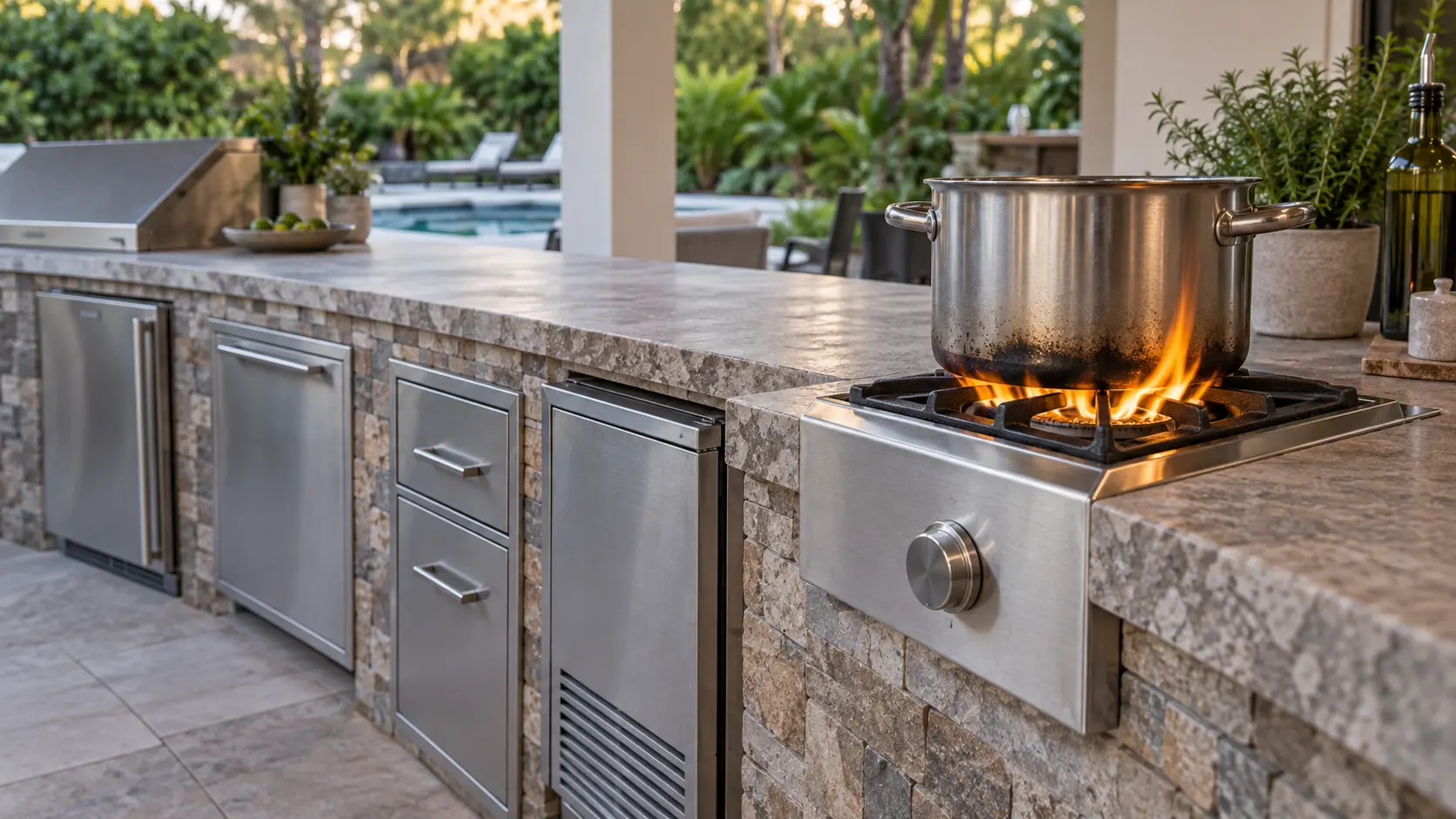
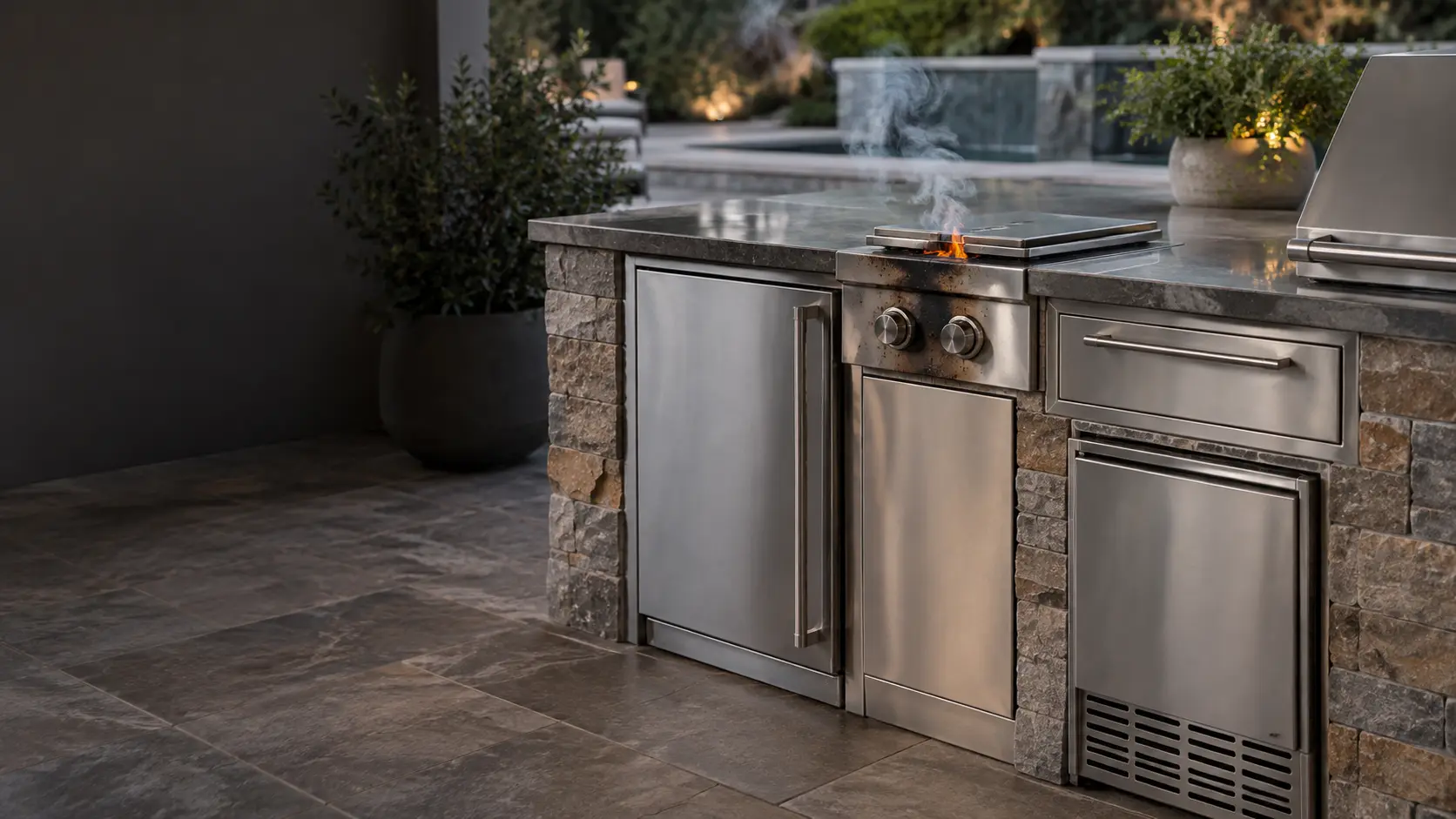
A tube does not need to be sealed to cause trouble; a web across half of it upsets the mixture. Blaze lists four symptoms of a nest, and each is easy to notice once you know it matters. Any flame outside the burner is past that list: turn that knob off, shut the supply at its source, keep hands and face clear and let the flame die.
- Yellow, lazy flames together with a smell of gas.
- A burner that never gets as hot as it used to.
- Heat that is strong on one side of the ring and weak on the other.
- Popping or small bangs from the burner, especially when lighting or shutting off.
- Flame or glow at the air opening or under the knob panel, which is an emergency and not a cleaning job.
When a little yellow is normal
Blaze describes a healthy side burner flame as mostly blue with a yellow tip. Tips that flicker yellow in a breeze are fine. A flame that has turned yellow along its whole height, soots the bottom of a pot or comes with an odor is the one that needs the tube checked.
Source: Blaze — Double side burner user manual — Spiders and insects nest in burner tubes and cause flashback, a fire behind the valve panel; obstructed tubes are the most common cause; inspect before each use; symptoms: gas smell with yellow flames, low heat, uneven heat, popping; flame mostly blue with a yellow tip; clean ports with a small metal object and the tube with a rod or pipe cleaner; owner cleaning: remove the grate, clear debris in the burner head, inspect the burner inlet; burners seated and aligned with the orifice; table suggests removing a plugged orifice

Clearing the tube with the gas closed
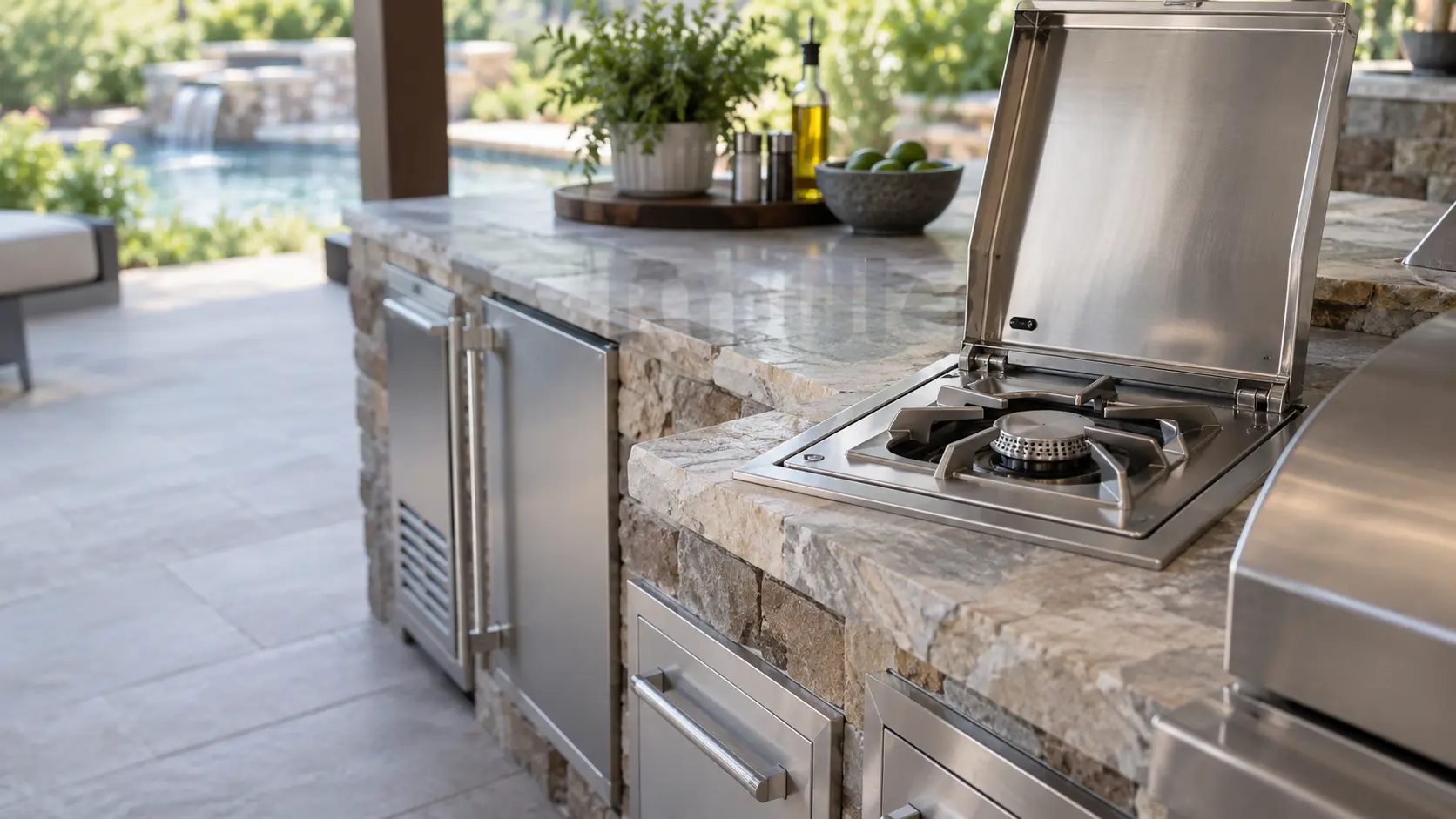
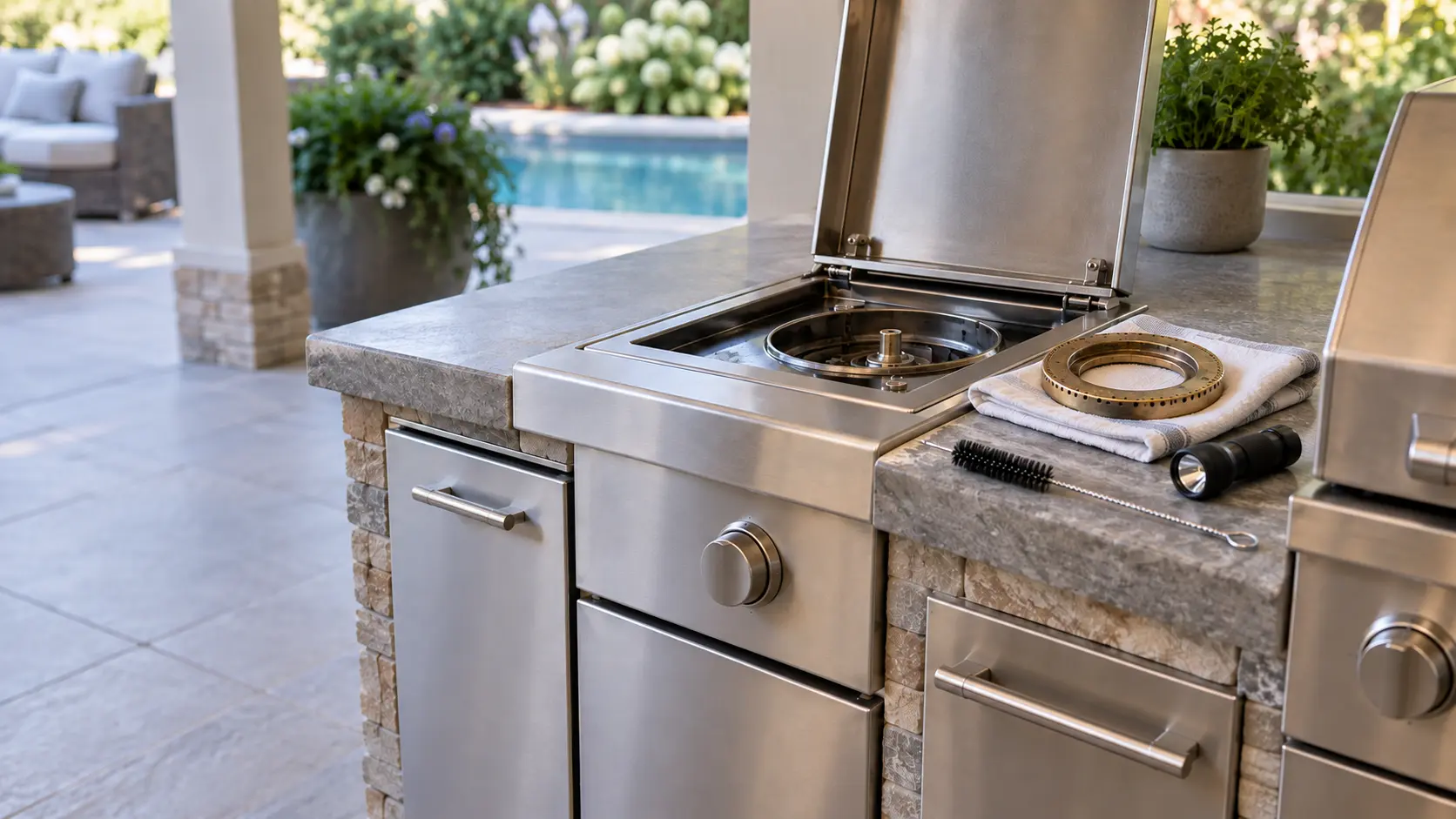
Work only on a cool burner, with the knobs at off and the supply shut at its source, cylinder or island valve. Lift off the grate and the cap, then raise the burner head only as far as your manual's cleaning section shows. Blaze's cleaning steps stop at the grate, the debris inside the burner head and a look into the burner inlet, all without tools. If your burner is held down with screws or wired to an igniter in a way the cleaning pages do not cover, stop there and book.
Push a flexible tube brush or a long pipe cleaner through the tube from the burner end and draw it back, repeating until it comes out clean. Blaze asks for burner ports to be kept clear with a small metal object; a straightened paper clip clears a blocked port without widening it. Shake the debris out of the tube, away from the orifice, and wipe the burner well.
Leave the brass orifice where it is
Blaze's troubleshooting table suggests removing a plugged orifice and cleaning it with a fine wire. On our side of the line that is a visit: the orifice screws into the valve, sets how much gas the burner gets, and has to seal when it goes back. Do not poke anything into it, and do not loosen it to look inside.
Source: Blaze — Double side burner user manual — Spiders and insects nest in burner tubes and cause flashback, a fire behind the valve panel; obstructed tubes are the most common cause; inspect before each use; symptoms: gas smell with yellow flames, low heat, uneven heat, popping; flame mostly blue with a yellow tip; clean ports with a small metal object and the tube with a rod or pipe cleaner; owner cleaning: remove the grate, clear debris in the burner head, inspect the burner inlet; burners seated and aligned with the orifice; table suggests removing a plugged orifice
Reseating the burner and the first flame
Set the tube back over the orifice so the opening slides onto it, then lower the burner head into its seat until it sits flat. Blaze asks for every burner to sit square in its housing over the orifice; a tube that rests beside the orifice rather than over it sends gas straight into the burner box. Replace the cap and the grate.
Open the gas with every knob off, then light the burner exactly as the manual describes, standing back. Watch the first minute. A clean, mostly blue flame all the way round means the job is done. Yellow flames, popping or any flame at the front of the burner means knob off, gas off and a booking, because something is still blocked or out of place.
Source: Blaze — Double side burner user manual — Spiders and insects nest in burner tubes and cause flashback, a fire behind the valve panel; obstructed tubes are the most common cause; inspect before each use; symptoms: gas smell with yellow flames, low heat, uneven heat, popping; flame mostly blue with a yellow tip; clean ports with a small metal object and the tube with a rod or pipe cleaner; owner cleaning: remove the grate, clear debris in the burner head, inspect the burner inlet; burners seated and aligned with the orifice; table suggests removing a plugged orifice
Keeping insects out between uses
The simplest protection is use: a burner lit every week is rarely colonized. For a side burner that is saved for summer corn, make the tube check part of the routine rather than a repair.
- Look into each burner's air opening with a flashlight before the first lighting of the season.
- Keep the stainless lid closed and the island covered once the burners are cool.
- Leave any mesh screen the maker fitted at the air opening in place; it is there for this reason.
- Clear webs from the cabinet and the access doors under the burners when you clean the island.
- Repeat the brush after a long trip or a month of disuse.