


outdoor kitchen repair specialists
Cold drinks,
a steady flame.
Our job, out back.
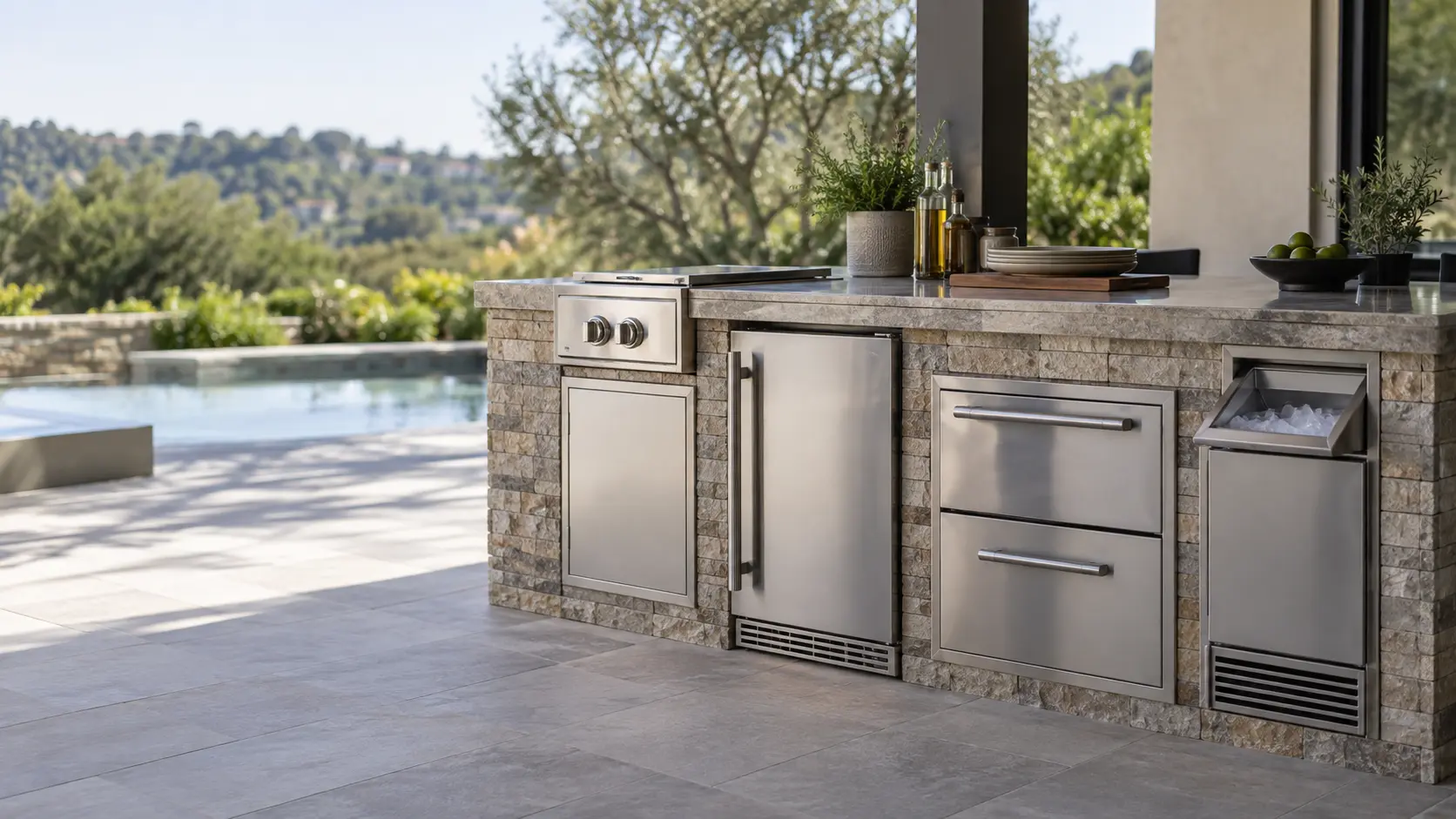
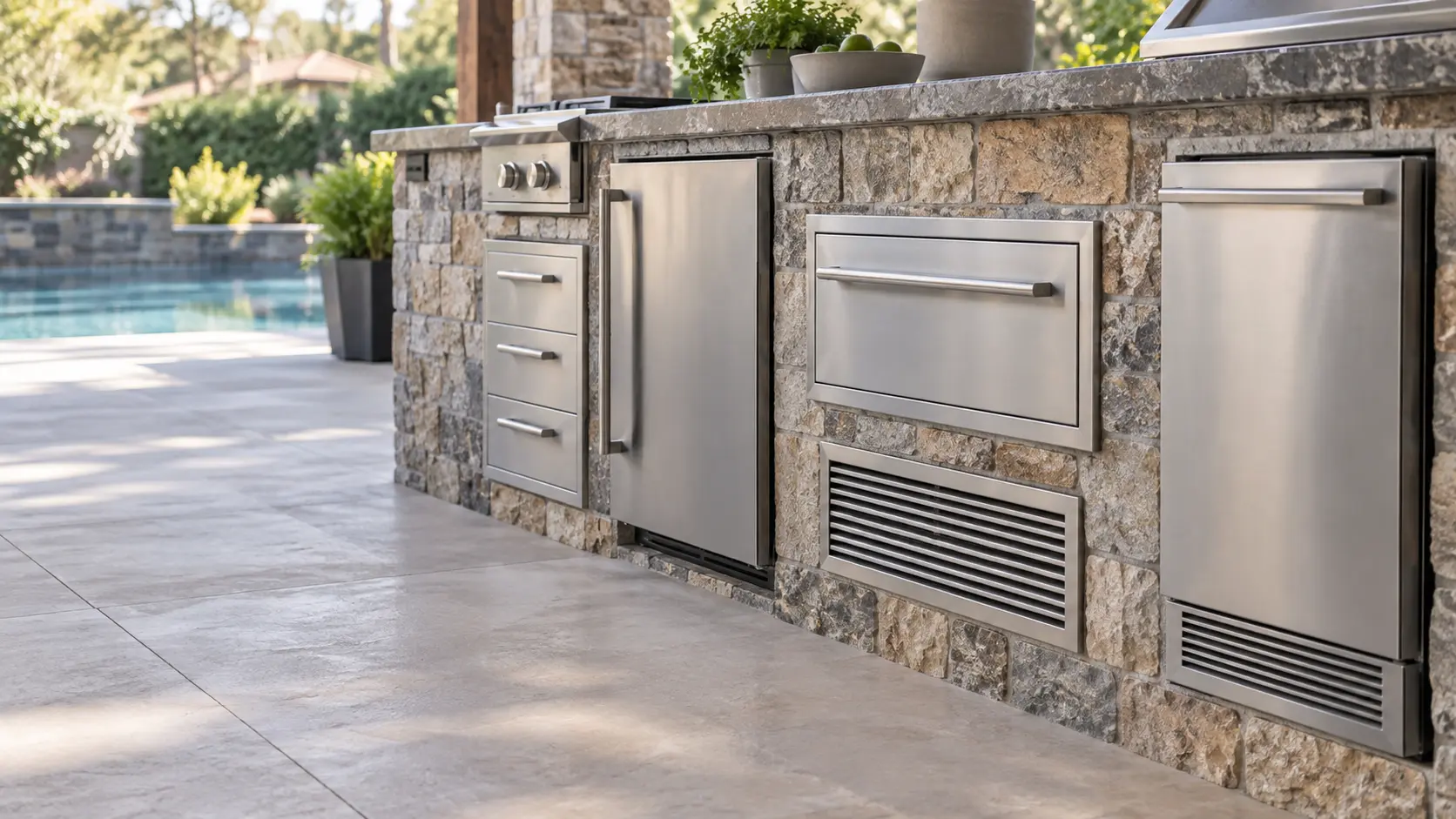
Repairs for everything built into the island out back, the cooking head aside.
Tell us what the patio is missing. We’ll bring it back.
- Outdoor coolers, kegerators, ice makers
- Side burners, igniters, warming drawers
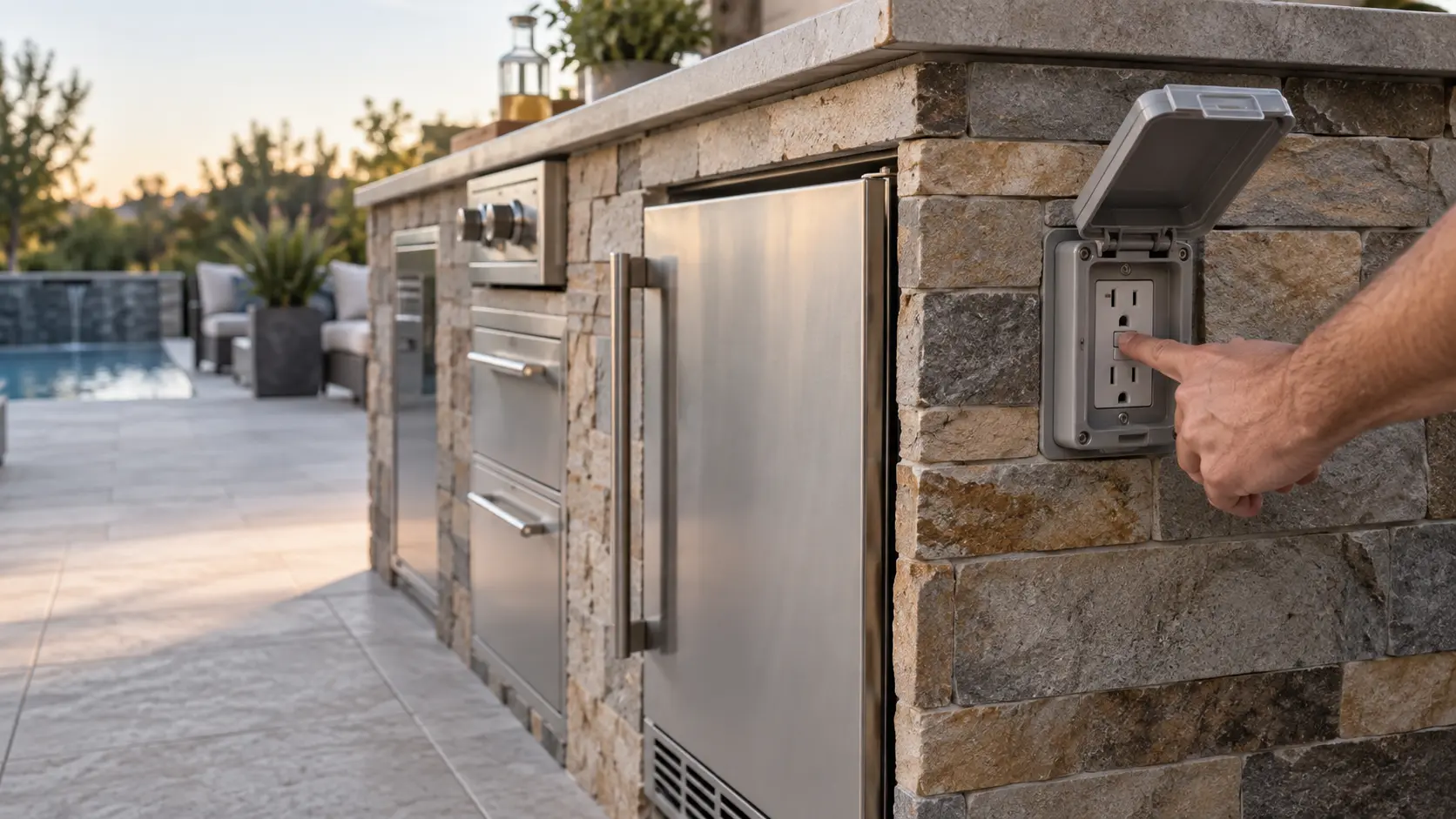
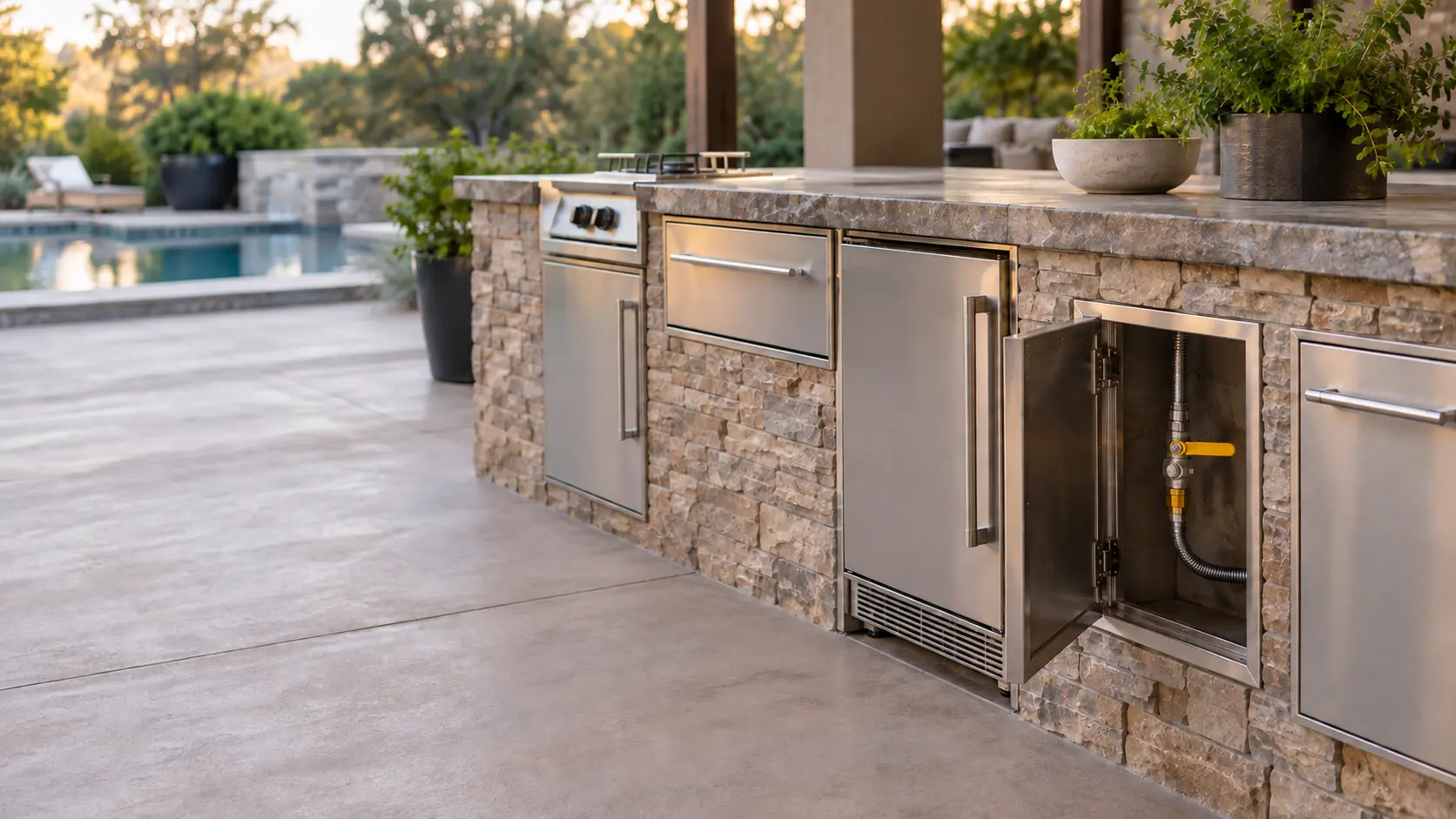
- Island gas lines, GFCI power, winterizing
What to expect
Experienced technicians
More than 12 years in appliance repair
Upfront pricing
The cost of the repair in writing, before any work begins
OEM parts on order
Original manufacturer parts ordered against your model number, never third-party substitutes
Warranty on our workmanship
Every repair is backed by a warranty on the work we performed
Your next step
to a working outdoor kitchen.
A few details now.
A little less to worry about.
Say what is wrong out back
Pick the unit in the island and tell us what the cooler, the ice, the burner, the drawer or the power is doing.
Choose a day
Any open date, then morning or afternoon, whichever keeps the patio free for us.
How we reach the yard
The street address, the side gate or how to get to the back, and a phone the technician can call on the way.
Every appliance in an outdoor kitchen carries a model plate with the make, the model and the serial number. On an outdoor cooler or kegerator it usually sits inside, on a side wall or under the top edge of the door opening; on a side burner or a warming drawer it is often on the underside of the front panel or the drawer's side, and an outdoor ice maker tends to keep it behind the lower kick plate. A sharp photo of that plate tells us which unit, and which outdoor version of it, we are coming to.
or call (844) 449-0269
Loading appointment form…
The appointment form couldn’t load. Please try again.
Four steps,
and no surprises.
The three steps in the form are how you book. These four are what actually happens once a technician is standing in your backyard.
The island, looked over first
The technician checks the gas supply and the island vents, the GFCI and the outlets, then runs the unit you booked us for: the cooler through a cooling cycle, the burner through a light-off, the ice maker through a harvest, the drawer through a warm-up. Access panels come off and wiring or gas fittings are touched only by the technician, with the gas closed and the power off where the work allows.
The reason, then the price
Standing at the island, the technician names the worn or weather-damaged part and its price together, and orders nothing until you agree. If a new outdoor-rated unit is the better use of the money, you hear that plainly too.
Parts in the van
Igniter electrodes and spark modules, thermocouples, door gaskets, common sensors, GFCI outlets and drain parts often ride along. A gas valve, a compressor, a control board, a warming drawer element or a cooler door fits one model and gets ordered; send the serial with the booking and that order may be moving before we arrive.
Running before we leave
With the part fitted and the panels closed, the unit runs while you watch: the burner lit and adjusted to a clean blue flame, the cooler pulled down to its setting, the ice maker dropping ice, the drawer warming, and the GFCI tested once more.
Not every outdoor kitchen
breaks the same way.
An outdoor kitchen cooler keeps drinks and food cold in the island, whether it is a full door, a pair of cold drawers or a kegerator with a tap on top; an outdoor ice maker freezes and stores its own ice and drains what melts; a side or power burner cooks a pot beside the main burners on its own gas valve; and an outdoor warming drawer holds finished food hot below the counter. Which one needs us?
All outdoor kitchen types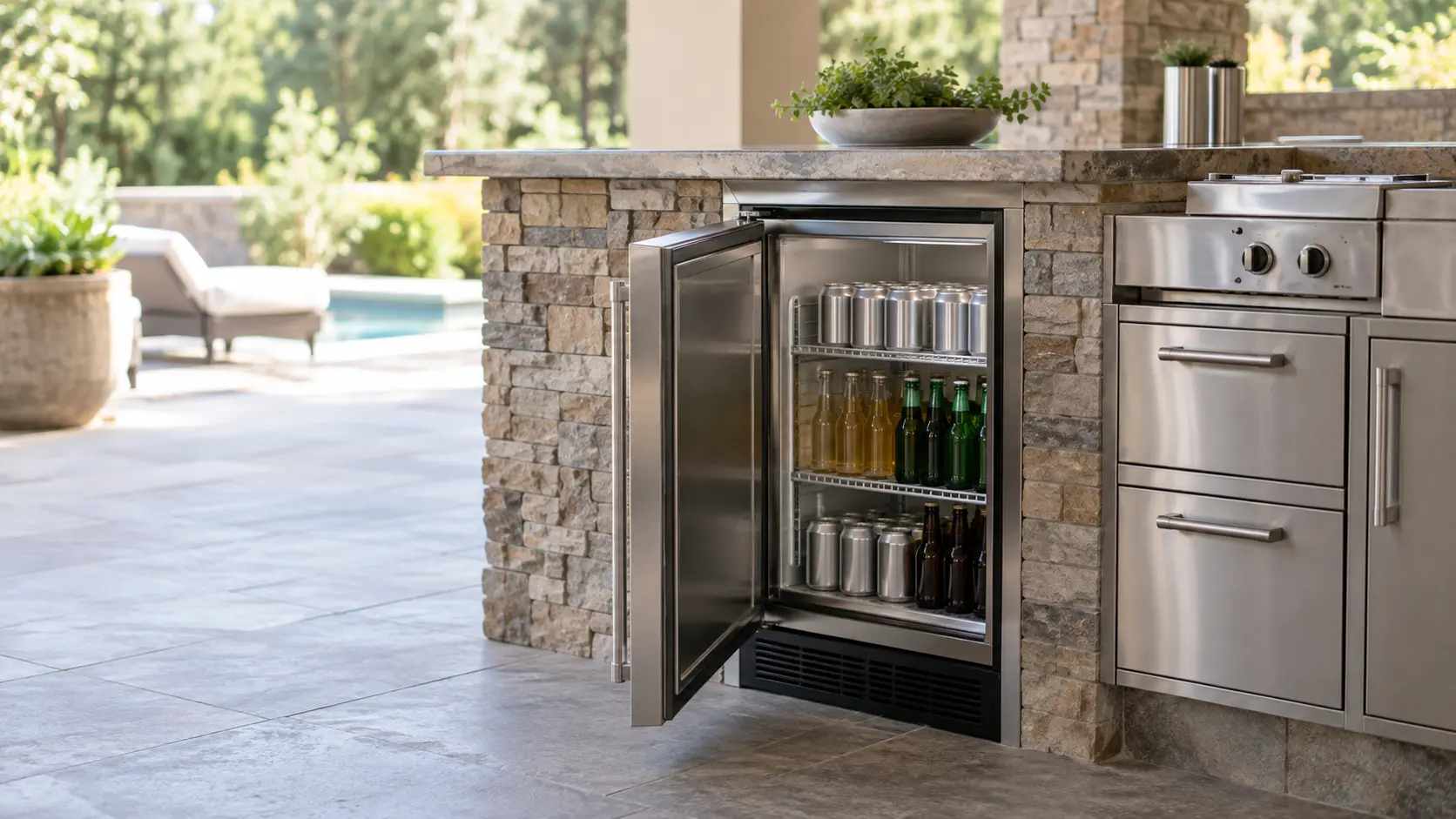
Outdoor kitchen cooler
An outdoor-rated refrigerator, cold drawer or kegerator built under the island counter, sealed and vented to keep drinks cold through patio heat, sun and blowing rain.
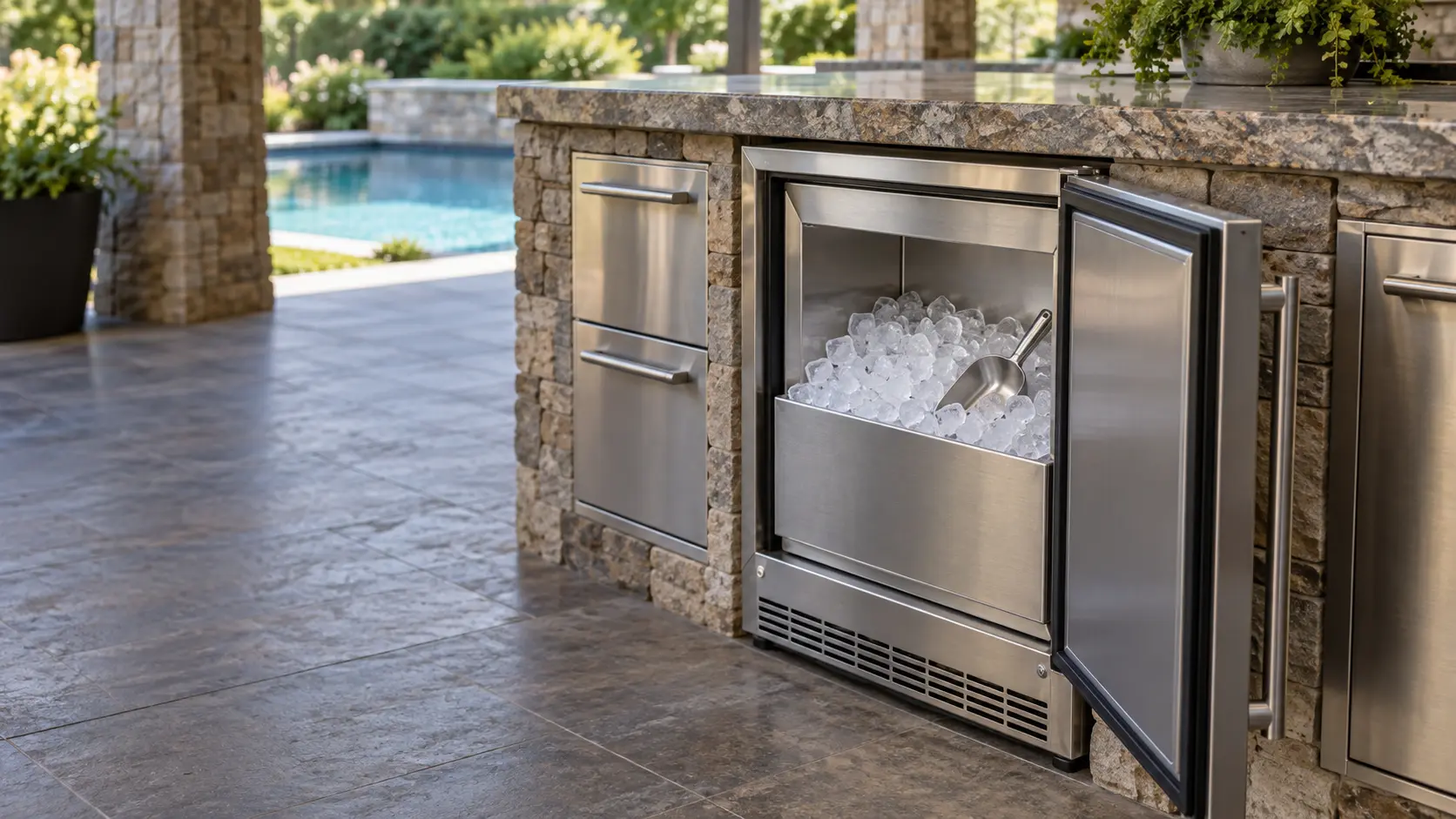
Outdoor ice maker
An outdoor-rated ice maker built into the island that turns a garden water line into clear cubes, with a drain or a drain pump beneath it and a sealed stainless cabinet.
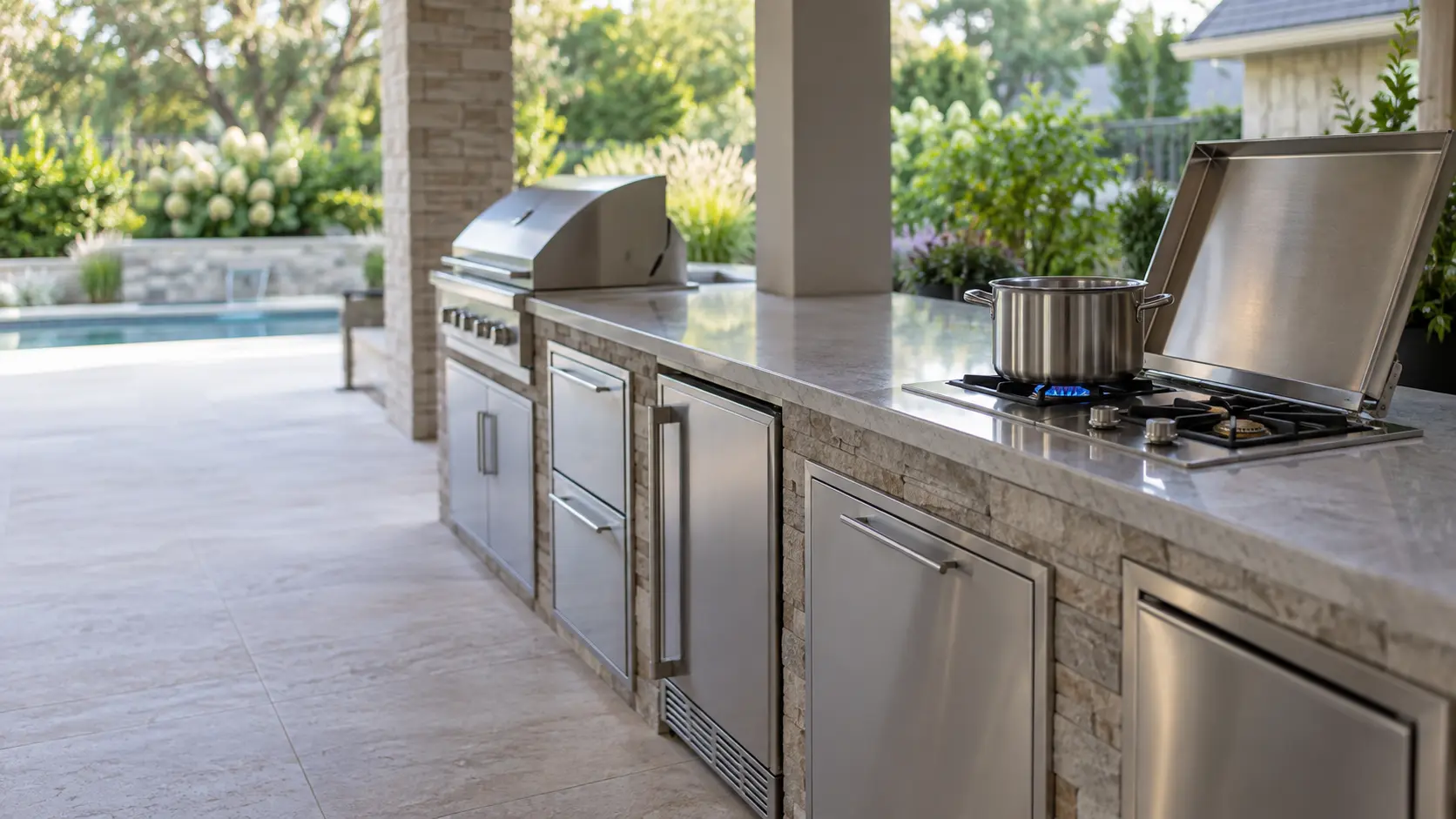
Side and power burner
A single or double gas burner set into the island counter beside the main cooking head, for a pot of corn or a wok, from a gentle simmer to a high-output power burner.
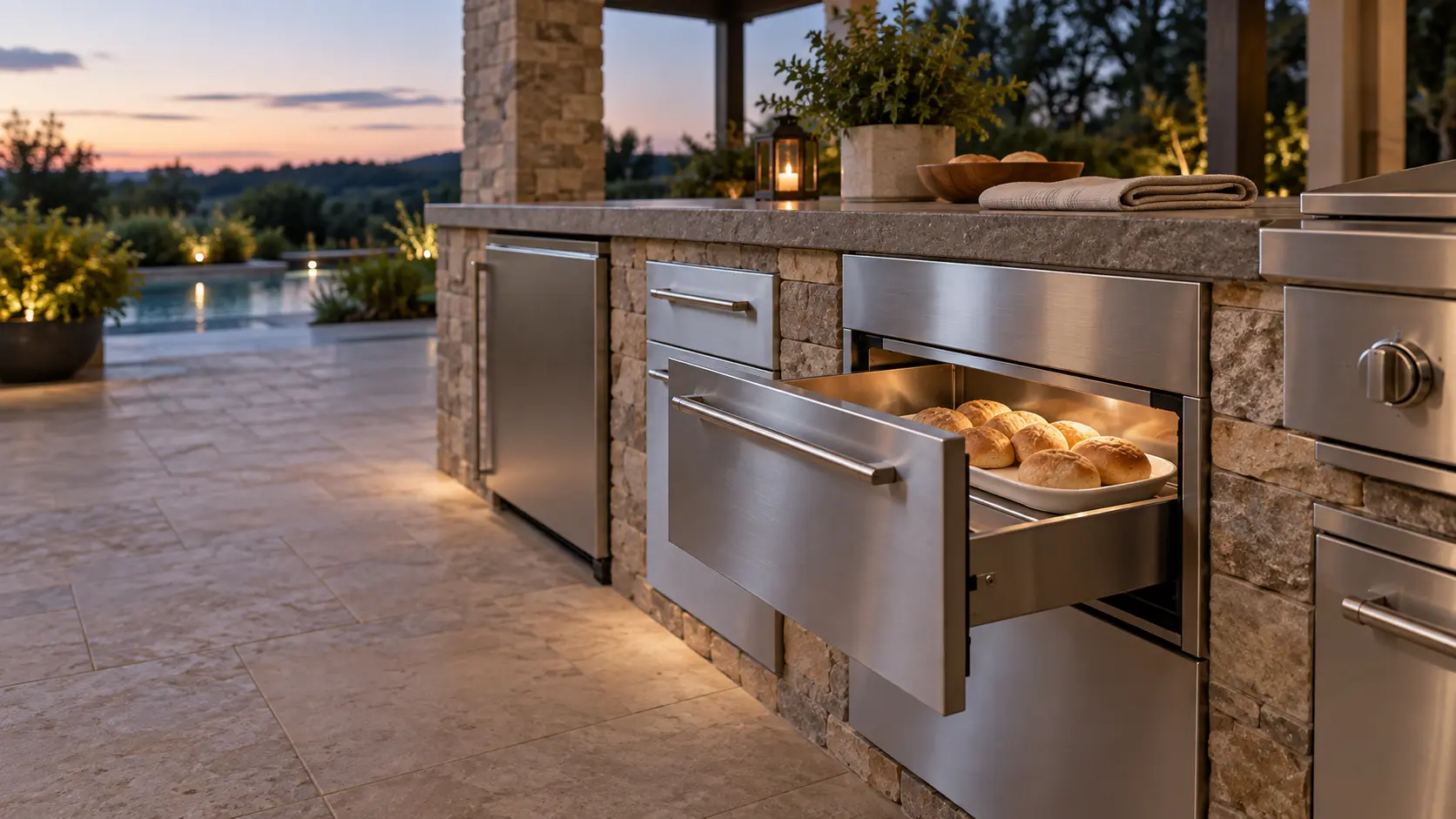
Outdoor warming drawer
An electric stainless drawer built into the island to hold plates and cooked food warm, with a sealed heating element, a thermostat and a gasket built to shed rain.
Every kind we serviceAll outdoor kitchens, side by side
The archive puts the 4 types against each other: how to tell which you own, what fails on each, and which manufacturers build them.
How to tell yoursWhat fails on eachWho makes them Open the type archiveA cooler that holds cold at noon.
A side burner that catches on one click.
Maybe the outdoor cooler runs warm by midafternoon, the ice maker has left the bin half full since spring, a side burner clicks and clicks without catching, the flame burns tall and yellow, the warming drawer stays cool, or something has been chewing on the wiring inside the island. Start from the sign you noticed last; its page follows that sign to the parts it usually points at and only at the very end asks if you want a technician.
 All 17 problems
Gas Smell at the Outdoor Kitchen Island: Shut It Down First
An outdoor kitchen gas smell is the rotten-egg odor of propane or natural gas hanging around a side burner, seeping from the island doors, or rising from the vents low on the island wall.
Fire Under the Counter or Inside an Outdoor Kitchen Island
An outdoor kitchen island fire is flame where it has no business being: below a side burner, licking out of the knob panel, inside the cabinet doors, or a pan of oil burning on the power burner.
Hot Wire or Burning Smell Around an Outdoor Kitchen
An outdoor kitchen burning smell can be sharp and electrical like hot plastic from the cooler grille or an outlet, or smoky and sour from a warming drawer, a burner box or something smoldering in the island.
Outdoor Kitchen GFCI Keeps Tripping When It Rains
An outdoor kitchen GFCI keeps tripping when the cooler and warming drawer go dark after a storm, a sprinkler run or a hose-down, or the moment the pool pump starts on the same circuit.
Outdoor Kitchen Cooler Not Cooling on a Warm Patio
An outdoor kitchen cooler not cooling holds soda and beer barely chilled, lets the kegerator pour foamy, or leaves a cold drawer at cellar warmth by the time guests arrive.
Outdoor Kitchen Cooler Freezing Cans on Cool Nights
An outdoor kitchen cooler freezing drinks leaves bottles slushy in the morning, cans domed or split at the seam, and a kegerator line that will not pour until noon.
Familiar brands. Expert care.
For the brands
in your backyard.
Independent repair service. Not affiliated with, authorized or endorsed by any manufacturer. Brand names and model numbers are the property of their respective owners and are used here for identification only, to describe the appliances we service.
What a repair
usually costs.
Weigh the repair against what a new outdoor-rated unit would really cost you, set into the island, connected to its gas or its outlet and tested, not only its catalog price. Every cutout in an island is sized for the unit in it, and outdoor models cost well above their indoor cousins, which tips almost every job toward repair. Burner cleaning, igniters, gaskets, drains, elements and a gas check are small next to a new unit, and a control or a fan is usually still worth it. The real exception is a cooler or an ice maker whose compressor has failed on a cabinet that salt air or pool water has rusted through: there the technician puts both totals side by side and the choice is yours.
| Repair | Relative cost | Notes |
|---|---|---|
| Condenser cleaning, fan motor, gasket, sensor, control or compressor on an outdoor cooler | moderate to highest | A grille and coil cleaned of webs and pollen, or a new door gasket, sits low in this band. A condenser fan, a sensor or a control is a step higher, and a compressor or a leak found and repaired in the sealed system of an outdoor-rated unit is the dearest cooling work in the island. |
| Descaling and sanitizing, inlet valve, drain pump and condenser work on an outdoor ice maker | low to moderate | A descaling and sanitizing with the drain cleared is the lighter end. A new inlet valve, a drain pump with its float, or a water line cracked by a freeze and replaced moves the job up a step. |
| Venturi and orifice cleaning, burner head, air shutter set on a side or power burner | low to moderate | Clearing a nest from the venturi and setting the flame costs little beyond the visit. A new burner head, an orifice changed to suit the gas, or a power burner with several rings and heat shields to go through adds parts and time. |
| Igniter module, electrode, ignition wire, thermocouple or burner valve | low to moderate | A fresh spark module or a new electrode costs the least here. A wire run behind the front panel, a thermocouple or flame sensor, or a burner valve replaced and leak-checked sits higher in the band. |
| Heating element, thermostat or control, wiring and slides on a warming drawer | low to moderate | A thermostat or a sealed terminal is modest. A new element, a control board, or wiring replaced after rodents chewed it, with rusted slides changed on the same visit, is the fuller job. |
| Gas supply check, connector, fitting or regulator replacement and vent clearing | low | A full leak check from the tank or the house line to every burner, with the vents cleared, is a short job. A new flexible connector, a fitting or a regulator adds a small part and a second round of leak testing. |
| GFCI trip traced, wet connectors sealed, chewed or heat-damaged cords replaced | low to moderate | Finding the unit that trips the outlet and drying and sealing a wet connector is the lighter end. Replacing cords and leads chewed through in several units, or a compressor lead cooked by heat, takes longer and costs a step more. |
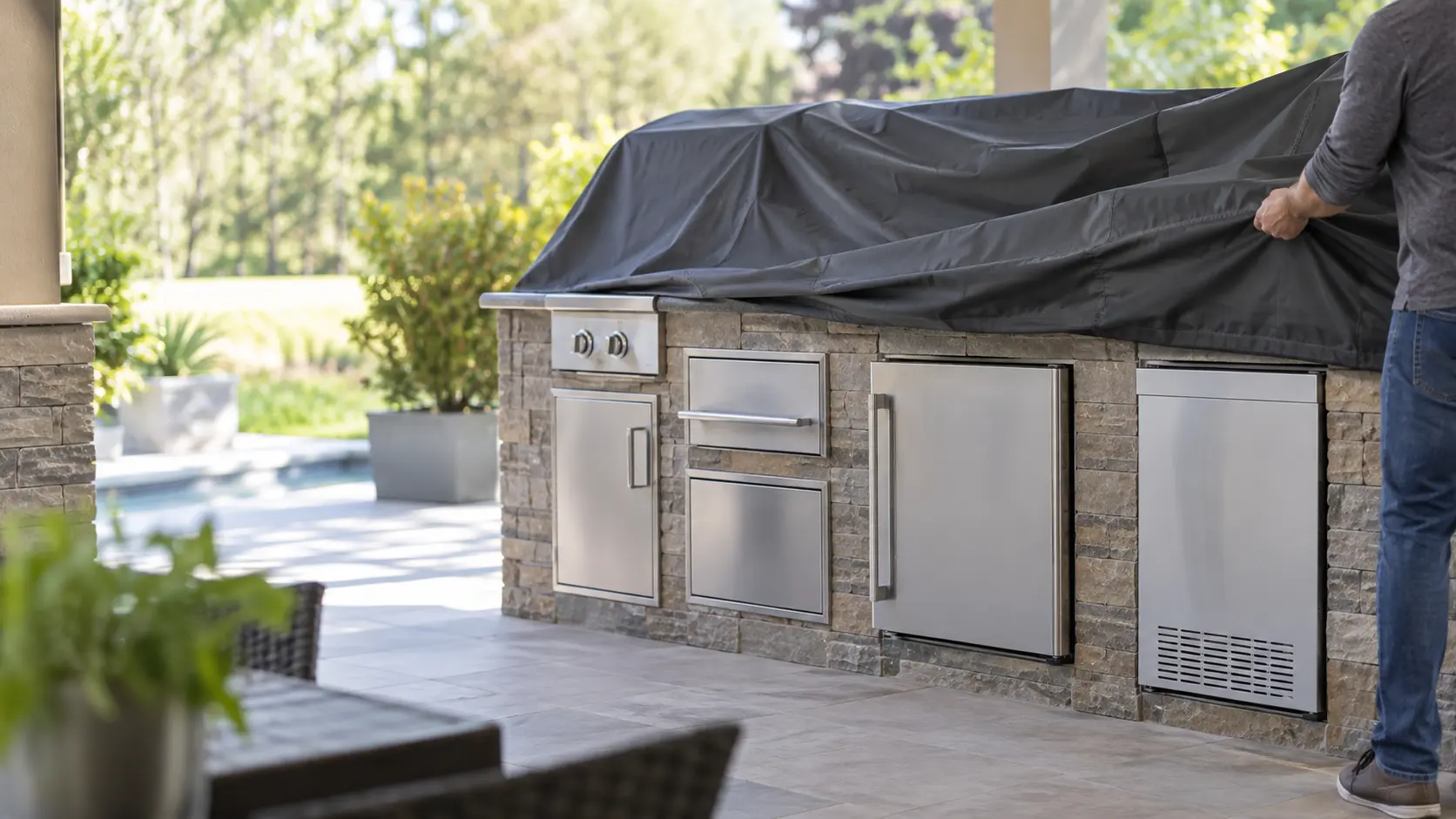
| Fall winterizing or spring startup of the whole island | lowest | Draining the ice maker and shutting the island down, or waking it in spring with the gas leak-checked and every unit started, is the smallest job here. Anything found cracked by frost or chewed over the winter is priced as its own repair. |
| Stainless cleaning and treatment, door gaskets, hinges, slides and screws | low to moderate | Cleaning and treating light staining on fronts and doors sits low in the band. New gaskets on several doors, hinges that no longer close them, or drawer slides and screws that have rusted through make the fuller job. |
9 metros,
one appliance.
The yard around an outdoor kitchen decides what wears it out: salt air that pits stainless within sight of the water, pool chemicals drifting onto the doors, afternoon sun baking a cooler's condenser, desert heat, lake-effect winters that split an undrained water line, wind off a bay that blows burners out. Each note is about the outdoor kitchens in one town and the weather they get, and leaves the sights to the travel guides.
All service areasTampa BayFL · 31 areas
Tampa Bay's outdoor kitchens sit on lanais, pool decks and bayfront patios used almost all year, facing salt air, strong sun and frequent summer lightning that can damage controls and GFCIs. The 2024 storms, Helene's surge and Milton's winds, showed why the gas is closed and the power switched off before a hurricane, and why a flooded island is checked dry before anything runs again.
OrlandoFL · 30 areas
Greater Orlando's outdoor kitchens stand under screened pool cages at houses and vacation rentals, sheltered from the coasts' salt but not from daily summer storms and some of the most frequent lightning in the country. Many homes here are used only part of the year, so outdoor coolers and ice makers sit idle between guests and need cleaning, and propane is common where natural gas lines do not reach.
Miami / South FloridaFL · 47 areas
South Florida's outdoor kitchens run all year on pool decks, lanais and tower terraces, in salt air, strong sun and heavy afternoon rain. Hurricane season shapes the calendar: the gas is closed and the power switched off before a storm, and nothing is turned on again until it is checked dry. Many owners leave for the summer, so shutdown and startup here happen in spring and fall rather than around a winter freeze.
New York MetroNY · 75 areas
New York's outdoor kitchens range from rooftop terraces in Manhattan to backyard islands in Queens, on Long Island and in the suburbs, and every one of them needs winterizing: draining the ice maker, emptying the cooler and covering the burners. City fire rules restrict propane cylinders on terraces and roofs, so many rooftop kitchens run on piped natural gas, and elevators and building staff shape every visit.
HoustonTX · 36 areas
Greater Houston uses its outdoor kitchens most of the year in heat and heavy humidity, which rusts hinges, fogs controls and keeps a cooler's compressor working hard. Natural gas is common in backyards here, fire ants nest in outdoor electrical boxes, and storms bring long outages, as Beryl did in 2024, while a rare hard freeze like February 2021's can split an outdoor ice maker's water lines.
ChicagoIL · 50 areas
Chicagoland's outdoor kitchens live through a short, intense season and a long freeze, from Gold Coast terraces to suburban yards across the region. The fall winterizing, which drains the ice maker and its lines, empties the cooler and closes the gas, decides how spring goes, and wind off Lake Michigan tests every side burner. Rodents seek warmth inside a closed island, so spring startup looks for chewed wiring.
Los AngelesCA · 95 areas
Greater Los Angeles cooks outside in every month, from pool islands in the Valley to terraces on the Westside, and its climate asks two things of an outdoor kitchen: coping with heat waves and dry Santa Ana winds inland, and with salt air by the coast. The region is a seismic zone and fire weather brings planned power shutoffs, so a flexible gas connector and clear island vents matter here as much as any part.
San DiegoCA · 31 areas
San Diego's outdoor kitchens work in a mild climate most of the year, on coastal patios under the marine layer and in hotter inland yards. Salt air pits stainless near the beaches, Santa Ana winds bring dust and fire weather, and planned power shutoffs in the backcountry can leave an outdoor cooler warm. The county is a seismic zone, so a flexible gas connector belongs at every island.
San Francisco Bay AreaCA · 74 areas
Bay Area outdoor kitchens span foggy city decks, warm Peninsula and South Bay yards and hot inland valleys, and each climate wears the island in its own way: damp and salt near the water, heat and dust inland. The region is a seismic zone, so a flexible gas connector at the island matters, and when fire weather brings planned power shutoffs, the outdoor cooler and ice maker go warm and need checking once power returns.

Answers before
you book.
Guests are coming this weekend. How soon can someone look at the outdoor kitchen?
Do you repair the appliances in my outdoor kitchen?
How do I get the outdoor kitchen ready for the visit?
What does an outdoor kitchen repair usually cost?
Our outdoor kitchen has seen a lot of summers. Is a repair still worth it?
I smell gas near the side burner. What do I do first?
Work out what
you are dealing with.
Split by what you are trying to find out rather than by what part of the appliance it concerns.
All 27 guides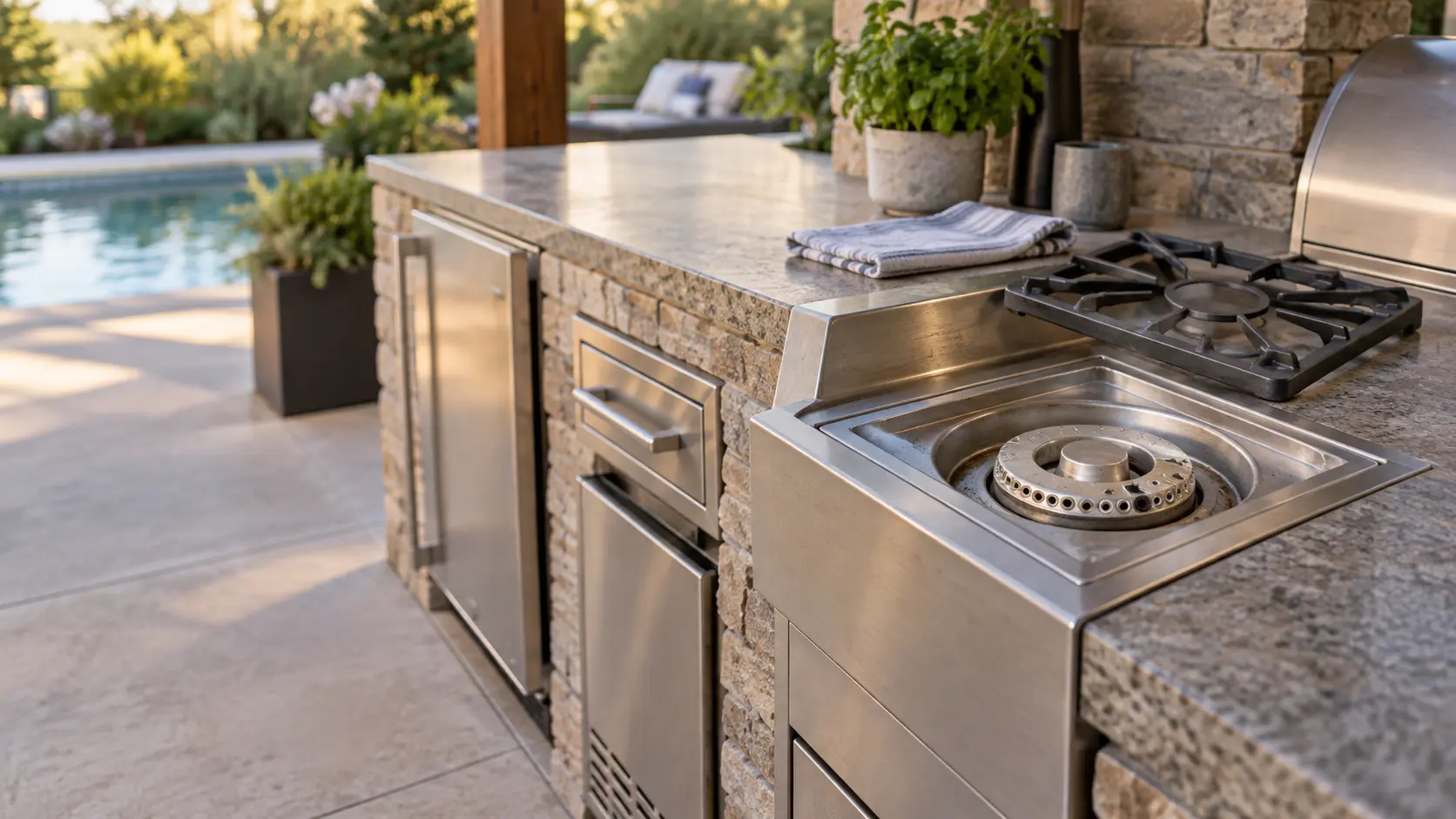
Wondering what the bill might come to? That has a page of its own, because no fair number exists until someone has watched the unit run out in the yard — outdoor kitchen repair cost.
Back to your everyday
Let’s get your outdoor kitchen working again.
Three short steps, a window that suits you, and a price for the actual repair before any work starts.