
Outdoor Kitchen Winterizing and Spring Startup
The island drained and shut down before the first freeze, then woken in spring with gas, power, burners, the cooler and the ice maker checked.
Mon–Sat, 8am–8pm
- Lowest cost band
- 5 steps on the visit
- 4 problems it answers
Book a visit
Three short steps, about a minute.
or call (844) 449-0269
Loading appointment form…
The appointment form couldn’t load. Please try again.
What the outdoor kitchen winterizing and spring startup
involves.
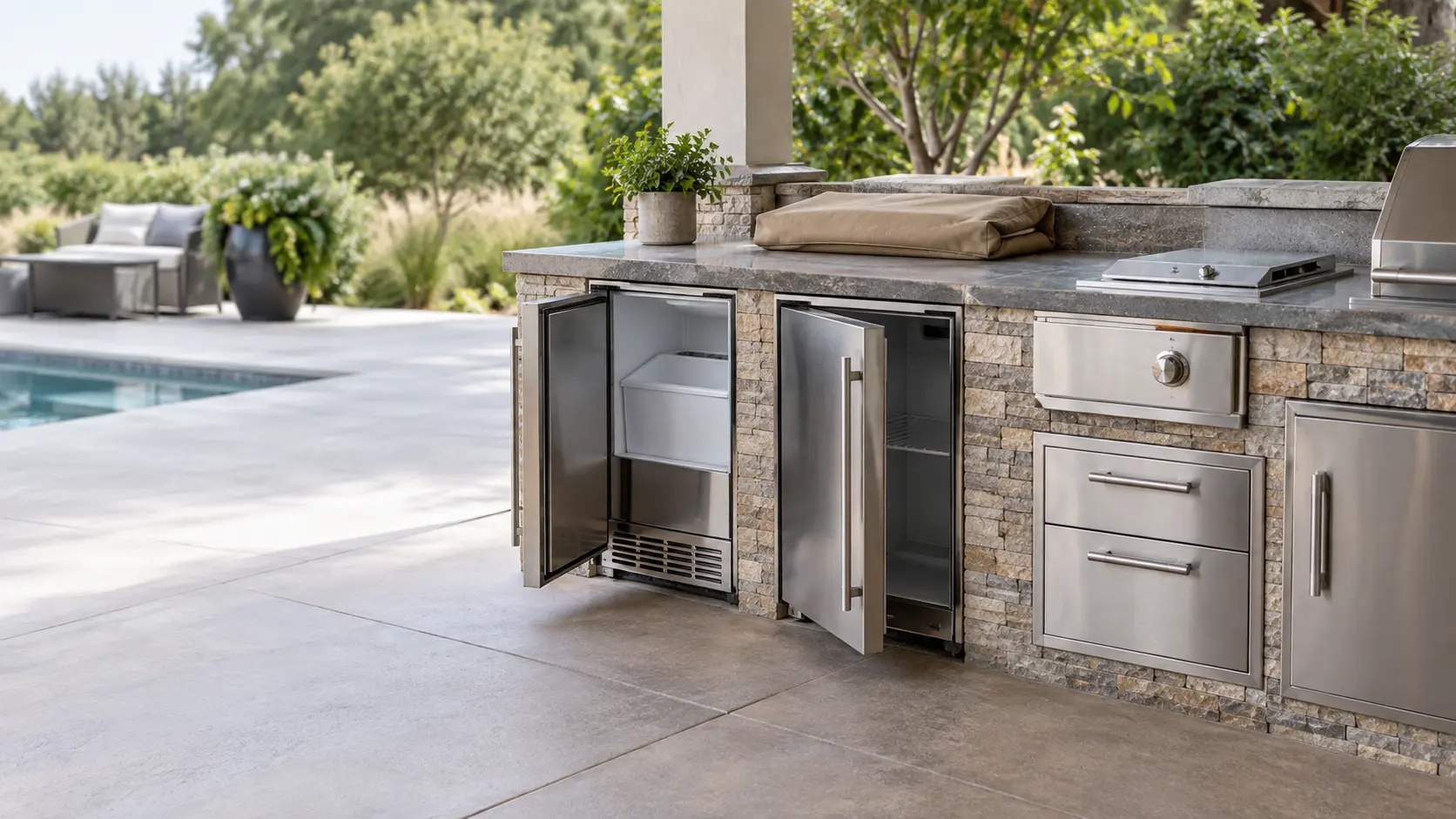
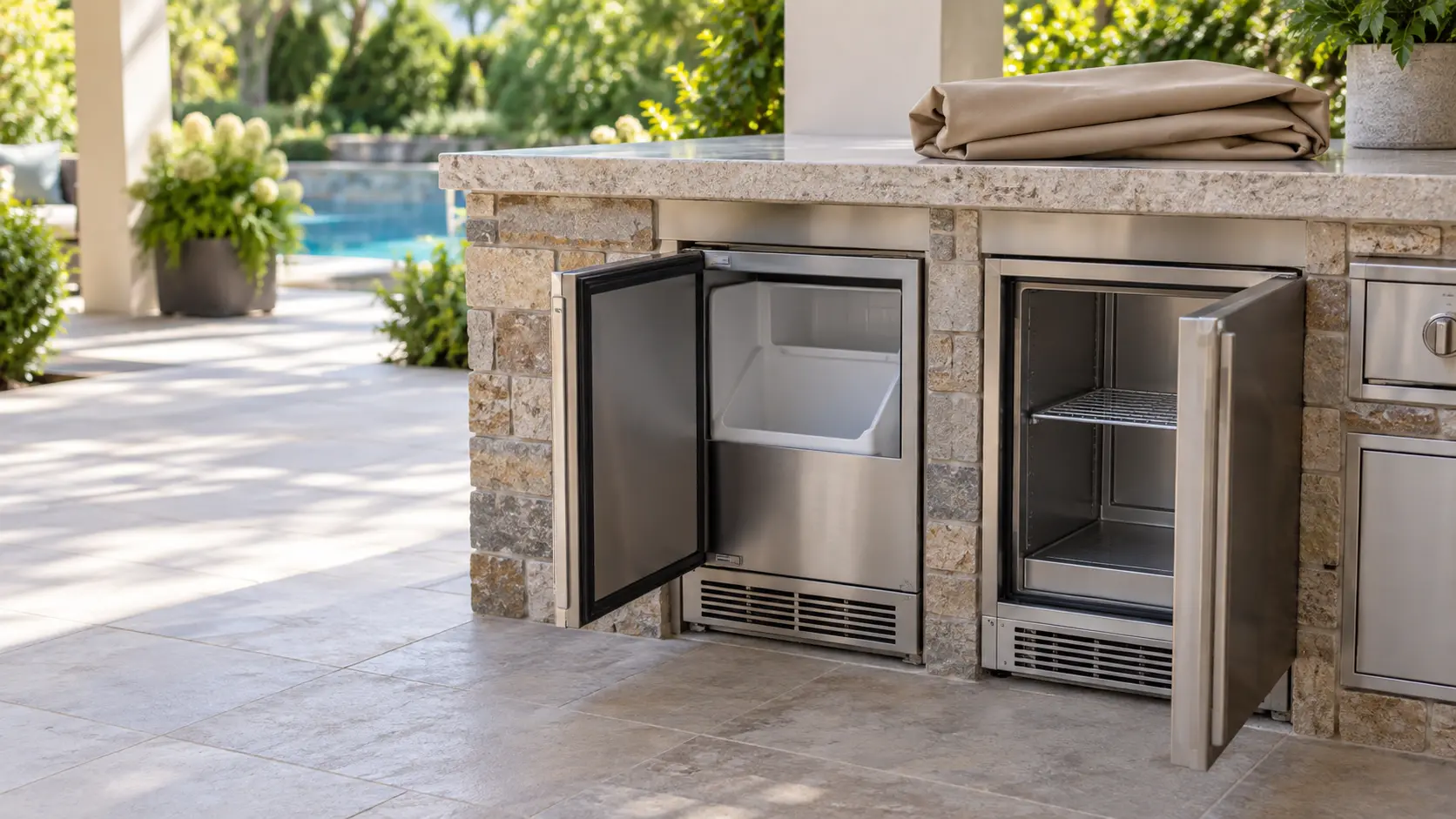
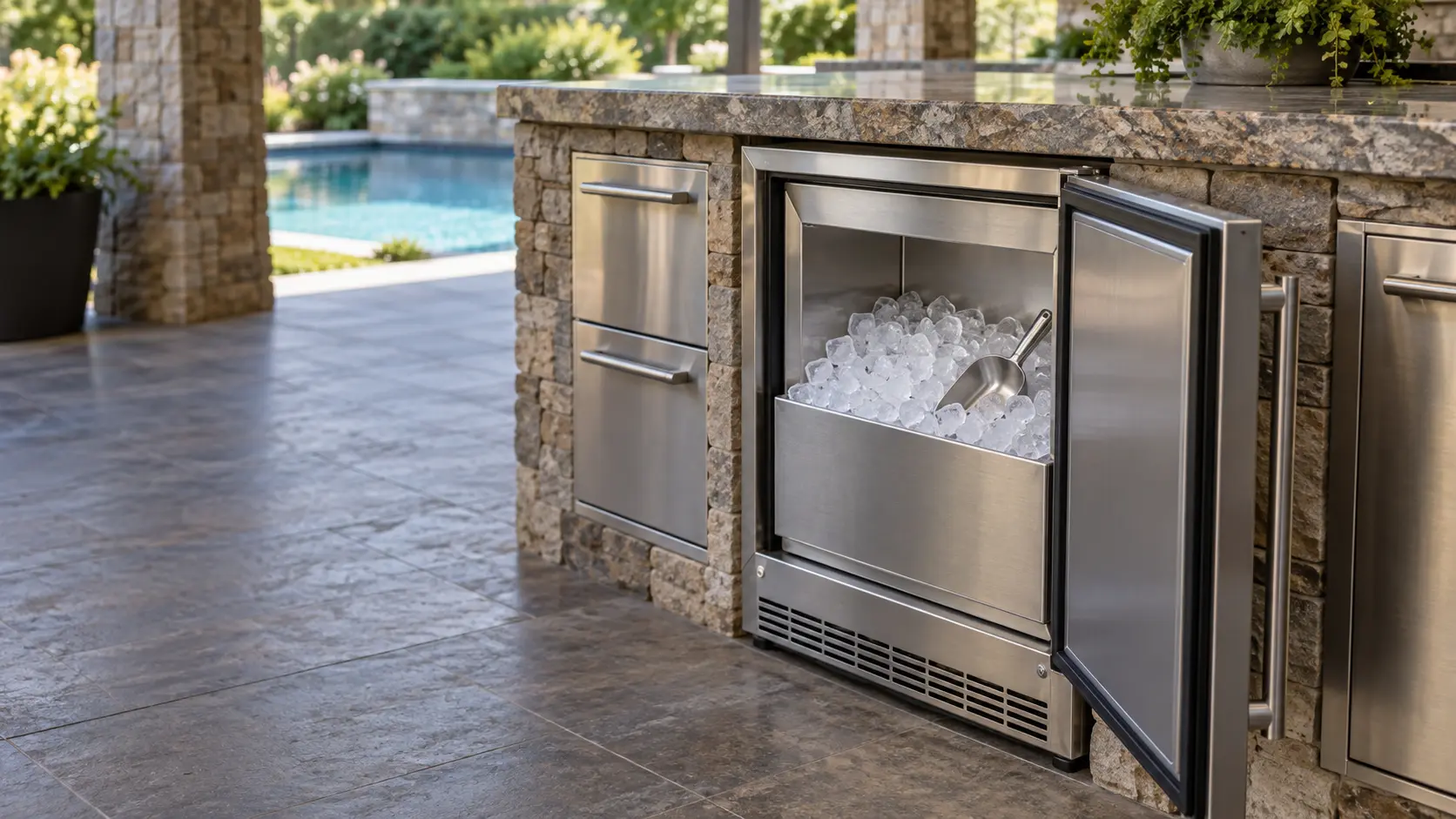
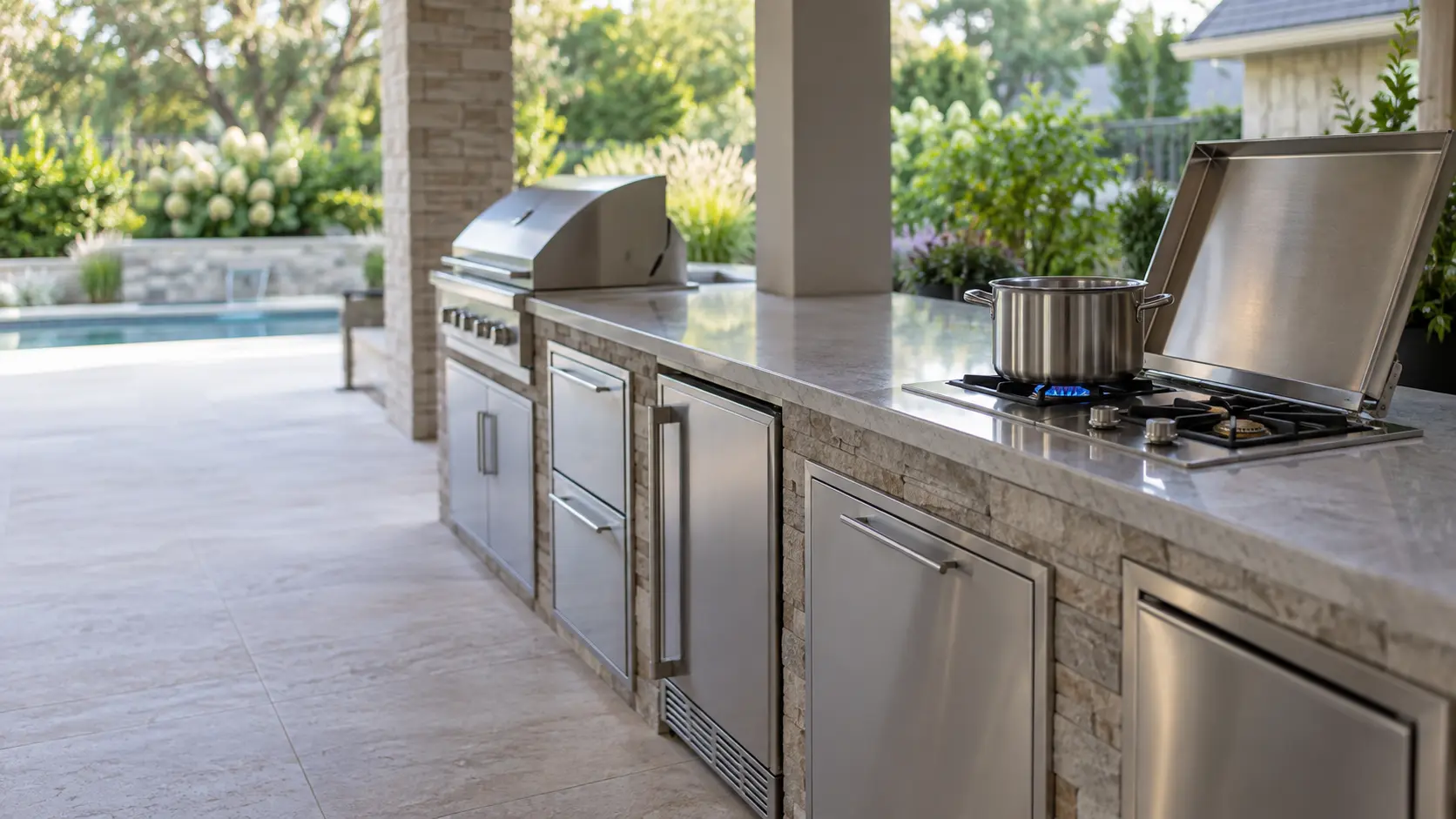
An outdoor kitchen that sees freezing nights needs to be put to sleep and woken up again, and most spring repair calls come from one of those two steps being skipped. In the fall, the ice maker's water is shut at its valve and the line, the inlet valve, the water plate, the pump and the drain are emptied, so nothing is left to freeze and split. The outdoor cooler is emptied, unplugged if the maker asks for it, dried and left with its door propped. The warming drawer is unplugged and left slightly open. The gas is closed at the tank or the shutoff, a tank is disconnected and stored as the maker and local rules say, and burner openings are covered so insects do not move in. In spring the order runs backward and checks as it goes: the island opened and looked over for nests, droppings and chewed wires; the gas reconnected and every joint leak-checked; each burner cleaned of webs in its venturi and lit; the GFCI outlet tested and the units plugged in one by one; the cooler brought down to temperature and the ice maker filled, sanitized and run through a first batch that is thrown away. Anything that froze or was chewed is found before the first party, not during it.
How the visit goesWhat it usually costsLowest · Fall winterizing or spring startup of the whole island
Draining the ice maker and shutting the island down, or waking it in spring with the gas leak-checked and every unit started, is the smallest job here. Anything found cracked by frost or chewed over the winter is priced as its own repair.
Answers 4 problemsOutdoor Kitchen Freeze Damage Found at Spring Start-Up
Rodents Nesting in the Outdoor Kitchen Island · Outdoor Ice Maker Not Making Ice After Winter or in Heat · Side Burner Won't Light on the Outdoor Kitchen Island
Comes up most onOutdoor kitchen cooler
Outdoor ice maker · Side and power burner · Outdoor warming drawer
Outdoor kitchen winterizing and spring startup,
step by step.
Power the cooler and the ice maker, sanitize the ice maker, discard its first batch, and confirm every unit works.
In the fall: shut and drain the ice maker's water, and empty its line, valve, pump and drain.
Empty, dry and prop open the cooler, unplug the warming drawer, and close or disconnect the gas.
In spring: open the island, look for nests, droppings, chewed wires and anything cracked by frost.
Reconnect and leak-check the gas, clear each burner's venturi and light it, and test the GFCI outlet.
Power the cooler and the ice maker, sanitize the ice maker, discard its first batch, and confirm every unit works.
The problems
it answers.
4 of them, from outdoor kitchen freeze damage found at spring start-up to side burner won't light on the outdoor kitchen island.
All problems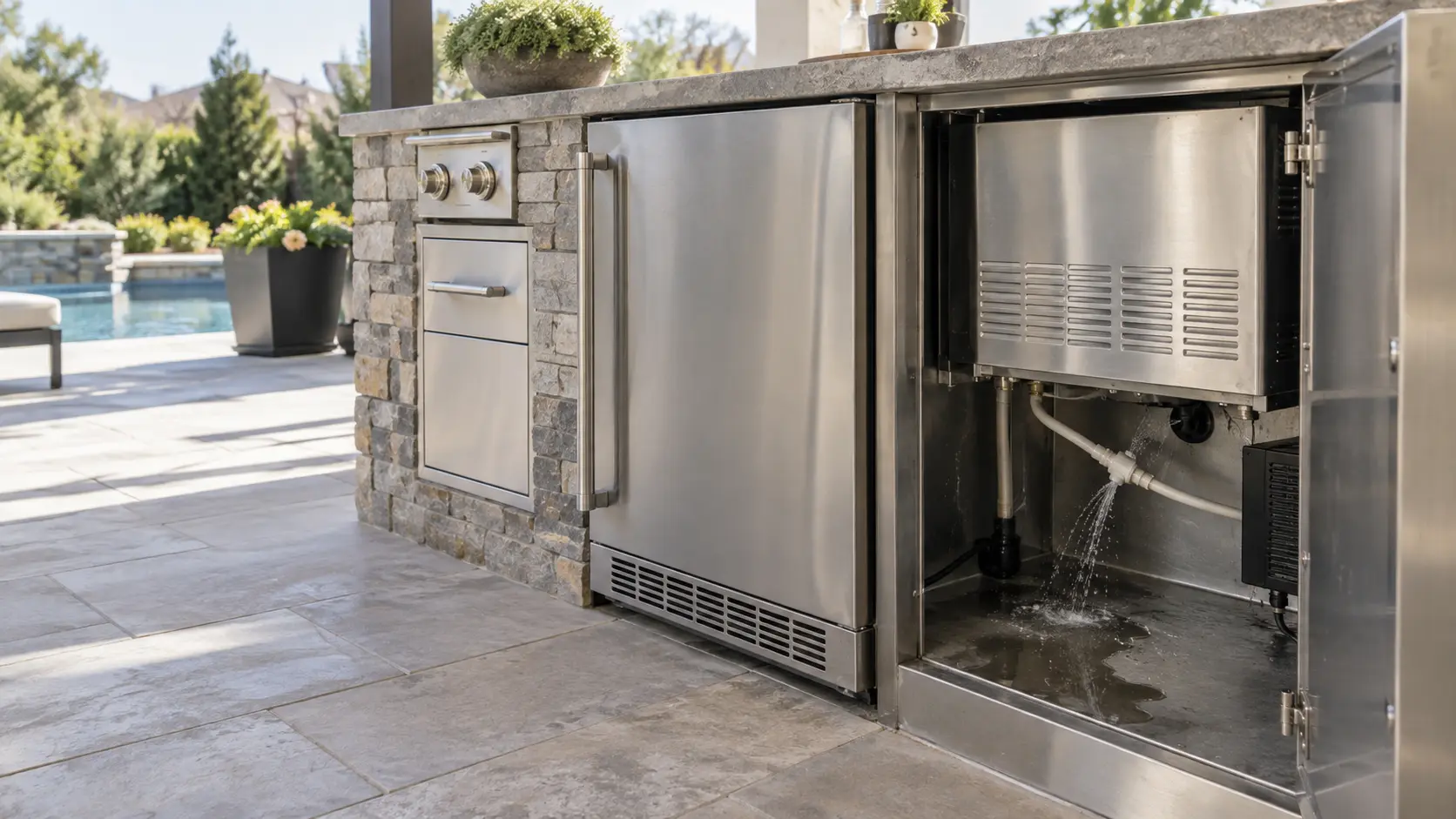
Outdoor Kitchen Freeze Damage Found at Spring Start-Up
5 causes, cheapest first
Before you call
Tell us this when you book
- How cold your winters get and whether the island has a cover or a roof
- Which units the island has, and whether the ice maker has a drain pump
- Whether the gas is a tank or the house line
- Whether the island was winterized last year, and by whom
It also answers
Lowest,
on the site's scale.
Draining the ice maker and shutting the island down, or waking it in spring with the gas leak-checked and every unit started, is the smallest job here. Anything found cracked by frost or chewed over the winter is priced as its own repair.
Read the full cost guideWhere it
comes up most.
Most bookings: Outdoor kitchen cooler, Outdoor ice maker, Side and power burner, Outdoor warming drawer.
All outdoor kitchen typesOften the same visit
The makes
we see it on.
22 makes on this site, and the outdoor kitchen winterizing and spring startup on any of them. Each mark opens that make's own page.
All 22 brandsOutdoor kitchen winterizing and spring startup,
where we come out.
The backyard, the climate and the building all change how the outdoor kitchen winterizing and spring startup goes. These notes are about that, metro by metro.
All service areasTampa BayFL · 31 areas
Tampa Bay rarely freezes hard, but a cold snap now and then can split the water line to an outdoor ice maker, so seasonal service here drains whatever holds water before a freeze warning and restarts and cleans every unit when the owner returns.
OrlandoFL · 30 areas
Orlando owners of seasonal and rental homes use this service when they leave and when they return: the technician shuts the island down, empties and props open the cooler and ice maker, closes the gas, and later brings everything back into service.
Miami / South FloridaFL · 47 areas
In South Florida the season runs backward: owners who leave for the summer have their outdoor kitchen shut down in spring, the gas closed and the cold units emptied before hurricane season, and started up again when they come back in the fall.
New York MetroNY · 75 areas
New York rooftop and backyard islands need a real winterizing each fall, draining the ice maker and its lines, emptying and unplugging the cooler and covering the burners, followed by a spring startup that checks for split fittings and cracked seals.
HoustonTX · 36 areas
Houston winters are mild, but a hard freeze like the one in February 2021 can burst an outdoor ice maker's lines, so this service here drains the water side before a freeze warning and restarts it after, rather than closing the kitchen for months.
ChicagoIL · 50 areas
Chicagoland winterizing is the one service no outdoor kitchen here should skip: the ice maker and its valve are drained and blown clear, the cooler is emptied and unplugged, the gas is closed, and spring startup finds anything the frost still reached.
Los AngelesCA · 95 areas
Los Angeles rarely needs winterizing, but coastal and canyon homes that close for part of the year use a seasonal shutdown to drain the ice maker and empty the cooler, and a startup that cleans both and relights the burners after a dusty fall.
San DiegoCA · 31 areas
In San Diego seasonal service is less about frost and more about a house left empty, so the shutdown drains and dries the ice maker and cooler, closes the gas and covers the island, and the startup cleans, checks and restarts each unit.
San Francisco Bay AreaCA · 74 areas
Bay Area outdoor kitchens rest through the rainy months more than through frost, so a seasonal shutdown covers and dries the island and drains the ice maker in colder inland valleys, and a spring startup checks for rust, damp controls and nesting pests.

Questions about
the outdoor kitchen winterizing and spring startup.
When should an outdoor kitchen be winterized?
Is it enough to just unplug everything for the winter?
What if I find a nest in the island in spring?
Back to your everyday
Ready to book the outdoor kitchen winterizing and spring startup?
Have these to hand: how cold your winters get and whether the island has a cover or a roof, which units the island has, and whether the ice maker has a drain pump, whether the gas is a tank or the house line, whether the island was winterized last year, and by whom.