
Outdoor Kitchen Gas Connection Check
The island's gas supply checked from the tank or house line to each burner: shutoff, regulator, connectors, vents and every joint, leak-tested.
Mon–Sat, 8am–8pm
- Low cost band
- 5 steps on the visit
- 4 problems it answers
Book a visit
Three short steps, about a minute.
or call (844) 449-0269
Loading appointment form…
The appointment form couldn’t load. Please try again.
What the outdoor kitchen gas connection check
involves.
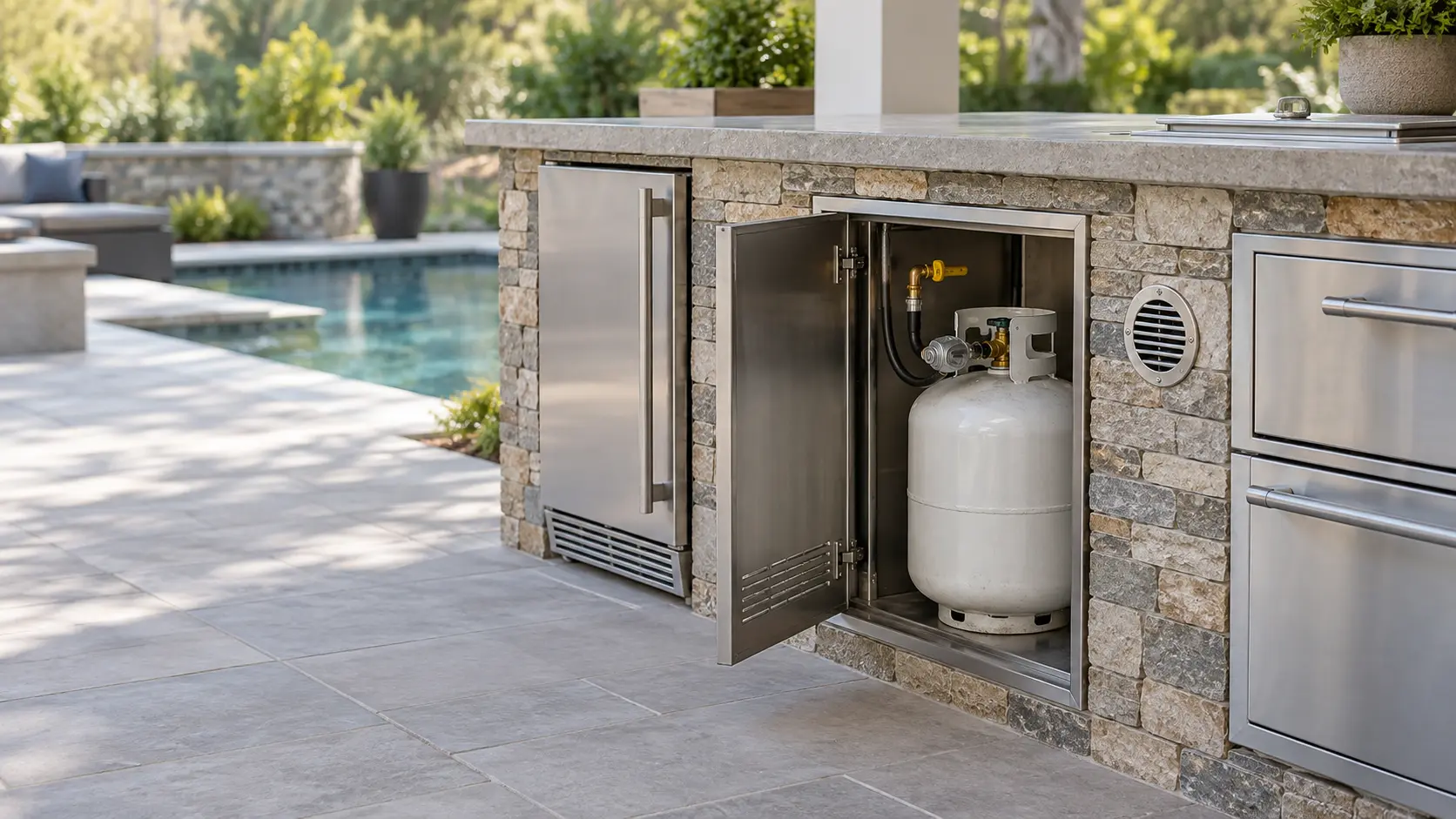
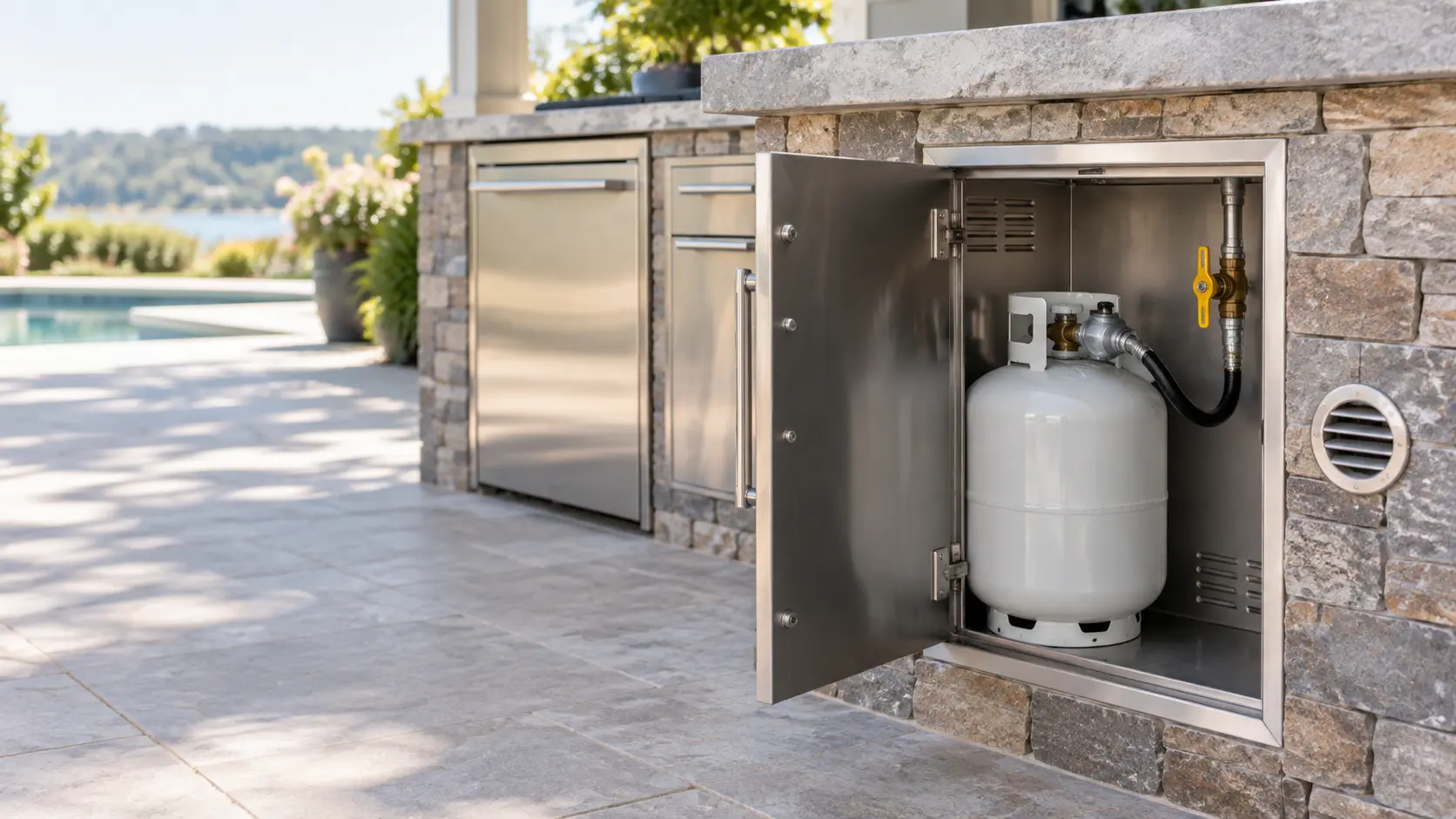
Every burner in an outdoor kitchen shares one gas supply, and the island around it is a closed box that can hold gas unless it is vented. This check follows that supply end to end. It starts at the source: a propane tank, its valve, its hose and the regulator on it, or the house line with its own shutoff where it enters the island. Inside the island the technician looks at the manifold, the flexible connectors to each burner valve and how they are routed, since a connector that sags onto a hot surface or rubs on a sharp edge wears through. Every joint is leak-tested with an electronic detector or the soapy solution the maker allows, never with a flame. The island's vents, usually low on opposite sides because propane is heavier than air, are checked for being present, open and clear of leaves, mulch and nests. A tank stored inside the island is checked for its own vented space, as the maker requires. The regulator's output is confirmed where the burners show a weak flame, and a leaking fitting, a worn connector or a failed regulator is replaced. You get a written note of what was checked and what, if anything, needs changing.
How the visit goesWhat it usually costsLow · Gas supply check, connector, fitting or regulator replacement and vent clearing
A full leak check from the tank or the house line to every burner, with the vents cleared, is a short job. A new flexible connector, a fitting or a regulator adds a small part and a second round of leak testing.
Answers 4 problemsGas Smell at the Outdoor Kitchen Island: Shut It Down First
Side Burner Flame Weak, Lazy or Yellow Outdoors · Fire Under the Counter or Inside an Outdoor Kitchen Island · Rodents Nesting in the Outdoor Kitchen Island
Comes up most onSide and power burner
Outdoor kitchen gas connection check,
step by step.
Replace a leaking fitting, a worn connector or a failed regulator, and test the burners again.
Start at the tank or the house line: its valve or shutoff, the hose and the regulator.
Open the island and follow the manifold and every flexible connector to its burner valve.
Leak-test each joint with a detector or the maker's soapy solution, never a flame.
Check that the island's vents are there, open and clear, and that a tank inside has its own vented space.
Replace a leaking fitting, a worn connector or a failed regulator, and test the burners again.
The problems
it answers.
4 of them, from gas smell at the outdoor kitchen island: shut it down first to rodents nesting in the outdoor kitchen island.
All problems
Gas Smell at the Outdoor Kitchen Island: Shut It Down First
6 causes, cheapest first
Before you call
Tell us this when you book
- Whether the island runs on a tank or the house line, and where its shutoff is
- Whether you have ever smelled gas at the island, and where
- Whether the tank is kept inside the island or beside it
- Any change to the gas lately: a new tank, a new regulator or a conversion
It also answers
Low,
on the site's scale.
A full leak check from the tank or the house line to every burner, with the vents cleared, is a short job. A new flexible connector, a fitting or a regulator adds a small part and a second round of leak testing.
Read the full cost guideWhere it
comes up most.
Most bookings: Side and power burner.
All outdoor kitchen typesOften the same visit

The makes
we see it on.
22 makes on this site, and the outdoor kitchen gas connection check on any of them. Each mark opens that make's own page.
All 22 brandsOutdoor kitchen gas connection check,
where we come out.
The backyard, the climate and the building all change how the outdoor kitchen gas connection check goes. These notes are about that, metro by metro.
All service areasTampa BayFL · 31 areas
Before and after hurricane season, a Tampa Bay gas connection check confirms the island's shutoff works, the tank or the natural gas line is secured, the flexible connector is not cracked by sun and the island vents are open, not buried by plants or debris.
OrlandoFL · 30 areas
Many Orlando outdoor kitchens run on a propane tank tucked into a cabinet or a buried tank shared with the pool heater, and the gas connection check looks at the regulator, the hose or line, the island's shutoff and the vents that let leaking gas escape.
Miami / South FloridaFL · 47 areas
Salt air corrodes brass and steel gas fittings along South Florida's coast, so the connection check on a waterfront island looks closely at the shutoff valve, the regulator and each joint for corrosion and leaks, and at the vents that must stay open.
New York MetroNY · 75 areas
New York fire rules restrict propane cylinders on terraces and rooftops, so outdoor kitchens there usually run on piped natural gas, and the connection check follows the line to the island's shutoff and confirms the island is vented as its maker requires.
HoustonTX · 36 areas
Houston backyards commonly run natural gas to the island, and clay soil that shrinks in drought and swells after heavy rain can strain the line where it enters, so the gas connection check looks at that entry, the shutoff, the regulator and the island's vents.
ChicagoIL · 50 areas
In Chicagoland the gas connection check fits into spring startup, after frost heave may have shifted the patio and strained the line into the island, and the technician checks the shutoff, the flexible connector and each joint before the burners are lit.
Los AngelesCA · 95 areas
In the Los Angeles seismic zone the connection check looks for a flexible gas connector at the island, so a quake can move the island without breaking the line, and confirms the shutoff is easy to reach and the vents are clear of dry leaves.
San DiegoCA · 31 areas
San Diego outdoor kitchens run on both natural gas and propane, and a gas connection check first confirms which fuel the burners were set up for, then inspects the regulator, the connector, the shutoff and the island vents for leaks and blockages.
San Francisco Bay AreaCA · 74 areas
Bay Area islands sit in a seismic zone too, and a gas connection check confirms a flexible connector and a working shutoff at the island, tests each joint for leaks with a proper detector and makes sure the island's vents are open.

Questions about
the outdoor kitchen gas connection check.
Why does an outdoor kitchen island need vents?
How often should the island's gas supply be checked?
Can I leak-test a gas connection myself?
Back to your everyday
Ready to book the outdoor kitchen gas connection check?
Have these to hand: whether the island runs on a tank or the house line, and where its shutoff is, whether you have ever smelled gas at the island, and where, whether the tank is kept inside the island or beside it, any change to the gas lately: a new tank, a new regulator or a conversion.