
Side and Power Burner Repair
A single or double gas burner set into the island counter beside the main cooking head, for a pot of corn or a wok, from a gentle simmer to a high-output power burner.
Mon–Sat, 8am–8pm
- 4 things that fail on it
- 14 makes build it
- 6 problems it shows
Book a visit
Three short steps, about a minute.
or call (844) 449-0269
Loading appointment form…
The appointment form couldn’t load. Please try again.
Is yours
a burner?
A side burner is the island's own open flame for pots and pans. Gas from the tank or the house line reaches it through the island's manifold and its shutoff, passes a control valve behind the knob, and leaves through a small brass orifice into a venturi tube, where it draws in air before it reaches the burner head. A spark igniter, driven by a battery module or a mains-powered module, lights it; some carry a thermocouple or a flame sensor that closes the gas if the flame goes out. A double side burner puts two of these under one lid, and a power burner is the same idea scaled up, a large ring or brass head with far more output for a wok or a stockpot, often with its own grate and wind guard. Outdoors the flame has three enemies. Wind blows a low flame out or pushes it sideways, spiders and insects build nests in the venturi and the orifice so the flame turns weak and yellow, and rain and humidity foul the igniter and its wire until it clicks without lighting. The lid, when fitted, protects all of it and is also a heat trap if it is closed on a burner that is still on.
 What fails on a side and power burner
How to tell
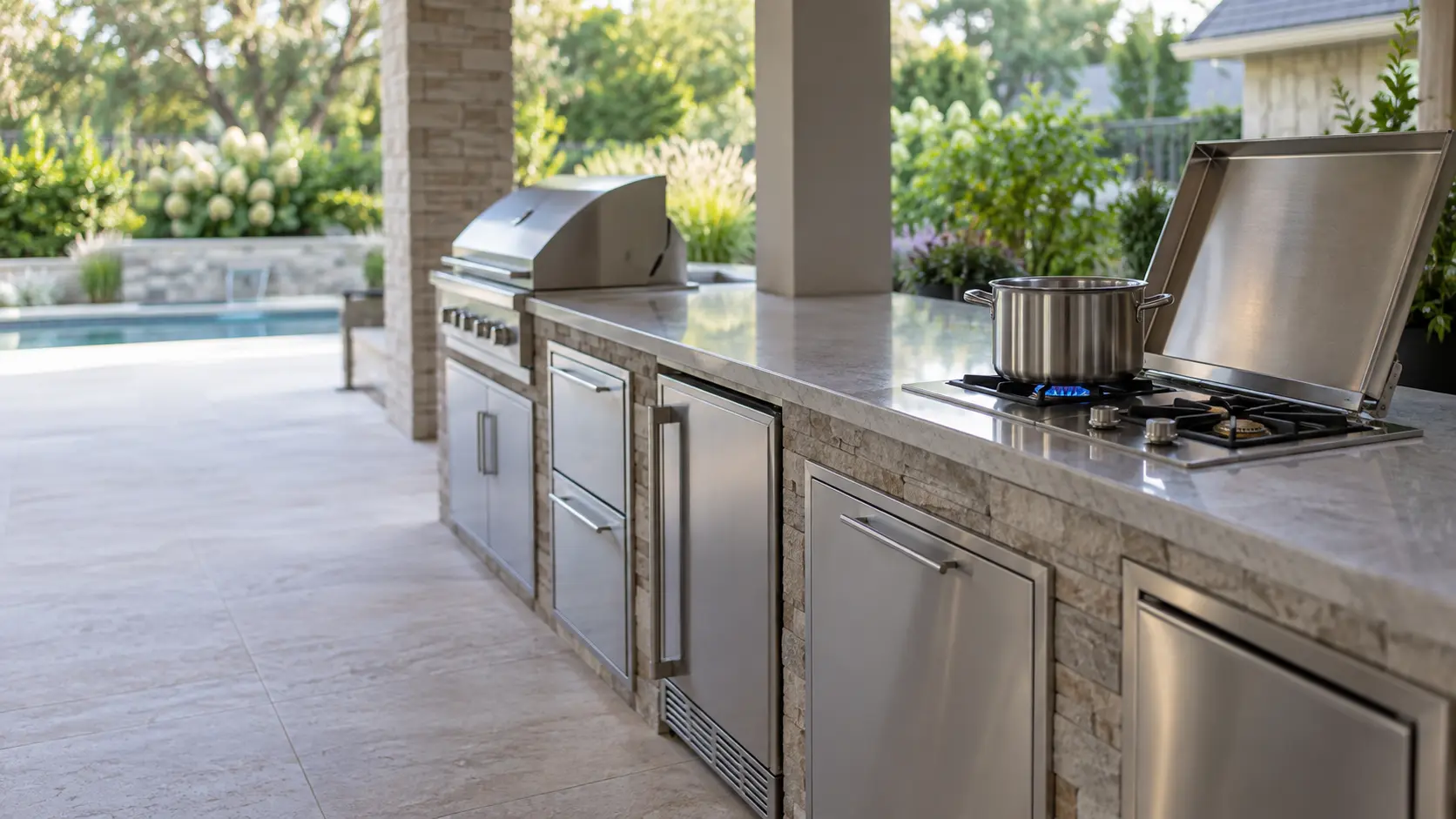
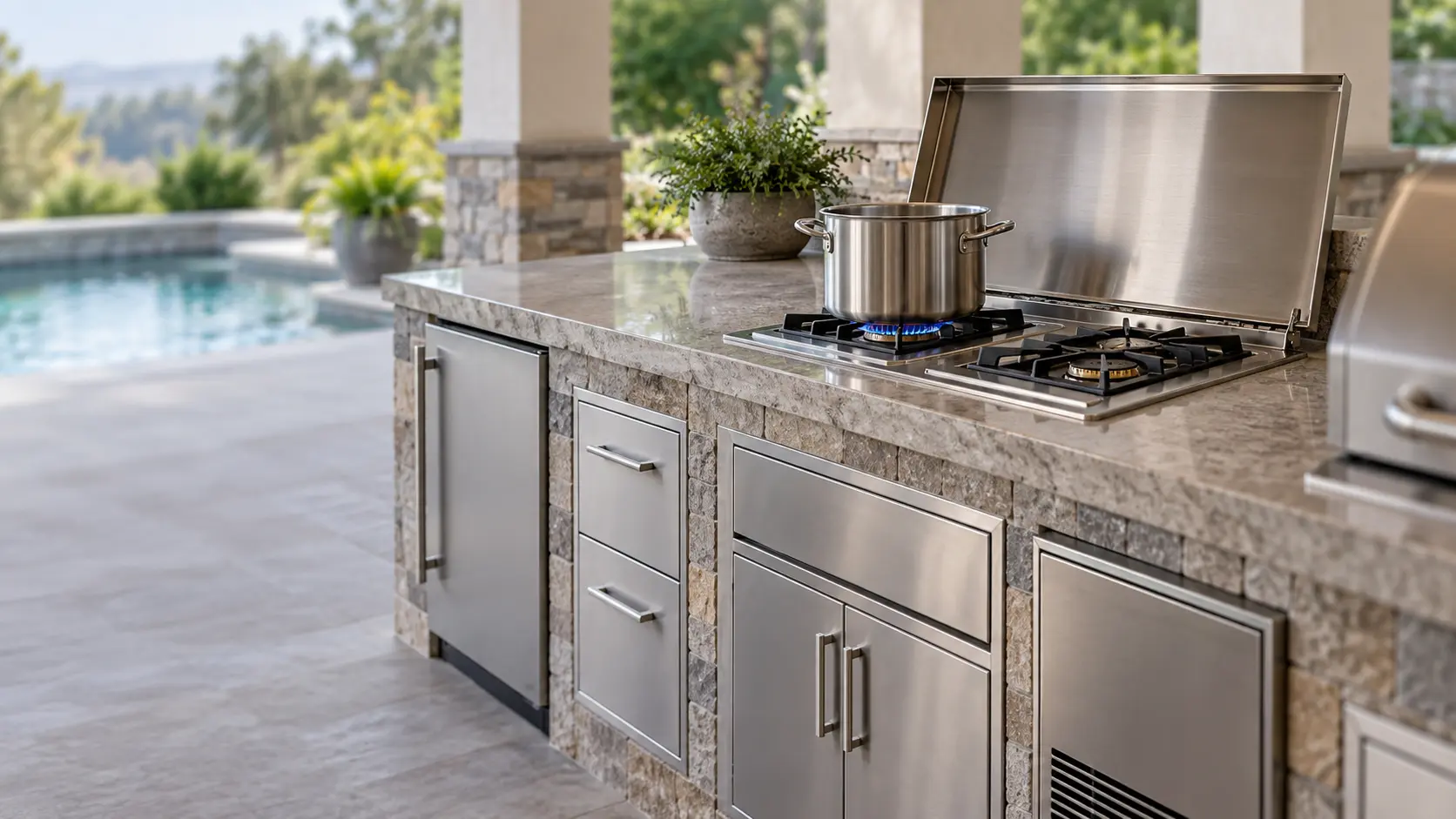
One or two round burners sit in their own well in the counter, under a grate, often with a hinged stainless lid that folds over them.
Each burner has its own knob on the front of the island, and pressing or turning it makes a clicking spark at the burner.
A power burner has a much larger ring or several rings of flame and a heavy grate built for a wok or a big pot.
Gas reaches it from the same tank or line as the rest of the island, with a shutoff inside the island door or near the tank.
Not yours?Outdoor kitchen coolerOutdoor ice makerOutdoor warming drawer
What fails
on this design.
On a side and power burner: venturi and orifice blocked by spiders and insects, igniter, electrode and its wire, burner head and ports rusted or clogged, control valve, thermocouple and a gas that runs low.
The problems it showsVenturi and orifice blocked by spiders and insects
The small dark tube where gas mixes with air is exactly where spiders like to spin, and mud wasps build inside it. The flame turns lazy and yellow, lifts off the ports or lights only on one side, and in a bad case gas can burn behind the knob instead of at the head.
Igniter, electrode and its wire
The electrode cracks, sits too far from the burner, or gets coated with grease and rust, and the wire behind the panel frays where it rubs on the frame. The igniter clicks and never lights, or keeps clicking after the flame is going.
Burner head and ports rusted or clogged
Boil-overs, grease and salt air close the small ports and rust through the head. The flame becomes uneven, some ports stay dark, and a pot heats on one side only.
Control valve, thermocouple and a gas that runs low
A stiff or leaking valve, a thermocouple that no longer holds it open, or a tank nearly empty all show up as a burner that will not stay lit. A regulator that has locked down on a tank changed with the valves open gives the same weak flame on every burner of the island.
Getting at it,
and whether to.
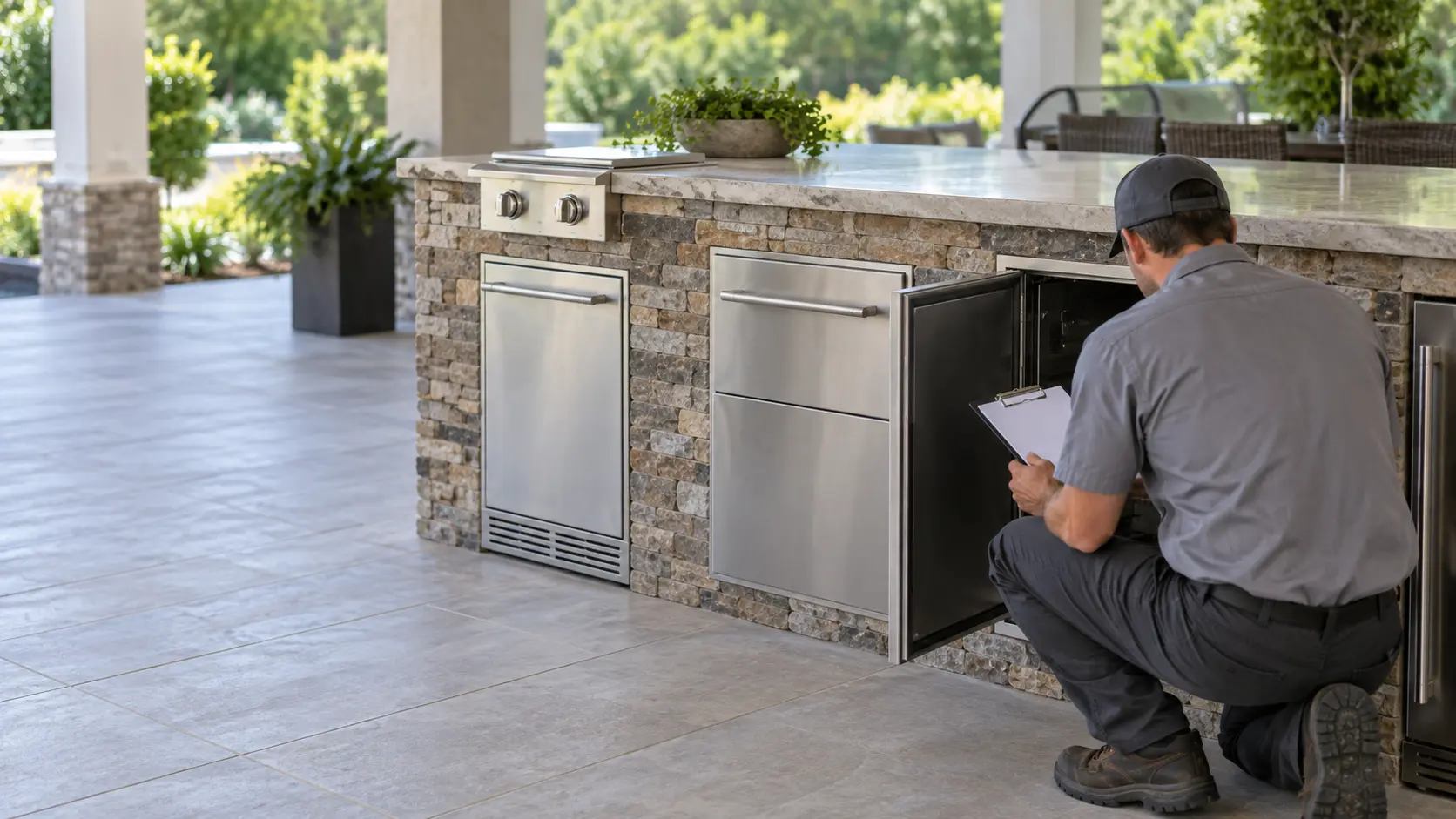
Please make sure every burner knob is off and the lid is open before the technician arrives, and tell us whether the gas is a tank or the house line.
What repairs costOn the visit
- Show us where the island's gas shutoff is; the technician closes it before any burner part is taken apart and opens it again only to test.
- If you have smelled gas around the burner or inside the island, keep the gas closed and tell us when you book, so the visit starts with the leak.
- Clear pots, grates and covers from the counter around the burner, and let the burner cool if it has been used that day.
Repair or replace
A side or power burner is almost always worth repairing. Its cutout, its gas line and its place in the counter are built around it, and the parts that fail are small: a cleaned venturi and orifice, an igniter or an electrode, a burner head, a thermocouple or a valve. Replacing the whole insert only makes sense when the body has rusted through, the maker no longer supplies its valve, or its size has been dropped, and then a matching insert for the same cutout is the first thing checked.
Book a visit for a side and power burnerThe problems
it shows.
On a side and power burner, most often side burner won't light on the outdoor kitchen island.
All problems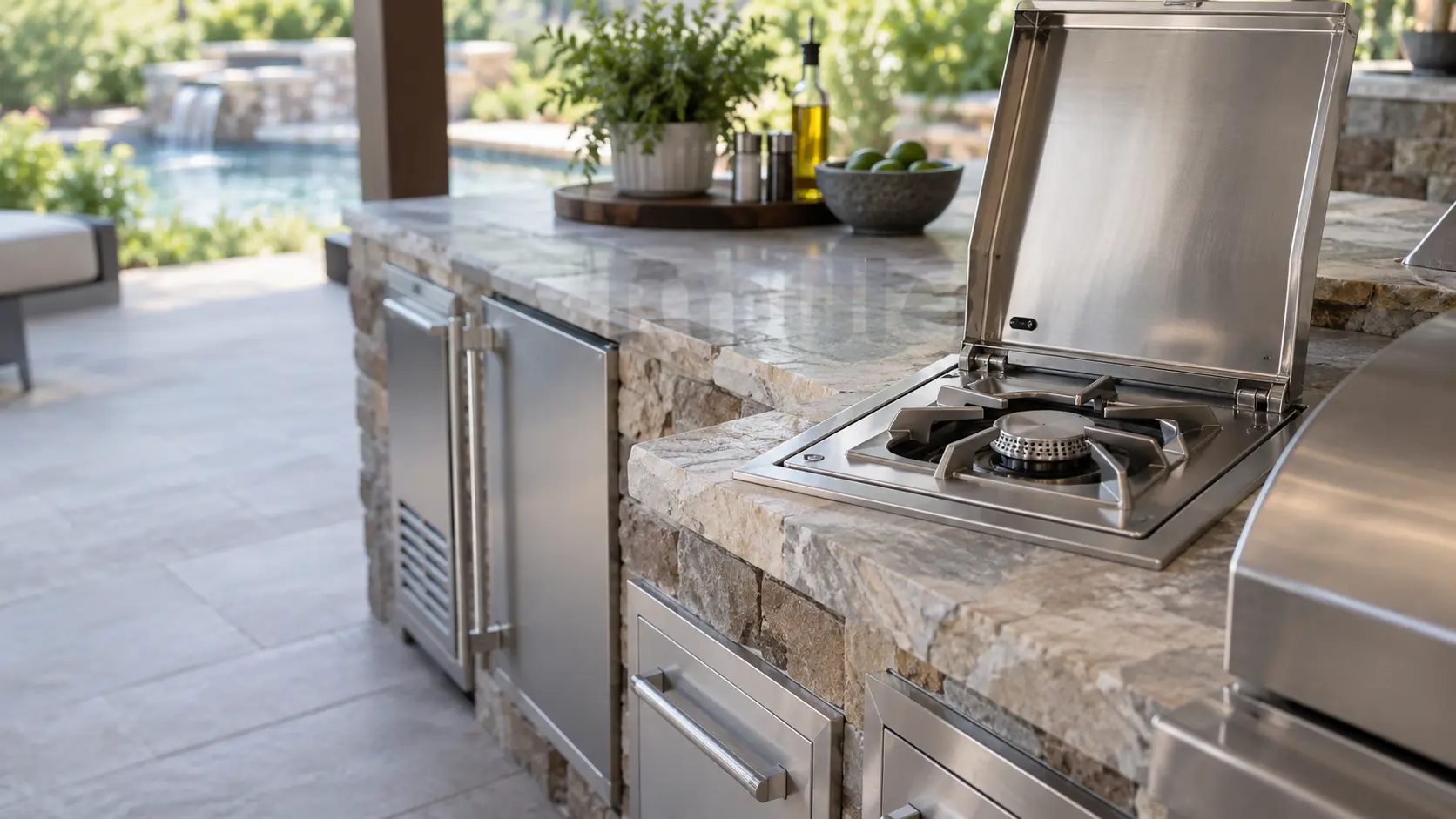
Side Burner Won't Light on the Outdoor Kitchen Island
6 causes, cheapest first
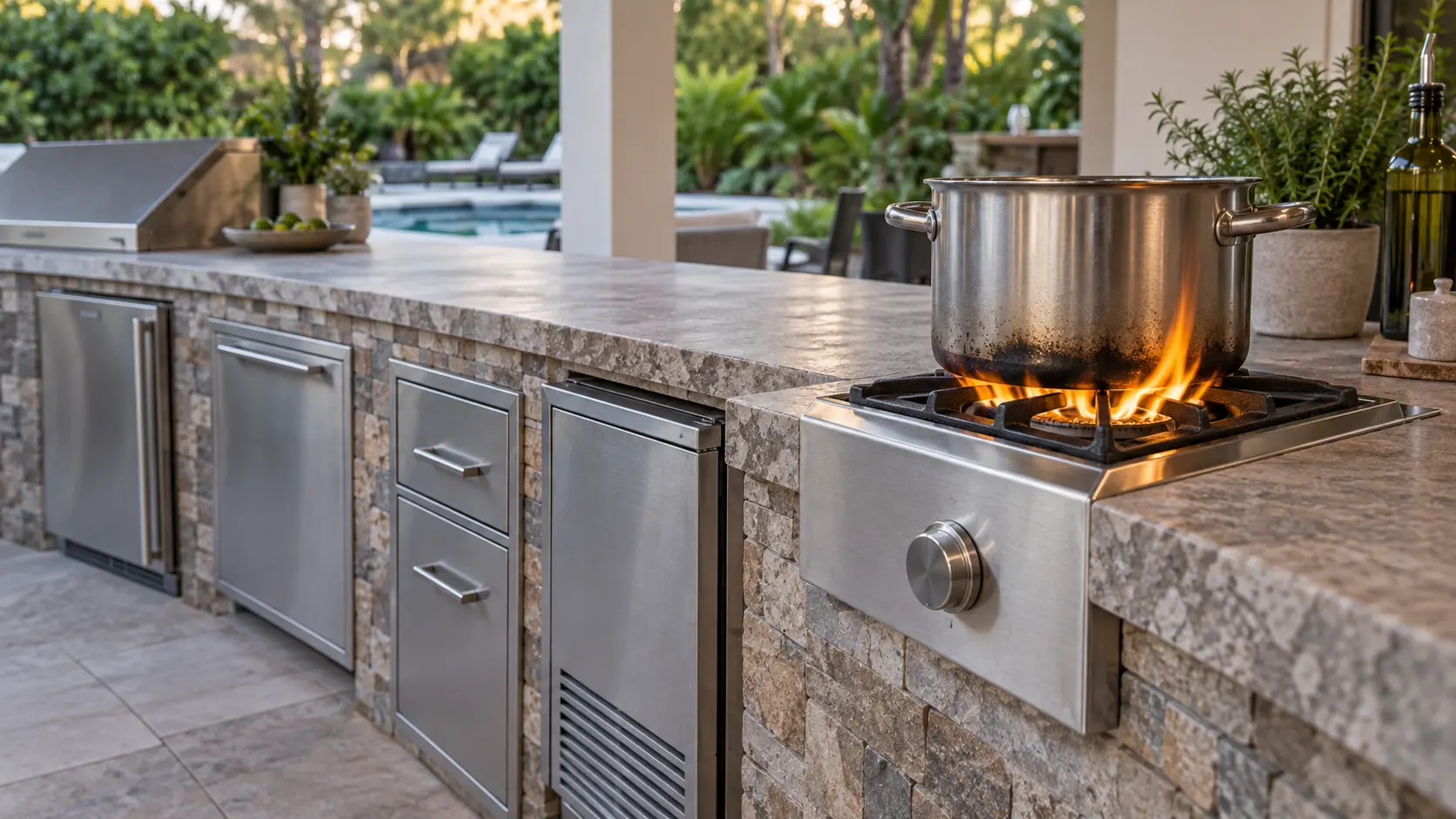
Side Burner Flame Weak, Lazy or Yellow Outdoors
5 causes, cheapest first
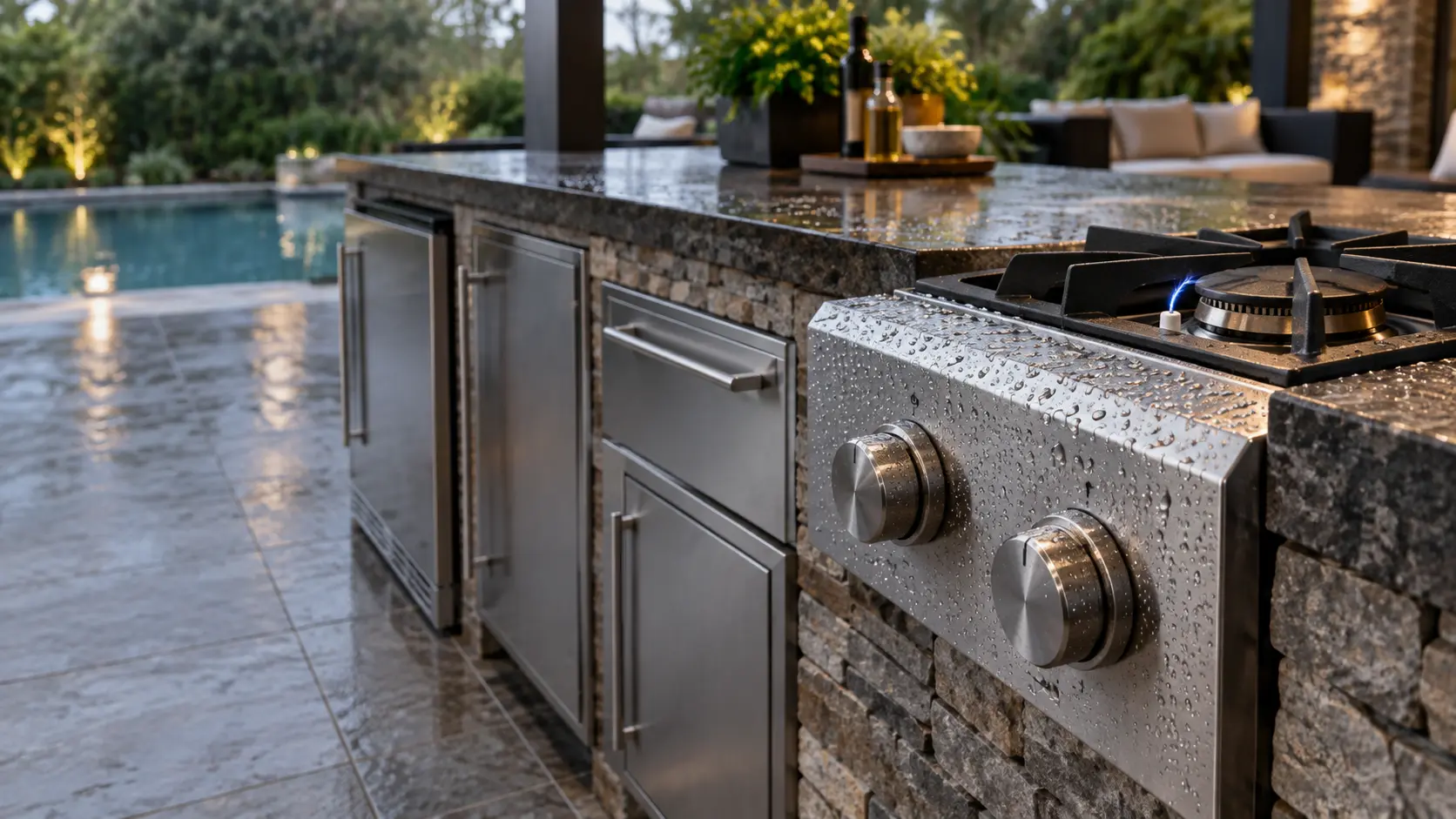
Side Burner Igniter Clicking Nonstop After Rain
5 causes, cheapest first
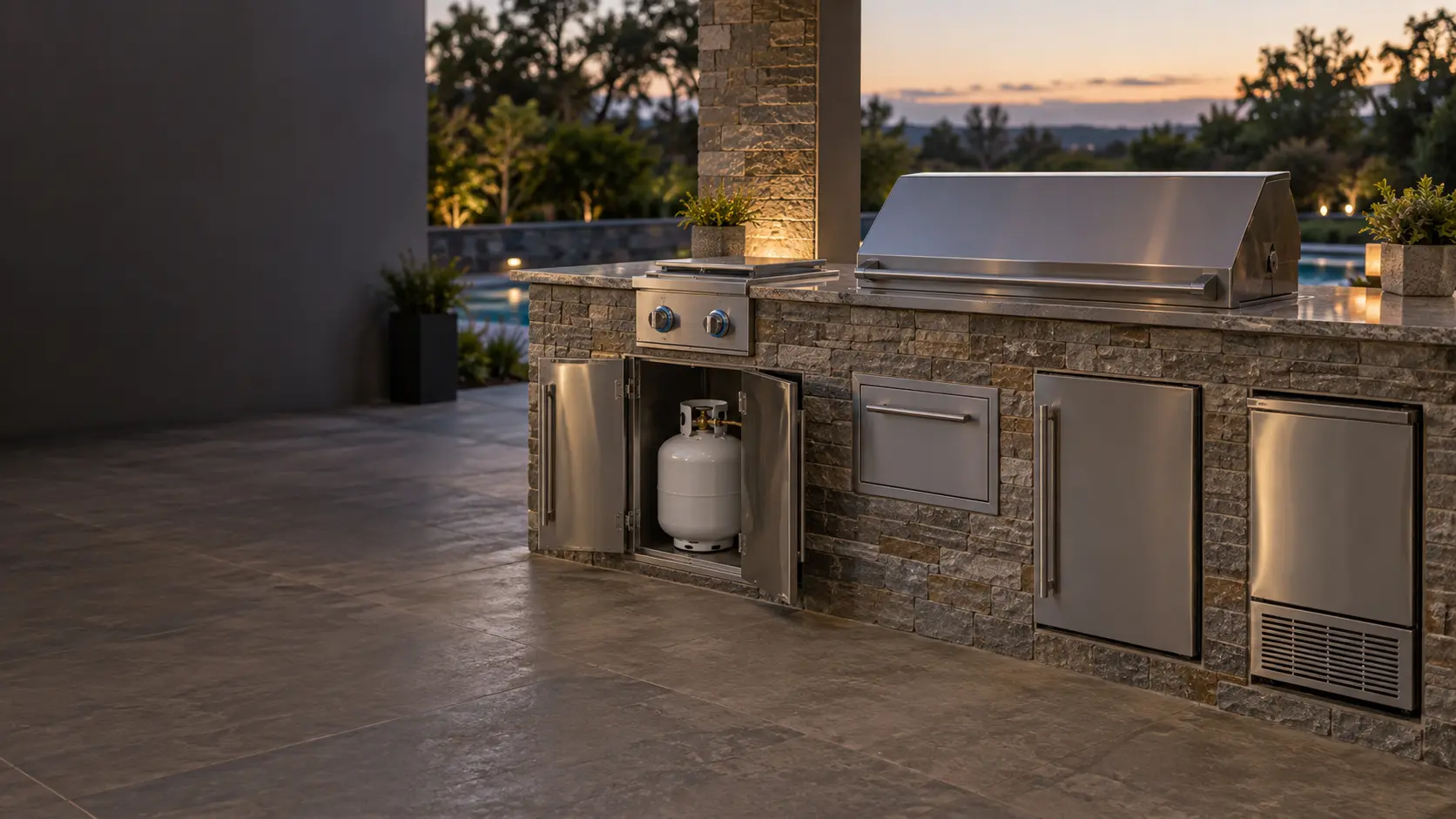
Gas Smell at the Outdoor Kitchen Island: Shut It Down First
6 causes, cheapest first
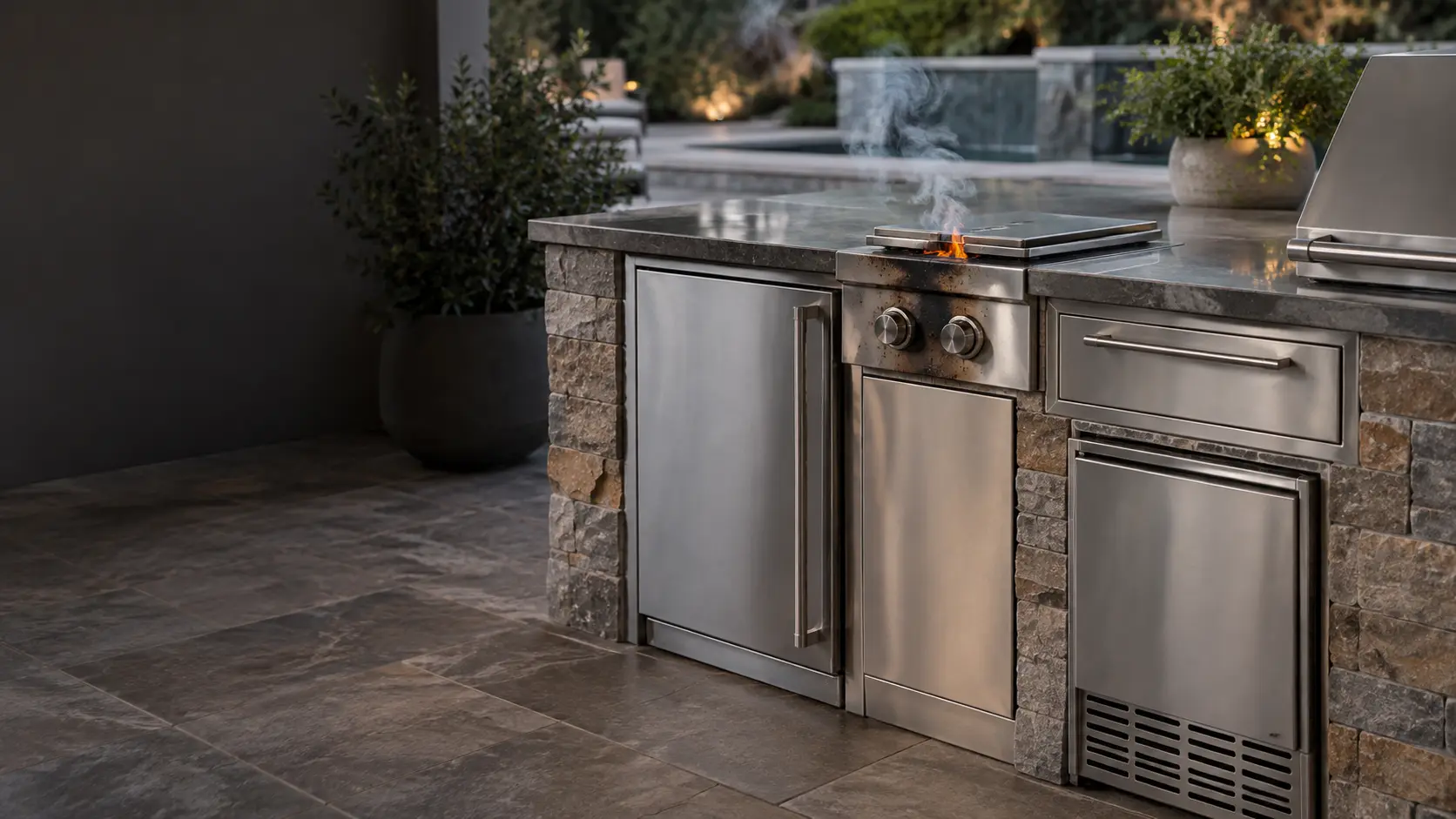
Fire Under the Counter or Inside an Outdoor Kitchen Island
5 causes, cheapest first
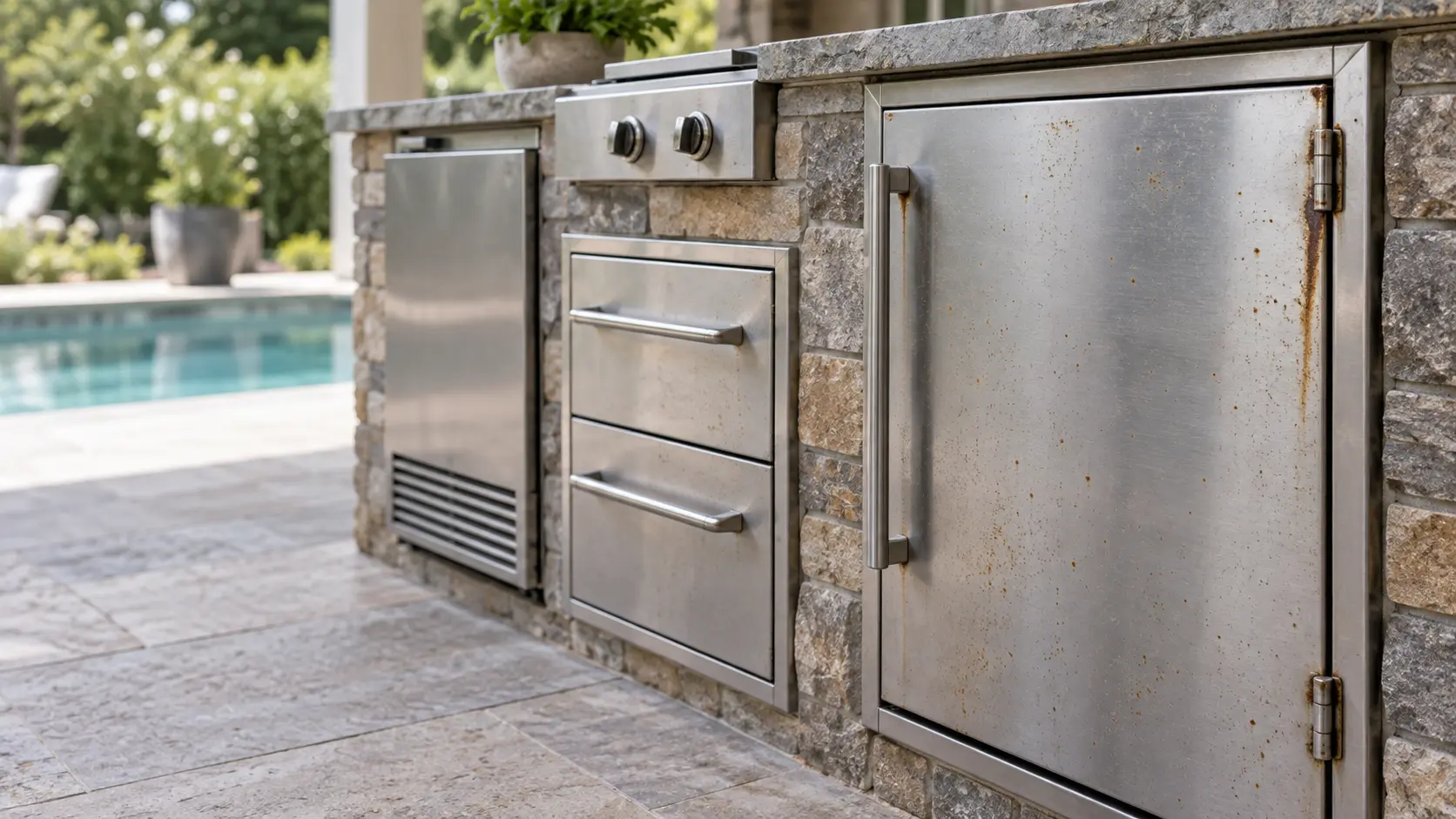
Outdoor Kitchen Stainless Rusting or Pitting Near the Pool
6 causes, cheapest first
Who builds
a burner.
14 of the makes on this site build a side and power burner. Each mark opens that make's own page.
All 22 brandsSide and power burner repair,
where we come out.
9 metros, each with its own page.
All service areasTampa BayFL · 31 areas
Miami / South FloridaFL · 47 areas
New York MetroNY · 75 areas
HoustonTX · 36 areas
ChicagoIL · 50 areas
Los AngelesCA · 95 areas
San DiegoCA · 31 areas

Questions about
side and power burners.
Why does my side burner light with a match but not with the knob?
Is a yellow flame on a side burner dangerous?
Can a side burner run on a tank when the rest of the island uses natural gas?
Why is a power burner a bigger repair than a side burner?
Back to your everyday
Is it a side and power burner?
Say so when you book — it changes what the technician brings and how the visit is planned.