
Outdoor Kitchen Stainless Rusting or Pitting Near the Pool
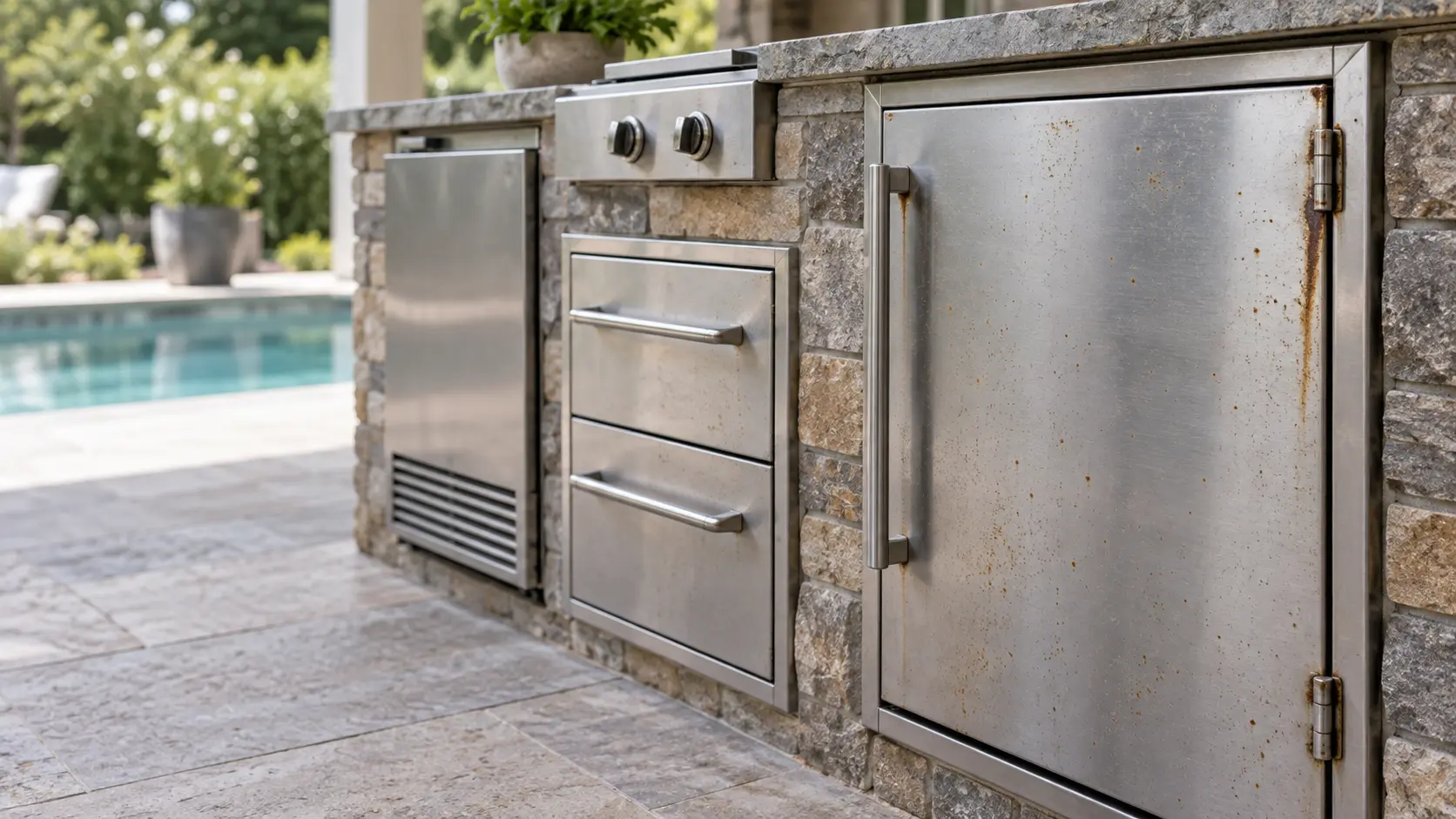
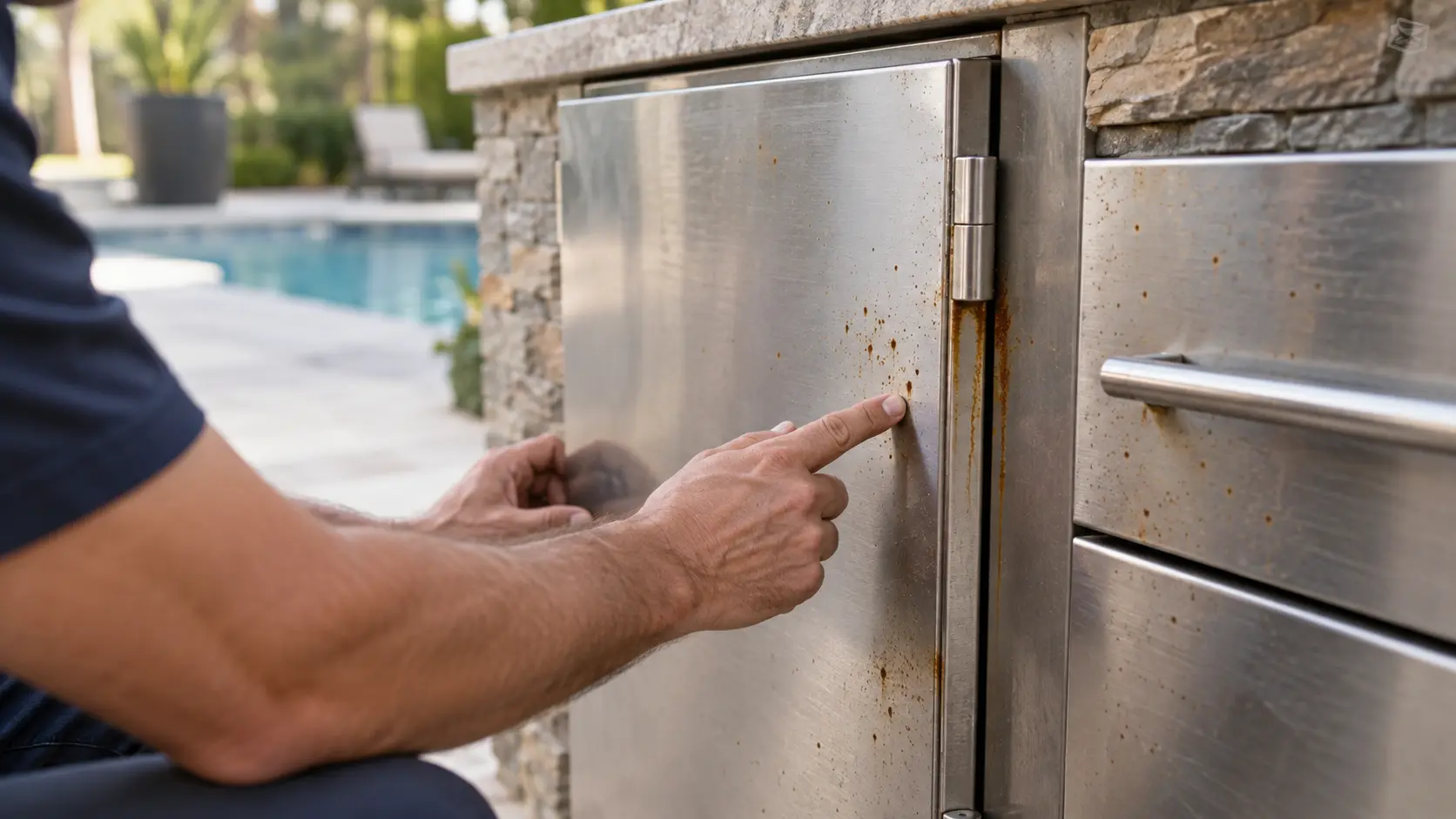
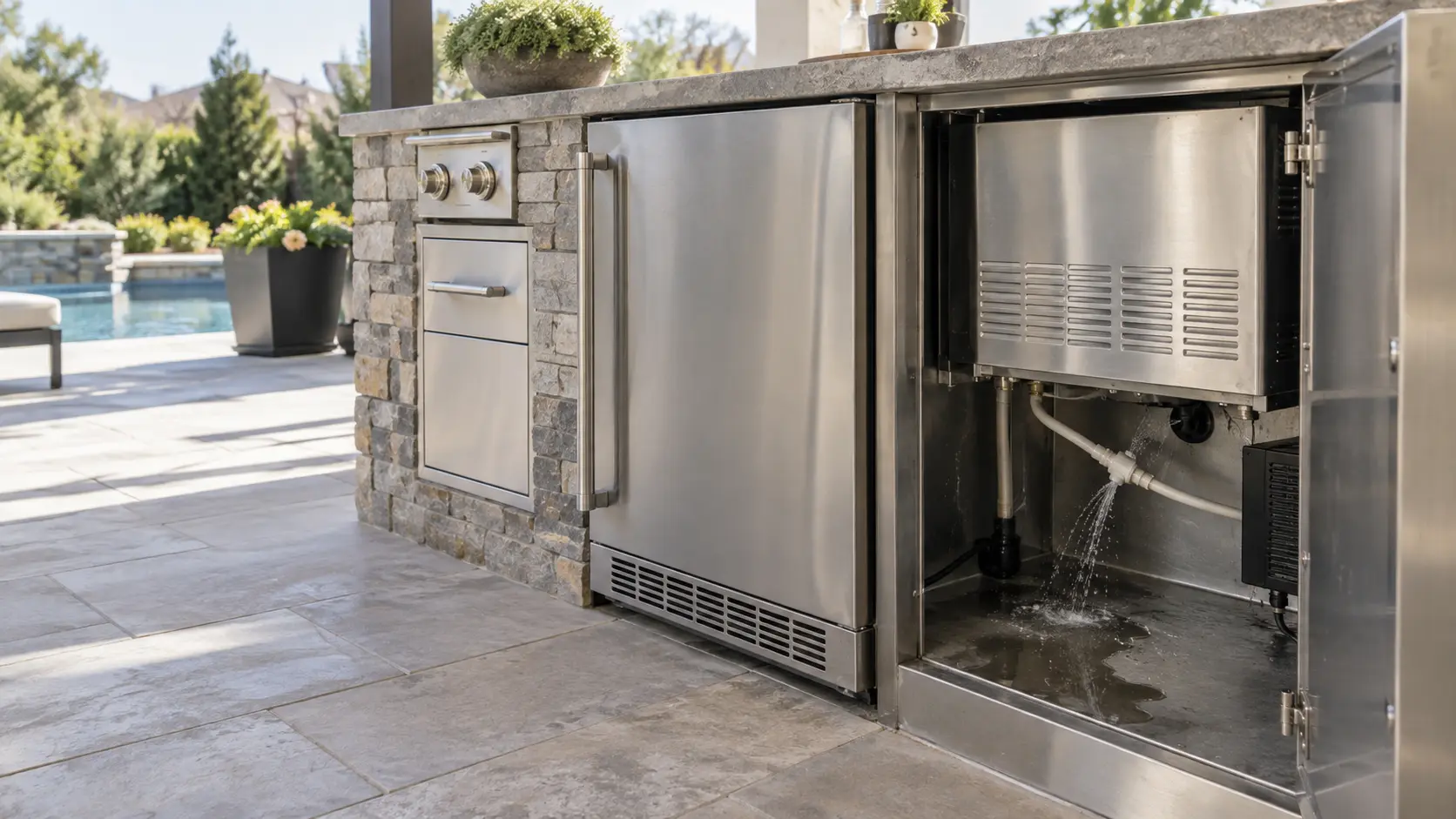
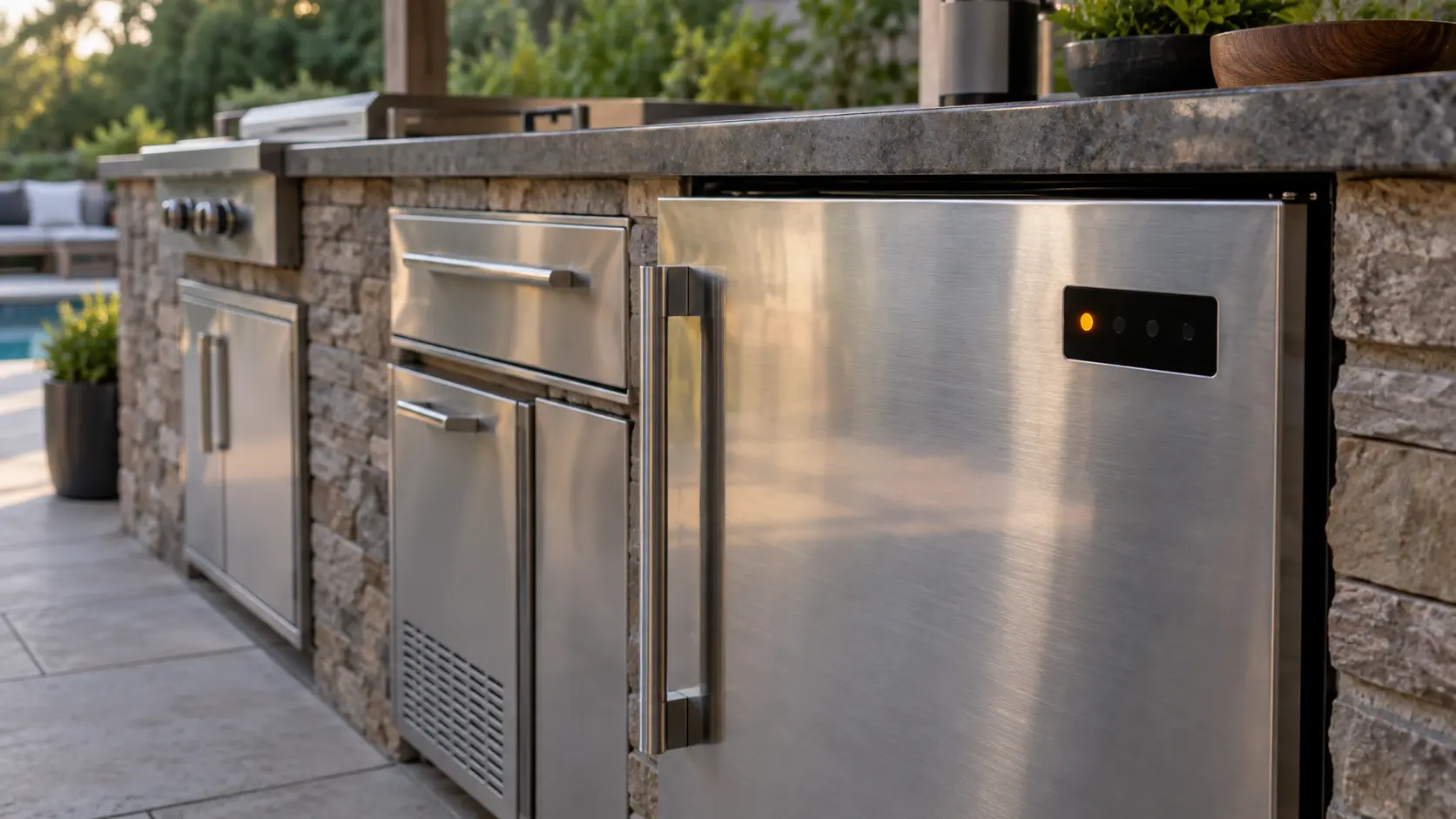
Outdoor kitchen rust and pitting appears as orange spots on the cooler door, tiny pits on drawer fronts, streaks under the knobs, or hinges that squeak and stick.
Mon–Sat, 8am–8pm
- 5 checks before you book
- 5 questions that narrow it
- 6 causes, cheapest first
Book a visit
Three short steps, about a minute.
or call (844) 449-0269
Loading appointment form…
The appointment form couldn’t load. Please try again.
What it
usually means.
Stainless steel stays bright because chromium in the metal forms a skin thinner than a soap film that heals itself in open air. Anything that sits on that skin and keeps air away, or attacks it chemically, lets rust start. Around an outdoor kitchen there is plenty: salt carried inland on the sea breeze, chlorine and bromine drifting from a pool or spa, splashes of pool water on a hot door, cleaners with bleach, and specks of iron left by a wire brush used on the cooking head or by a neighbor cutting steel. A cover that stays on through a damp week holds all of it against the metal. Lower grades of stainless, often used on budget islands and door frames, give way sooner than the grade used on most premium outdoor coolers and drawers. Early tea-colored staining wipes off; small pits that catch a fingernail are deeper and come back; rust at a hinge, a drawer runner or the flange where the cooler seal lands affects how the parts work, not just how they look.
 The 6 causes, cheapest first
Answer these first
Is the island near the coast or a pool?
Are pool chemicals or cleaners stored in or near the island?
Does the rust wipe away with a damp cloth, or do small pits stay behind that catch a fingernail?
Are hinges, runners or knobs sticking?
Does a cover stay on the island most of the time?
Check these
before you book.
Outdoor kitchen rust and pitting: 5 checks, and none of them costs anything.
Rinse stainless with fresh water and dry it after pool days or salty weather.
Move pool chemicals away from the island.
Use only stainless-safe cleaners and soft cloths, never steel wool.
Also worth checking
- Check that covers are vented and not trapping moisture.
- Photograph rust spots and pitting for the technician.
How soon does it need a visit?
Rust is not urgent, but it spreads. Clean it early; book a visit if hinges, runners or seals are affected.
The causes,
cheapest first.
6 things outdoor kitchen stainless rusting or pitting near the pool turns out to be, from salt or chlorine left on the surface to deep pitting on doors or panels.
The cost guide-
01 no repair
Salt or chlorine left on the surface
Wiping stainless with fresh water and a soft cloth regularly removes salt and chlorine before they do damage.
-
02 no repair
Pool chemicals stored in the island
Chlorine fumes attack stainless from inside. Store chemicals elsewhere.
-
03 lowest
Iron particles from a steel brush
Steel wool or brushes leave iron that rusts on stainless. Cleaning with a stainless-safe product removes it.
-
04 low
Cover trapping moisture
A cover that does not breathe keeps the surface damp. A vented cover helps.
-
05 low to moderate
Hinges and runners corroded
Salt and damp seize hinges and drawer runners. They are replaced with corrosion-resistant parts.
-
06 moderate
Deep pitting on doors or panels
Deep pits cannot be polished out. The panel or door may need replacing.
What else
it could be.
Most often confused with outdoor kitchen cooler door not sealing or swinging open, then outdoor kitchen freeze damage found at spring start-up.
All problems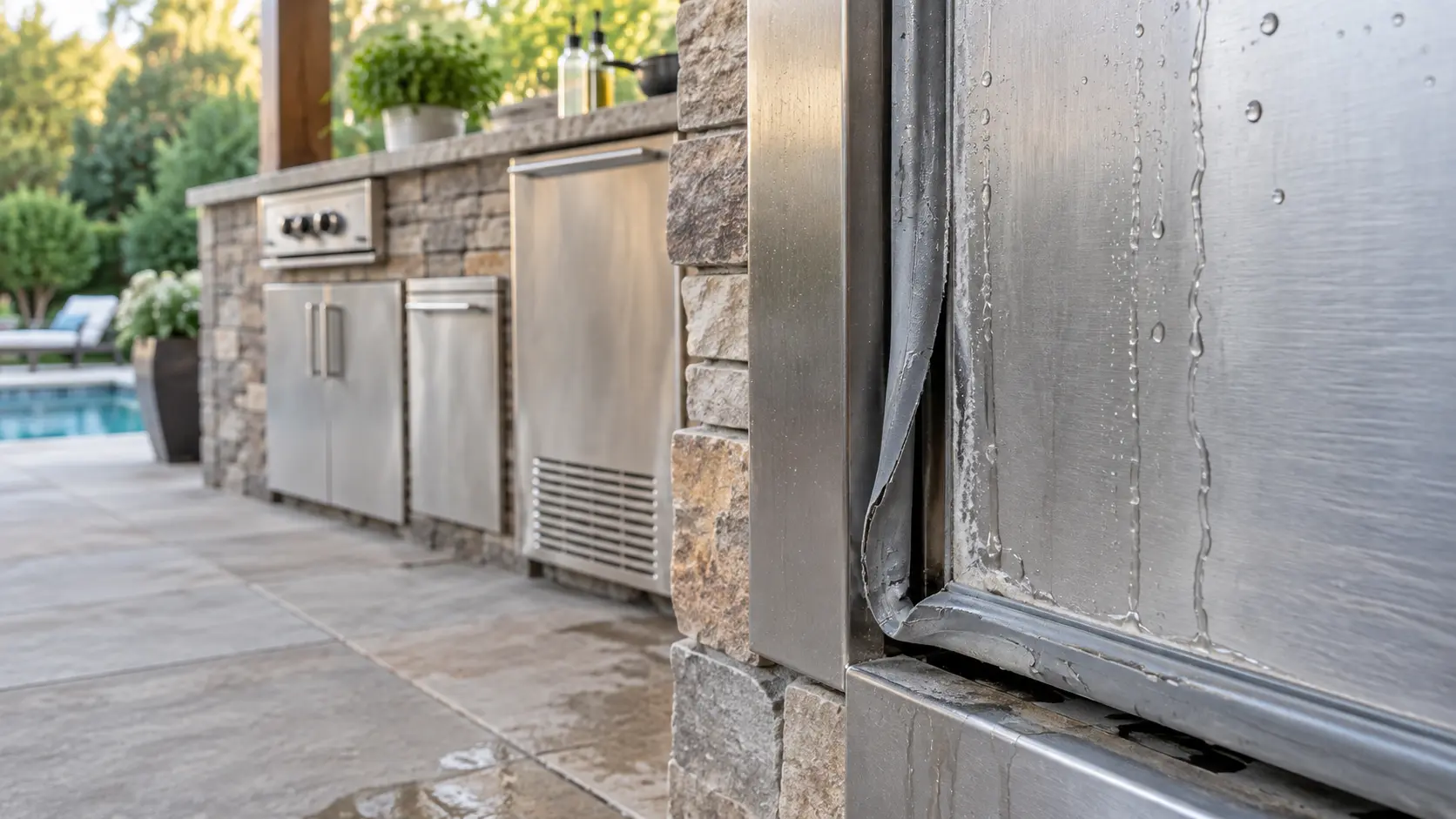
The makes
it happens on.
22 makes on this site; outdoor kitchen stainless rusting or pitting near the pool can show up on any of them. Each mark opens that make's own page.
All 22 brandsOutdoor Kitchen Stainless Rusting or Pitting Near the Pool,
where we come out.
9 metros, each with its own page.
All service areasTampa BayFL · 31 areas
Miami / South FloridaFL · 47 areas
New York MetroNY · 75 areas
HoustonTX · 36 areas
ChicagoIL · 50 areas
Los AngelesCA · 95 areas
San DiegoCA · 31 areas

Questions about
outdoor kitchen stainless rusting or pitting near the pool.
Why does the stainless on our outdoor kitchen rust when it is supposed to be rustproof?
Can tea staining be cleaned off the outdoor kitchen doors?
How often should outdoor kitchen stainless be rinsed near the ocean?
Is it safe to keep pool chlorine in the outdoor kitchen cabinet?
Back to your everyday
Still seeing outdoor kitchen stainless rusting or pitting near the pool?
Book with what you checked above — 5 answers save the technician the first part of the visit.