
Rodents Nesting in the Outdoor Kitchen Island
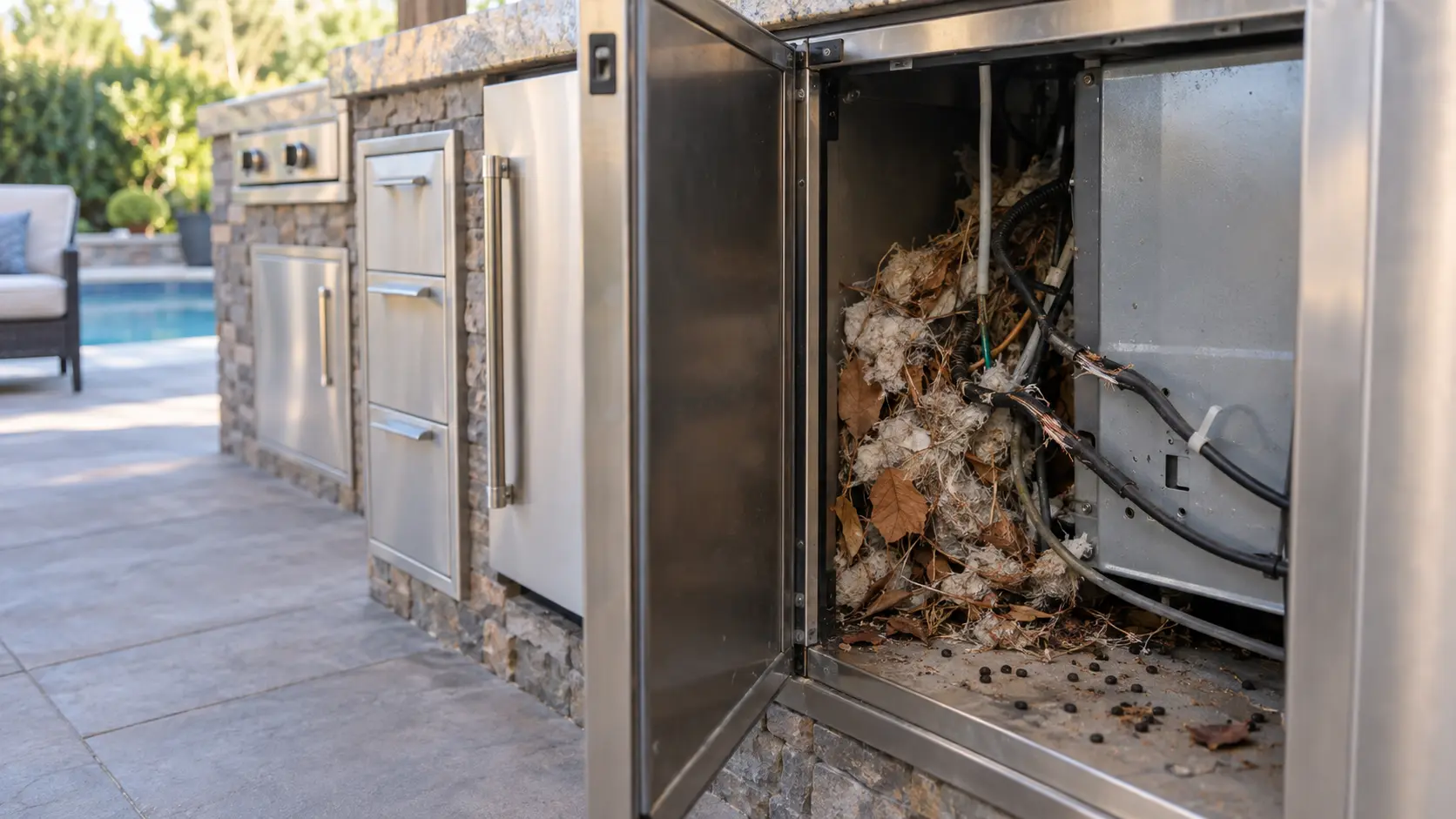
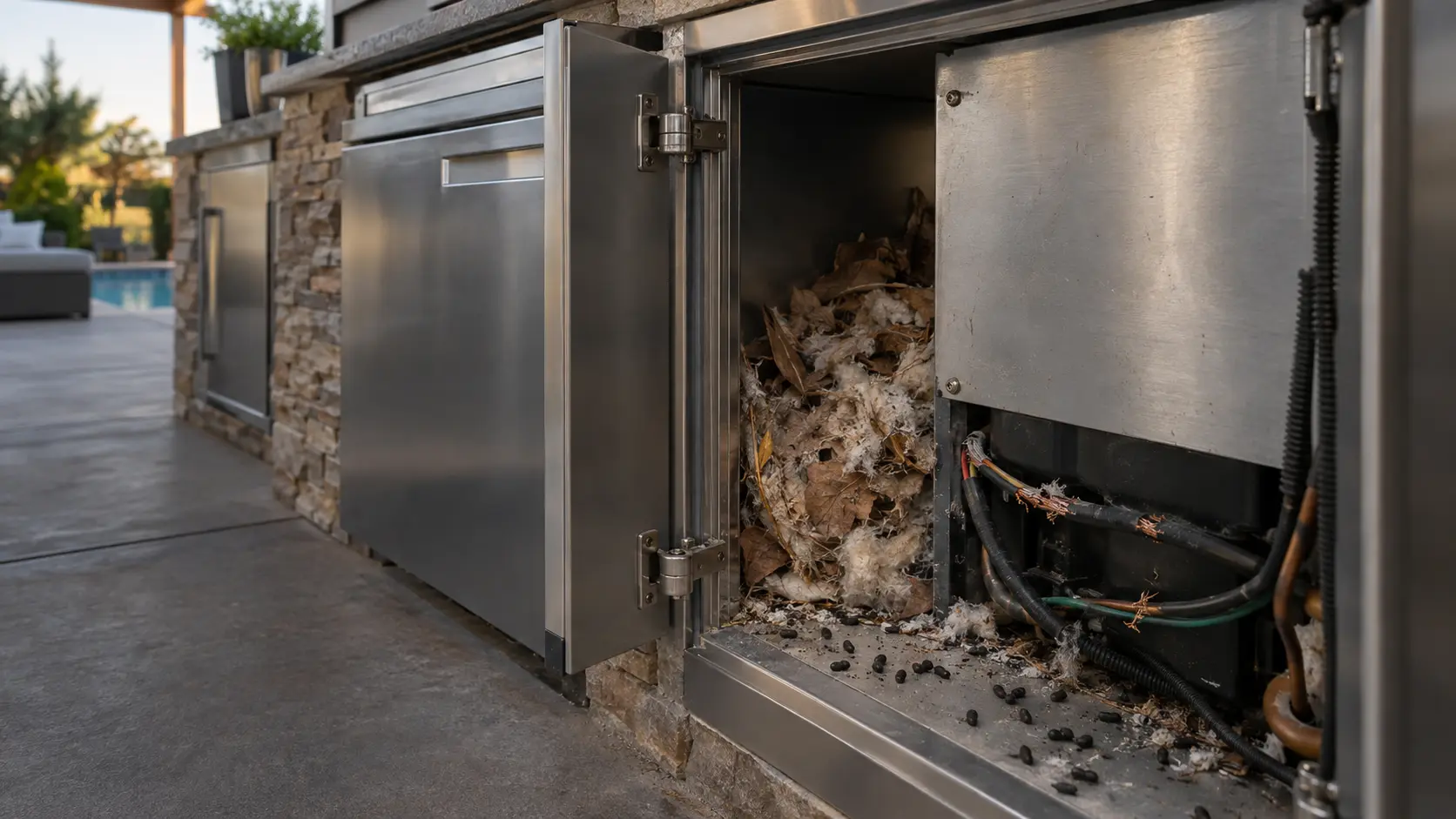
Outdoor kitchen rodent damage turns up as droppings in the island cabinet, shredded insulation behind the cooler, a warming drawer that stopped working, or wires and hoses chewed through.
Mon–Sat, 8am–8pm
- 5 checks before you book
- 5 questions that narrow it
- 5 causes, cheapest first
Book a visit
Three short steps, about a minute.
or call (844) 449-0269
Loading appointment form…
The appointment form couldn’t load. Please try again.
What it
usually means.
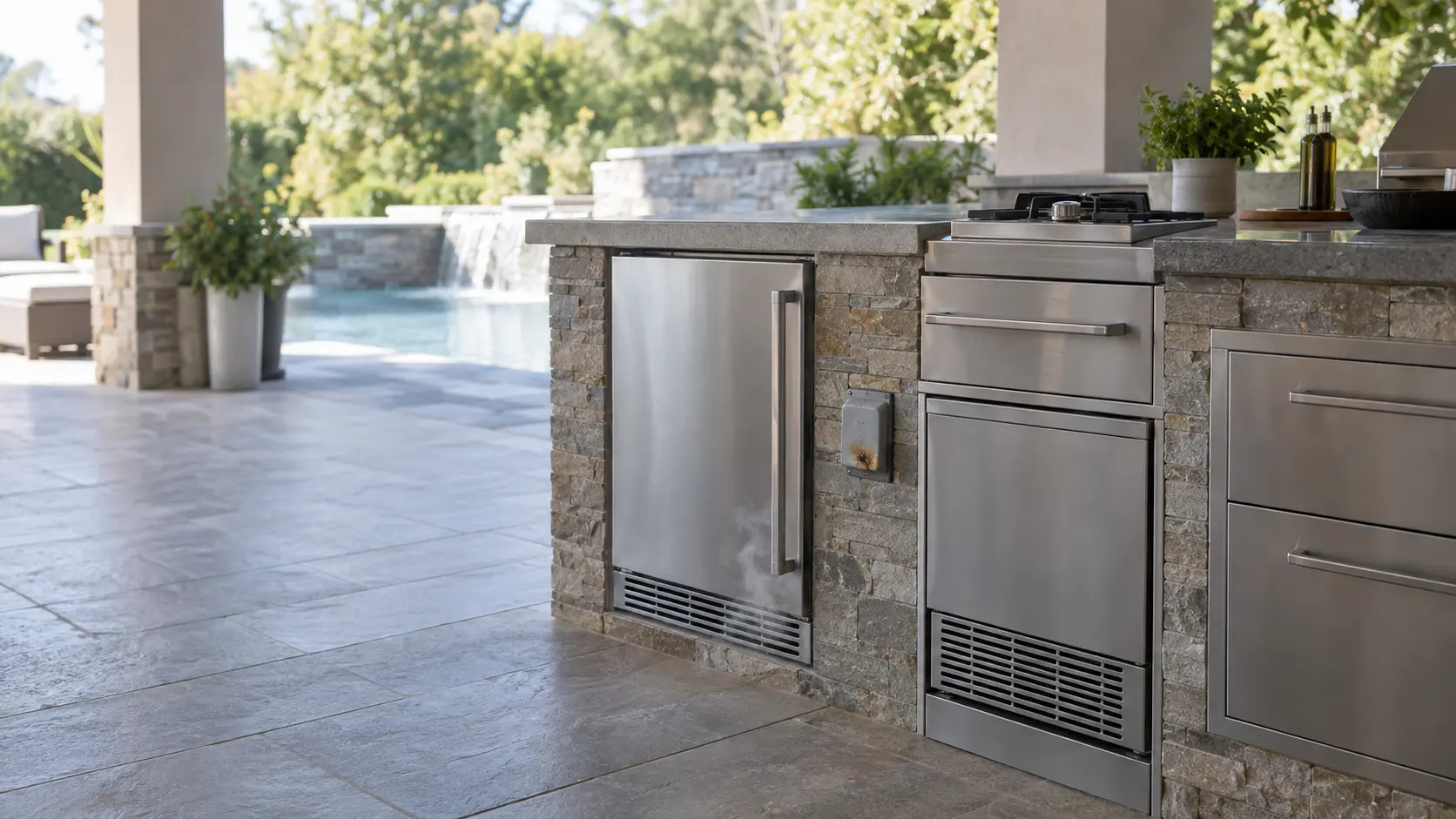
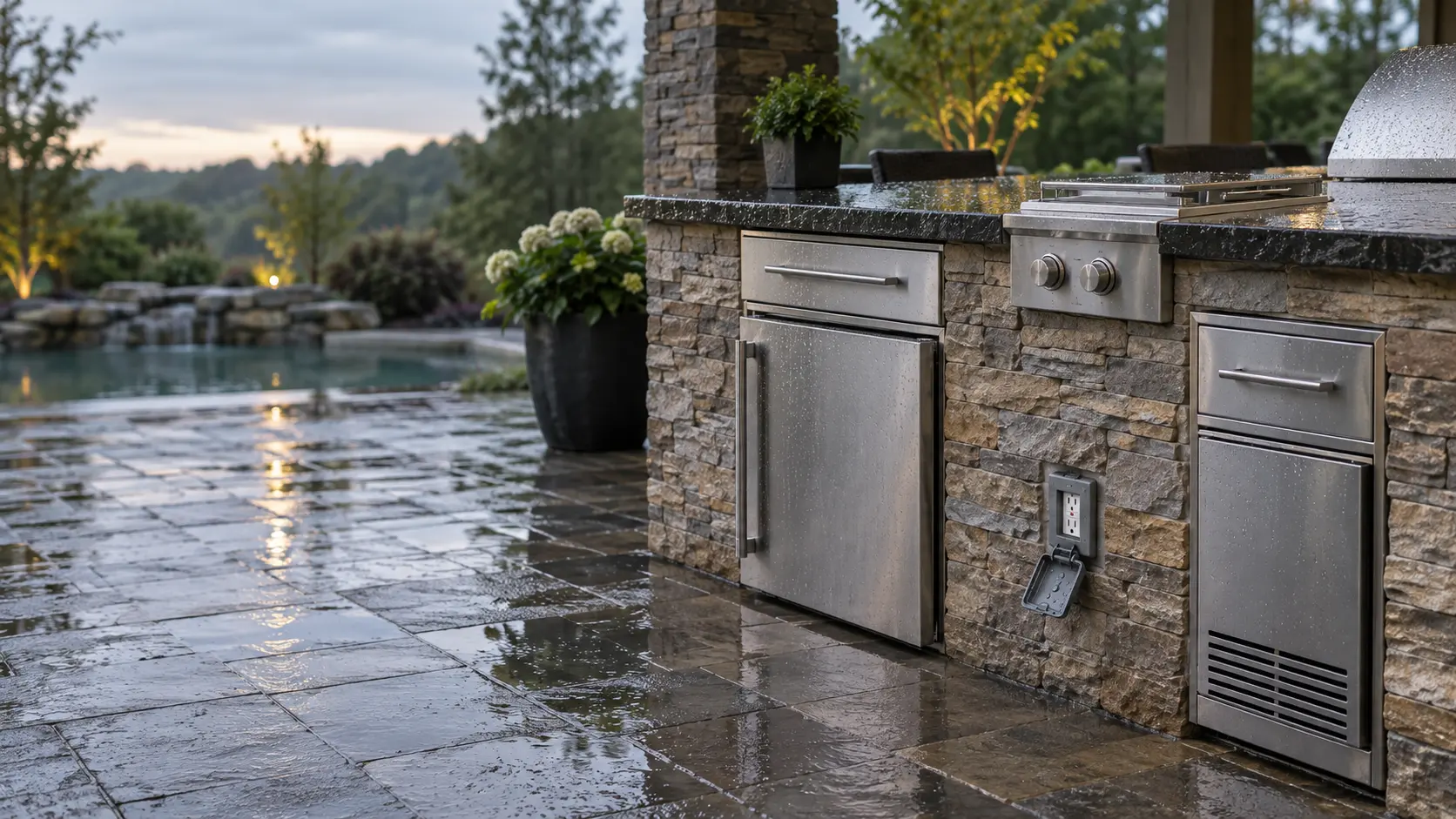
An island is a sheltered, dark box with food smells, warmth from compressors and burners, and often gaps where pipes and wires enter. Mice, rats and squirrels move in, especially after a quiet winter. They chew wiring to the cooler, the warming drawer, the igniter and the GFCI, and sometimes the flexible gas hose. They pack nesting material against the cooler's condenser, blocking airflow, and into burner boxes, where it can smolder. Droppings and urine corrode stainless and contaminate surfaces. The risk is not only a part that stops working: a chewed gas hose is a gas leak, and chewed wiring can short and heat. The right order is to stop the power and gas before anyone reaches in, then have the damage traced and the island sealed.
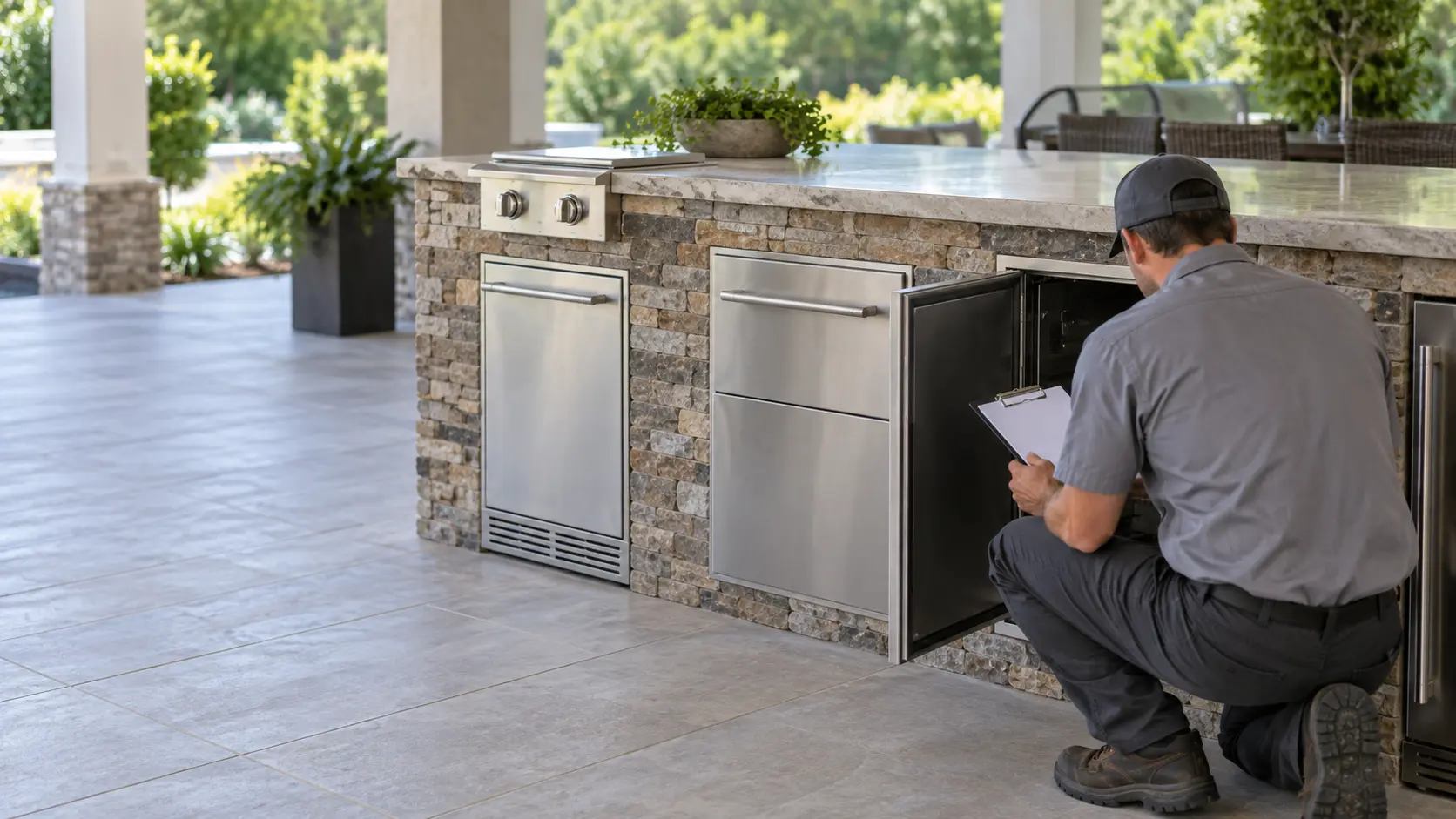 The 5 causes, cheapest first
Answer these first
What did you find: droppings, nests, chewed insulation, chewed wires or hoses?
Which parts have stopped working or behave oddly?
Do you smell gas or anything burning?
Are there gaps at the base of the island, around pipes or at the doors?
Is food, pet food or grease left in or near the island?
Check these
before you book.
Outdoor kitchen rodent damage: 5 checks, and none of them costs anything.
If you smell gas, close the gas at the tank or the shutoff and follow the gas smell page before anything else.
Switch off the island's breaker from a dry panel before anyone reaches into the cabinet.
Wear gloves and a mask to remove droppings and nesting material you can reach without touching wiring or fittings.
Also worth checking
- Remove food, pet food and bags of charcoal from the island.
- Photograph chewed wires or hoses from a distance and leave them in place for the technician.
How soon does it need a visit?
Rodent damage becomes urgent when there is a gas smell, a burning smell or a tripping GFCI: follow those pages first. Otherwise, cut the power and book a visit soon, because chewed wiring and hoses do not heal.
The causes,
cheapest first.
5 things rodents nesting in the outdoor kitchen island turns out to be, from food and grease left in the island to chewed wiring.
The cost guide-
01 no repair
Food and grease left in the island
Pet food, bags of charcoal, snacks and grease drippings draw rodents in. Removing them makes the island less inviting.
-
02 low
Gaps where pipes and wires enter
Openings at the base or behind the cooler let rodents in. They are sealed with rodent-proof materials after the damage is repaired.
-
03 low
Nest blocking the cooler condenser
Nesting material packed against the coil stops the cooler shedding heat. It is removed and the coil cleaned.
-
04 low to moderate
Chewed gas hose
A gnawed flexible connector leaks gas. The hose is replaced and the line tested.
-
05 moderate
Chewed wiring
Wires to the cooler, warming drawer or igniter chewed through can short or stop parts working. Damaged runs are traced and replaced.
-
What it costs
Every repair on the site's cost scale, side by side
Open the cost guide
What else
it could be.
Most often confused with gas smell at the outdoor kitchen island: shut it down first, then hot wire or burning smell around an outdoor kitchen.
All problems
The makes
it happens on.
22 makes on this site; rodents nesting in the outdoor kitchen island can show up on any of them. Each mark opens that make's own page.
All 22 brandsRodents Nesting in the Outdoor Kitchen Island,
where we come out.
9 metros, each with its own page.
All service areasTampa BayFL · 31 areas
Miami / South FloridaFL · 47 areas
New York MetroNY · 75 areas
HoustonTX · 36 areas
ChicagoIL · 50 areas
Los AngelesCA · 95 areas
San DiegoCA · 31 areas

Questions about
rodents nesting in the outdoor kitchen island.
Why do rodents like outdoor kitchens?
Can we use the outdoor kitchen before the chewed wire is fixed?
Should we put rodent bait inside the island?
Do rodents chew gas hoses?
Back to your everyday
Still seeing rodents nesting in the outdoor kitchen island?
Book with what you checked above — 5 answers save the technician the first part of the visit.