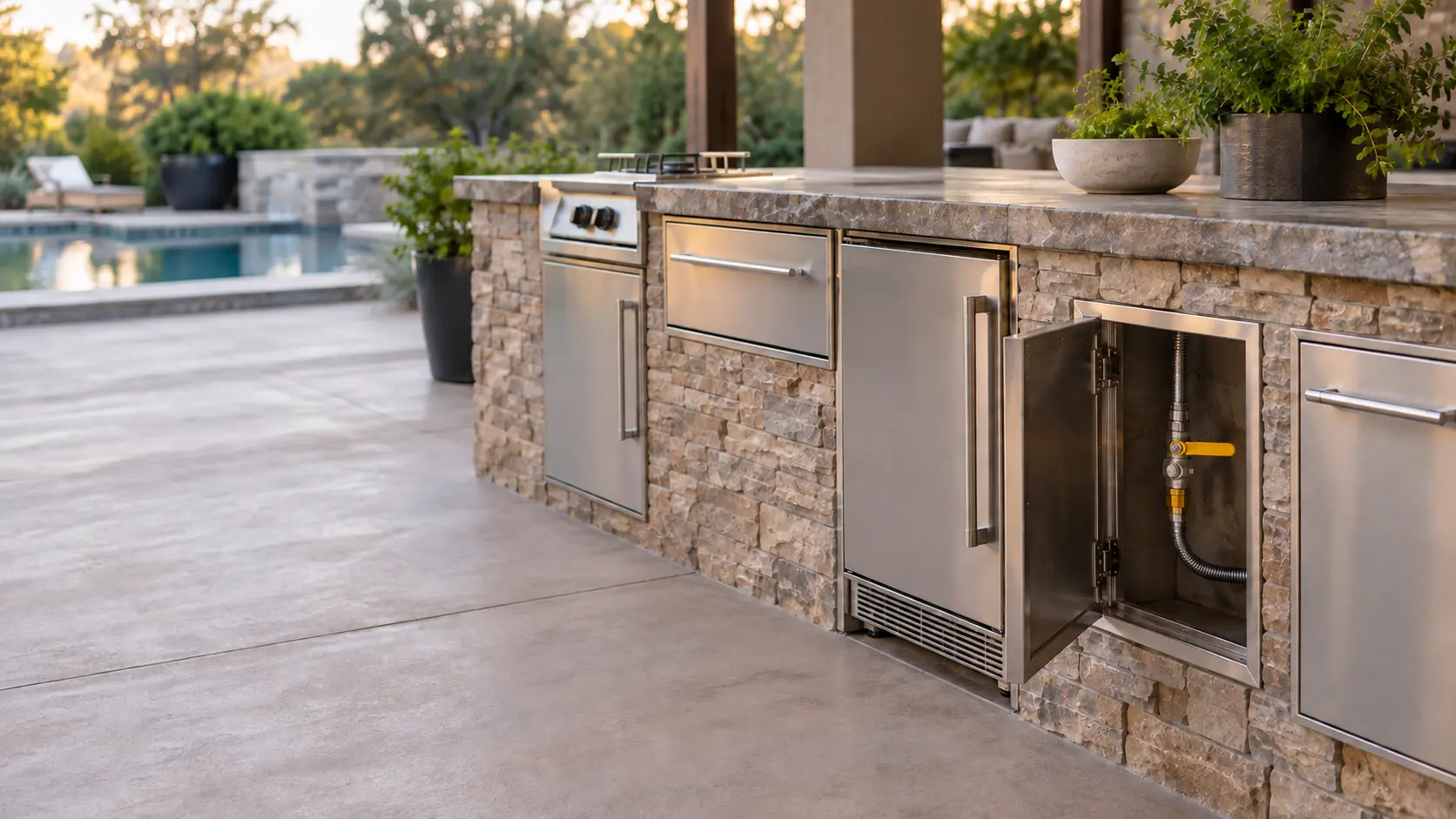
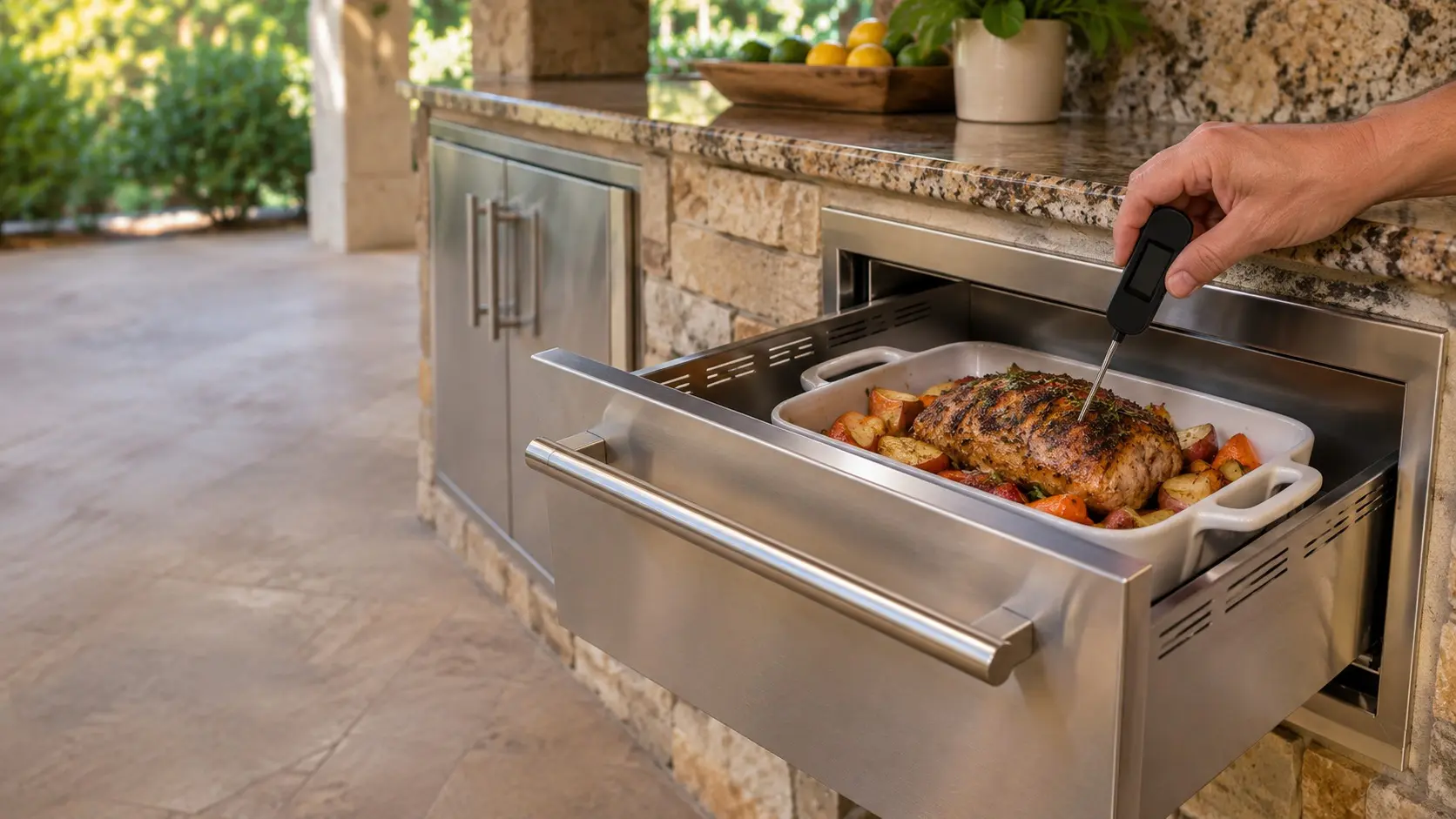

Gas, flame, power and cold food out back
Gas, fire and power outdoors
guides.
What to do when you smell gas at the island, when a pot of grease catches on the side burner, when the GFCI trips with water around, and how long food stays safe in an outdoor cooler that runs warm.
Mon–Sat, 8am–8pm
- Four guides
- Read before you book
- Says where to stop
Book a visit
Three short steps, about a minute.
or call (844) 449-0269
Loading appointment form…
The appointment form couldn’t load. Please try again.
Gas, fire and power outdoors,
guide by guide.
These guides cover the evenings when the outdoor kitchen stops being a place to cook and becomes a place to act quickly: a gas smell drifting from the island, a pan of oil catching on the side burner, or an outdoor cooler found warm with the party food inside. Each one starts with what to do in the first minutes and only then explains the cause.
All 27 guides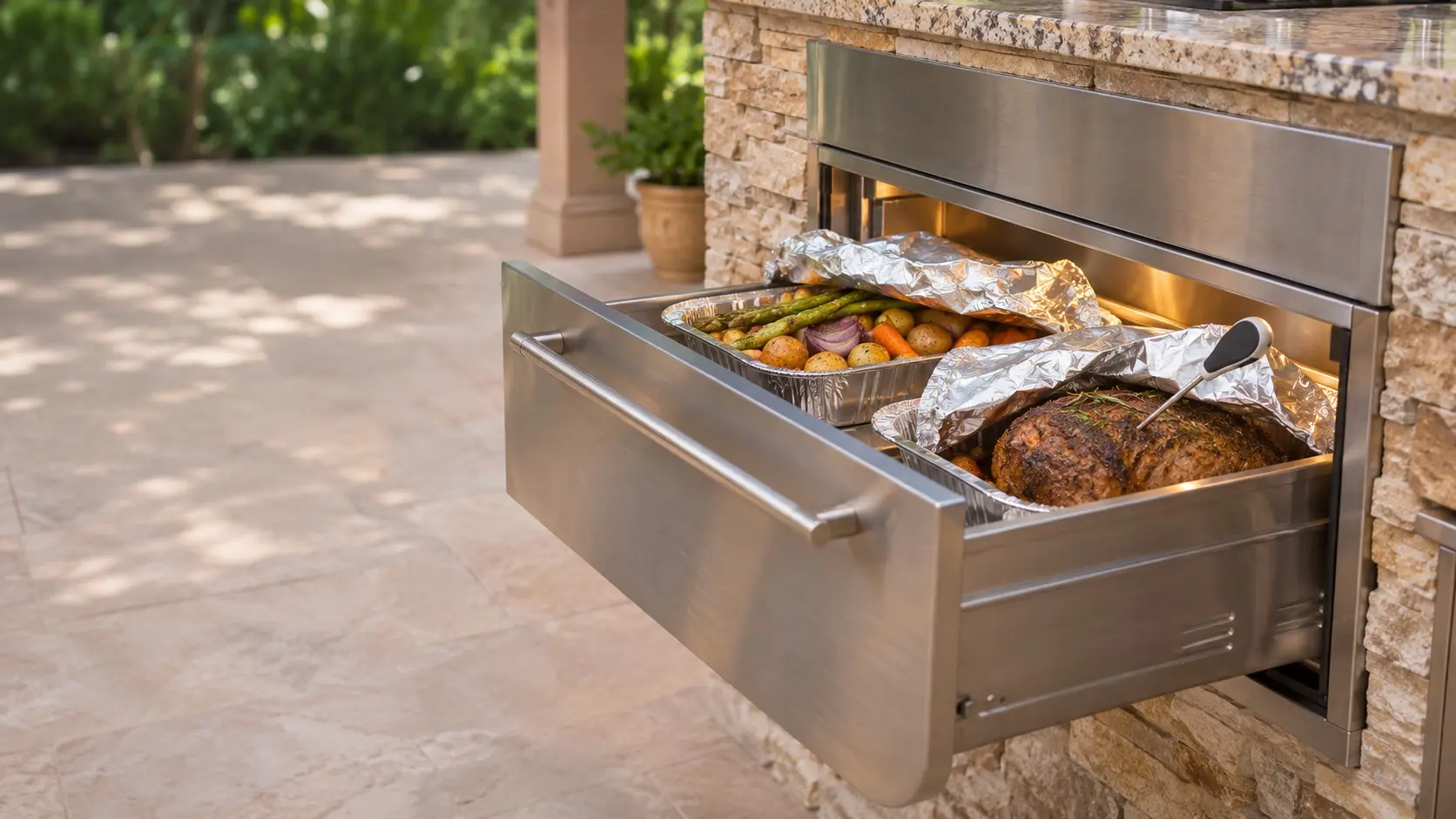
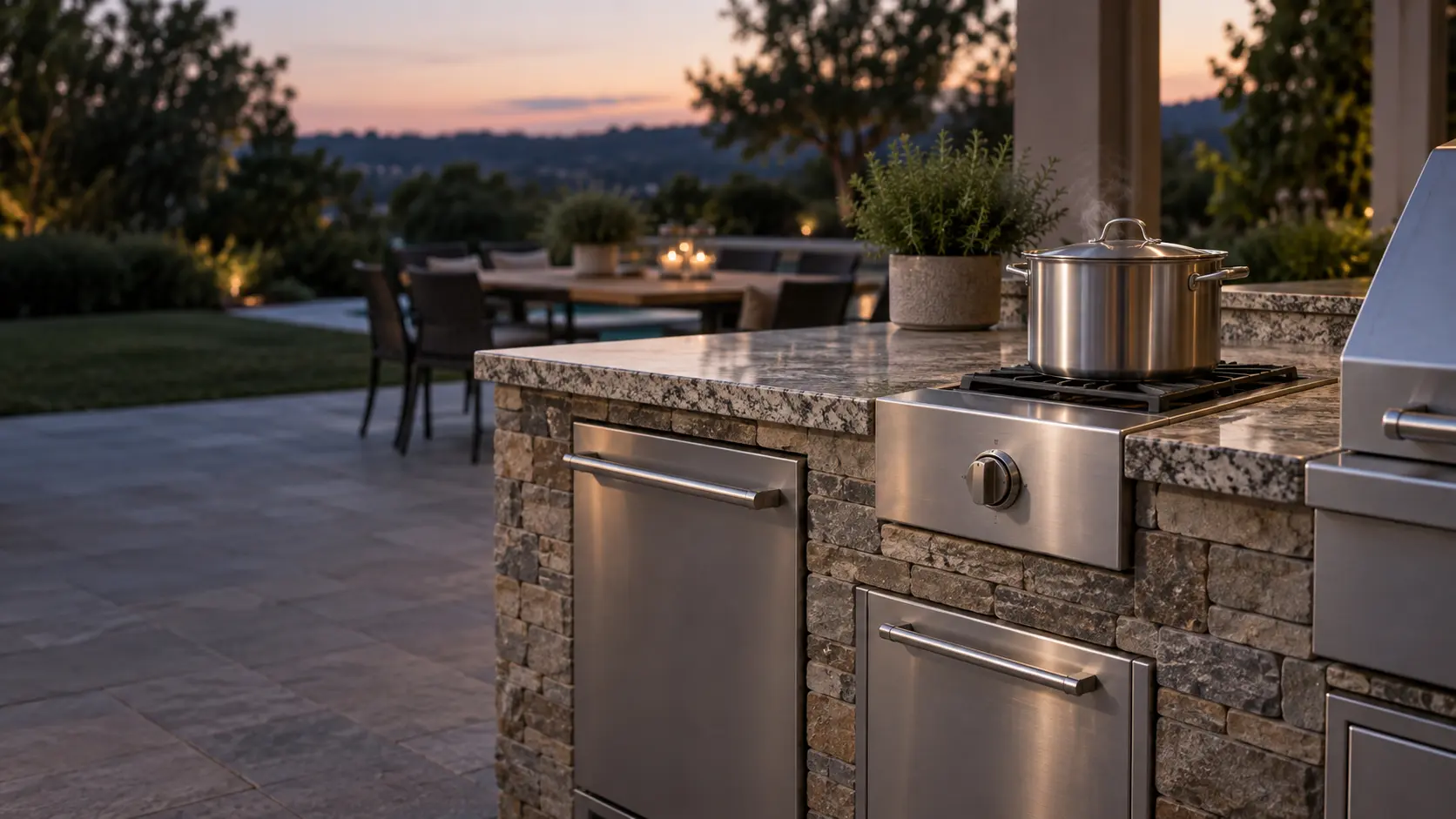
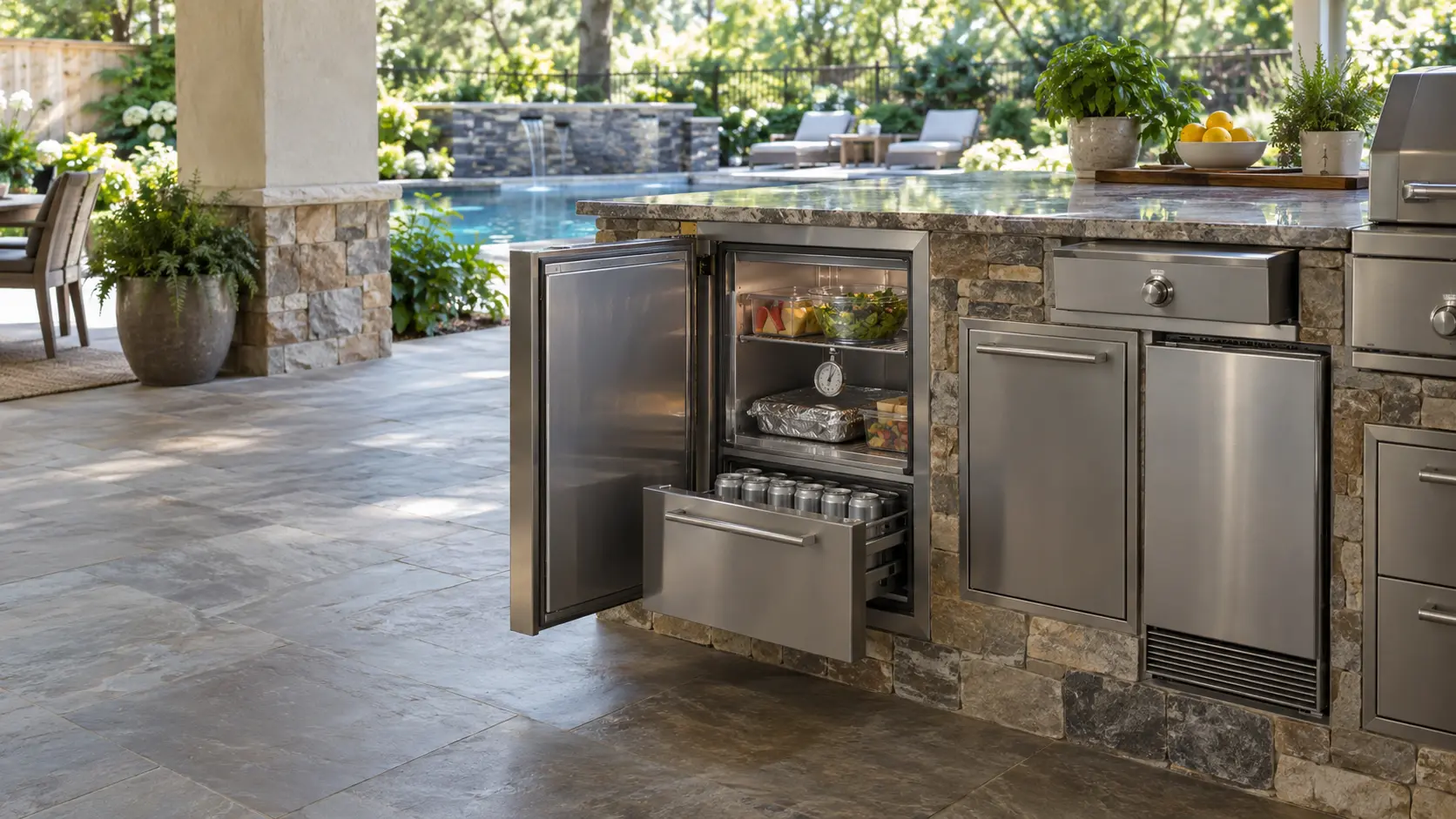
Gas, flame, power and cold food out back.
The gas and fire steps follow what NFPA, USFA and CPSC publish and what the makers print on the first pages of their manuals, in the same order they give: burner knobs off, the gas closed where it can be reached safely, no flame and no switches near the island, everyone stepping away, and 911 or the gas supplier called from a distance. A grease fire gets a lid or a baking sheet, never water.
The food guide works from FDA's figures and cites them on the page: cold food at 40°F or below, 2 hours out of the cooler, or 1 hour when the air is above 90°F, and the stricter 2-hour rule after an outdoor cooler has run warm. Hot food held on the island stays at 140°F or above.
Every guide in this section ends where an owner's part ends. Closing a tank valve, covering a pan, reading a thermometer and resetting a tripped outlet once from a dry spot are yours; gas fittings, burner valves, the island wiring and the cooling system belong to a technician, and nobody looks for a gas leak with a flame.
Not sure where to start?The short answerKeeping food hot outside: warming drawer settings and 140°F
Keeping food hot outside means holding it at 140°F or higher, the lower edge of what USDA calls the danger zone.
The short answerA Gas Smell at the Outdoor Kitchen Island: Knobs Off, Gas Closed, Step Away
A gas smell at an outdoor kitchen calls for burner knobs off, the gas closed at the tank or the island shutoff if you can reach it without leaning into the smell, no flame, no switches or phones near the island, and everyone stepping away.
The short answerA Grease Fire on the Side Burner: Smother the Pan, Shut the Gas, Call 911 If It Spreads
For a grease fire on a side burner, slide a lid or a baking sheet over the pan, turn the burner off and close the gas at the tank or the island shutoff if you can reach it safely.
The short answerKeeping Food Cold Outside: The Outdoor Kitchen Cooler, a Thermometer and the Clock
Keeping food cold in an outdoor kitchen means perishables at 40°F or below, checked with an appliance thermometer rather than the display.
When reading
is not enough.
If the checks in these guides did not settle it, the visit picks up from there, stop by stop.
What repairs cost- 01The island, looked over first
- 02The reason, then the price
- 03Parts in the van
- 04Running before we leave
The problems
these answer.
Each has a page of its own, with the causes in the order worth checking.
All 17 problems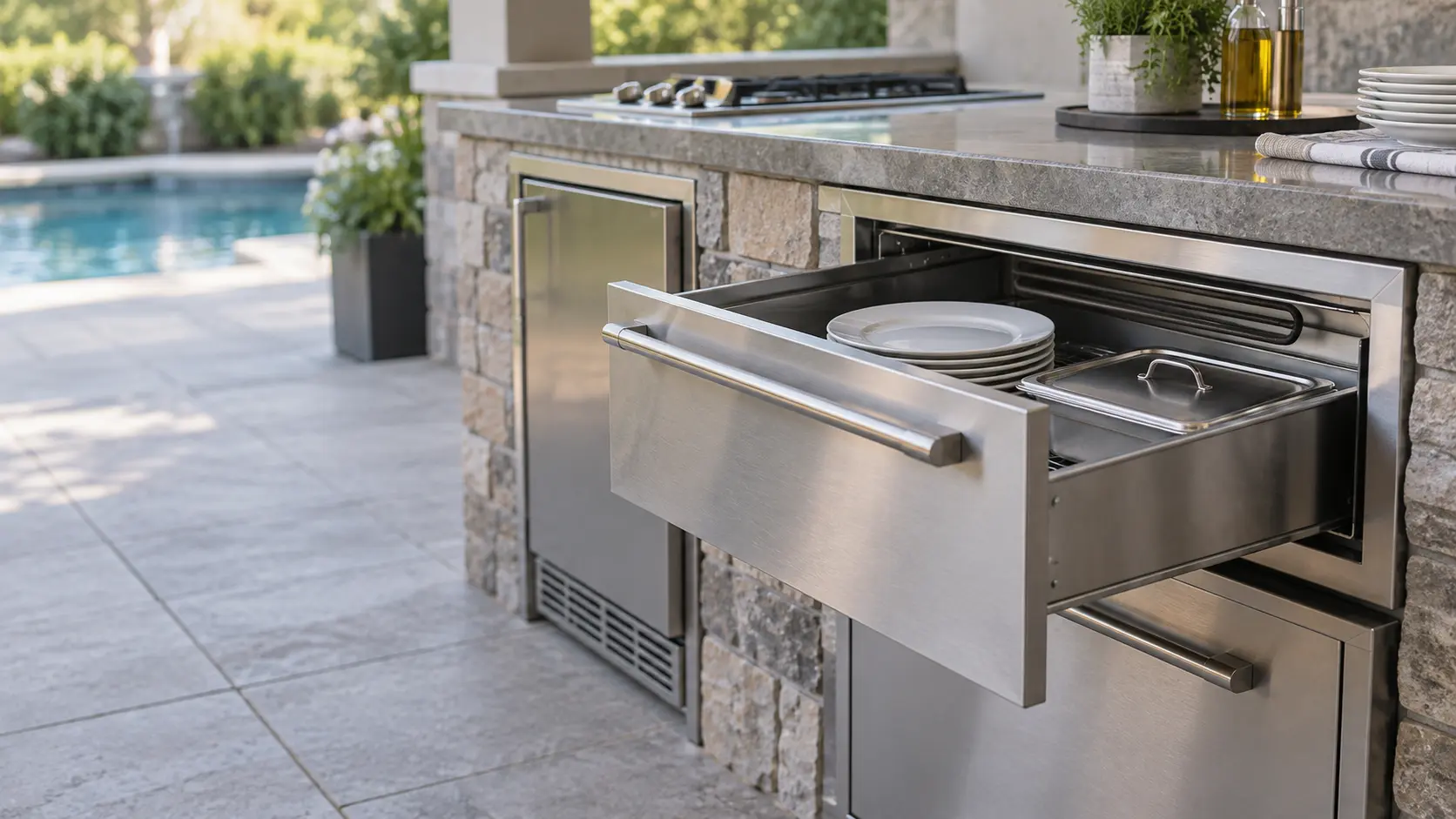
Outdoor Warming Drawer Not Heating or Heating Unevenly
6 causes, cheapest first
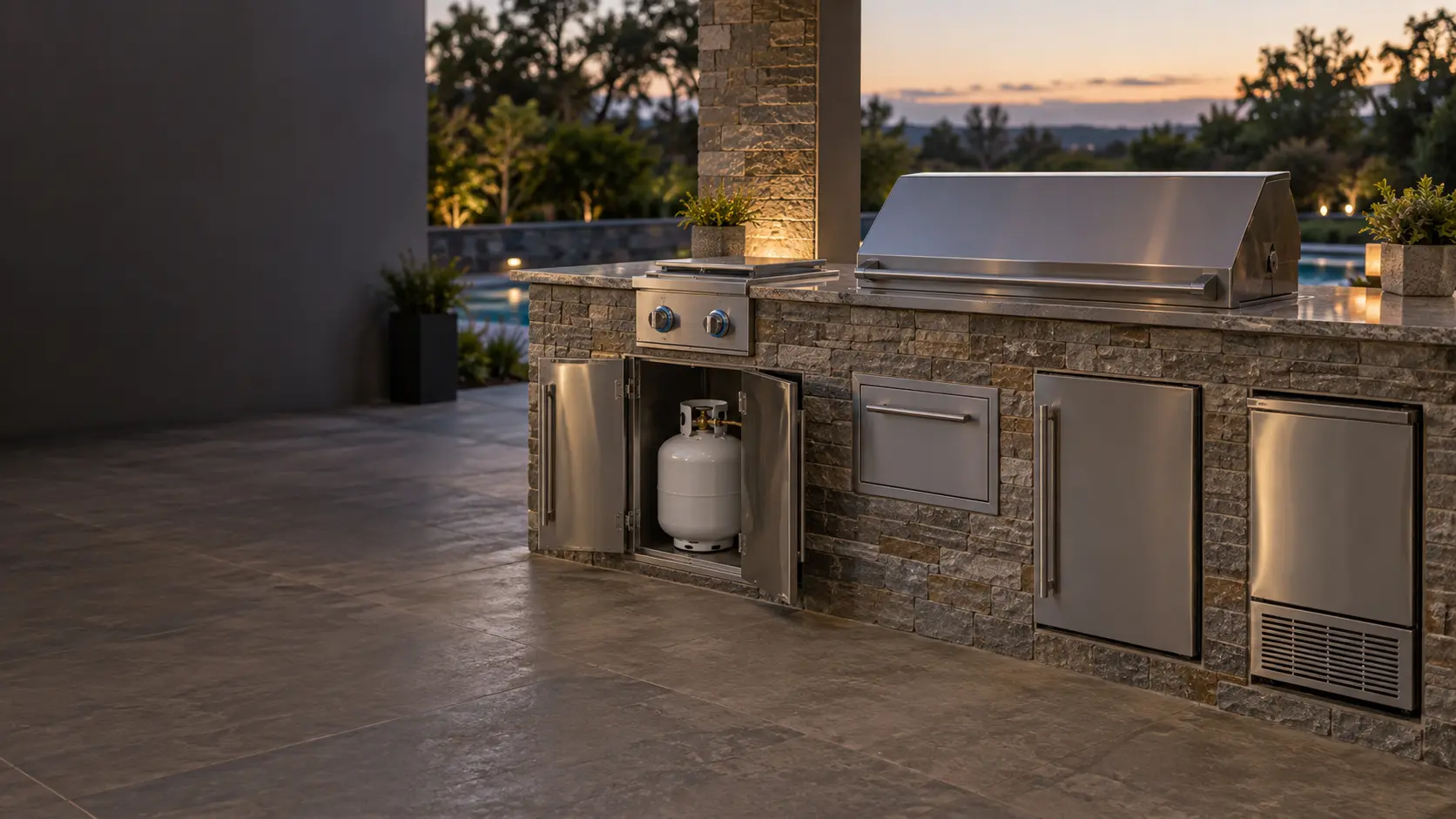
Gas Smell at the Outdoor Kitchen Island: Shut It Down First
6 causes, cheapest first
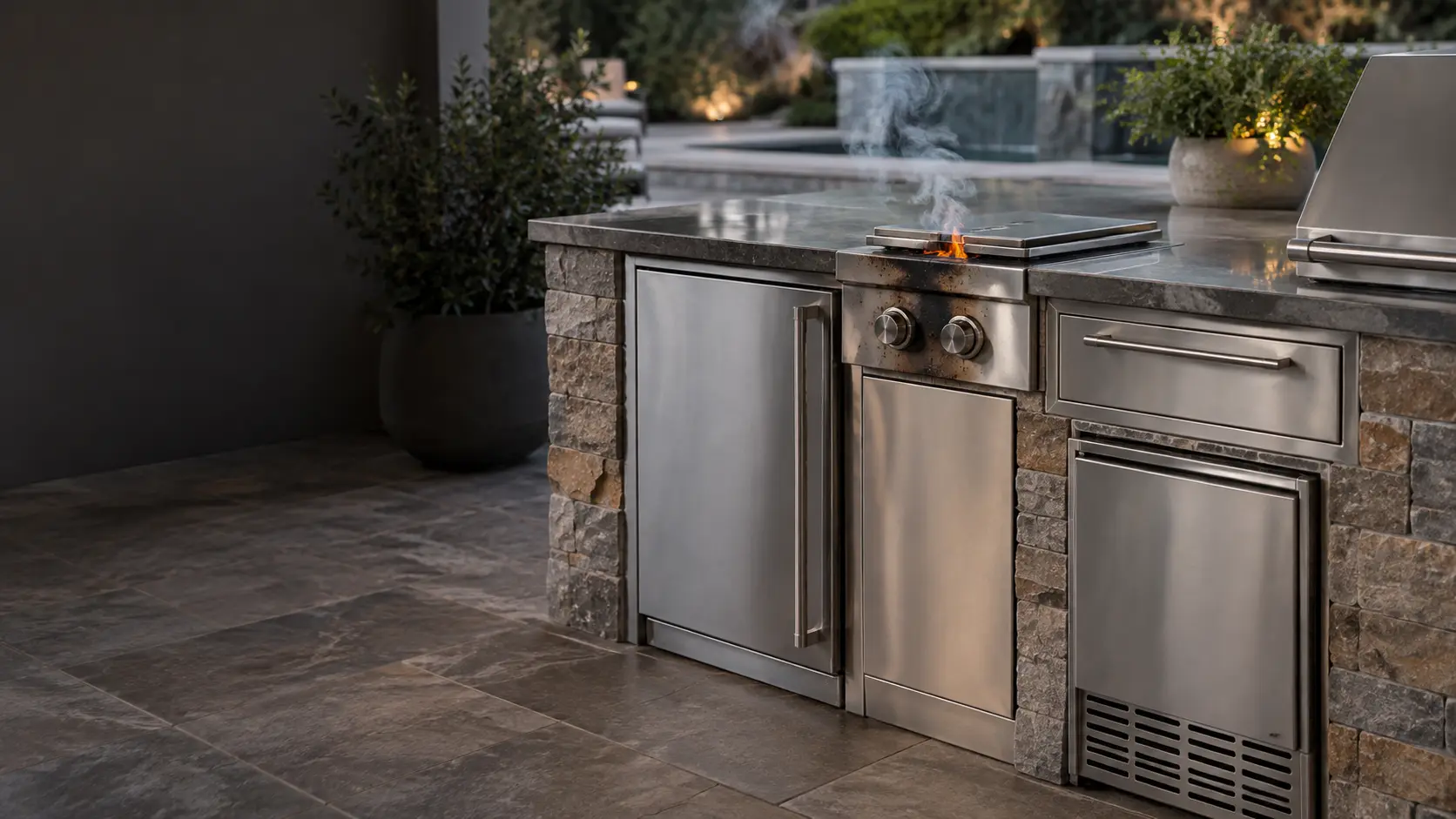
Fire Under the Counter or Inside an Outdoor Kitchen Island
5 causes, cheapest first
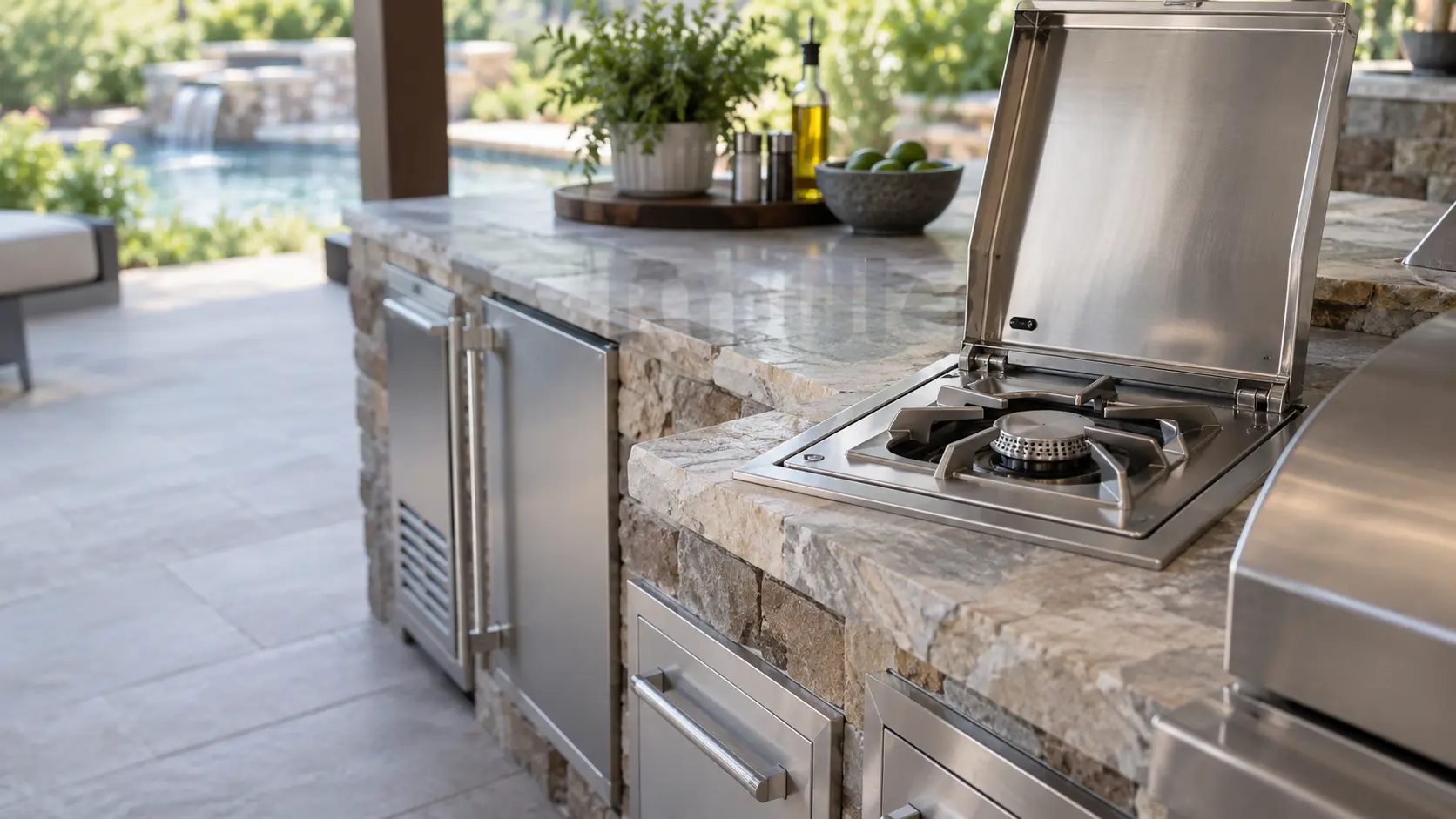
Side Burner Won't Light on the Outdoor Kitchen Island
6 causes, cheapest first

Questions about
gas, fire and power outdoors.
What should I do first if I smell gas at the outdoor kitchen?
Why can I not use the garden hose on a pan fire at the side burner?
Where do the food-safety times on these pages come from?
When is a safety problem at the island a job for a technician rather than the fire department?
The other
sections.
Split by what you are trying to find out rather than by which part of the appliance it concerns.
All guides
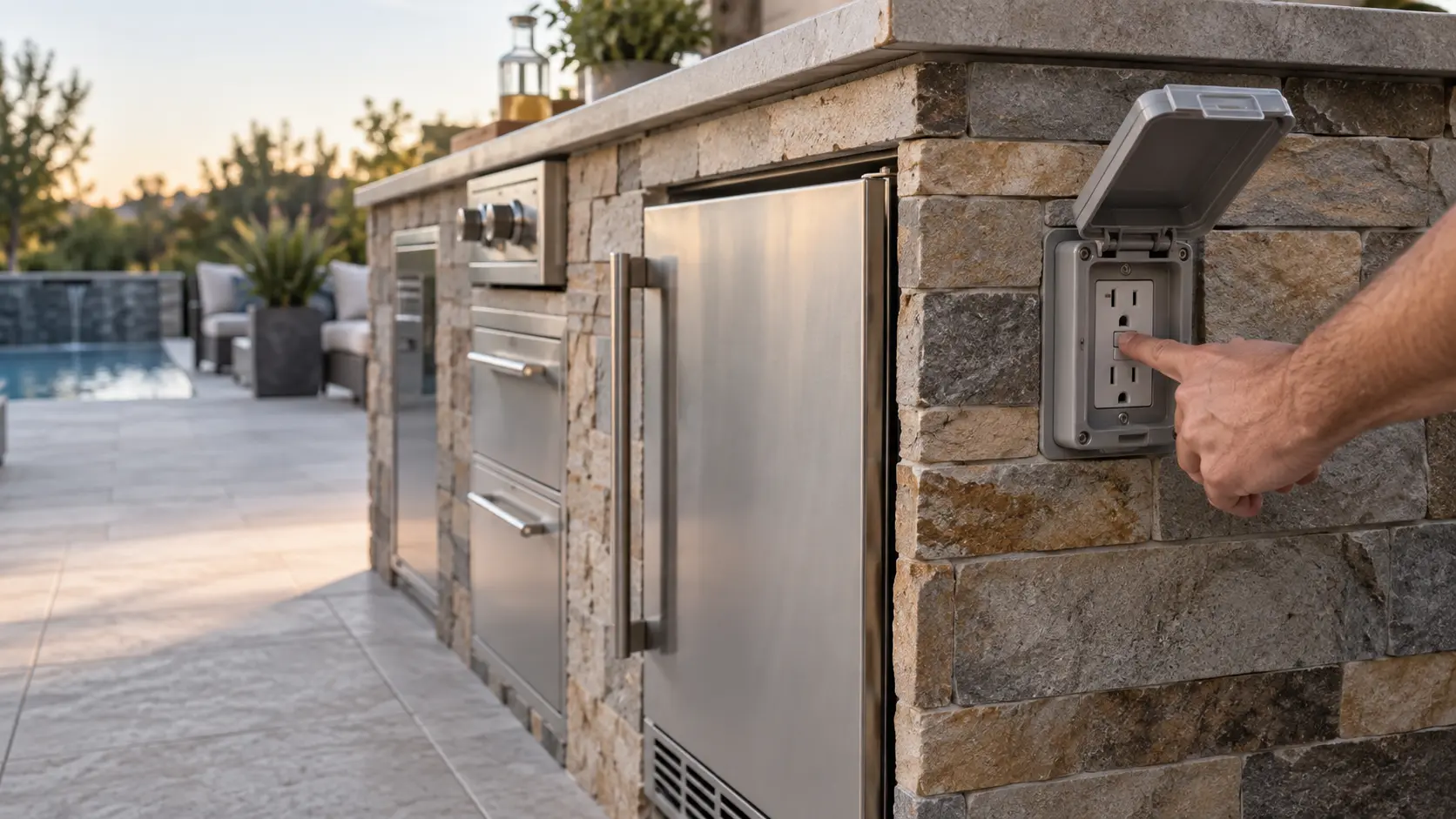
Back to your everyday
Let’s get your outdoor kitchen working again.
Three short steps online, or one call. Tell us what you are seeing and pick a window that works.