The numbers FDA uses for food outdoors
The rules for keeping food cold in an outdoor kitchen come from FDA's page on eating outdoors, which reduces the problem to a band it calls the danger zone, between 40°F and 140°F, where bacteria multiply fastest. Cold perishable food belongs at 40°F or below until it is served; once out, it should not sit for more than 2 hours, or 1 hour when the air outside is above 90°F, and anything that has sat longer is thrown away. Hot food is held at 140°F or above for the same reason.
Those are the figures this site uses, and a summer afternoon on a patio burns through the one-hour allowance quickly. A tray of raw chicken set beside the cooking head at noon in July is on that clock from the moment it leaves the cooler.
- Perishables in the cooler at 40°F or below until they are needed.
- Out on the counter no longer than 2 hours, or 1 hour above 90°F.
- Cooked food kept at 140°F or above until it is eaten.
- Anything that went past those limits goes in the trash, not back in the cooler.
Source: FDA — Handling Food Safely While Eating Outdoors — Danger zone 40°F to 140°F; cold food at 40°F or below; no more than 2 hours out, or 1 hour above 90°F, then discard; hot food at 140°F or above; separate coolers for drinks and perishables; clean platters; cold dishes on ice with meltwater drained
What an outdoor kitchen cooler can hold on a hot day
Outdoor-rated units are built for the heat, within limits the makers state. U-Line designs its outdoor units to run between 50°F and 100°F, and warns that higher surrounding temperatures reduce the unit's ability to reach its low settings; it asks for the cabinet to be kept out of direct sunlight and away from equipment that gives off heat. True asks for a vent behind the unit wherever the air around the island is regularly hotter than 95°F.
Put together, a cooler that holds 38°F in a shaded morning may drift toward the forties by mid-afternoon on a still, sunny day, especially with the door opening every few minutes. That is not always a repair. It is a reason to measure rather than assume, and to plan what goes in it.
Measure the inside with a thermometer
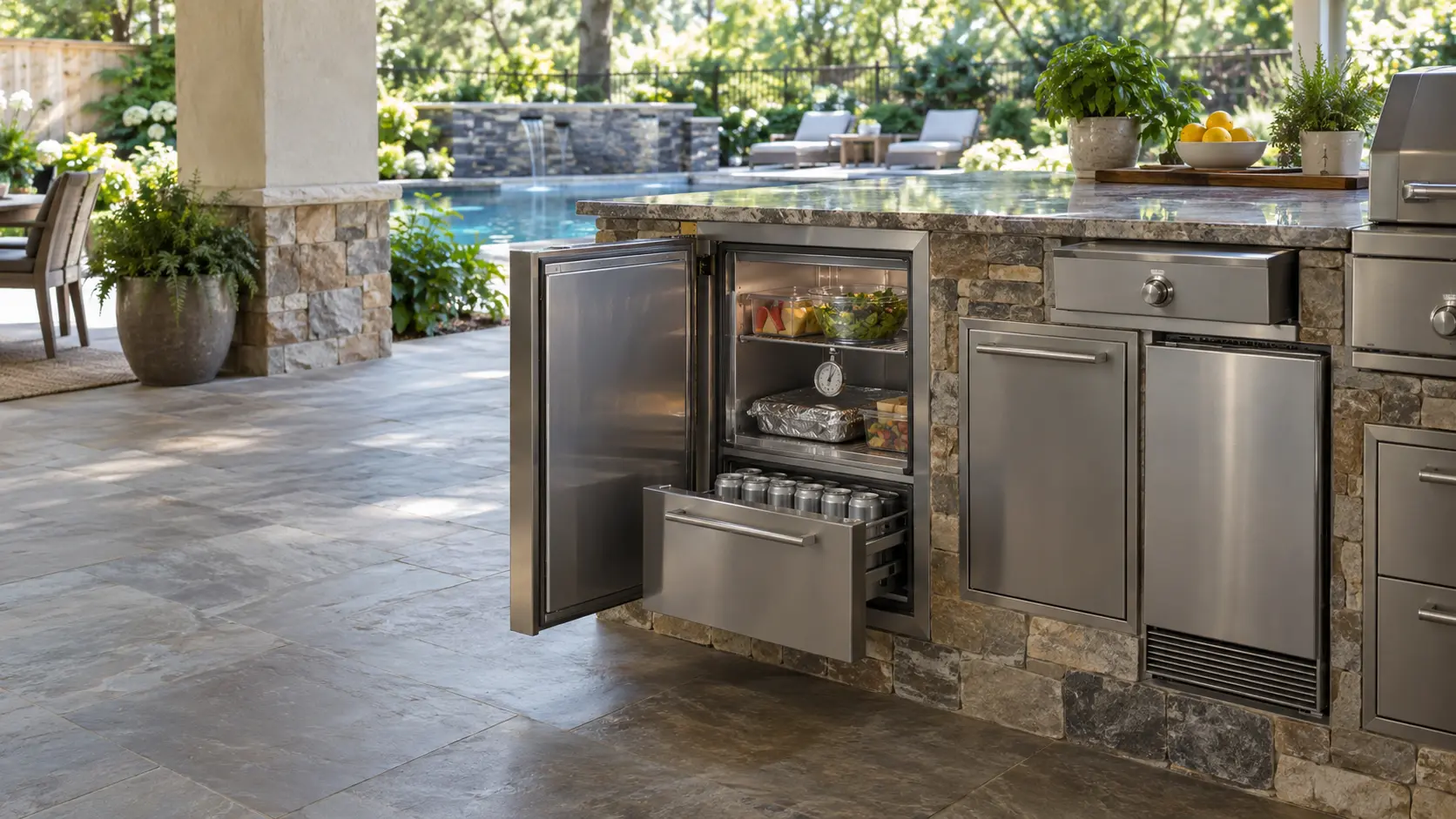
FDA points out that few refrigerator controls show the actual temperature inside, and recommends a freestanding appliance thermometer, checked often. Put one on the middle shelf of the outdoor cooler and read it at the hottest part of a busy day, not first thing in the morning. A reading at or below 40°F then is the one that counts.
Drinks in one place, perishables in another
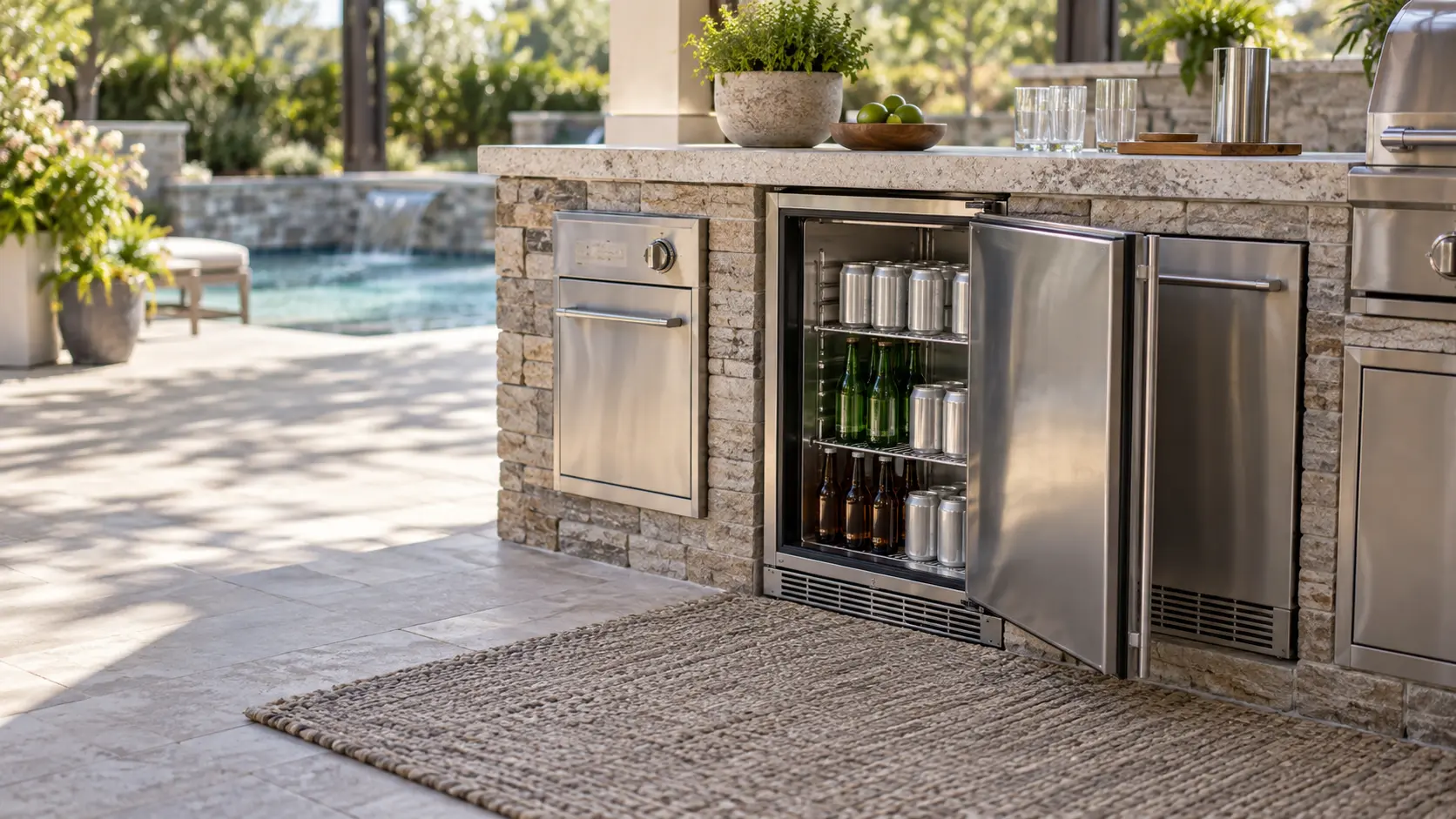
FDA's advice for picnic coolers carries over well to an island: pack beverages in one cooler and perishables in another, so the constant trips for drinks do not warm the food. If the island has a cooler and a pair of cold drawers, give the drinks the unit that gets opened all evening and keep raw meat and salads in the one that stays shut. With a single unit, keep the perishables in the house refrigerator until the cooking starts.
A stocked cabinet holds its cold better
True recommends keeping its outdoor units stocked full for the best operation. Chilled cans and bottles act as a store of cold that softens each door opening, so loading the drinks the night before a party does more good than loading them an hour before the guests arrive.
Source: U-Line — UORE124 Outdoor User Guide and Service Manual — Designed to operate between 50°F and 100°F; higher ambient temperatures reduce the ability to reach low temperatures; keep out of direct sunlight and away from heat-generating equipment; True Residential — 15 and 24 inch Undercounter Install Guide and User's Manual — Vent the rear of the opening where ambient regularly exceeds 95°F; keep the unit stocked full for best operation

When the outdoor cooler has been running warm
Sometimes you find out after the fact: the outlet tripped in a storm, the cooler's display went dark overnight, or the thermometer reads 50°F. FDA's guidance for a power loss is the one to use. A refrigerator keeps food cold for about 4 hours if the door stays closed, and refrigerated food should be safe if the power was out no more than 4 hours with the door shut.
FDA's own pages differ on the next figure, one saying 4 hours above 40°F and another 2; this site follows the stricter one. Discard perishable food such as meat, poultry, fish, eggs and leftovers that has been above 40°F for 2 hours or more, and do not decide by smell or look.
When nobody knows how long it was warm
- Read the appliance thermometer before opening anything else.
- If it shows 40°F or below, the food is fine; keep the door shut while you find out why it stopped.
- If it is above 40°F and you cannot say for how long, FDA's rule is not to take the chance: throw the perishables out.
- Sealed drinks are not the concern; meat, dairy, eggs, cooked dishes and cut fruit are.
Source: FDA — Food and Water Safety During Power Outages and Floods — A closed refrigerator keeps food cold about 4 hours; food is safe if the outage lasted no more than 4 hours with the doors shut; this page gives 4 hours above 40°F as the discard point; FDA — Power Outages: Key Tips for Consumers about Food Safety — Discard perishable food that has been above 40°F for 2 hours or more
Serving from the island without breaking the chain
Once the food is cooked, FDA's rules for the table apply. Carry cooked meat to a clean platter, never the one that held it raw unless it has been washed in hot, soapy water. Cold dishes such as chicken salad can sit on ice in a shallow pan, with the meltwater poured off and the ice topped up as it goes.
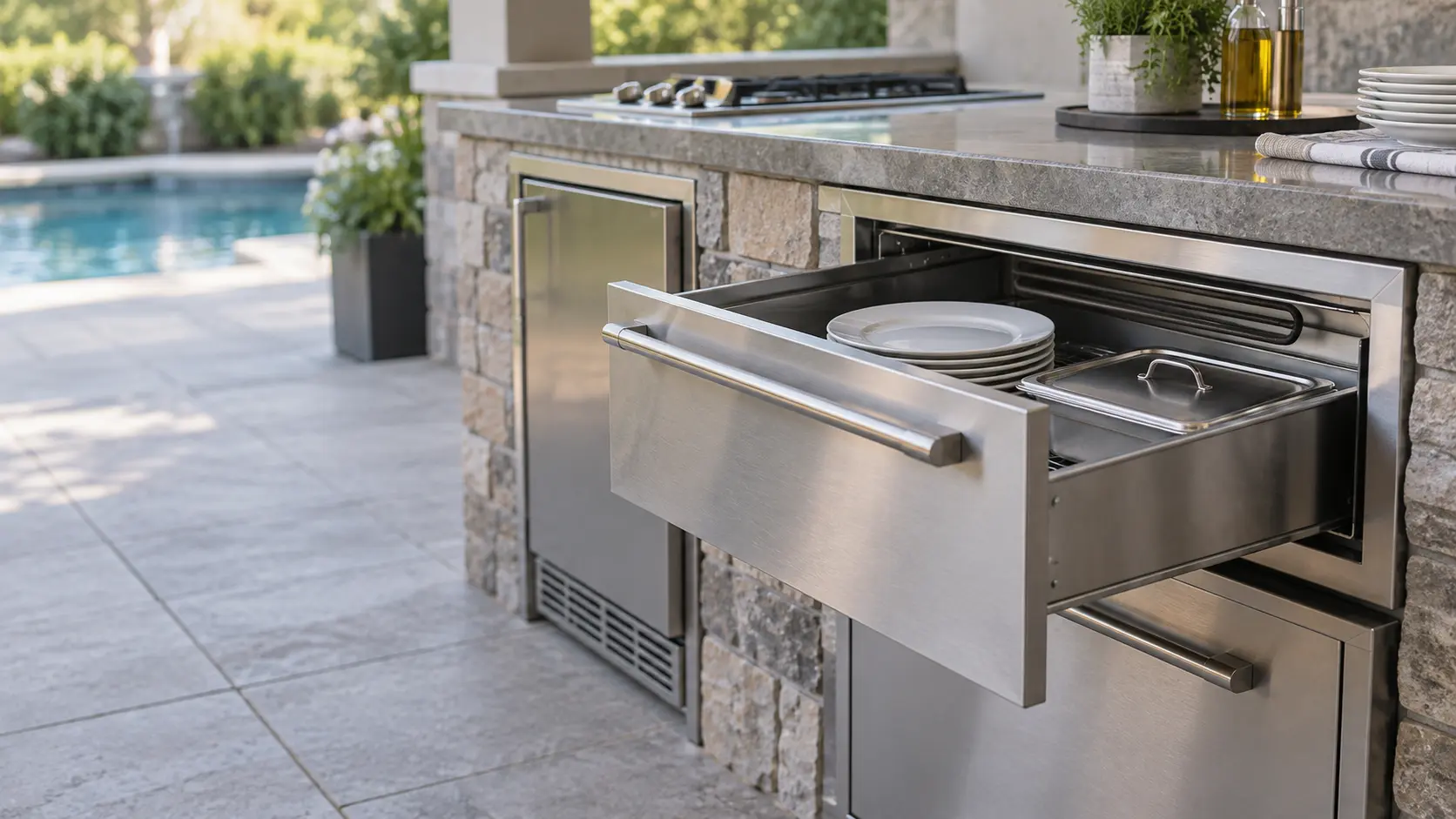
A warming drawer is useful for the other half of the rule. Set it so the cooked food stays at 140°F or above, check with a food thermometer, and treat it as a place to hold food that is already hot rather than a way to rescue a tray that cooled on the counter.
Source: FDA — Handling Food Safely While Eating Outdoors — Danger zone 40°F to 140°F; cold food at 40°F or below; no more than 2 hours out, or 1 hour above 90°F, then discard; hot food at 140°F or above; separate coolers for drinks and perishables; clean platters; cold dishes on ice with meltwater drained
When warm food points to a repair
Heat, sun and a busy door explain an afternoon drift of a few degrees. They do not explain a cooler that will not reach 40°F in the shade on a mild day, a compressor that runs without stopping, frost building on the back wall, or a door that no longer pulls shut. Those are worth a visit, and the numbers from your thermometer, with the time of day, make the diagnosis quicker.