What temperature keeps food safe to eat?
Hot food stays safe when it is held at 140°F or above. USDA's food safety pages describe 40°F to 140°F as the danger zone, where bacteria multiply quickly, and say perishable food should not sit in it for more than 2 hours.
That 2-hour limit counts the time food spends in the danger zone in total. When the air is above 90°F, the limit drops to 1 hour. At a patio dinner the food is carried out, plated, passed around and refilled, and all of that counts. Treat 140°F as the floor and the clock as running from the moment a dish drops below it.
Why cold air changes the math
A warming drawer works against the air around it. In a mild kitchen it only has to keep up with heat loss through the walls. On a 40°F patio the cabinet itself is cold, the drawer starts from a lower point, and every opening of the door lets heat out faster. Plan on a longer preheat and fewer peeks.
How should I set and use an outdoor warming drawer?
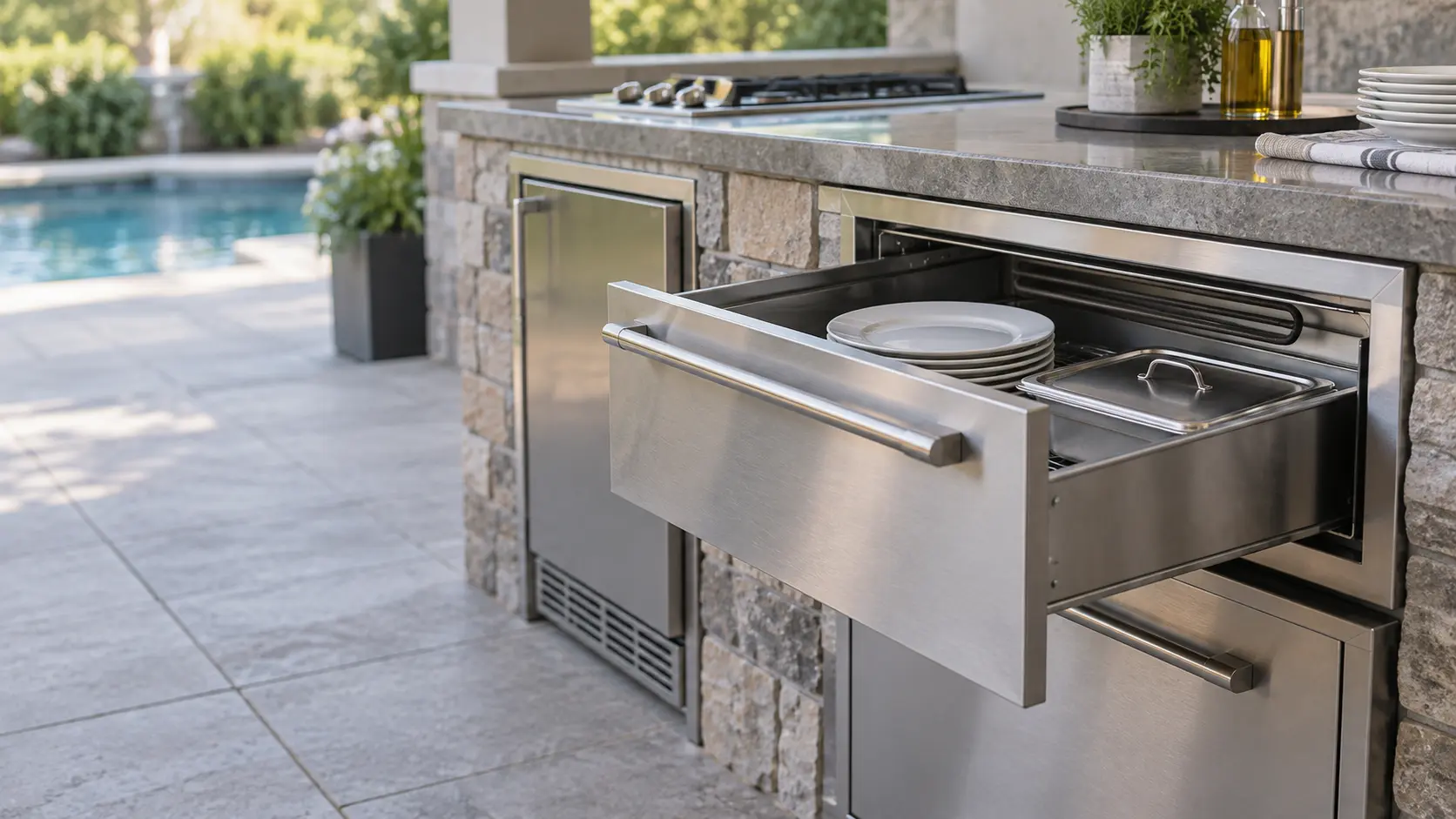
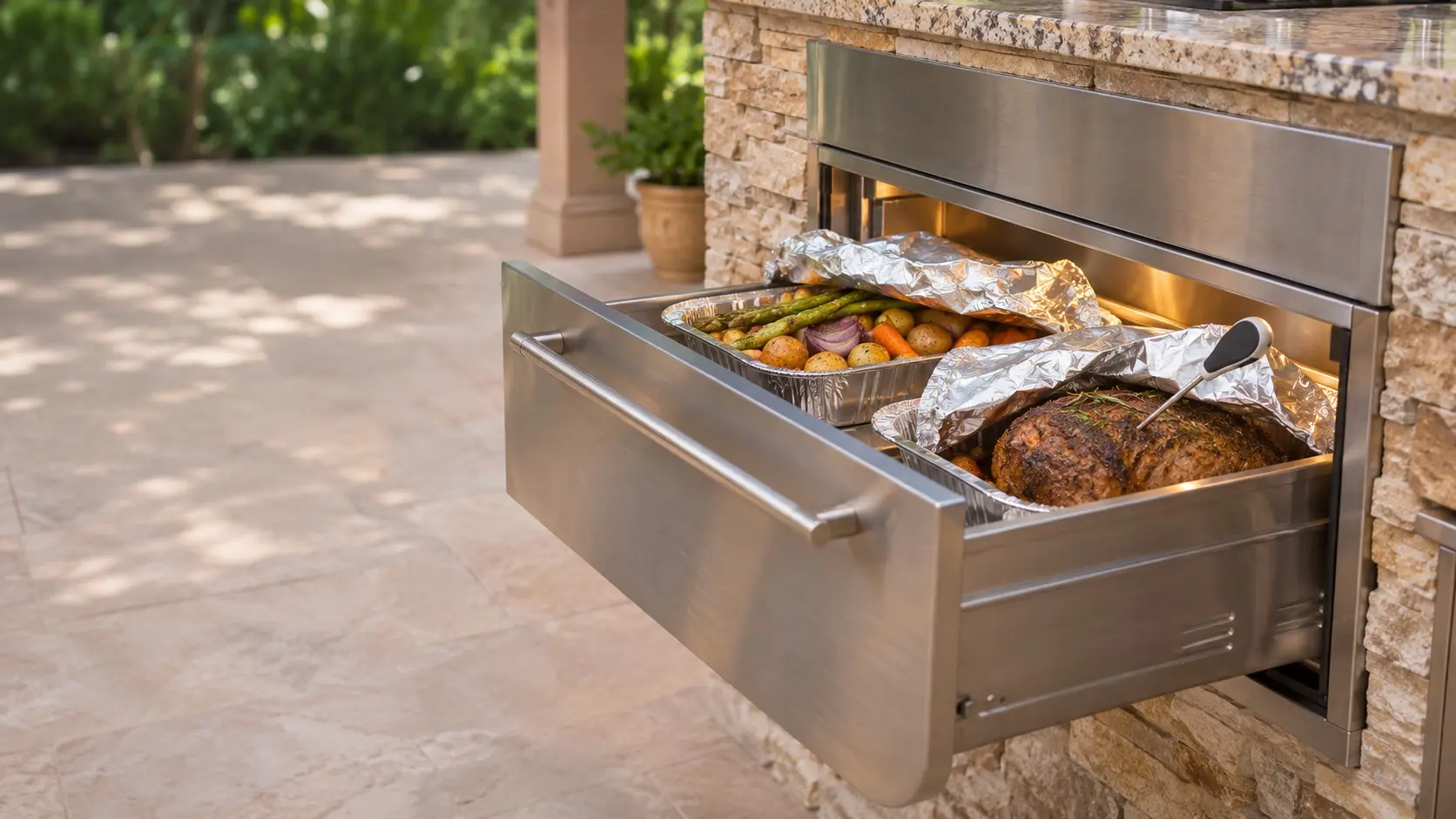
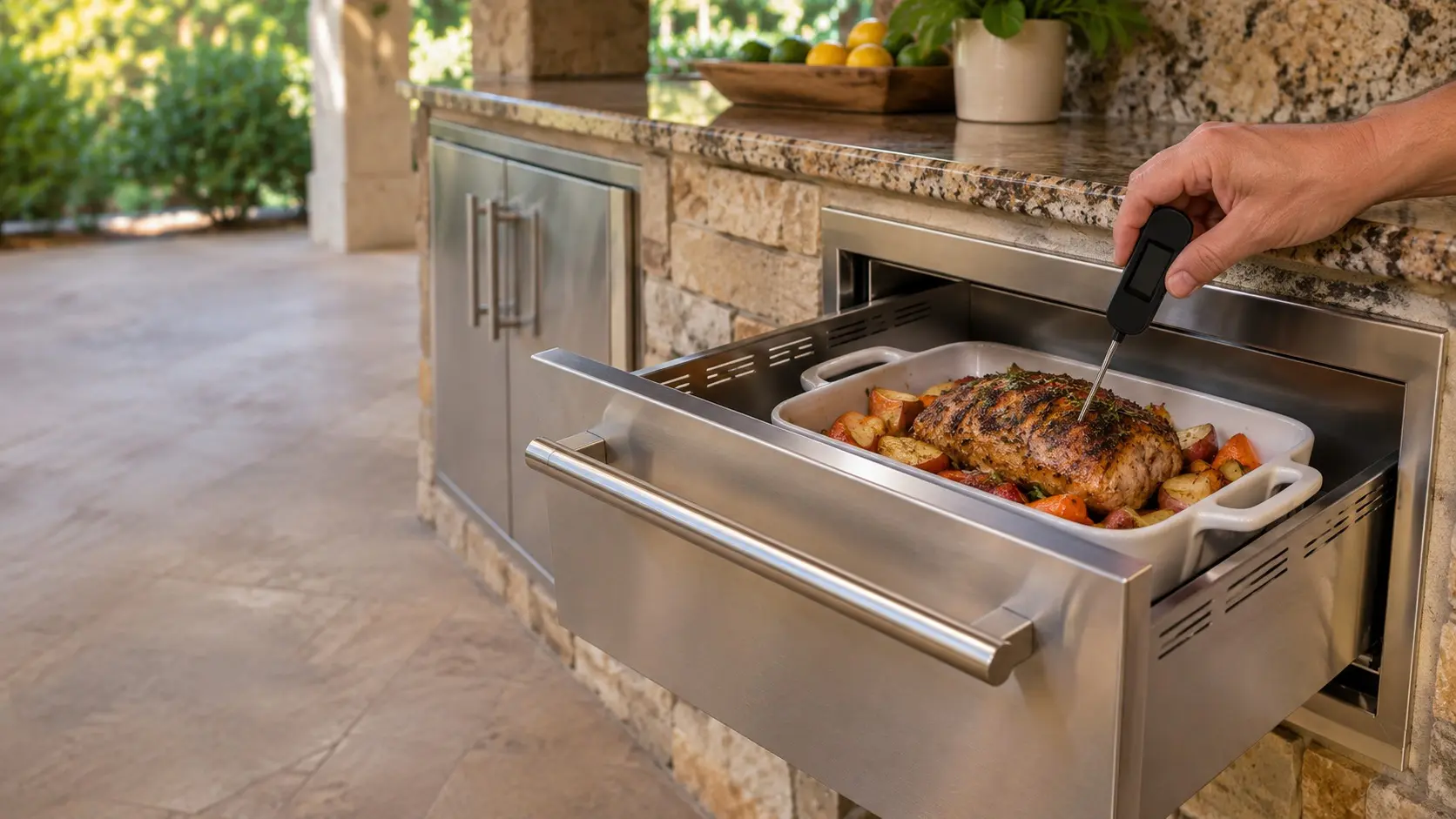
Preheat the drawer empty, load hot food into it, keep it shut, and let a thermometer tell you whether the setting is right. The dial's labels are a guide, not a promise.
- Preheat it for the time your manual gives, and longer on a cold night, before the food comes off the heat; the warming drawer checks explain how to time it the day before.
- Move food in while it is still steaming, not after it has cooled on the counter.
- Cover dishes with foil or a lid, and keep the moisture vent shut for moist dishes.
- Check the thickest part of the food with a probe after 20 minutes.
- Raise the setting a notch if it reads under 140°F, then check again.
Moist or crisp
Close the vent for mashed potatoes, gravy and casseroles. Open it a little for rolls, fried food or anything that should stay crisp. A wet dish in an open drawer loses heat as it steams.
What can a warming drawer not do?
A warming drawer holds hot food hot. It is not built to heat cold food, and it is not an oven. Putting a chilled dish in will take a long time to reach 140°F, and for that time the dish sits in the danger zone.
| Task | Warming drawer? | Better choice |
|---|---|---|
| Hold cooked food at 140°F or above | Yes | None needed |
| Reheat cold leftovers | No | Oven or stovetop to 165°F first |
| Cook raw food | No | Oven, side burner or smoker |
| Keep fried food crisp | Partly | Open vent, short hold |
| Hold food for many hours | Safe at 140°F, but quality drops | Serve in waves |
Reheating first
If a dish has gone cold, heat it through before it goes into the drawer. USDA advises reheating leftovers to 165°F. Then move it to the drawer to hold, not to heat.
Source: USDA FSIS — Leftovers and Food Safety — reheat leftovers to 165°F and refrigerate within 2 hours
How do I check it with a thermometer?
Put a probe in the thickest part of the food, not the edge or the foil. Read it again when you serve. The reading in the dish is the number that matters, not the setting on the dial.
Check the drawer too
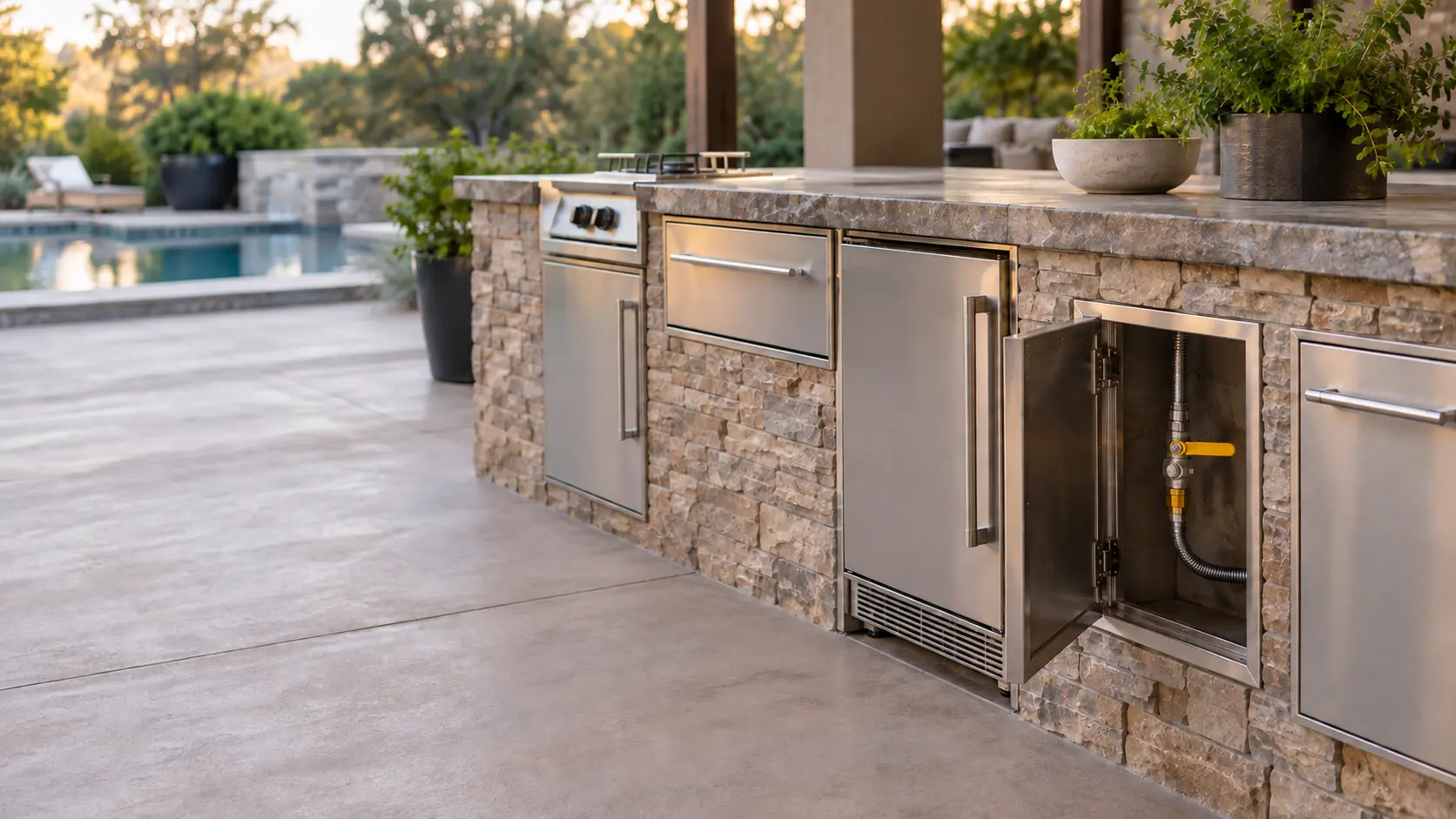
A drawer that trips the breaker is a power question first; the GFCI and power repair page covers it, and power and water to the island shows how the circuit is usually set up.
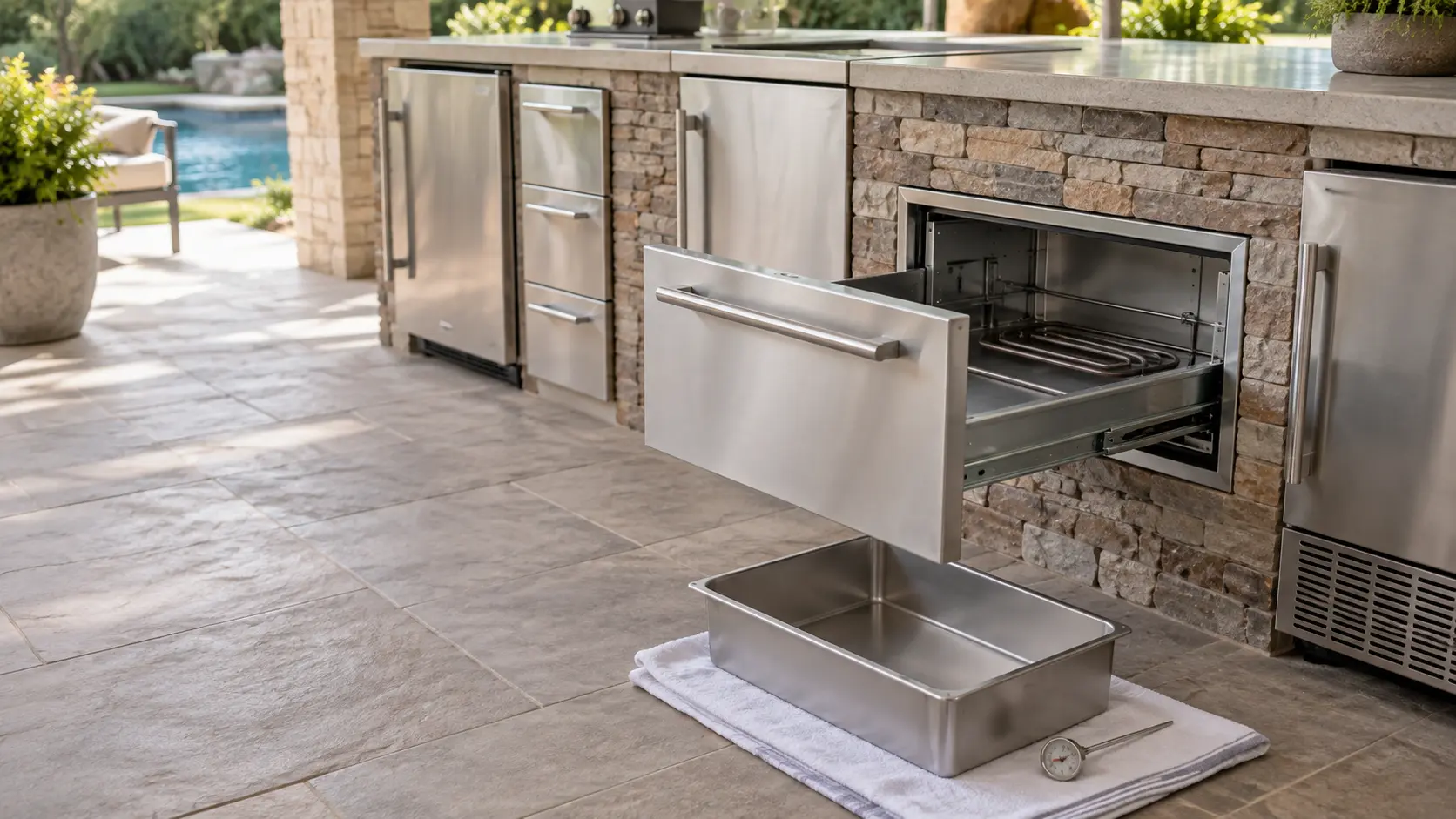
A dial thermometer set on the rack shows the air temperature. It can read higher than the food in a loaded drawer, so use it to confirm the drawer is working and the probe to confirm the food is. A drawer that never reaches 140°F with the middle setting is a repair question for warming drawer heating repair, and the not heating page lists the signs.
Backups if the drawer fails
USDA lists chafing dishes, preheated steam tables, warming trays and slow cookers for keeping hot food hot. On a patio that means:
- A slow cooker on the warm setting, for soups and sides, plugged into a GFCI outlet.
- A plug-in warming tray on a covered table.
- A covered dish kept in the indoor oven with the heat on.
- A chafing dish with fuel, watched at all times and kept away from wind.
Check each with a probe the same way. The cold side of the same job is covered in a companion guide.
What does the drawer type change?
Built-in outdoor drawers sit in an insulated cabinet and hold heat well; a freestanding one on a cart loses more. The outdoor warming drawer type page lists the kinds. A drawer with a vent slider and a seal will do better in wind than one without, and a drawer under a roof will do better than one in open rain.
Where to put the drawer in the serving flow
Keep the drawer close to the table and shut between trips. Send one person to fetch dishes so the door opens once for each refill, not once for each guest. Label the drawer's contents with a note on top so guests do not open it to look.
When should I throw food out?
Throw away food that has sat below 140°F, and above 40°F, for more than 2 hours, or 1 hour if the air was above 90°F. Look at your probe notes and the clock, not at how the food smells or looks.
Cooked food that has held at 140°F or above is still safe, though dishes lose texture over a long hold. Serve in waves if the meal is long, and put leftovers into shallow containers and into a cold place within 2 hours.
Source: USDA FSIS — "Danger Zone" (40°F - 140°F) — the 40°F to 140°F range, the 2-hour and 1-hour (above 90°F) limits, and hot food held at or above 140°F