When the pan on the side burner catches
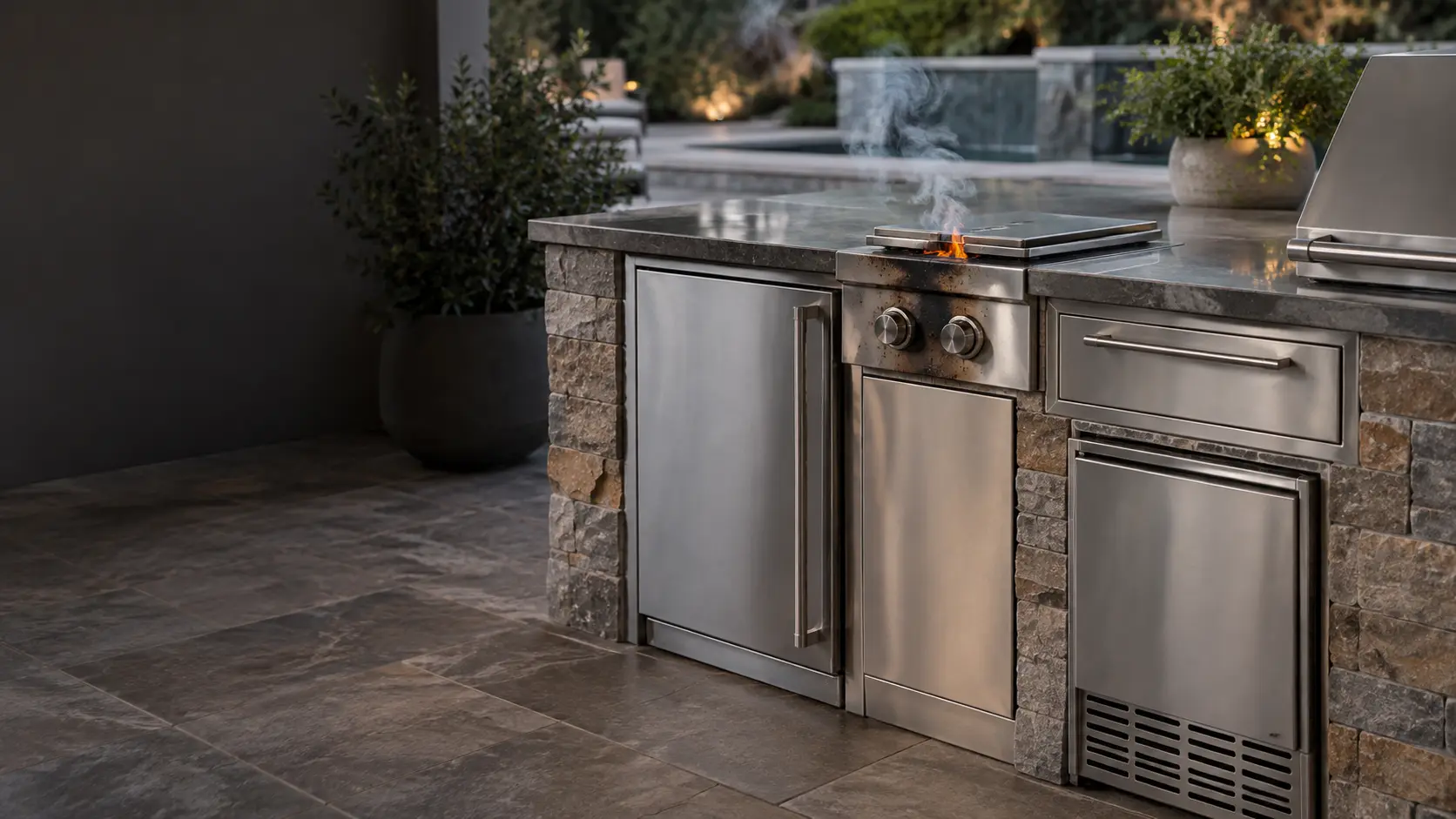
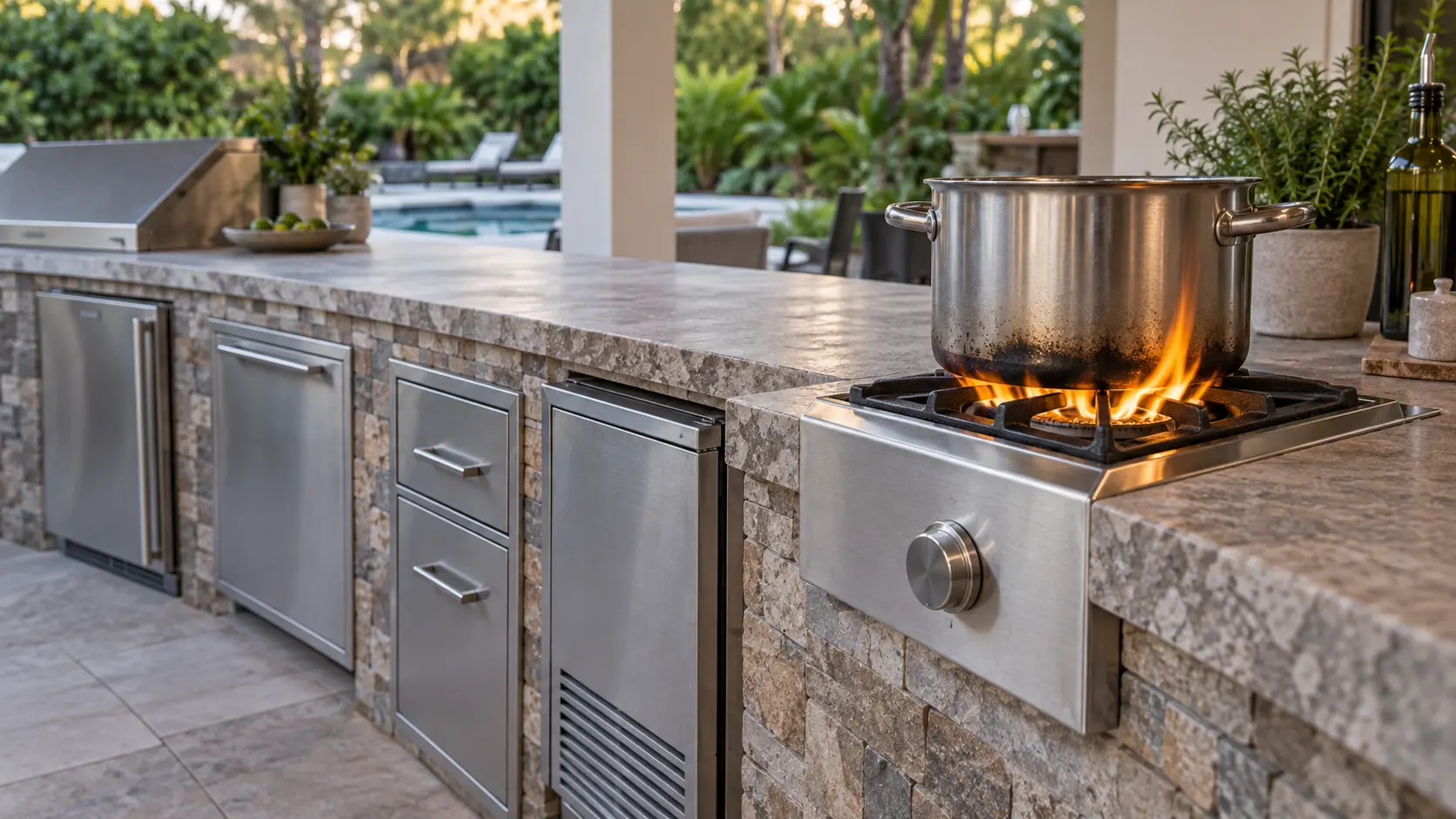
A grease fire on a side burner burns because the oil has fuel and air, and the quickest way to take the air away is to cover it. NFPA's advice is to slide a lid over the pan, turn off the burner and leave the pan covered until it is completely cool, and not to lift the cover early, because the fire can start again. USFA says the same with one useful addition: a baking sheet does the job when the lid is out of reach.
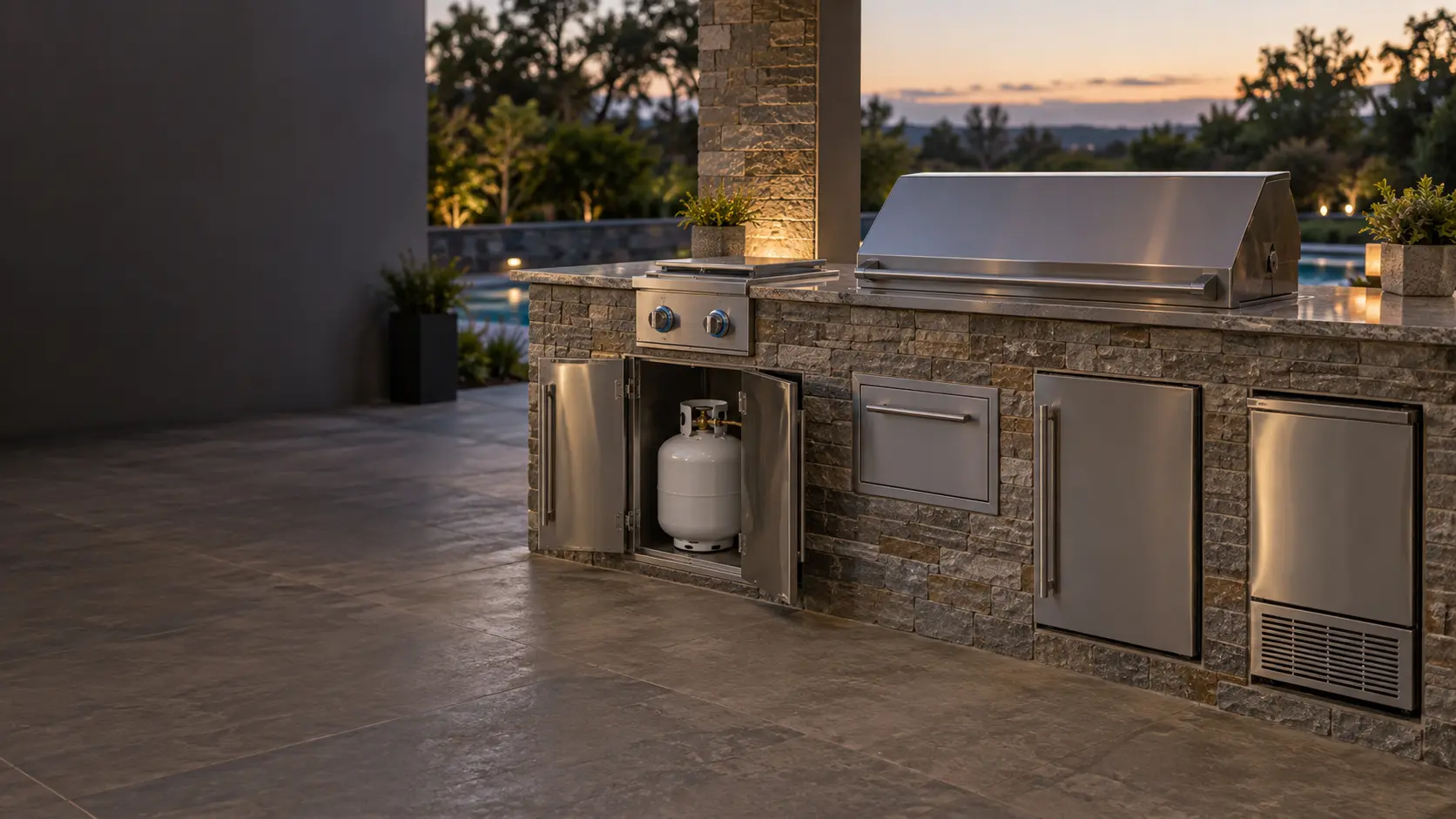
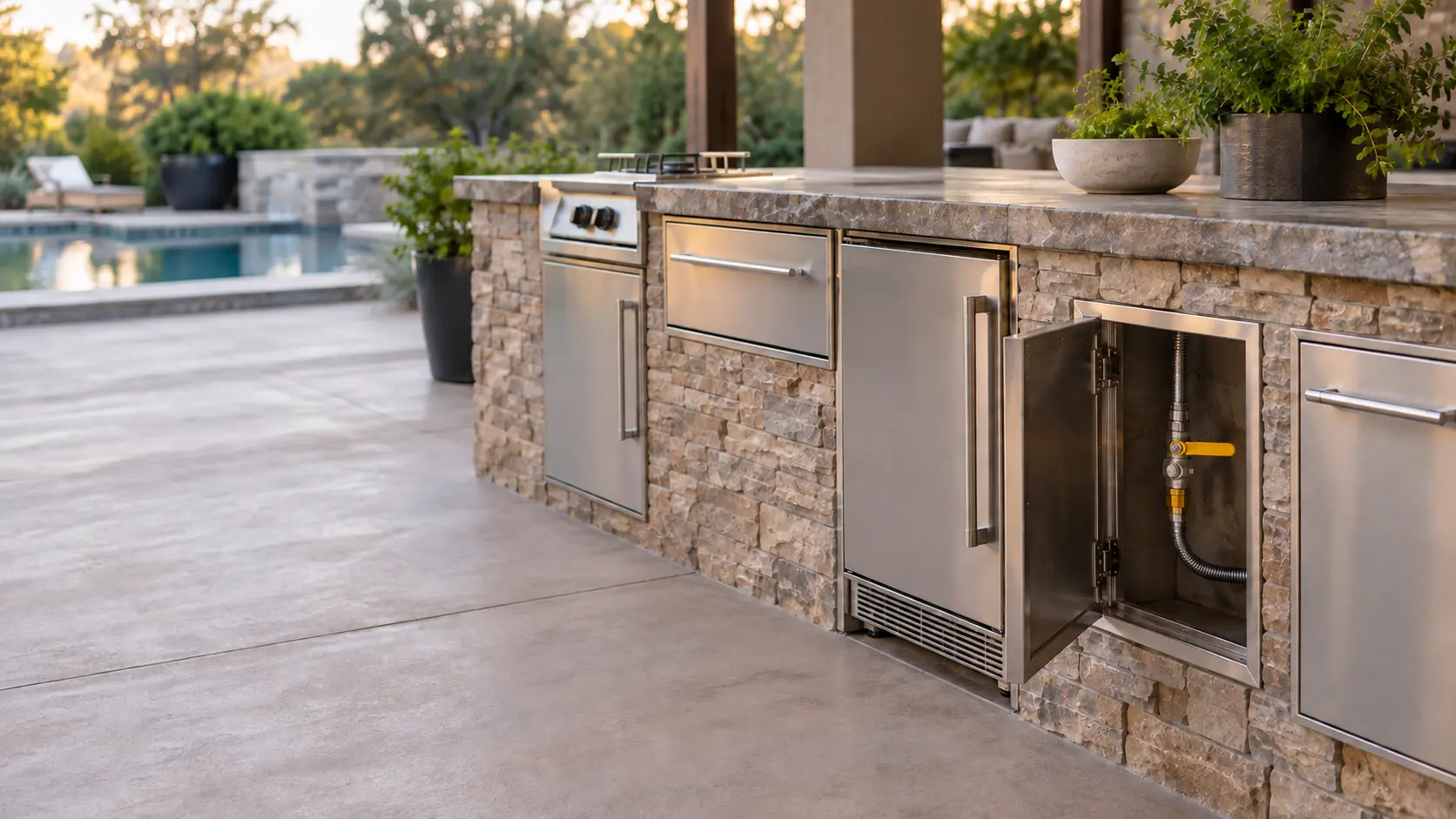
Outdoors there is one more valve to think about. With the burner off, close the gas at the propane tank or the island shutoff, but only if that does not mean reaching past the flame or crouching beside the side burner cabinet.
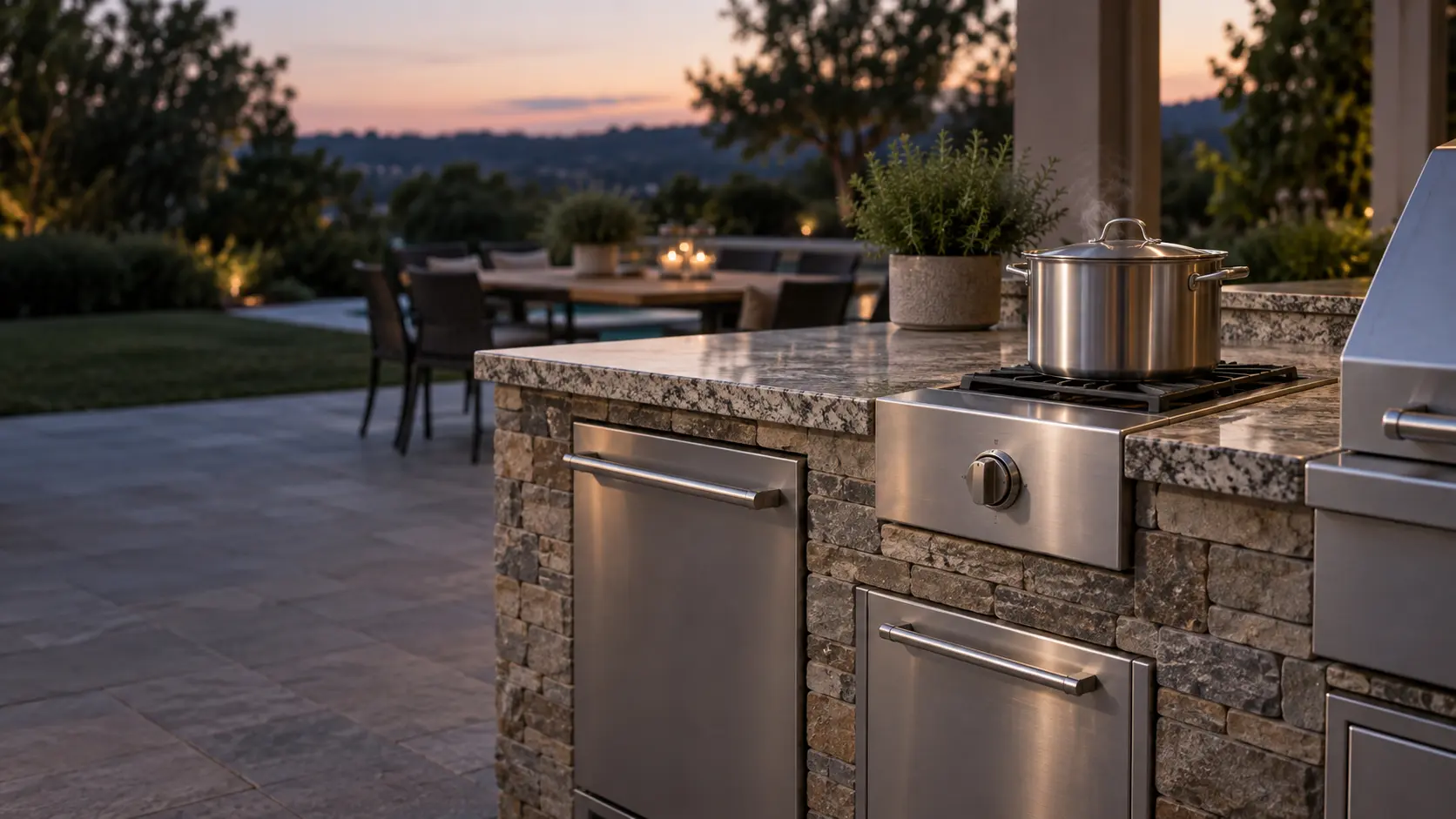
- Slide the lid or a baking sheet over the pan from the side, keeping your arm low and your face back.
- Turn the side burner knob to off.
- Close the gas at the tank or the shutoff if you can do it without going near the fire.
- Leave the pan where it is and the cover on; do not carry a burning pan across the patio.
- Keep everyone back from the island until the pan is cold.
Why water is never the answer
Lynx's side burner manual puts it in one line: never try to put out a grease fire with water or any other liquid. NFPA repeats it word for word in its cooking guidance. On a patio the garden hose is often the closest thing to hand, which is exactly why the rule deserves to be said out loud to everyone who cooks at the island.
The extinguisher by the island
Lynx asks owners to keep an ABC fire extinguisher accessible at the side burner, and CPSC's gas grill fact sheet says to keep one nearby. It is for a small fire you are sure you can handle, with a clear way back from the island; NFPA's condition for fighting any cooking fire is that others are getting out and you have a path out yourself.
Source: NFPA — Cooking safety — Slide a lid over the pan and turn off the burner; leave it covered until completely cool; never throw water on it; if it does not go out, get everyone out and call from outside; fight a fire only with a clear way out; smoke or an oil smell means turn the burner off; heat oil slowly and add food gently; USFA — Cooking fire safety — Keep a pan lid or baking sheet nearby and use it to cover a pan that catches fire
When it is a call to 911 instead
NFPA draws the line simply: if the fire does not go out, or you are not comfortable sliding a lid over the pan, get everyone away and call the fire department from a safe distance. On an outdoor kitchen, add flames that reach the countertop edge, the cabinet doors, an umbrella, a pergola or a wooden fence, and any fire you can see below the side burner inside the island.
A fire under the counter is a different emergency from a pan fire. It can mean burning grease that ran down through the burner box, or gas feeding the flame from a hose or fitting, and nobody should open a cabinet door into it. Step away, call 911, and close the gas upstream only if the tank or shutoff is well clear of the fire.
How grease ends up below the burner
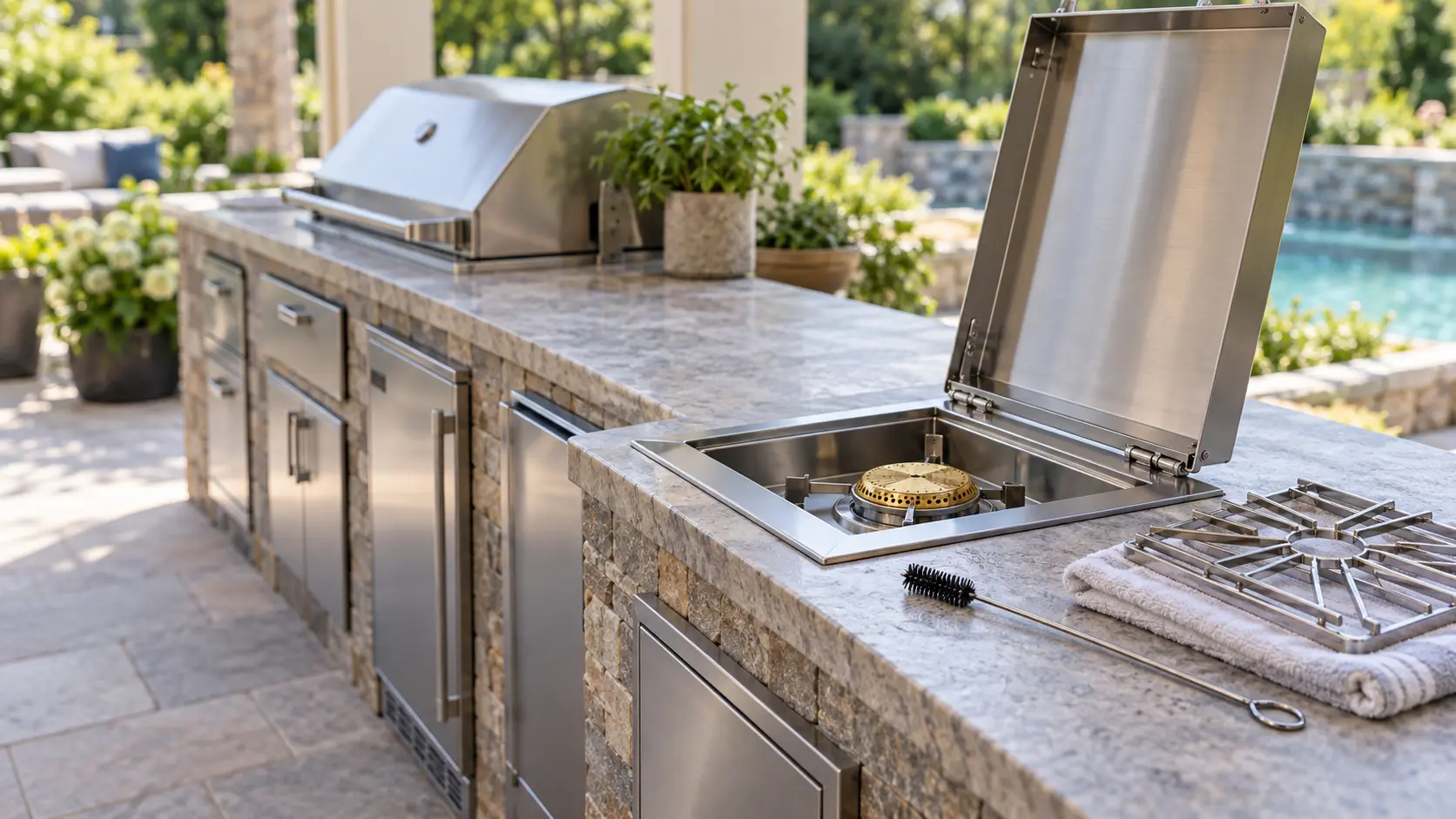
Lynx warns that when a built-in drip pan is not pushed all the way to the back, hot grease can leak downward and start a fire, and that the drip tray should be cleaned of grease regularly. A burner box coated from months of frying is fuel waiting under the pan, and it is the reason a small flare can find its way into the cabinet.
Source: NFPA — Cooking safety — Slide a lid over the pan and turn off the burner; leave it covered until completely cool; never throw water on it; if it does not go out, get everyone out and call from outside; fight a fire only with a clear way out; smoke or an oil smell means turn the burner off; heat oil slowly and add food gently

Frying at the side burner without a flare
Most pan fires start with oil that got too hot while the cook was at the other end of the island. NFPA's warning signs are wisps of smoke or an oily smell; at the first of them, turn the burner off or move the pan off the heat. Heat the oil slowly to the temperature you need, lower food in gently so the oil does not splash onto the burner, and keep the lid right beside the pan from the start.
Staying at the pan is the rule that matters most outdoors, where the main cooking, the drinks and the guests all pull you away. Lynx's pre-use checklist asks whether you are prepared to stay with the side burner for the whole cooking process, and to gather what you need before lighting if not.
Wind at the island
A gust can lay a burner flame sideways onto the pan handle or push it up the side of a wok. Lynx's checklist says to wait until a strong wind subsides before lighting, and its installation notes ask for a wind barrier where built-in units face prevailing winds. A flame that keeps blowing out is a reason to stop frying for the day, not to relight it again and again.
What to keep off the counter
- Towels, paper plates and packaging stay well away from the burner grate.
- Spare propane cylinders never sit in the island cabinet or beside the side burner.
- Gasoline and other flammable liquids are never stored or used near the side burner.
- The lid and a baking sheet stay within one step of the pan.
Source: NFPA — Cooking safety — Slide a lid over the pan and turn off the burner; leave it covered until completely cool; never throw water on it; if it does not go out, get everyone out and call from outside; fight a fire only with a clear way out; smoke or an oil smell means turn the burner off; heat oil slowly and add food gently; Lynx — Side Burner Accessory Care, Use and Installation Manual — Keep an ABC extinguisher accessible and never extinguish a grease fire with water or other liquids; a drip pan not fully in place lets hot grease leak down and start a fire; grease is extremely flammable; stay with the side burner; wait for wind to subside and use a wind barrier; no spare cylinders or flammable liquids nearby
After the pan is cold
Let the pan cool fully under its cover before moving it; Lynx notes that grease is extremely flammable and should be allowed to cool before anyone handles or disposes of it. Then look, without lighting anything: at the knobs, the grate, the burner cap, the drip tray and the counter around the opening.
Heat from a pan fire can reach parts that are out of sight. CPSC reminds owners to keep gas hoses away from hot surfaces and from anywhere grease drips, and the hose to a side burner runs straight under the burner box. Before cooking on that burner again, book a check if any of the signs below are there.
- A knob that is warped, sticky or turns differently than before.
- Scorching or melted insulation on anything visible under the burner.
- An igniter that no longer sparks or glows.
- A gas smell at any time after the fire.
- A flame that burns yellow, lifts off the ports or lights unevenly afterwards.
Source: Lynx — Side Burner Accessory Care, Use and Installation Manual — Keep an ABC extinguisher accessible and never extinguish a grease fire with water or other liquids; a drip pan not fully in place lets hot grease leak down and start a fire; grease is extremely flammable; stay with the side burner; wait for wind to subside and use a wind barrier; no spare cylinders or flammable liquids nearby; CPSC — Safety Checks for the Grill (fact sheet, Publication 467) — Keep a fire extinguisher nearby; keep hoses away from hot surfaces and dripping grease