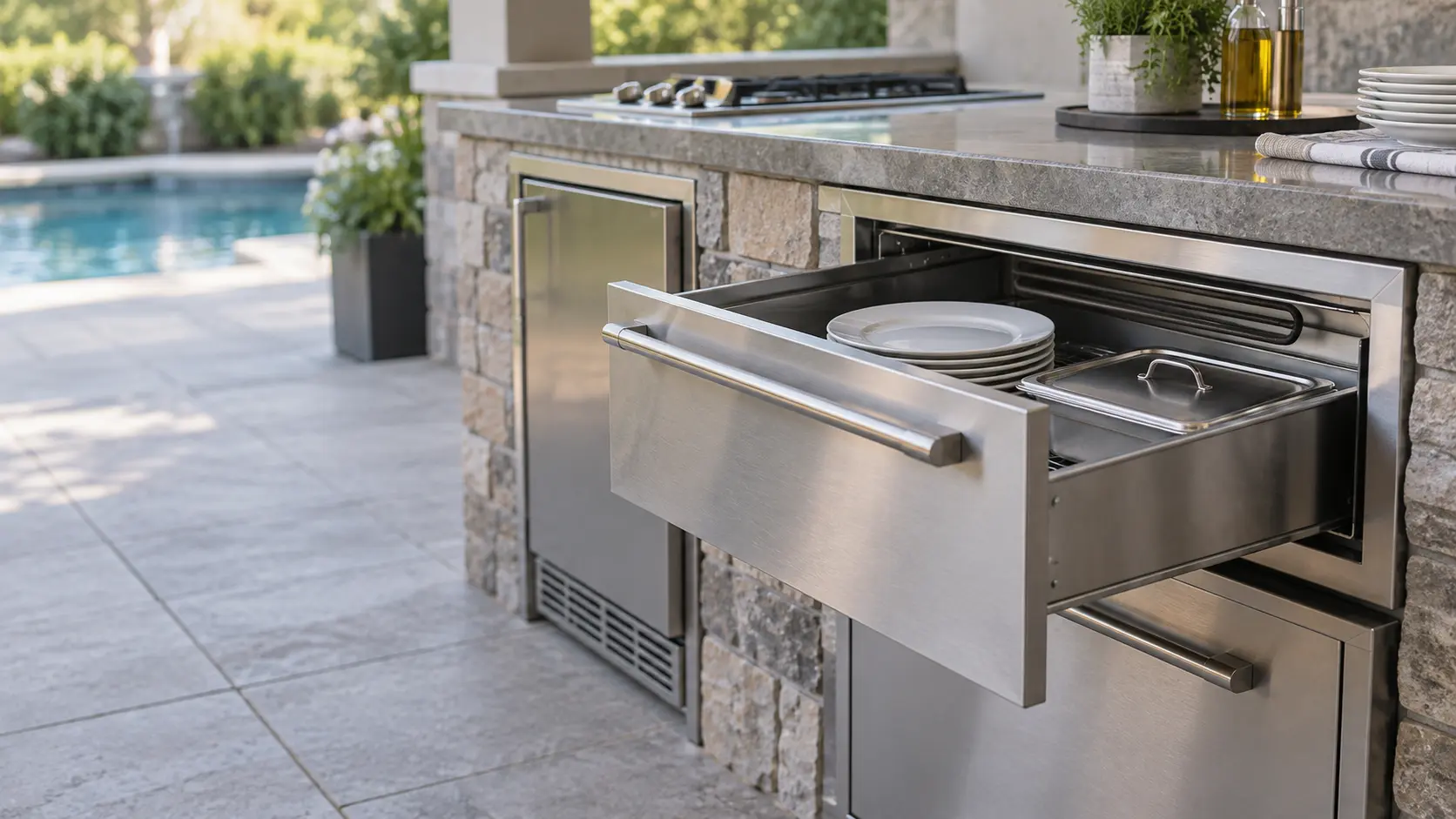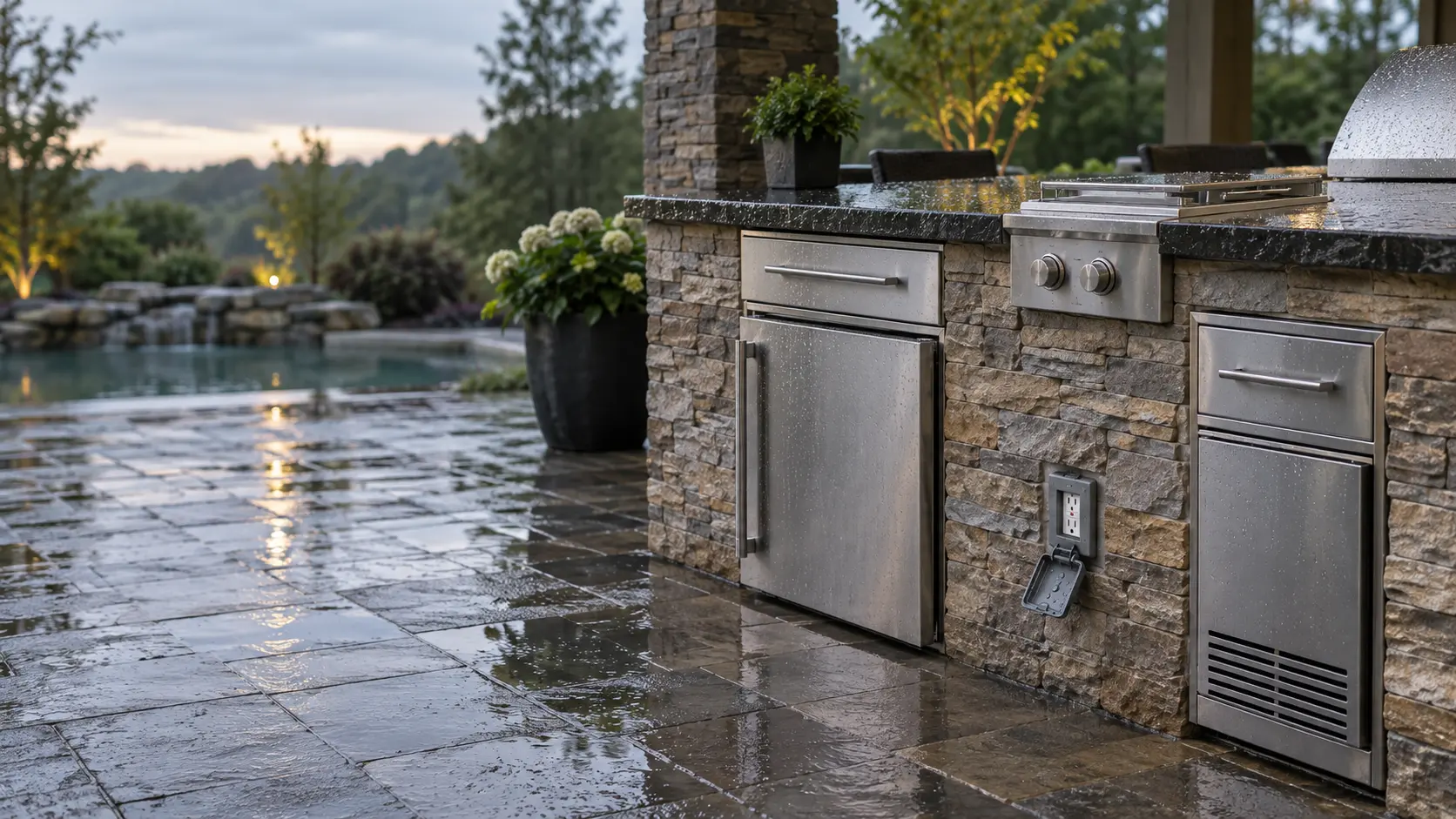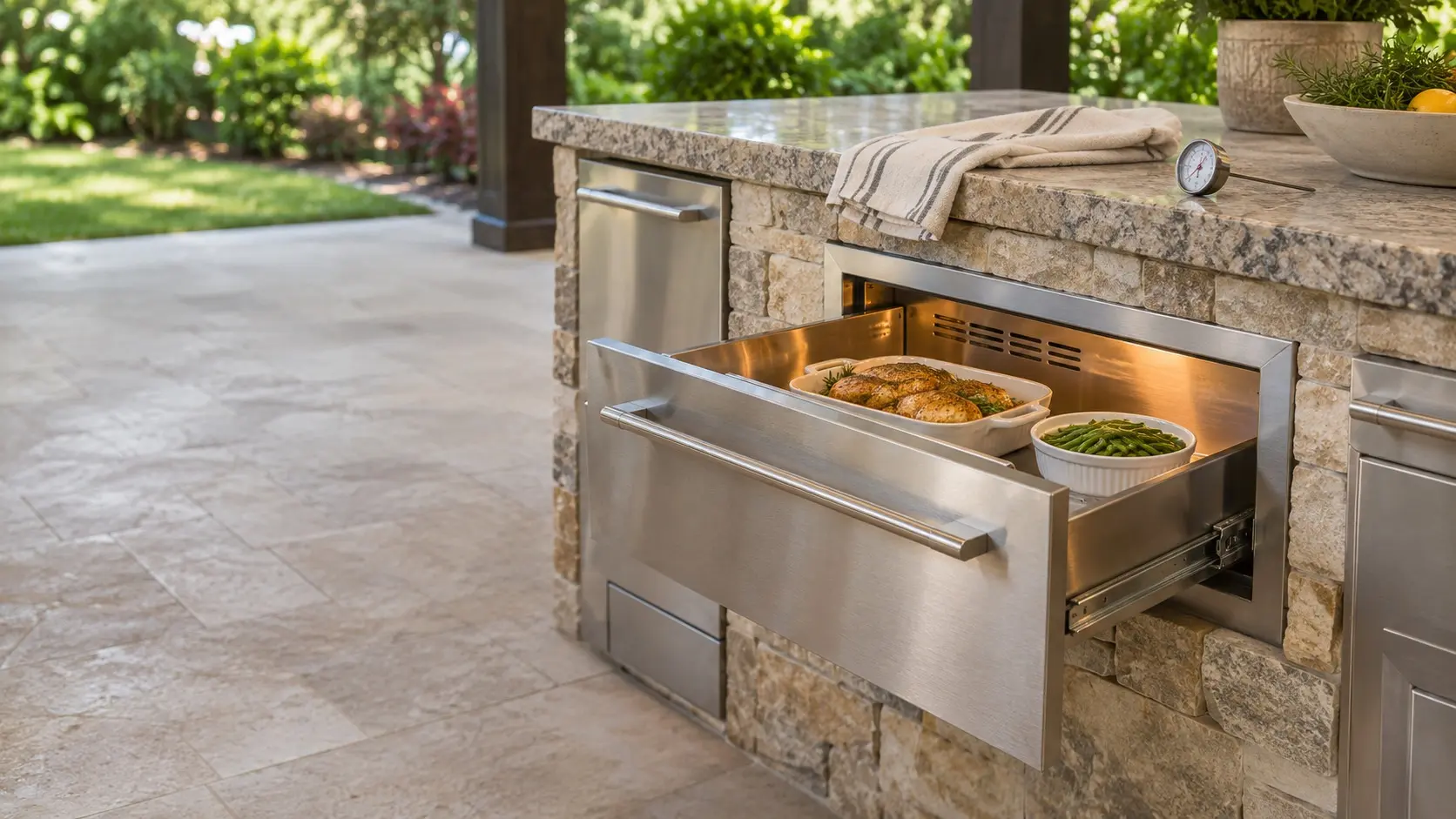
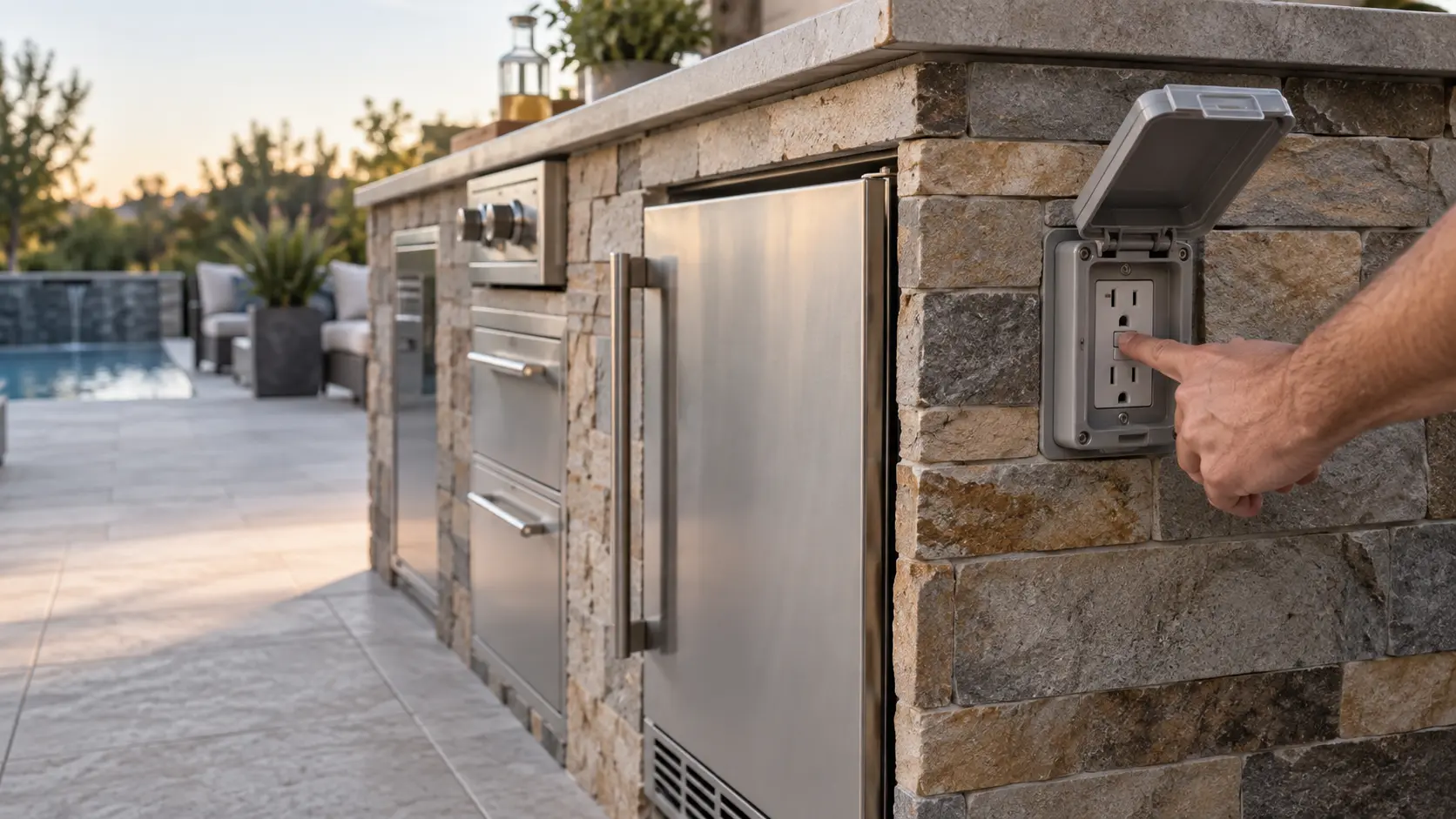
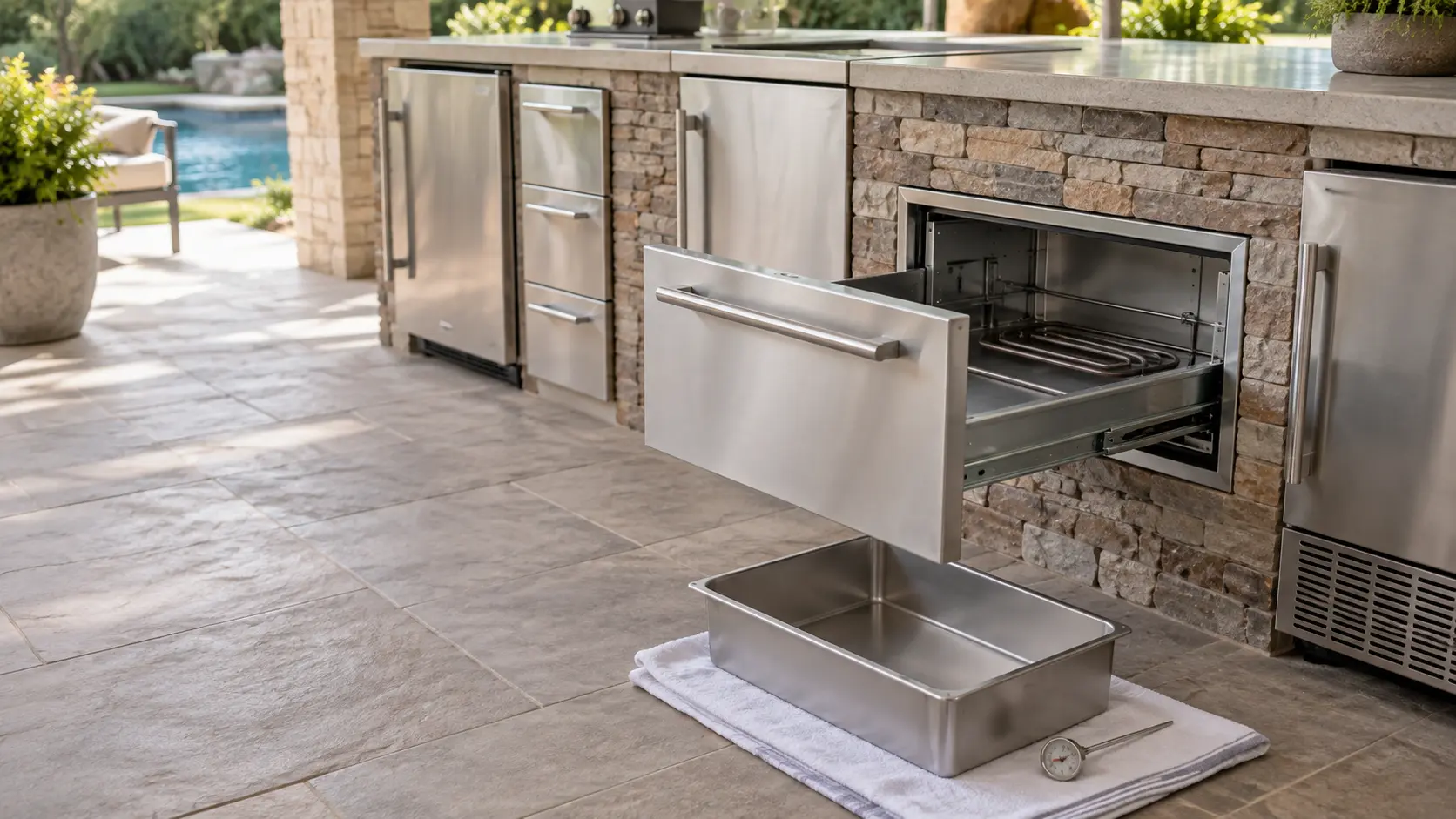
Why test the drawer the day before?
A test the day before leaves time to fix a small problem, and an empty drawer shows the problem without risking food. Most failures are quiet ones: no power at the outlet, a drawer that heats too slowly, or a gasket that lets the heat out.
An outdoor warming drawer lives in a cabinet that rain, damp and cold can reach, and it has often been off for months. Plan an hour for the test and a second hour as slack. If anything fails, you still have a day to book a visit.
What you need
None of it is specialized, and all of it fits in a kitchen drawer.
- A probe or dial thermometer you trust, checked in ice water first (it should read near 32°F).
- A clean tray, so the first heat does not bake off dust onto food.
- Your manual, or the model plate; the model plate guide shows where it sits.
Does the drawer have power?
Start with the outlet, because a dead outlet looks exactly like a dead drawer. Most outdoor outlets are on a GFCI, and a tripped one is the most common reason a drawer will not come on.
If the cabinet and outlet are dry, press the test and reset buttons on the GFCI outlet or breaker, then check the indicator light on the drawer if it has one. Do not run an extension cord to a built-in drawer, and do not move the plug into a wet cabinet.
If the GFCI trips
A GFCI that trips when the drawer starts has found current going where it should not, and water in a connector is a common cause. The GFCI tripping guide explains how to tell rain from a failing part. If it trips with the drawer unplugged, the problem is the outlet or the circuit, and that is the electrician's side of GFCI and power repair.
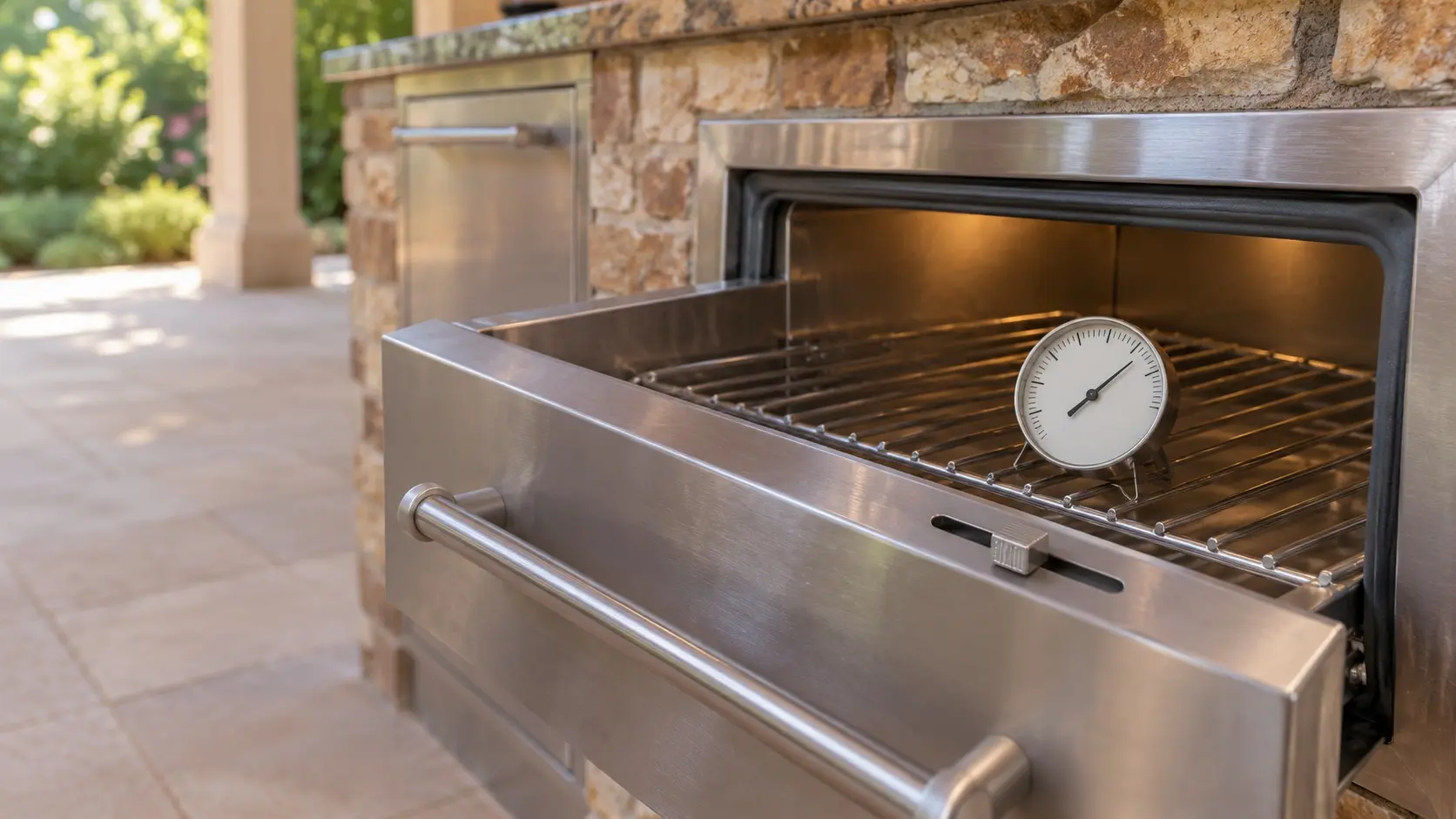
How long should it take to heat, and how do I check it?
Preheat the drawer empty and give it time. Preheat times differ by model, and the owner's manual for many models gives one you can compare with. If yours does not, the test itself tells you: time how long the drawer takes to level off.
- Set the drawer to the middle setting and close it.
- Put the thermometer on the rack, away from the back wall and the element.
- Wait out the manual's preheat time, then read it without opening the drawer for long; read again a while later to see whether it has leveled off.
- Repeat at the highest setting to see whether the dial moves the temperature at all.
Food you want to keep hot should stay at 140°F or above. The guide to keeping food hot outside covers how long and why.
What the reading tells you
| Reading after a full preheat | Likely cause |
|---|---|
| Reaches 140°F or above at the middle setting | Drawer is working; check the gasket and vent |
| Warm but stuck well under 140°F | Slow element, a weak control, or heat escaping |
| Cold, but the light is on | Element or control failure |
| Light off and no sound | No power at the outlet, or a failed control |
| Hot on high, cold on low | Control or thermostat that does not step |
What about the gasket, vent and rails?
A tight door seal and a closed vent matter more outdoors than in a kitchen, because cold air pulls heat out through any gap. Check them while the drawer is warm.
Gasket and drawer front
Run a hand along the gasket. A flat, torn or hardened section lets heat out. A bent front that does not close flush has the same effect. A gasket that has taken on water and gone gray may have mildew behind it.
Moisture vent
The vent slider keeps food crisp when open and moist when closed. Check that it moves freely and is not stuck with grease or spider webs. A vent jammed open on a cold night makes a drawer seem weak.
Rails and rack
Pull the drawer out and push it back. A drawer that drags or sits crooked may not close, and a crooked drawer will not hold temperature. Keep the rails free of grit with a dry brush.
What does a cold-weather test add?
A drawer that passes on a mild afternoon can struggle on the night of the dinner. If the forecast is cold, run the test at the same time of day as the meal, when the cabinet is as cold as it will be. Note how long the drawer takes to level off and how fast it climbs at the start.
- A drawer that gains heat slowly but steadily is probably fine with a longer preheat.
- A drawer that levels off well under 140°F will not hold food safely on a cold patio.
- A drawer that climbs, then drops, may have a gasket or door problem.
- A cabinet door left open lets cold air wash over the drawer, so shut it for the test.
Write the preheat time on a sticky note inside the cabinet. Next year you will not need to repeat the test to know the answer.
Who fixes what?
You can clean the gasket, free the vent, reset the GFCI and level the drawer. The test is also useful to a technician: a note of the reading, the setting and the time saves a diagnostic step. A cold element, a control that does not respond or a drawer that trips the GFCI needs warming drawer heating repair. The no heat problem page lists the signs again.
If the test fails and the dinner is tomorrow, plan around it. Keep dishes hot in the indoor oven, a slow cooker or a chafing dish, and book the drawer for after the holiday. The pre-booking checklist lists what to write down so the visit goes faster.