Four things that end the walk immediately
Before anything else, know the points where this guide stops being a checklist. Each of them has its own first steps, and none of them includes trying one more thing to see what happens.
Everything else on the island can wait for a calm look, in daylight, with the burners cool and nobody cooking.
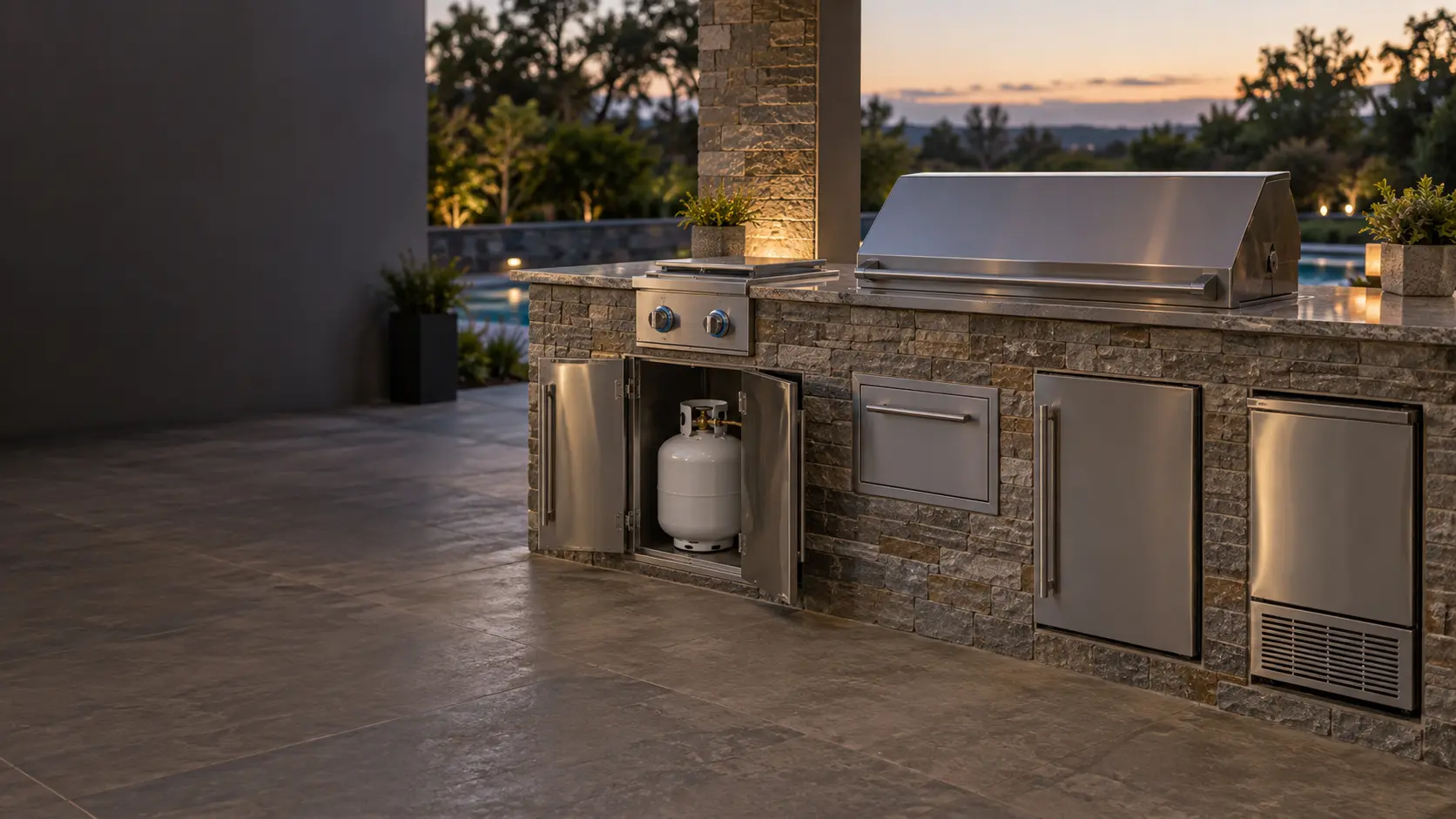
- Gas odor near a burner or coming out of a cabinet: every knob to off, the cylinder or island valve shut, nothing lit or switched, people moved away; the gas utility or 911 gets a call from a safe distance if the odor hangs on.
- Flame where it does not belong, under a burner or inside the island: burners off, gas closed, 911 if it spreads.
- A hot plastic or scorched-wire odor: open the island's breaker in the house panel.
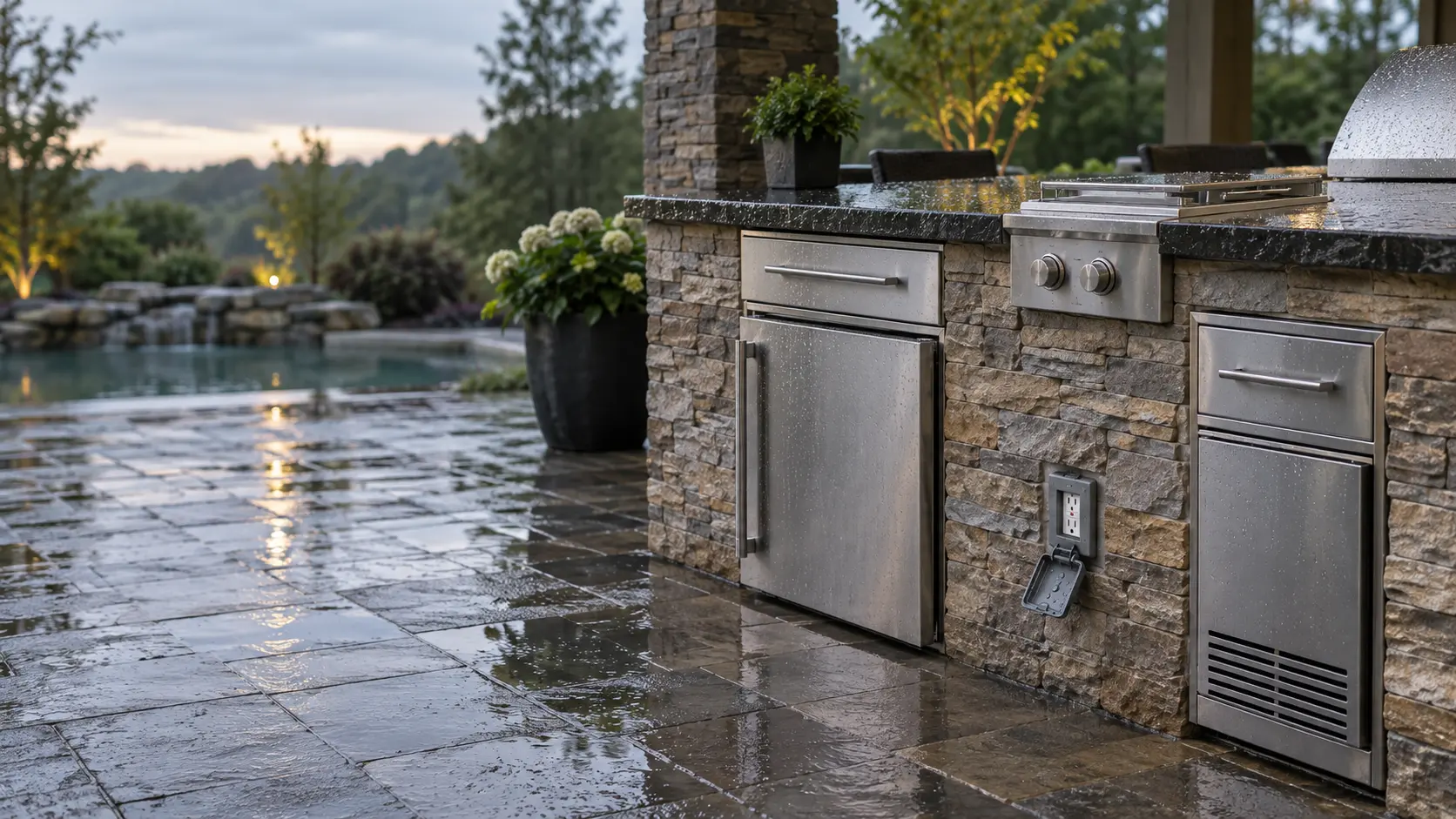
- A trip while rain, sprinklers or a hose are wetting the island: kill that circuit at the panel indoors and keep off the wet pavers.
The gas supply shared by every burner
Start at the source, because a supply problem looks like a burner problem at every knob. If the main burners at the far end light but a side burner does not, the supply is fine and the trouble is local. If nothing lights, the answer is usually here.
Blaze's side burner manual expects an installer-supplied shutoff valve that stays fully accessible, and its troubleshooting line for a burner that gets no gas is simply to check that the shutoff is on. It also warns, in capitals, that finding and fixing a gas leak is not a do-it-yourself job.
On a propane tank
Lift the tank or read its gauge; a tank that feels light may still hiss yet not feed a burner properly. Turn every knob off, then open the tank valve slowly and fully. If the tank was changed recently while a knob was on, see our side burner guide on weak flow after a tank swap.
On natural gas
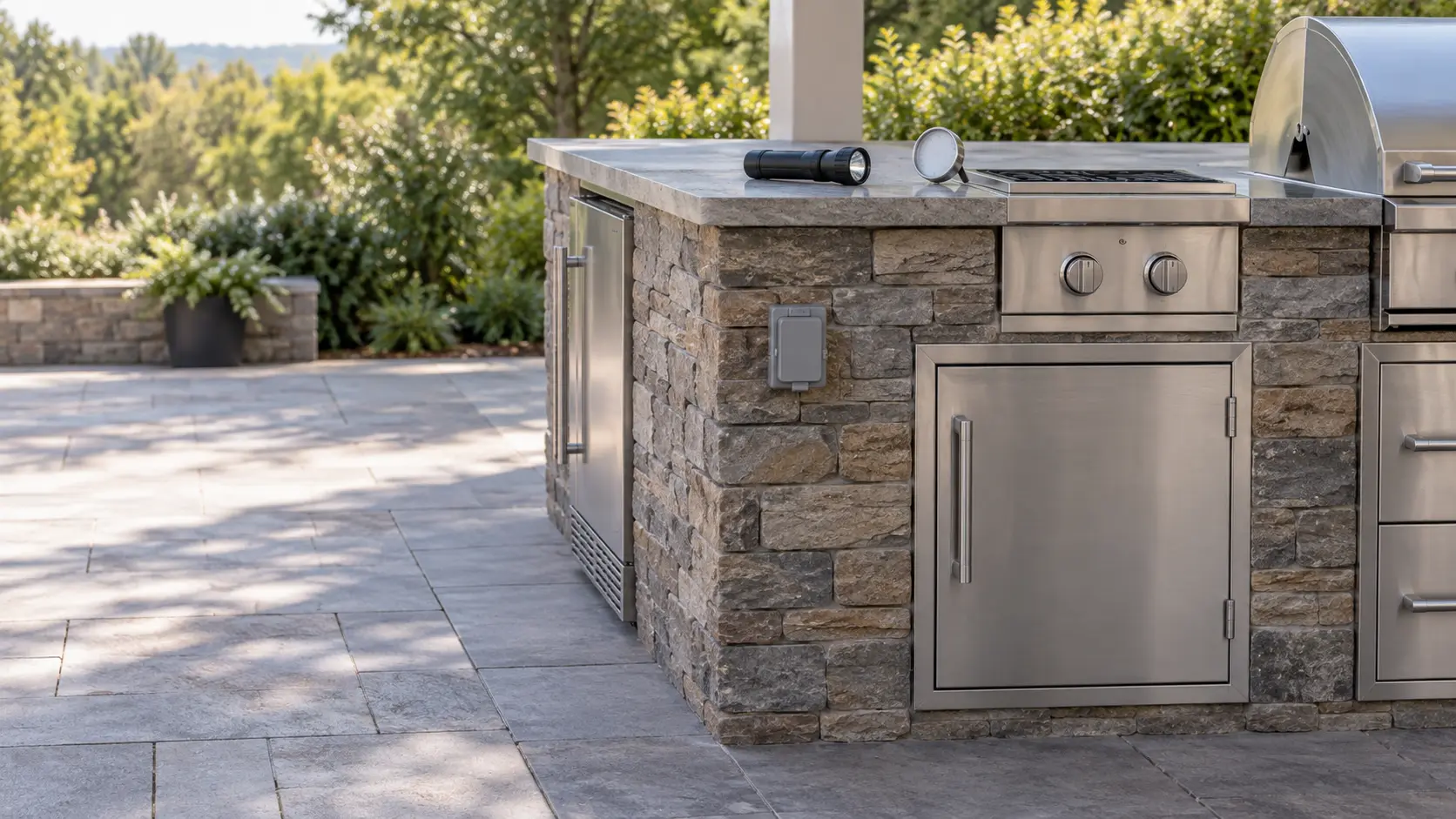
Find the island's shutoff, usually inside the cabinet under the cooking head or behind an access door. Look without reaching past it into the cabinet; a quarter-turn handle running the same way as the pipe normally means gas is flowing. A valve someone closed for the winter and forgot is one of the most frequent spring calls.
Source: Blaze — Double side burner user manual — Installer-supplied manual shutoff fully accessible; no gas to burner: check the shutoff is on; finding and fixing a gas leak is not a do-it-yourself job; leak test with soapy water, never a flame; lights powered by a transformer

Power at the island: outlets, breaker and plugs
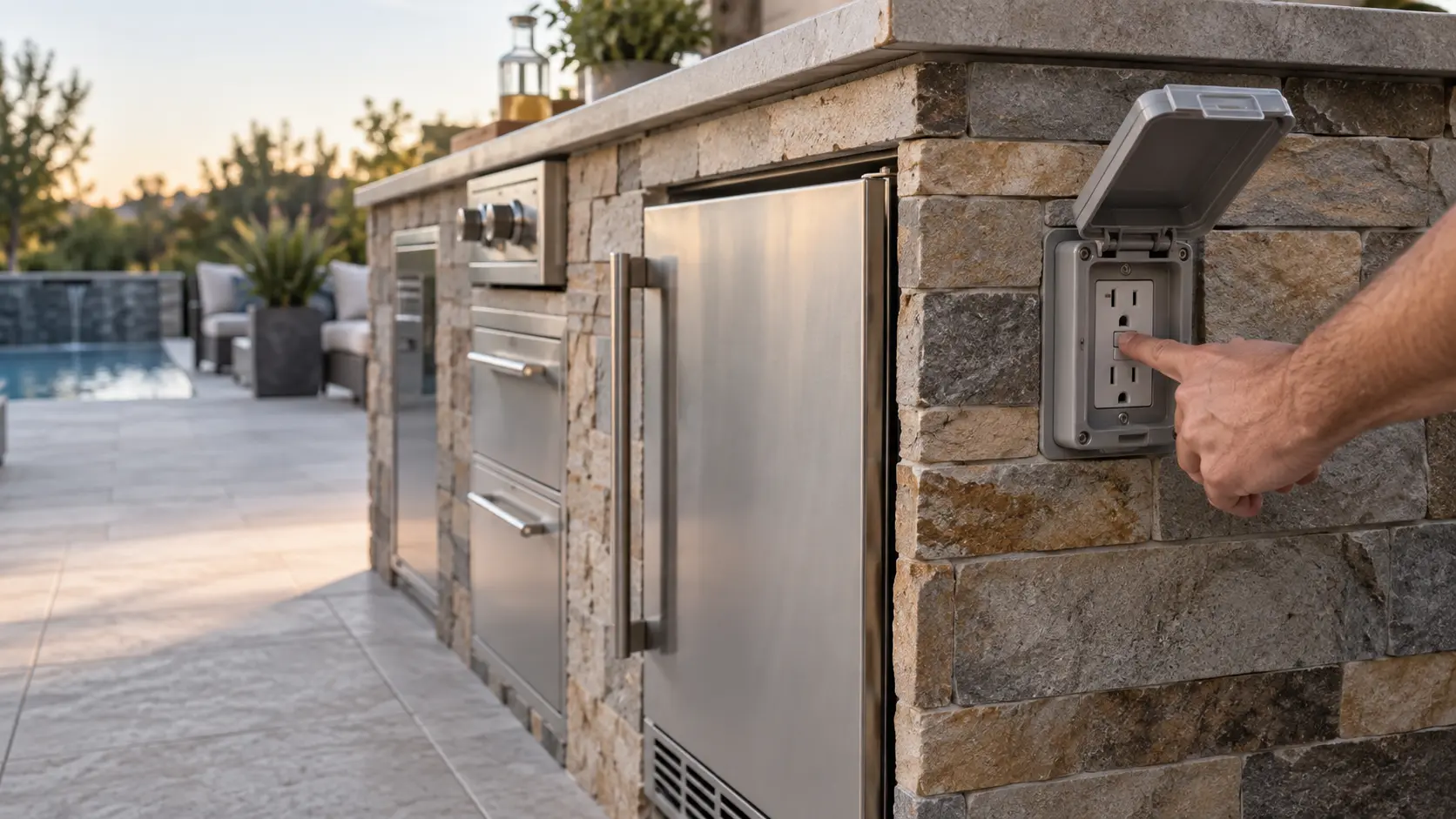
Coolers, ice makers, warming drawers, lights and some igniters share one or two circuits, often protected by a single GFCI outlet that also covers the outlets beyond it on the same line. The CPSC fact sheet on these devices explains that a GFCI receptacle protects outlets further downstream, which is why the tripped one may be around the corner from the appliance that went dark.
Check every outlet on the island and nearby walls for a popped reset button, and look at the breaker panel. Reset once, from dry ground, with dry hands. If it holds, test it as the CPSC suggests: press test, confirm the power goes off, press reset. If it trips again at once, stop; the next guide in this section follows that thread.
Switches, timers and transformers
Some islands put the lights and accent strips on a wall switch or a timer, and some makers run them from a small plug-in transformer; Blaze's side burner uses one for its lights. A dark island with working outlets may just be a switched circuit turned off at the house.
Source: CPSC — GFCIs fact sheet (Pub. 099) — A GFCI receptacle protects outlets further down the circuit; test by pressing test and reset, at least monthly
One outside check per appliance
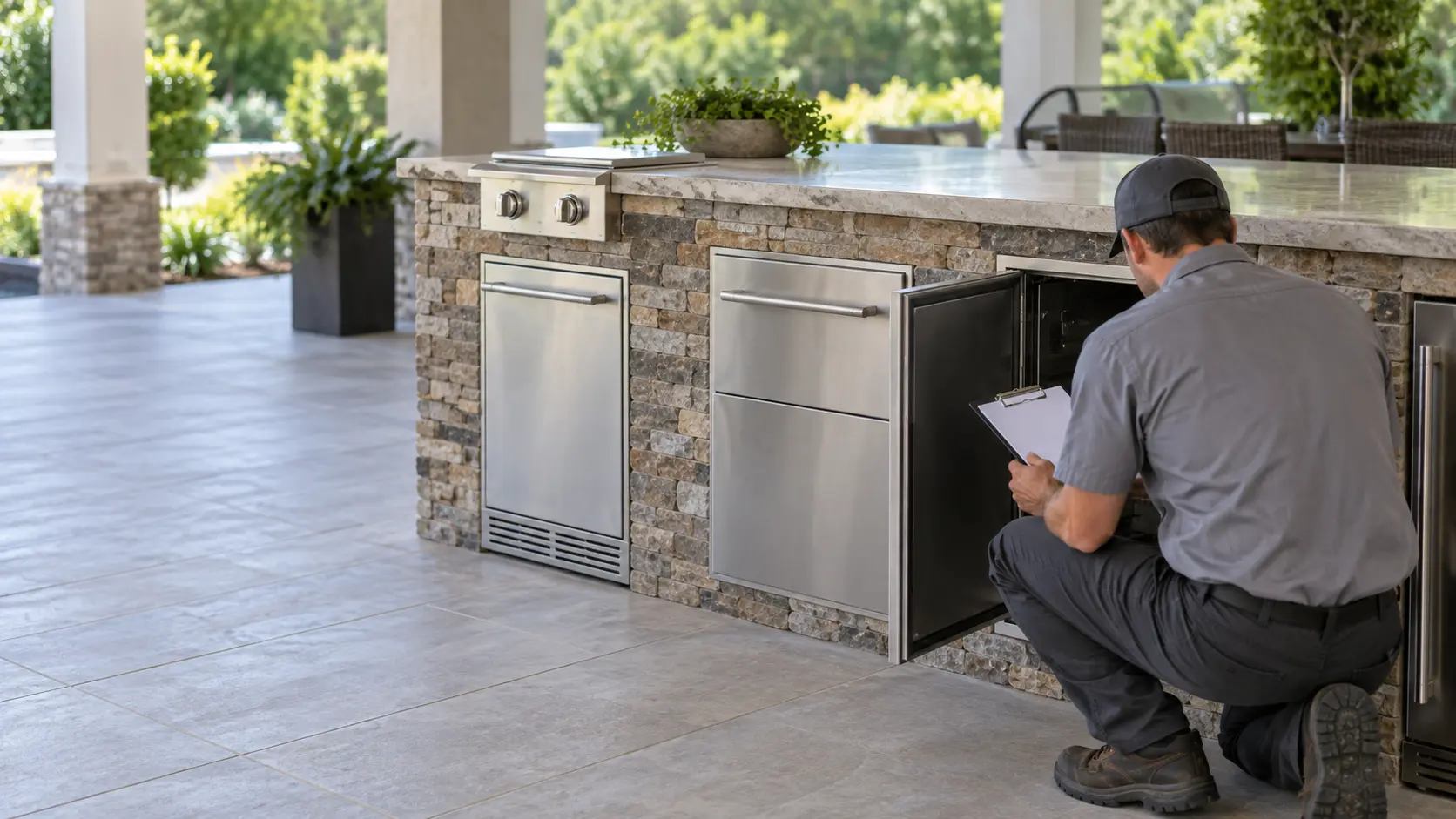
With gas and power confirmed, each appliance gets a short look from the outside. The point is not to repair anything but to separate a setting or an obstruction from a part that has failed, and to have something concrete to say when you book.
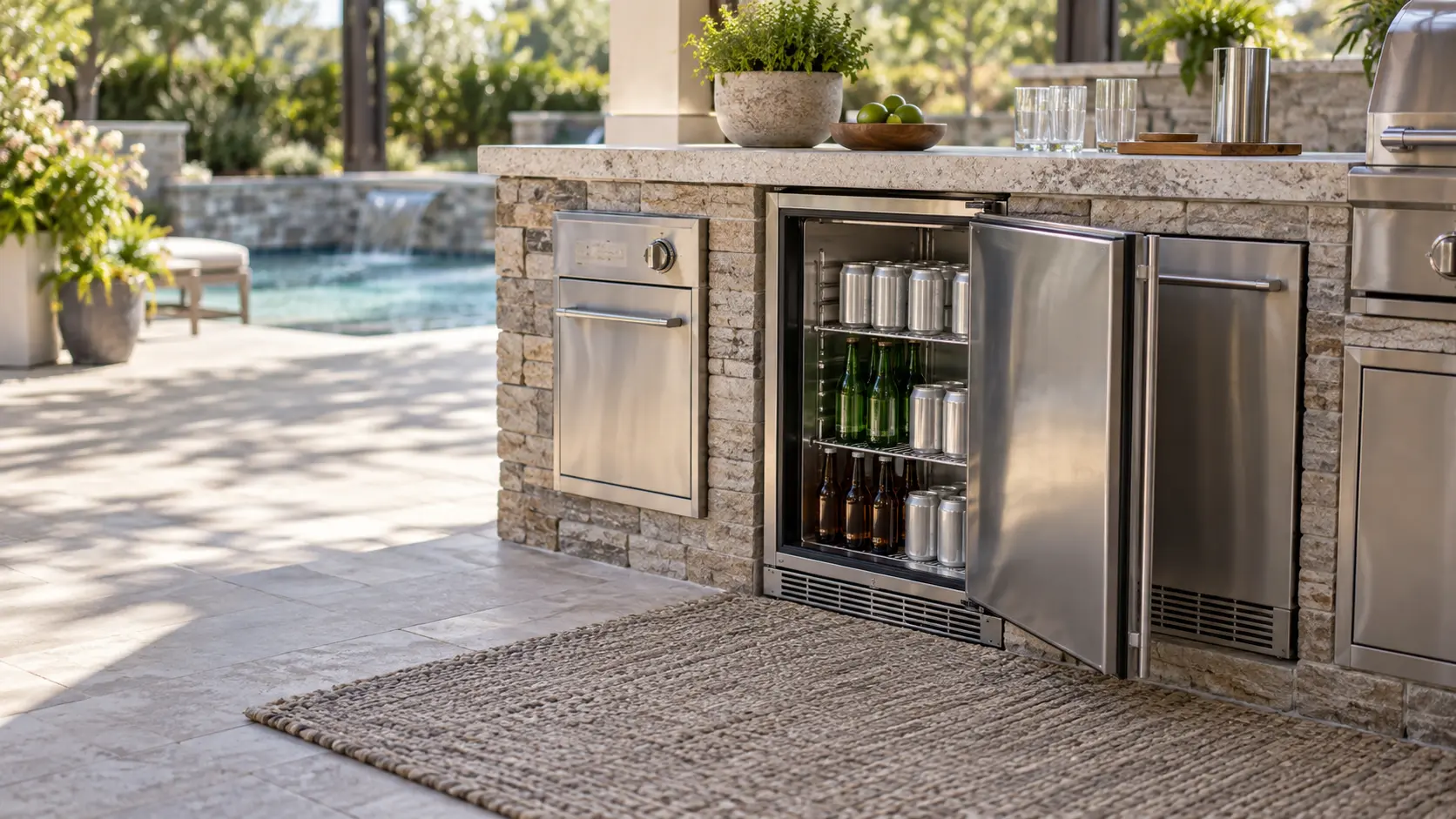
- Outdoor kitchen cooler: thermometer reading against the display, grille at the toe clear of covers and leaves, door closing on its own.
- Outdoor ice maker: water supply valve open, bin not simply full, no standing water in the bin, drain line not kinked where you can see it.
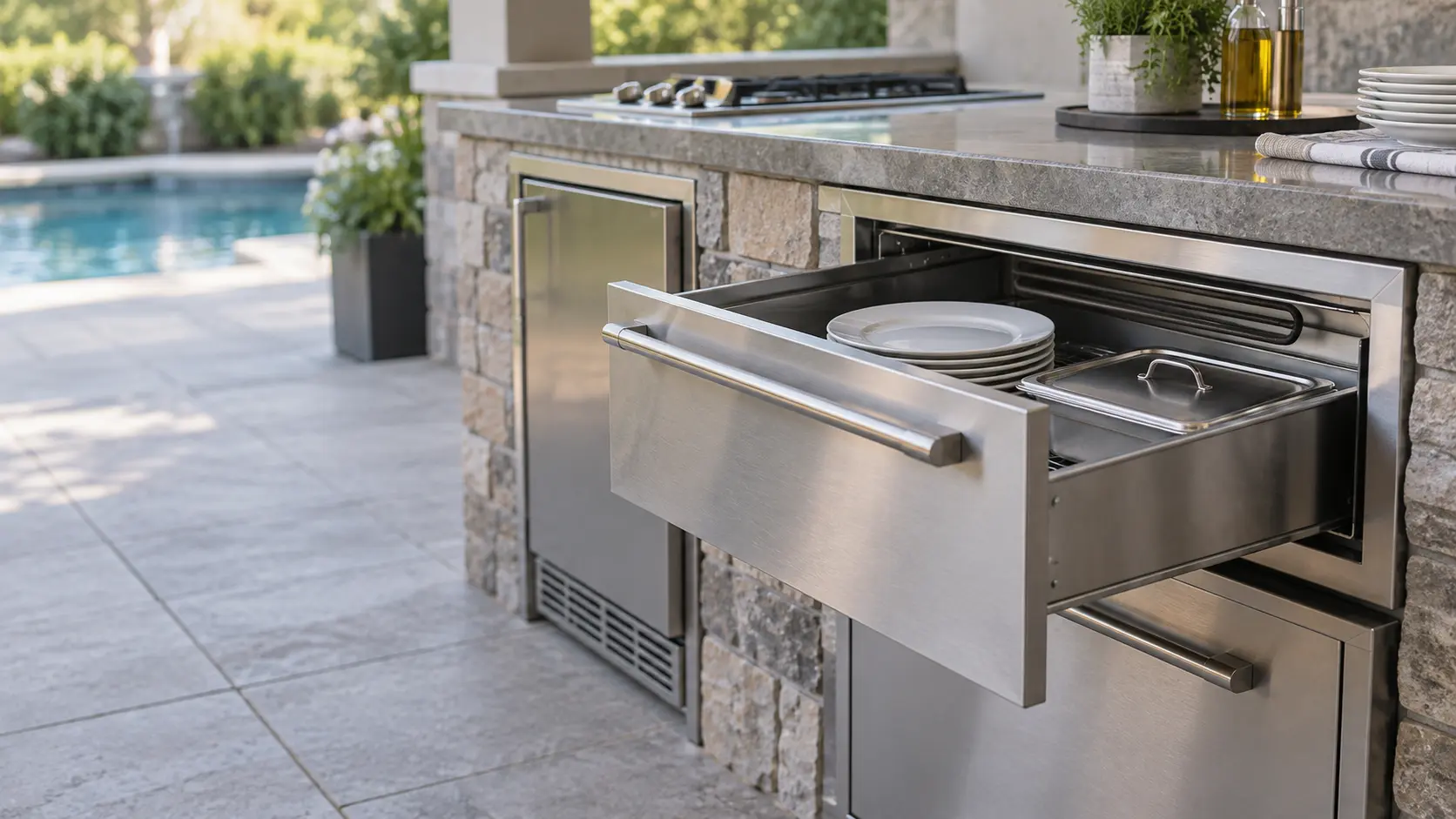
- Warming drawer: control on and set, indicator lit, door or drawer closing fully so its switch is pressed.
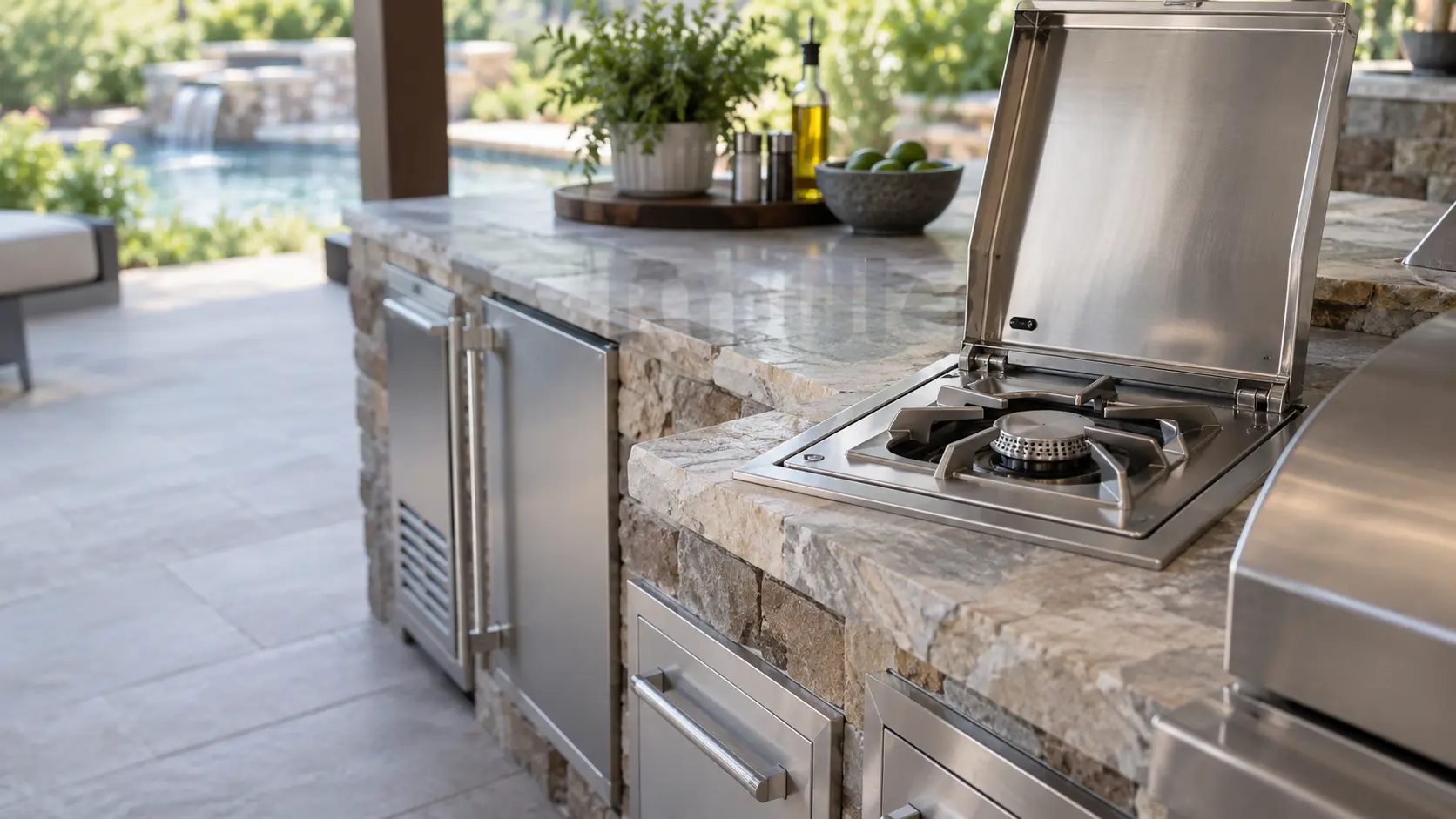
- Side or power burner: a click and a visible spark with the gas off, cap seated flat, no web across the air opening.
- Every unit: its display, any code showing, photographed before you press anything.
Notes that make the first visit count
Outdoor appliances often need parts matched to the exact model and to the gas type, and a technician who arrives knowing both is far more likely to finish on the first trip. Write down what you found as you went, even the checks that turned up nothing.
Include the weather. A cooler that warmed during a heat wave, an outlet that tripped the morning after a storm, or an ice maker that stopped after the first frost each carries a clue the part number alone does not.