Listen, look and smell before trying again
Turn the knob as the manual describes and pay attention to three things at once: whether there is a click and a visible spark, whether a soft hiss of gas reaches the burner, and whether you smell gas. The combination sorts the problem before any tool comes out.
Do not keep the knob open while clicking for long. Blaze's side burner manual says that if the burner has not lit within five seconds, the knob goes off and you wait five minutes with the lid off before trying again, and that after several failed attempts the gas valves are closed and a technician consulted. Gas that collects under a closed lid or around the burner box is what turns a nuisance into a flare.
- A click with no hiss: gas is not arriving, so start with the supply.
- A hiss with no click: the spark is missing, so look at the battery or the igniter.
- A hiss and a click with no flame: gas and spark are not meeting, so look at the cap, the ports and the wind.
- Any smell of gas: stop, and follow the steps just below.
If there is a gas smell
Stop trying. Knobs to off, then shut the gas at the cylinder or the island valve provided you need not bend over the burner to do it. No lighters, no light switches, and move well away from the island; a smell that lingers is a call to the gas utility or 911, made from the far side of the yard.
Source: Blaze — Double side burner user manual — If not lit in 5 seconds, knob off and wait five minutes with the lid off; close the gas and call a technician after several attempts; no gas to burner: check the shutoff is on; tank exchange with a valve open causes low flow and a regulator reset; blue spark from electrode to burner, clean contact, slot aligned, wire connected; burners seated and aligned with the orifice; wind hurts performance, windbreak in exposed sites; never light with the cover in place; manual lighting procedure, no standard matches or lighters
Is any gas reaching the side burner?
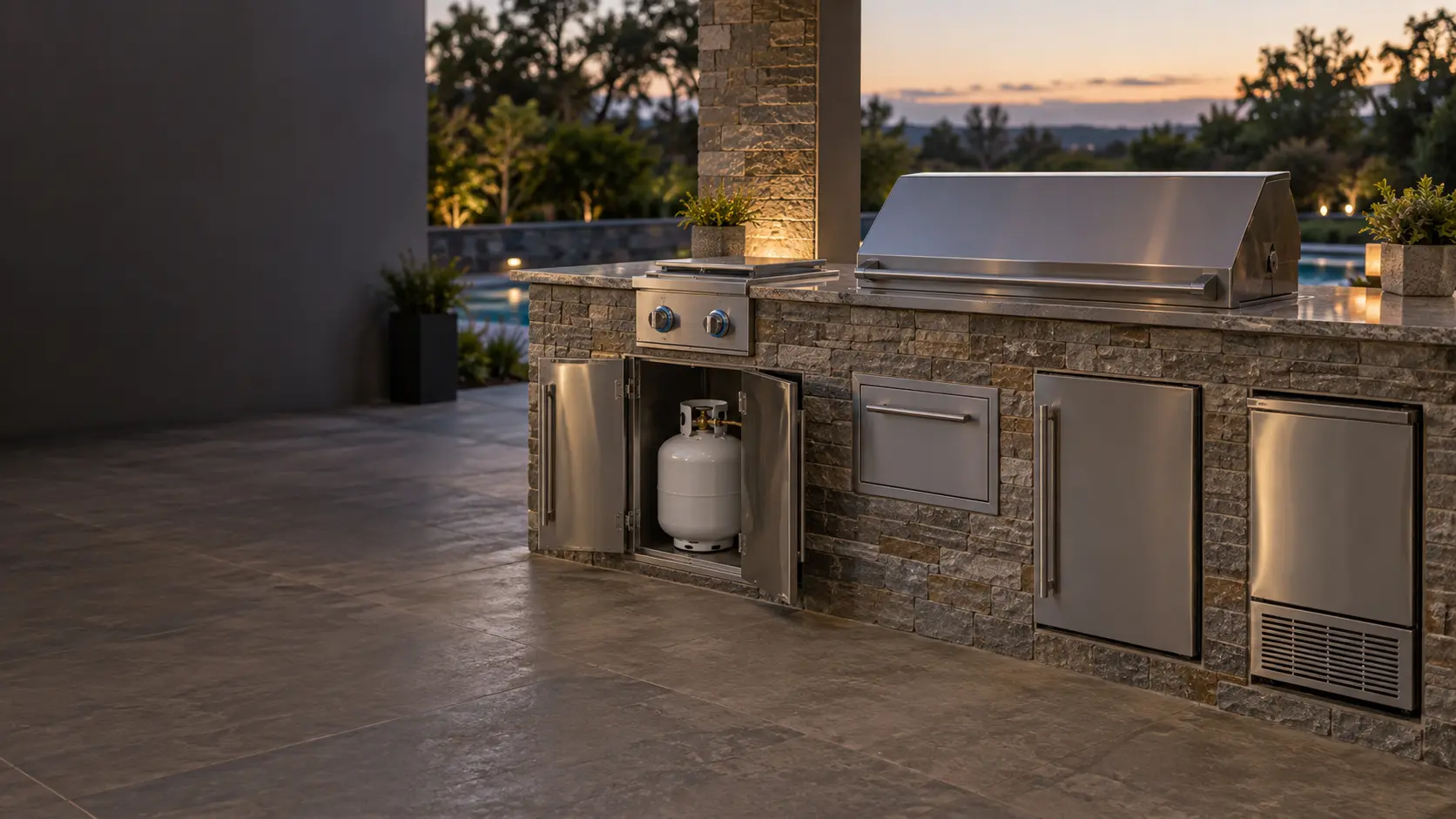
Start with the easiest comparison on the patio. On most islands the side burner shares the supply with the main burners at the far end. If those light and hold a normal flame, the tank has fuel and the shutoff is open, and the trouble sits in the side burner's own branch, valve or burner. If nothing on the island lights, look at the supply.
Blaze's troubleshooting table answers a burner with no gas in one line: check that the shutoff valve is in the on position. On a natural gas island, that valve sits inside the cabinet near the appliance, usually behind an access door; on a quarter-turn valve, a handle parallel to the pipe usually means open.
- Propane tank: lift or weigh it, or read its gauge if it has one; a nearly empty tank can feed one burner and starve another.
- Tank valve: turned fully open, counterclockwise, with every burner knob already off.
- Island shutoff: open, and not bumped closed by storage pushed into the cabinet.
- Other burners: whether the main burners or a power burner on the same supply light.
A weak flow after a tank swap
Blaze warns that exchanging a tank while a control valve is open can leave a low flow of gas through the burner, and that the regulator then has to be reset at the tank connection. Always turn every knob off before opening a new tank. If the flow stays weak after that, the reset is done by whoever normally connects your tanks or by a technician, not by loosening fittings to experiment.
Source: Blaze — Double side burner user manual — If not lit in 5 seconds, knob off and wait five minutes with the lid off; close the gas and call a technician after several attempts; no gas to burner: check the shutoff is on; tank exchange with a valve open causes low flow and a regulator reset; blue spark from electrode to burner, clean contact, slot aligned, wire connected; burners seated and aligned with the orifice; wind hurts performance, windbreak in exposed sites; never light with the cover in place; manual lighting procedure, no standard matches or lighters

No click, a weak click or a spark in the wrong place
Side burners light in one of two ways: a push-and-turn knob that snaps a spark as it rotates, or a separate button feeding an electronic module, often powered by a battery behind a cap on the front panel. No click at all on a battery model most often means a spent battery, and the manual shows which size and where it goes. A slow, weak tick is the same battery on its way out.
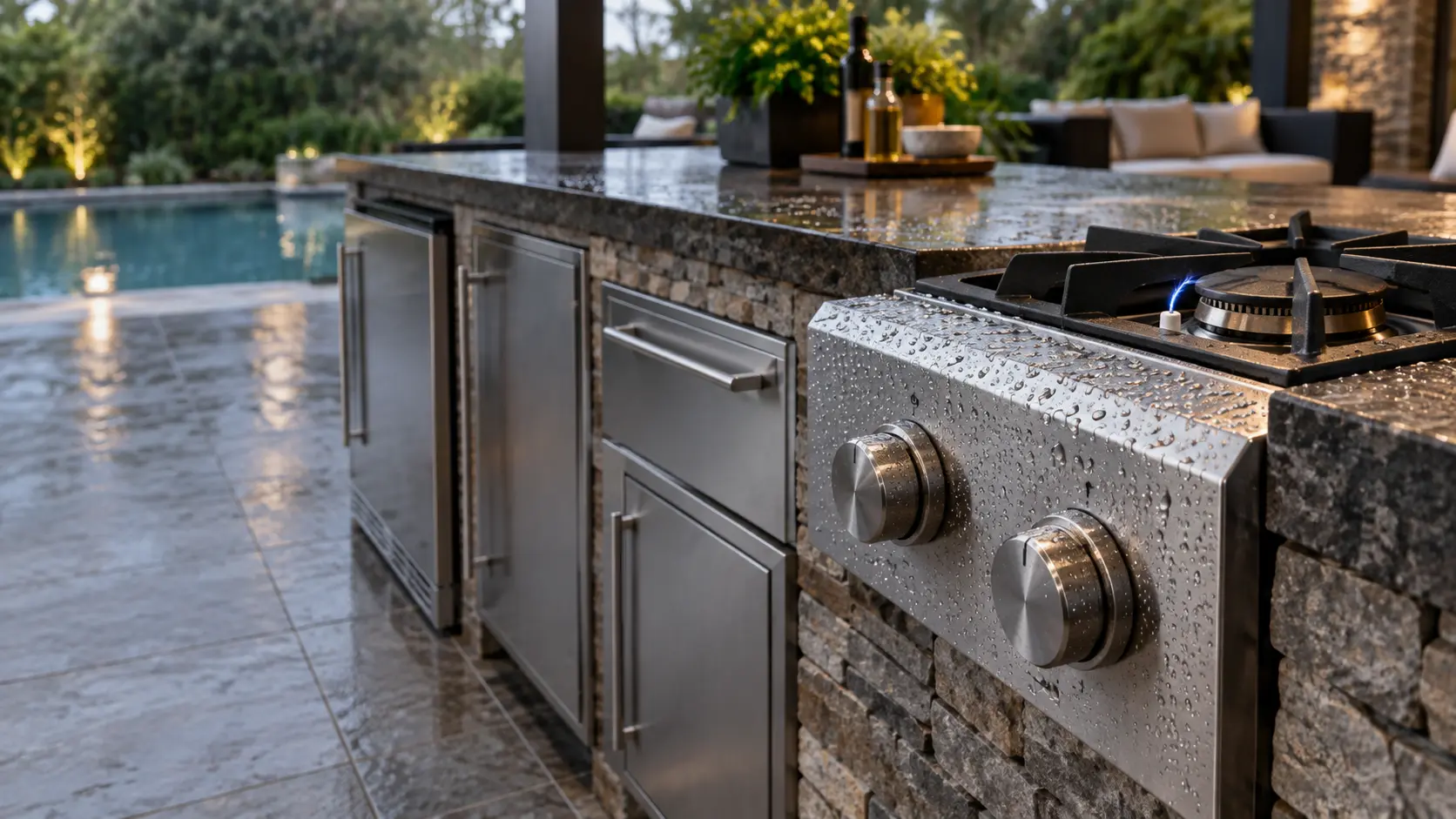
Blaze's table for a burner that does not ignite asks for a blue spark jumping from the electrode tip to the brass burner, a clean contact area between them, the burner slot lined up with the igniter and the wire connected. With the gas off and everything cool, you can look for the first three: a spark that jumps to the grate or the burner box lands where no gas is flowing.
After rain or a hose-down
Water in the burner well and on the ceramic insulator of the electrode lets the spark leak away before it jumps. Leave the lid open to dry the burner in the sun for an afternoon, wipe grease and cooked-on food off the tip with a dry cloth once it is cool, and try again. A cracked insulator or a loose wire is a part, not a cleaning job.
Source: Blaze — Double side burner user manual — If not lit in 5 seconds, knob off and wait five minutes with the lid off; close the gas and call a technician after several attempts; no gas to burner: check the shutoff is on; tank exchange with a valve open causes low flow and a regulator reset; blue spark from electrode to burner, clean contact, slot aligned, wire connected; burners seated and aligned with the orifice; wind hurts performance, windbreak in exposed sites; never light with the cover in place; manual lighting procedure, no standard matches or lighters
The cap, the ports and the wind across the top
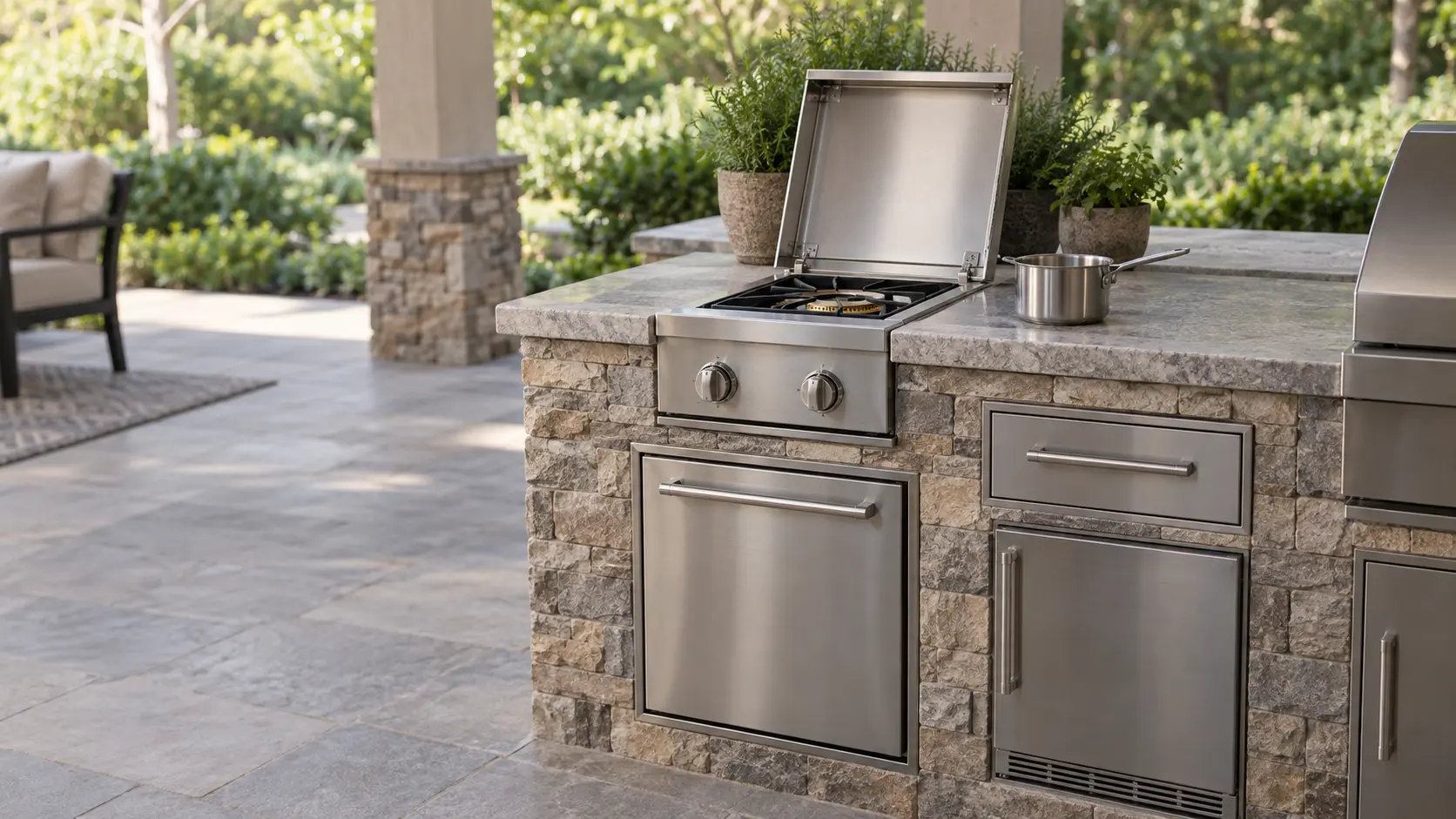
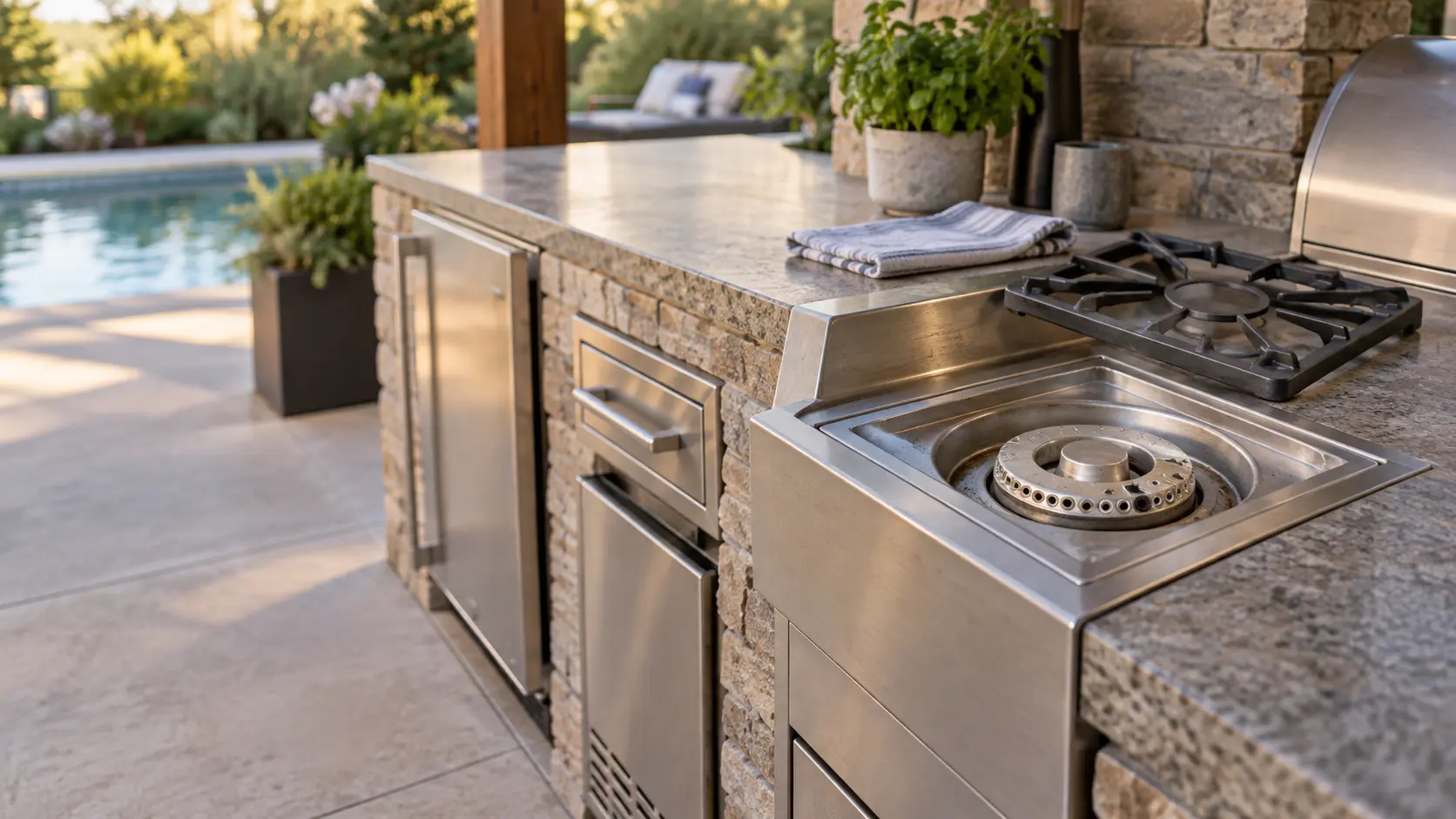
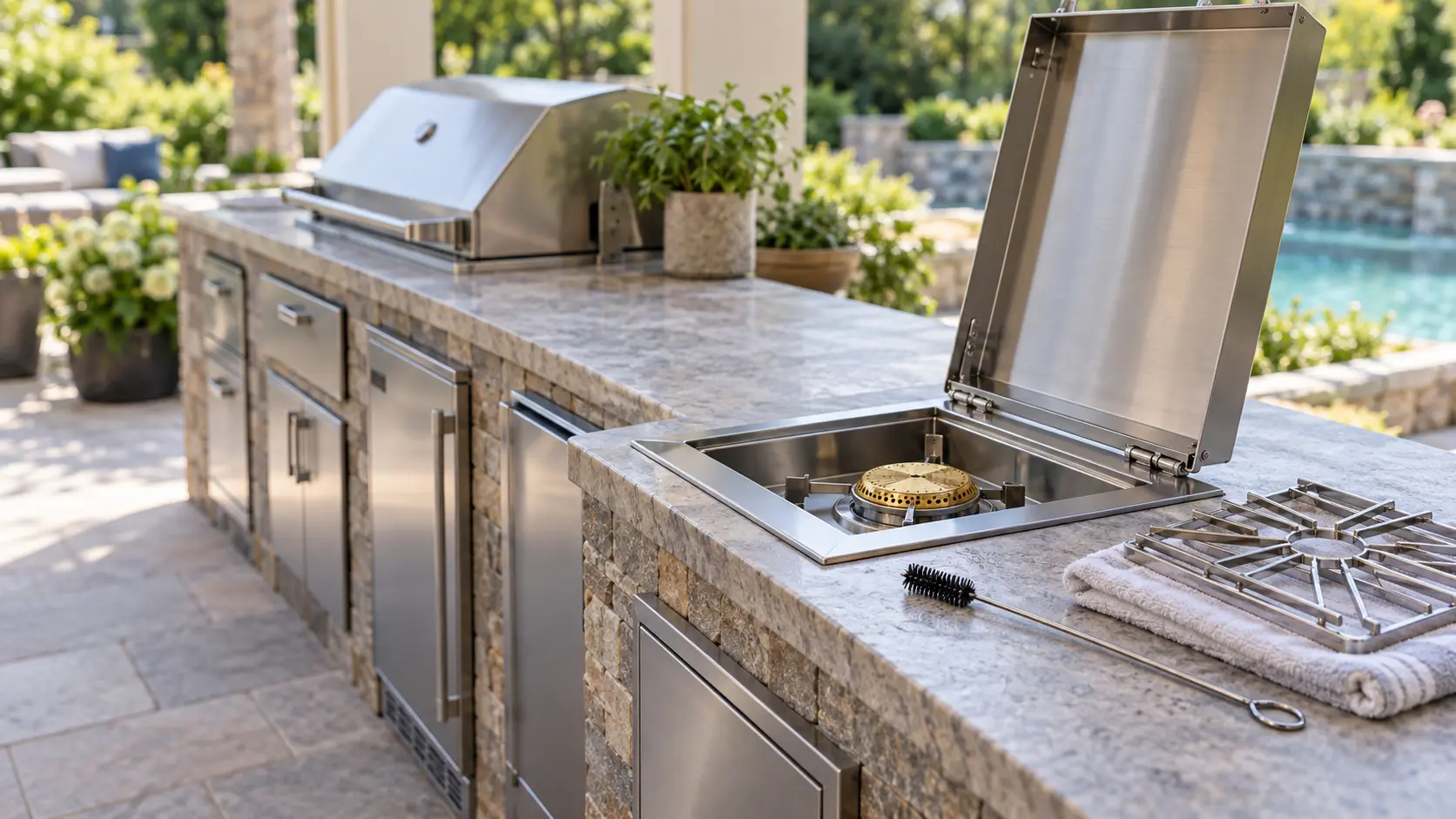
The burner head has to sit exactly where the maker put it. Blaze's manual wants each burner lined up over its orifice and resting in its housing, and a cap or ring that was lifted for cleaning and dropped back slightly crooked can leave the ports nearest the igniter starved. Reseat it until it sits flat and does not rock.
A starchy boil-over or spattered oil can seal the small ports nearest the electrode so gas never reaches the spark. Wind does the rest: Blaze says wind blowing into or across a burner hurts performance and calls for a windbreak in exposed places like an oceanfront yard. Try lighting with your body or a board blocking the breeze; if it catches at once, the burner is healthy and the location is the issue.
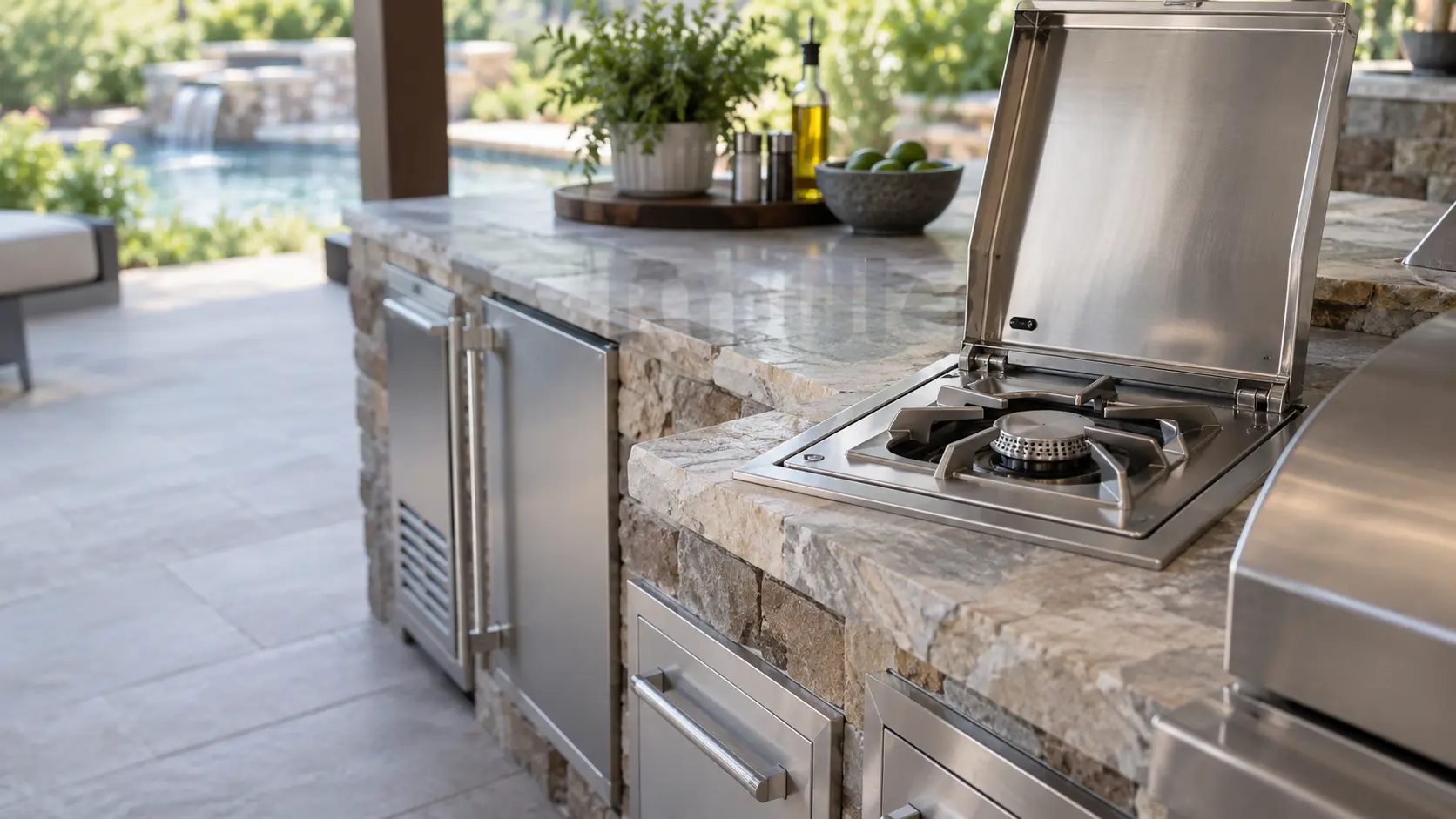
The lid or cover must be off
Blaze's side burner is never lit with its stainless cover in place, and the same rule appears across makers. A cover left half closed traps gas above the burner, which is both a failed light and a flare waiting for the next click.
Source: Blaze — Double side burner user manual — If not lit in 5 seconds, knob off and wait five minutes with the lid off; close the gas and call a technician after several attempts; no gas to burner: check the shutoff is on; tank exchange with a valve open causes low flow and a regulator reset; blue spark from electrode to burner, clean contact, slot aligned, wire connected; burners seated and aligned with the orifice; wind hurts performance, windbreak in exposed sites; never light with the cover in place; manual lighting procedure, no standard matches or lighters
What lighting it by hand tells you
Some manuals, Blaze's among them, give a manual lighting procedure with a long lighter or a match holder for when the spark fails. Follow your own maker's steps exactly or skip it, and never use a short match or a pocket lighter, which Blaze warns can cause serious burns. If the burner lights by hand and burns with a steady blue flame, the gas side is fine and the igniter needs attention. If it will not light by hand either, gas is not arriving and the checks above come first.
Source: Blaze — Double side burner user manual — If not lit in 5 seconds, knob off and wait five minutes with the lid off; close the gas and call a technician after several attempts; no gas to burner: check the shutoff is on; tank exchange with a valve open causes low flow and a regulator reset; blue spark from electrode to burner, clean contact, slot aligned, wire connected; burners seated and aligned with the orifice; wind hurts performance, windbreak in exposed sites; never light with the cover in place; manual lighting procedure, no standard matches or lighters