Measure the cold before changing anything
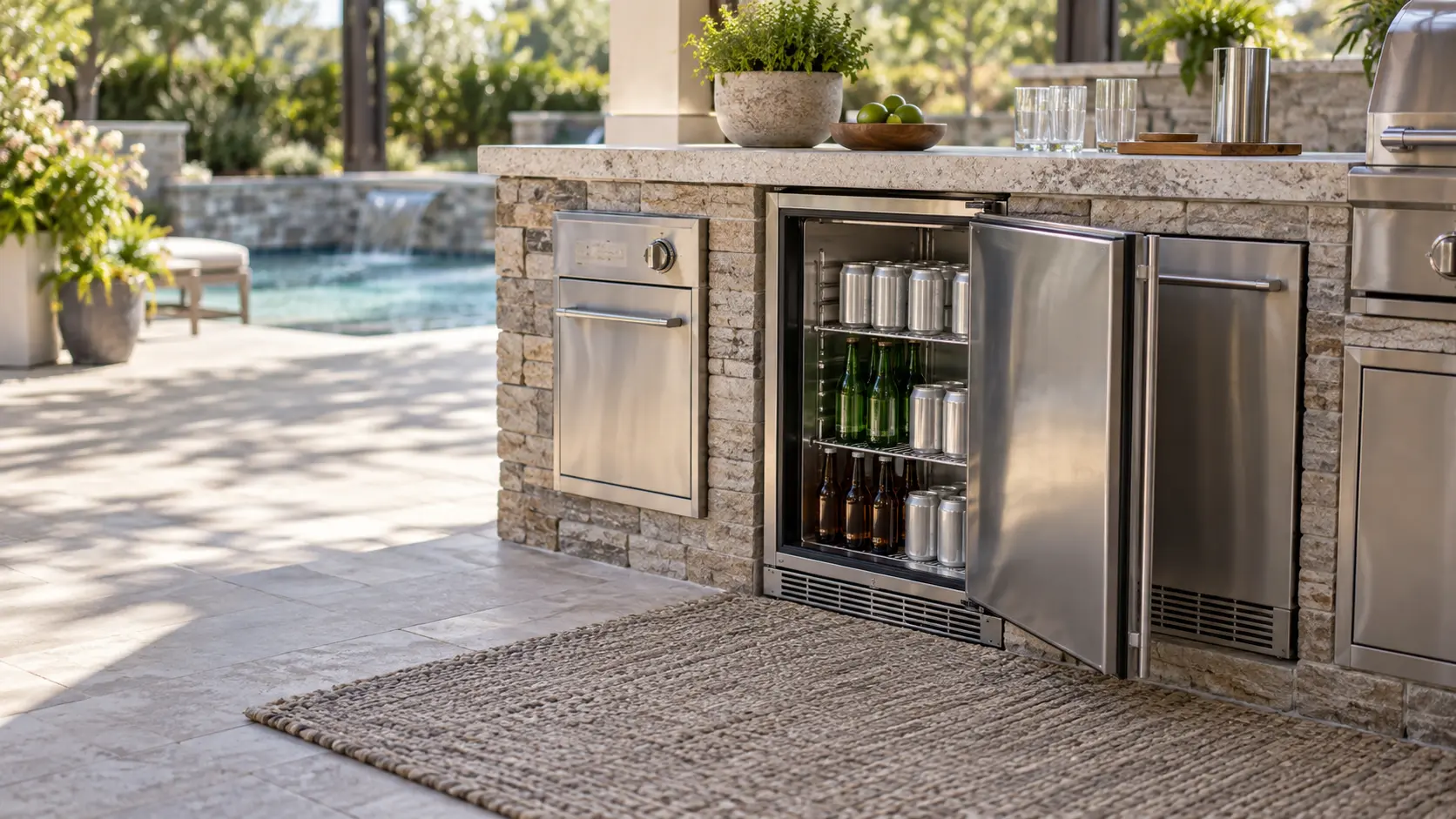
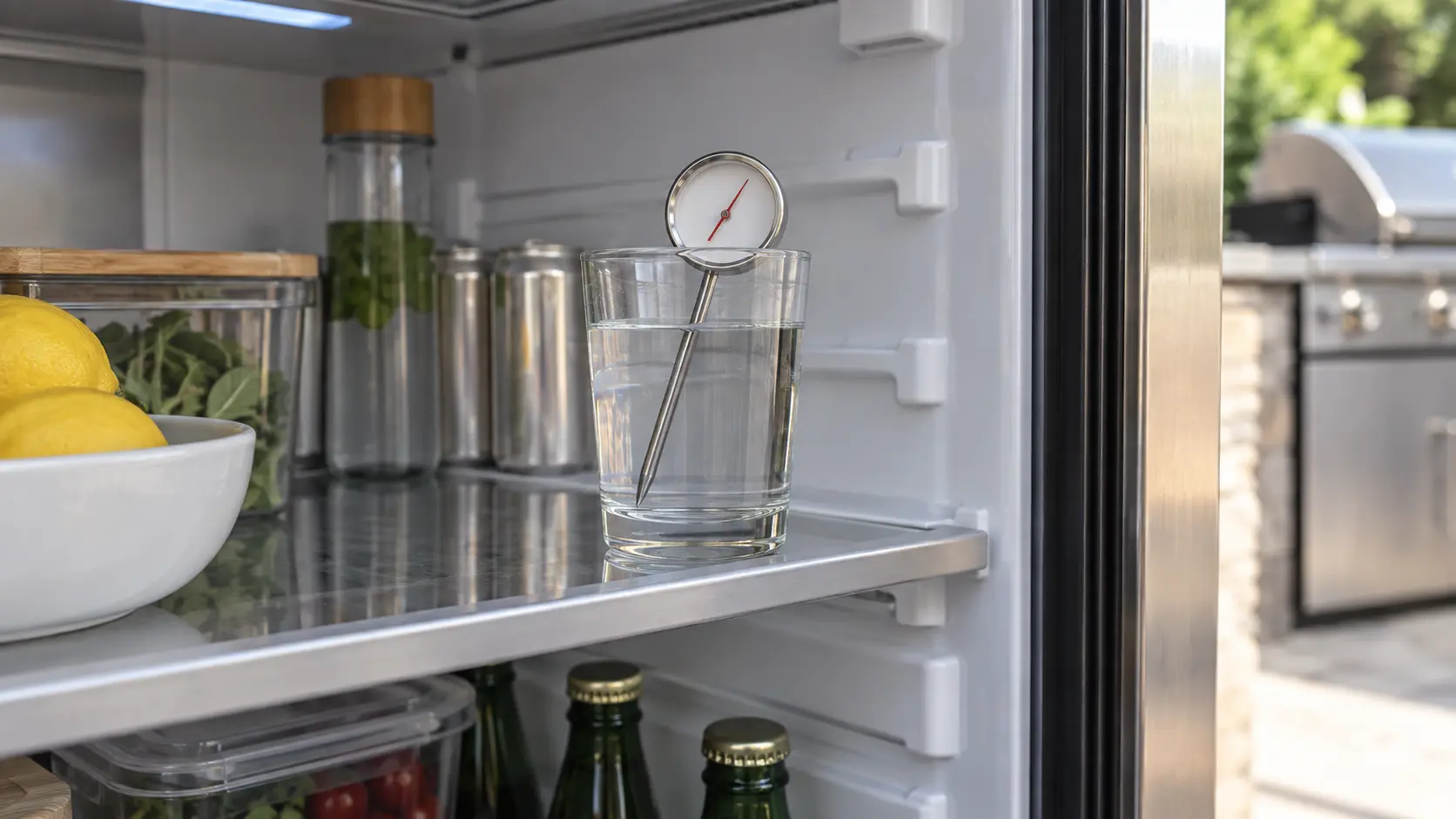
The number on the display is what the control is aiming for, and sometimes what one sensor near the back wall reads. The food on the door shelf can be several degrees warmer. Stand an appliance thermometer in a cup of water at mid-height in the cabinet, leave it overnight with the door shut, and read it first thing, before the sun reaches the island.
Then read it again in the late afternoon of a hot day, after the usual traffic. A morning reading at 37°F that climbs to 46°F by five o'clock tells a very different story from a cabinet that never gets below 45°F even at dawn. The first is a cooler working against its conditions; the second is one that has lost capacity. Most calls that begin as an outdoor refrigerator not cooling end at one of the checks that follow, and the two readings tell you which one to start with.
- Dawn reading, door unopened overnight.
- Late-afternoon reading, with the air temperature on the patio at that hour.
- How many times the door opened in between, roughly.
- Whether the fan behind the toe grille was running when you checked.
When the setting itself has moved
Touch controls on an island get brushed by hips, bags and wet towels, and a child can step the set point up without anyone noticing. Blaze lists the temperature setting among its first checks for a unit that is too warm. Note what the display shows before you change it, set it back, and give the cabinet a full day before judging.
Source: FDA — Are You Storing Food Safely? — Keep the refrigerator at or below 40°F and check it with an appliance thermometer
Sun, patio heat and the rating on the unit
An outdoor-rated cooler is built for a harder life than a kitchen unit, but it still has limits. Blaze designs its outdoor refrigerator for air between 50°F and 100°F and says higher temperatures may keep the cabinet from reaching its lower settings; its best results come between 65°F and 80°F for a built-in unit. A west-facing island on a stone patio can sit above that band for hours on a summer afternoon.
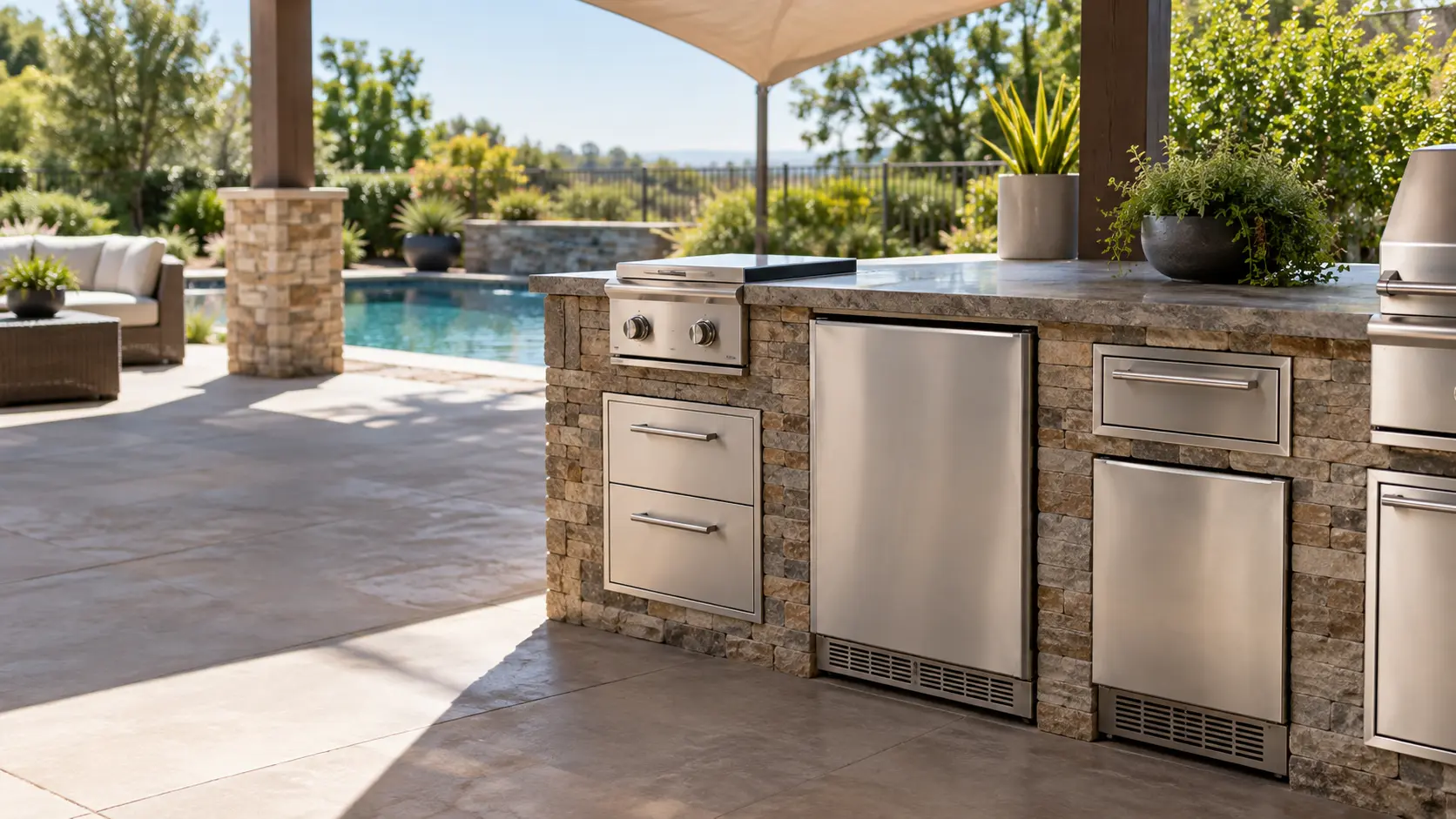
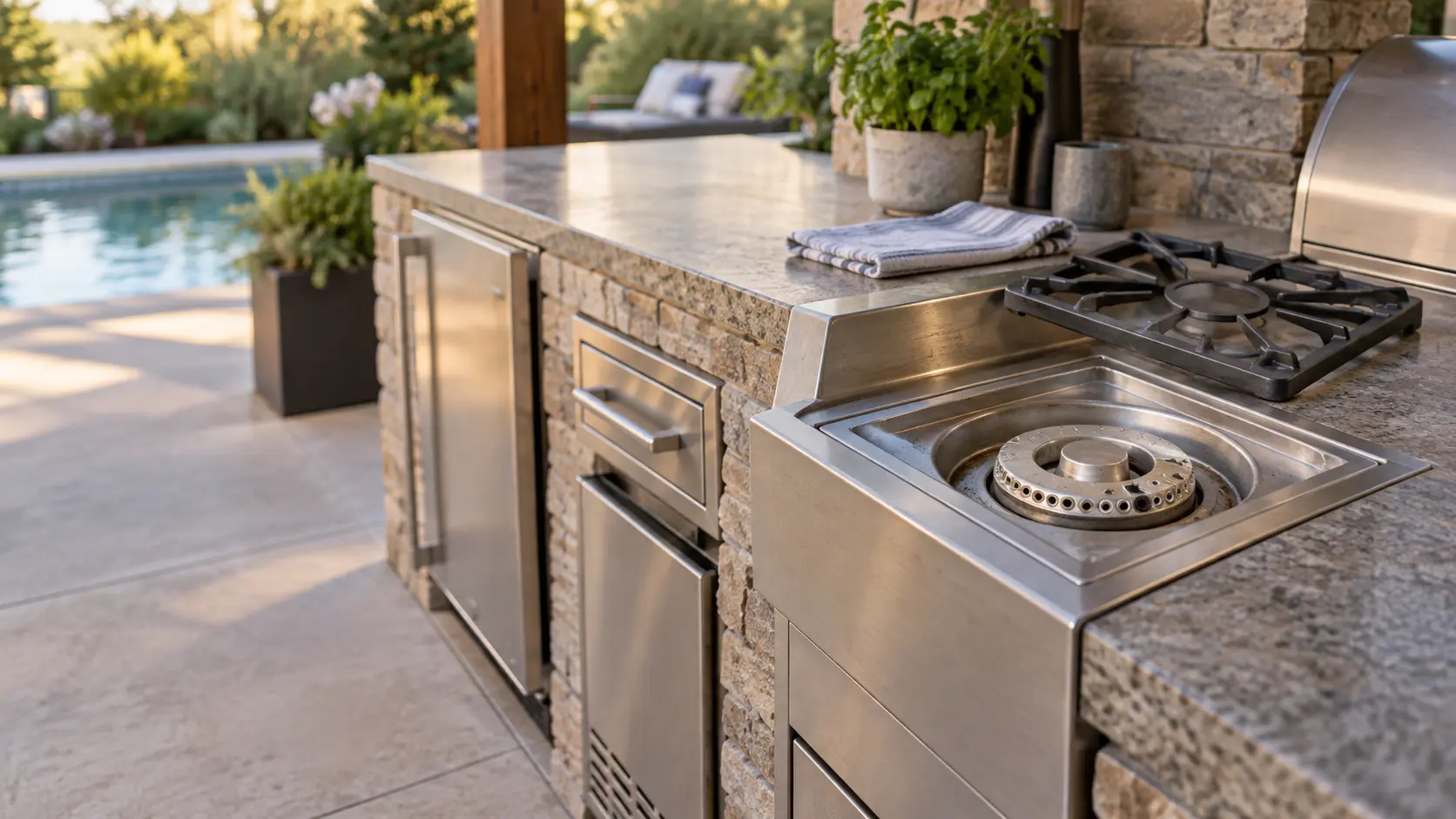
The same manual wants the unit shaded from direct sun and kept clear of anything that gives off heat. On an island, the heat source is often the neighbor: the cooking head at one end, a side burner above, or a warming drawer beside it. A shade sail, an umbrella that covers the door face at four o'clock, or simply planning big restocks for the morning can bring the afternoon reading down without any repair.
An indoor unit built into the island
If the cooler came from a kitchen showroom rather than an outdoor line, it may not be rated for the patio at all, and warm afternoons are the least of its troubles. The model plate and the manual will say which it is. Our guide to outdoor-rated or indoor appliances covers what to do when the answer is indoor.
Source: Blaze — Outdoor refrigerator user manual (BLZ-SSRF-50DH) — Designed for 50°F to 100°F, best 65–80°F built-in; avoid direct sun and heat sources; fans push heat through the front and front vents must stay clear; built-in clearances; no water on the unit without unplugging; too-warm checklist (door, setting, frequent opening, fresh load); automatic defrost about 30 minutes after about 6 hours; high-temperature alarm causes include a refrigerant leak
The front vent and the air behind it
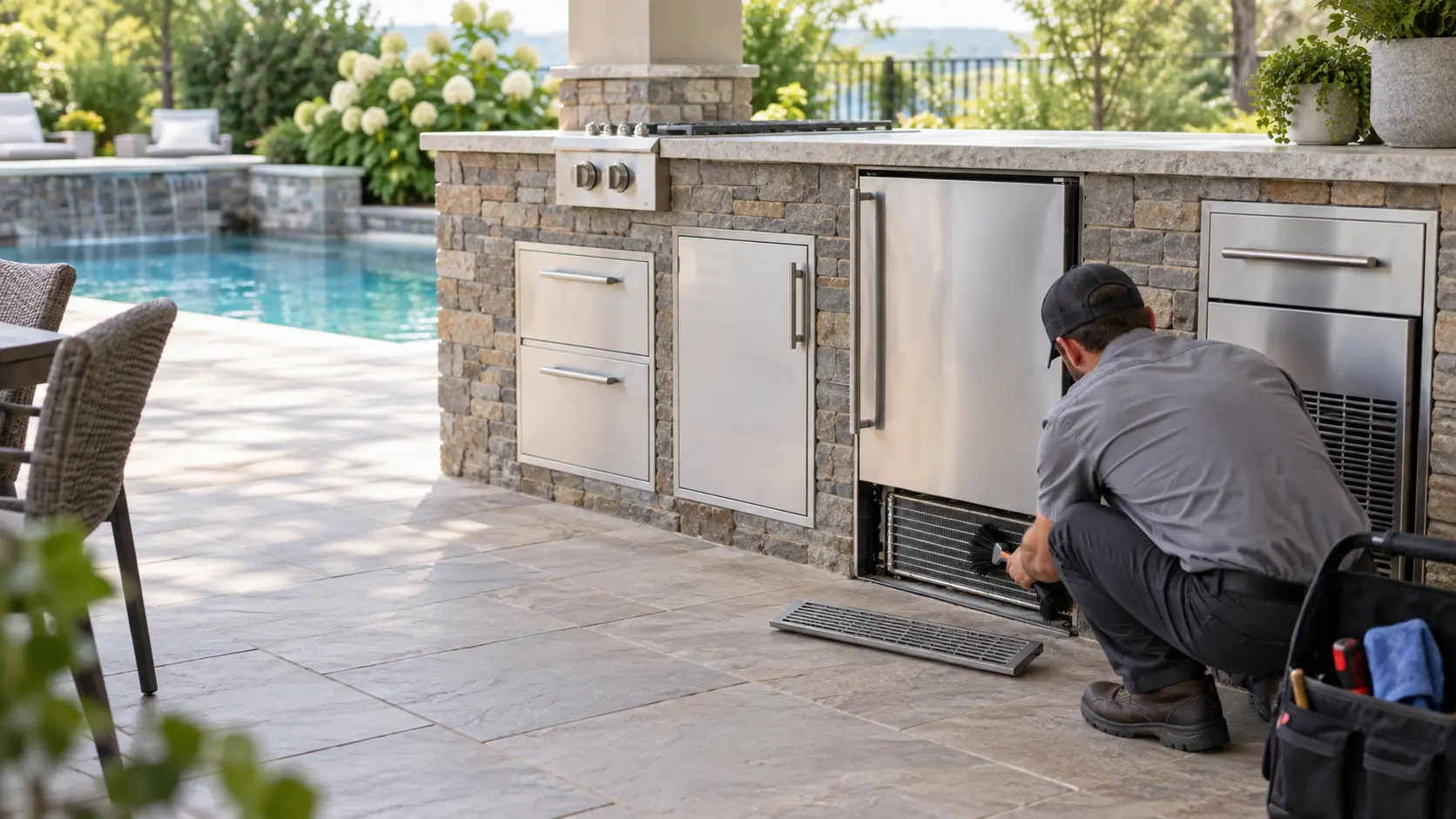
A built-in outdoor cooler has no room to breathe at the back or sides, so it breathes at the front. Blaze describes fans behind the unit that carry compressor heat away and out through the front, and asks that the front vents stay unobstructed; it also calls for small clearances around a built-in cabinet, a quarter inch at the sides and an inch at the top. When hot air cannot leave, the compressor runs longer and the cabinet warms anyway.
Walk up to the island and look at the grille at shin height. The things that block it are rarely dramatic, which is why they go unnoticed for a season.
- An island cover left hanging down over the lower doors while the cooler runs.
- A doormat, a planter or a stack of cushions pushed against the toe.
- Leaves, grass clippings, pollen or pool-deck grit packed into the slots.
- A trash bin or a propane tank parked in front of it for convenience.
Clearing the grille safely
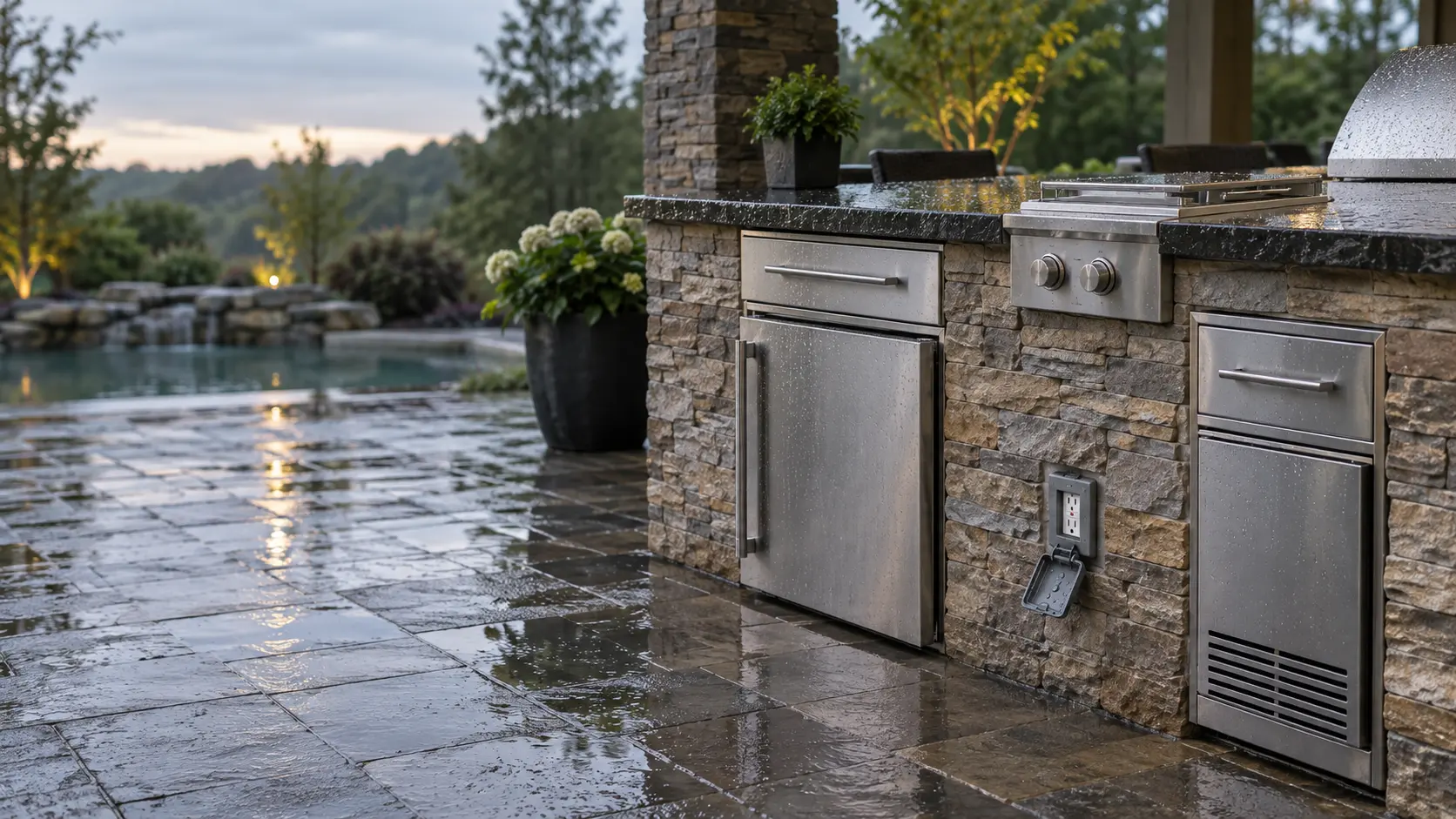
Switch the cooler off at its breaker, or unplug it if the plug is within reach at the front, and brush the slots with a soft brush or a vacuum nozzle. Keep the hose away; Blaze's manual wants the power disconnected before water gets anywhere near the cabinet. Nothing behind the grille needs to come out for this, and the panel screws stay in place.
Source: Blaze — Outdoor refrigerator user manual (BLZ-SSRF-50DH) — Designed for 50°F to 100°F, best 65–80°F built-in; avoid direct sun and heat sources; fans push heat through the front and front vents must stay clear; built-in clearances; no water on the unit without unplugging; too-warm checklist (door, setting, frequent opening, fresh load); automatic defrost about 30 minutes after about 6 hours; high-temperature alarm causes include a refrigerant leak
The door, the gasket and a warm restock
Blaze's own list for a unit that runs warm starts with the door: is it fully closed and sealed, has it been opened often, has it just been filled. A case of cans carried out from a hot garage can hold the cabinet above 40°F for the rest of the afternoon, and a door opened every few minutes during a party adds a steady stream of warm, humid air. Neither is a failure.
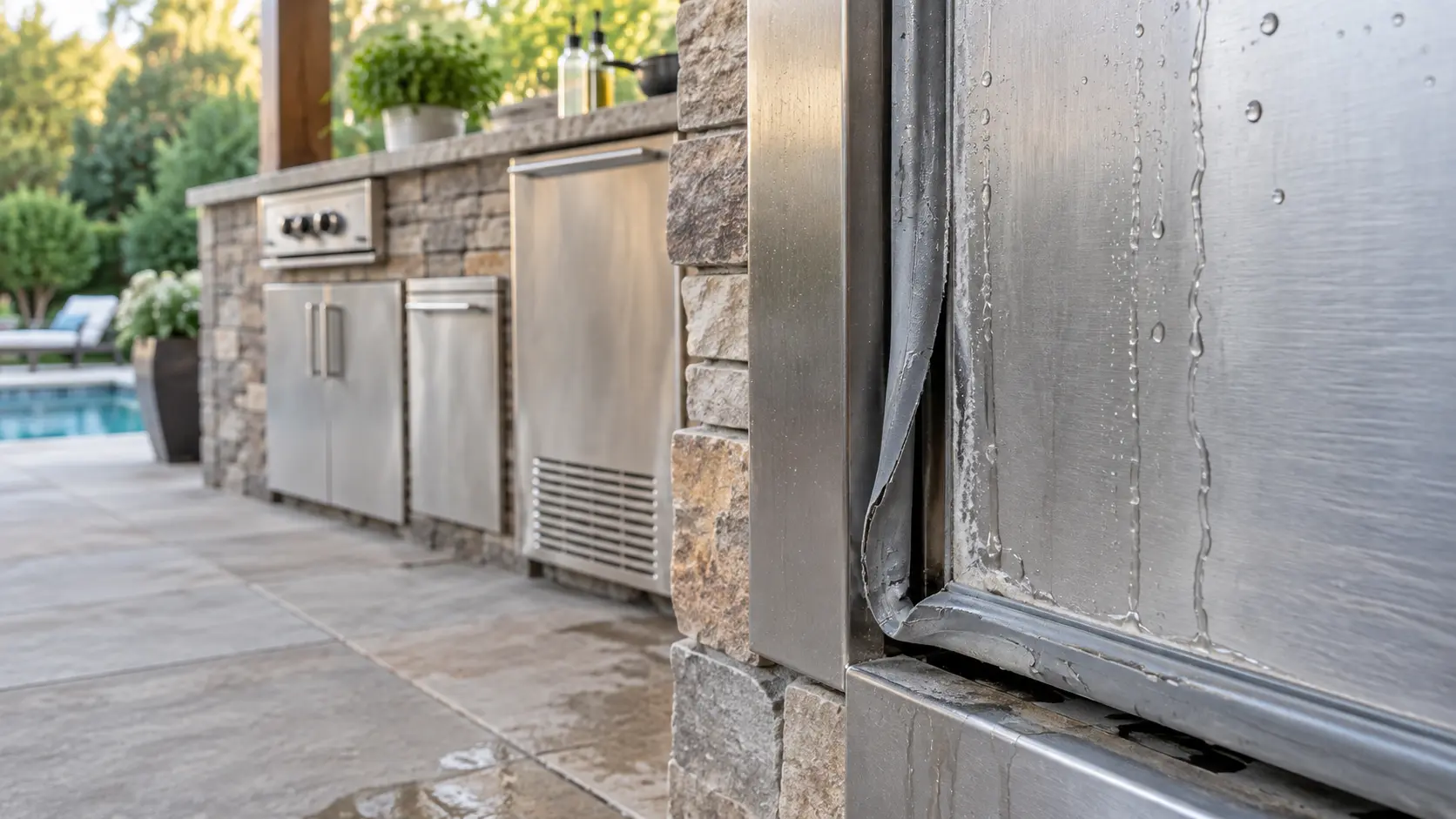
A gasket that has stopped sealing is different, because it works against the cooler all day. Shut the door on a narrow slip of paper, first at the hinge side, then the top, the handle side and the bottom, and tug it free each time; it should resist at every spot. Salt air, pool chemicals and sun harden gaskets on outdoor units, and a door that no longer swings shut by itself may mean the cabinet has shifted out of level on the pavers.
What normal recovery looks like after a party
Once the door stays shut, a healthy cooler should pull the cabinet back toward its setting within a few hours, faster in the evening shade. If it is still well above 40°F the next morning with nothing added and the door closed overnight, the load was not the explanation.
Source: Blaze — Outdoor refrigerator user manual (BLZ-SSRF-50DH) — Designed for 50°F to 100°F, best 65–80°F built-in; avoid direct sun and heat sources; fans push heat through the front and front vents must stay clear; built-in clearances; no water on the unit without unplugging; too-warm checklist (door, setting, frequent opening, fresh load); automatic defrost about 30 minutes after about 6 hours; high-temperature alarm causes include a refrigerant leak
Signs that go past the owner's checks
Some warm spells are built in. Blaze's unit shuts the compressor down for about thirty minutes after roughly six hours of running to defrost itself, so a single reading a few degrees high, taken at the wrong moment, is not a diagnosis. A reading that stays high is.
When Blaze's display shows its high-temperature alarm, the manual lists an open door and a fresh load first, then a refrigerant leak and a failing control. Here the checklist hands over: a cooler that stays warm with a clear grille, a sealing door and the fan audibly running, one whose compressor clicks on and off every few minutes, or one with frost building on the back wall needs gauges and a technician.
Source: Blaze — Outdoor refrigerator user manual (BLZ-SSRF-50DH) — Designed for 50°F to 100°F, best 65–80°F built-in; avoid direct sun and heat sources; fans push heat through the front and front vents must stay clear; built-in clearances; no water on the unit without unplugging; too-warm checklist (door, setting, frequent opening, fresh load); automatic defrost about 30 minutes after about 6 hours; high-temperature alarm causes include a refrigerant leak