Why does an undersized gas line starve burners?
A pipe can only carry so much gas at an acceptable pressure, and every foot of pipe and every fitting takes some of that pressure away. When one burner runs, there is plenty. When several run, the line can no longer deliver what each asks for, and the pressure at the farthest appliance sags.
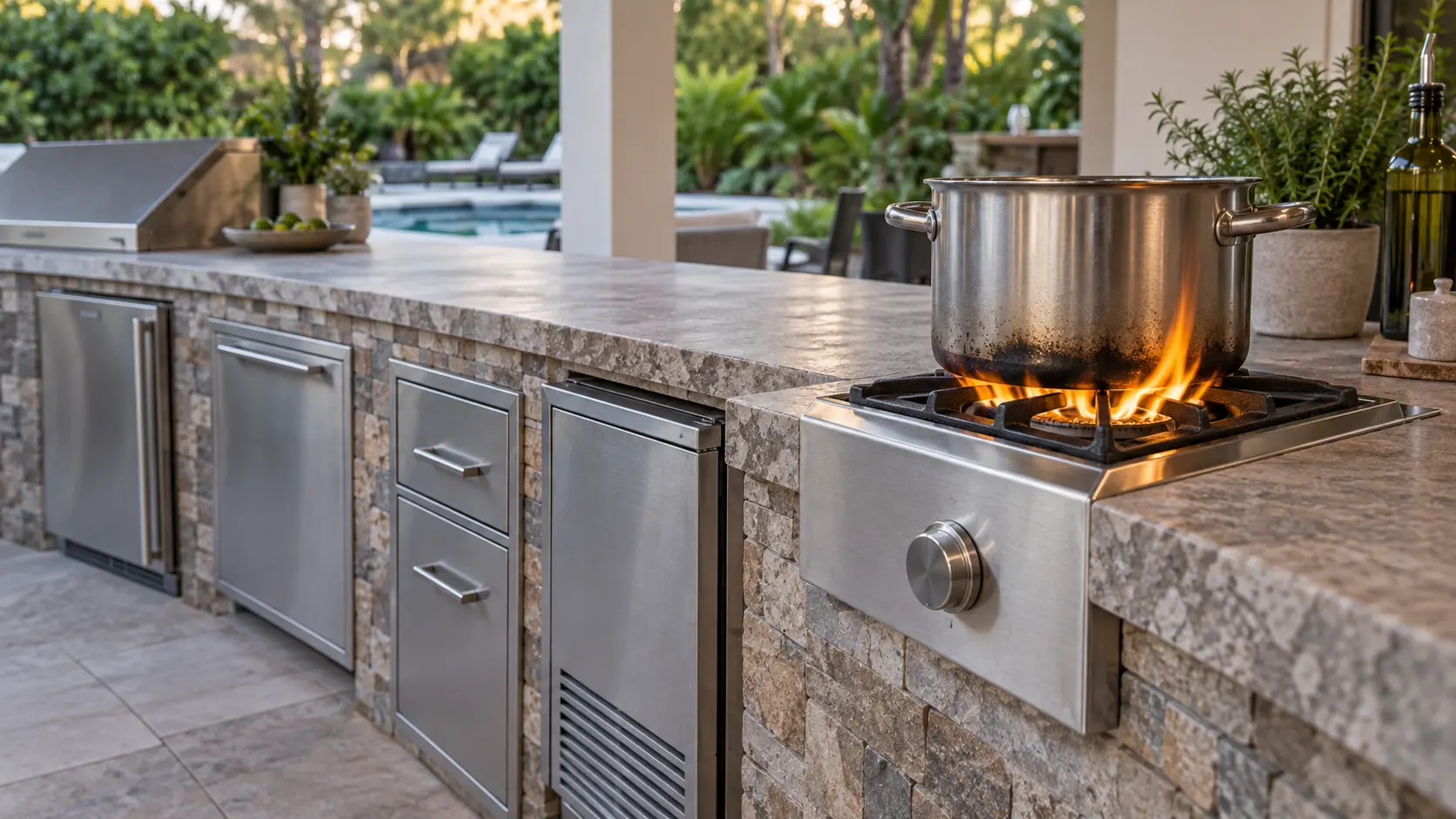
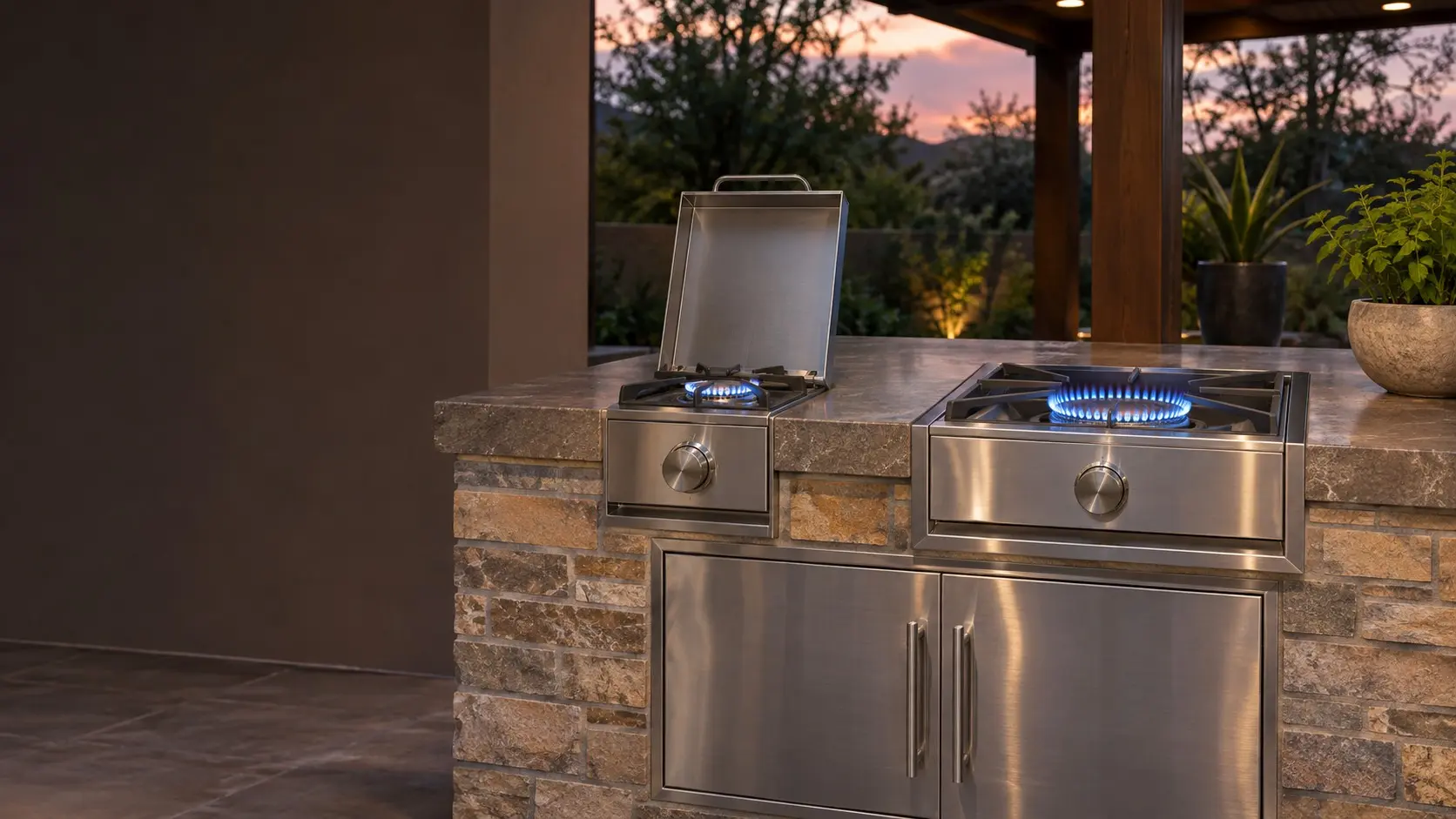
The sign is flames that look right alone and shrink, lift or turn yellow when other burners join. It is a different problem from a clogged orifice or a spider in a burner tube, which show on a single burner at any time. The yellow flame problem page lists both.
What "pressure" means here
Appliance gas pressure is low, measured in inches of water column. The manual for many models gives the pressure the appliance expects, and it differs between natural gas and propane. The line has to deliver close to that figure at the appliance even with everything on, and only a gas fitter with a gauge can confirm that.
How do I add up the BTU load?
This is the one sizing step that is yours: a written list. Add the BTU rating of every appliance on the line, not just the largest one, and hand the total to the gas fitter. The rating is on the model plate or in the manual, and the model plate guide shows where it sits on an outdoor kitchen.
- List each gas appliance: main burners, side burner, power burner, any heater or fire feature.
- Write the BTU per hour for each.
- Add them for the total load.
- Note anything you may install later, so the fitter can allow for it.
Plan for later
Adding a side burner or a patio heater to a line sized for the first appliance is the most common way a good line becomes a poor one. Give the gas fitter the future list now, and the line can be sized once.
| Item | What to write down |
|---|---|
| Appliance | Name and model |
| Rating | BTU per hour, from the plate |
| Fuel | Natural gas or propane |
| Location | Where it sits in the island |
| Future | Anything you may add |

What does the run length change?
The longer the run, the more pressure the pipe loses, so a long run needs a larger pipe for the same load. The gas fitter measures it from the meter, or from the regulator or tank, to the farthest appliance; you can help by marking on the island plan where the line comes from and where each appliance sits.
Branches
A line that splits to feed the island and a patio heater is sized as a trunk and branches. The trunk carries the sum and each branch carries its own load. Where the trunk is too small, the branch nearest the supply gets enough and the farthest one starves.
Fittings and flex hoses
Every elbow, tee and quick-connect adds a little resistance, and a long flexible connector adds more than a short one. The fitter chooses the pipe, the connectors and their lengths to suit the appliance manuals and the local code.
What happens when the line is already built?
Many owners inherit a line from the builder and add equipment over the years. If the island has grown, ask a gas fitter to check the line against today's load, and do it before a problem shows up. Do not add a tee or a longer hose to reach a new appliance yourself.
Signs the line is working too hard
- Flames that lift off the ports or look weak with several burners on.
- A power burner that heats slowly when the main burners are also lit.
- A pilot or igniter that fails only when other burners are running.
- A regulator that hums or whistles under load.
What a check involves
The visit is short when the plates are readable and the shutoff is easy to reach, so clear the cabinet beforehand.
The gas fitter reads the appliance plates, measures the run, looks at the regulator and reads the pressure at the appliance with a gauge, once with one burner on and once with all of them on. The difference between the two readings is the answer, and it is the number to ask for.
How does natural gas differ from propane?
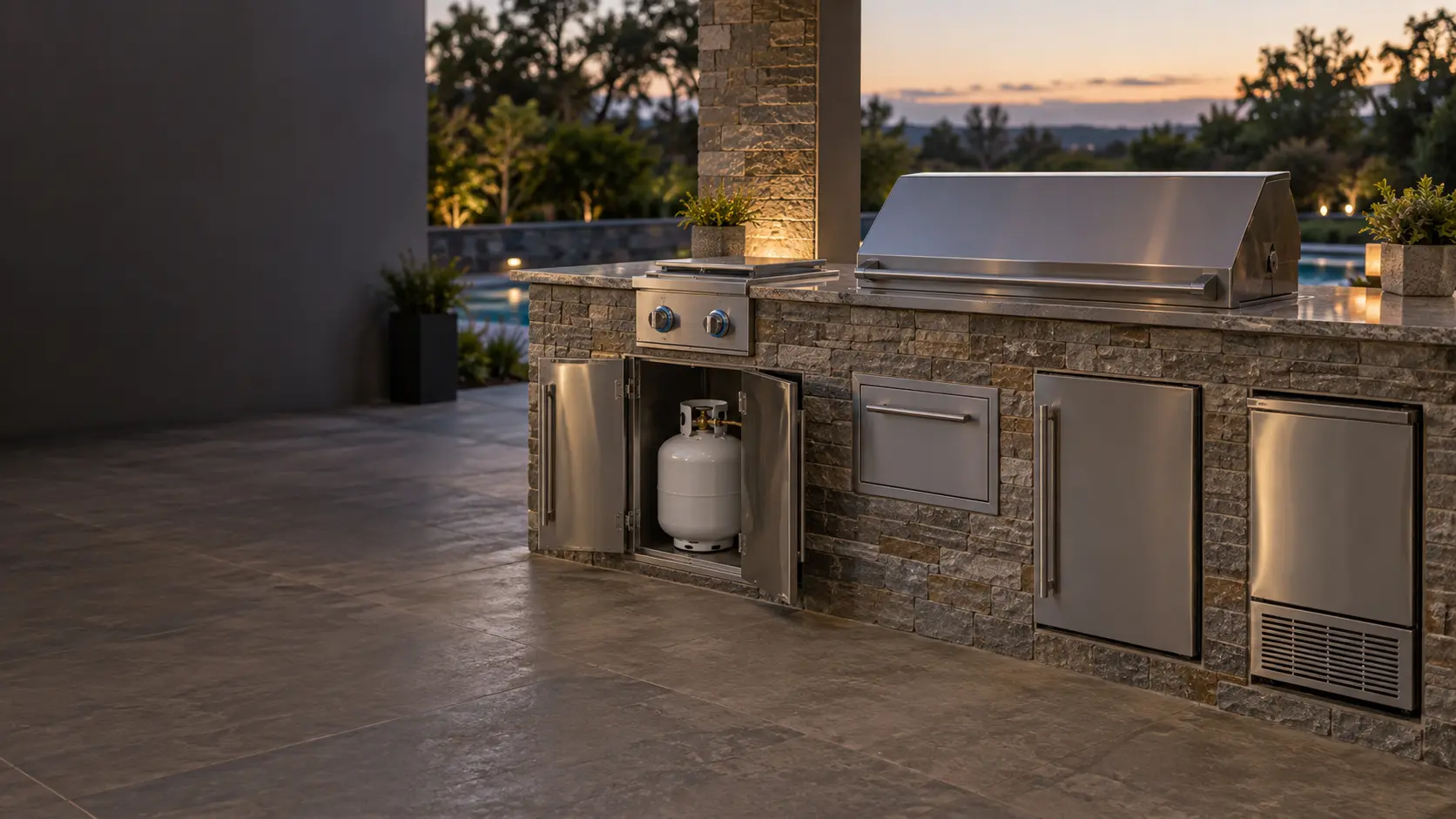
Natural gas and propane both work, but they need different pressures and, in the appliance, different orifices. Natural gas generally needs a larger opening and pipe for the same heat, because it carries less energy by volume than propane.
That is why a burner set for one fuel cannot simply be hooked to the other. The natural gas or propane guide explains the supply side and what a conversion involves. When the fuel changes, the line should be checked again, not assumed. A gas connection check is the visit that looks at the connection and the pressure.
What does a gas fitter need from me?
A gas fitter needs the appliance list, the fuel, the route and the distance, and a clear view of the supply. Bring the island plan, the installation planning guide shows what to settle first, and a note of where the shutoff should go.
Questions to ask
- Is the line sized for every appliance running at once?
- Where is the shutoff, and can I reach it?
- Is there room to add an appliance later?
- Who leak-tests the run, and when?
- Does the island have the ventilation it needs? The venting guide explains why that matters.
If a gas smell ever shows up, follow the gas smell guide and do not relight anything until it has been checked. If a valve or ignition part is suspected, igniter and gas valve repair is the service for appliance parts.