The conditions outdoor kitchen coolers are built for
Outdoor-rated units are tested for weather that an indoor unit never sees, and the makers still draw limits. U-Line designs its outdoor models to run between 50°F and 100°F and says that higher surrounding temperatures reduce the unit's ability to reach low settings; it also warns that damage from temperatures of 40°F or below is not covered. True rates all of its undercounter units for outdoor use and adds a note for hot places.
Those limits describe the air around the cabinet, not the forecast. A west-facing island can be much hotter at the cooler's face than the shade reading on a weather app suggests, and dark stone that has sat in the sun all day keeps giving that heat back after sunset.
True's note for places that pass 95°F
Where the surrounding air regularly exceeds 95°F, True recommends venting the rear of the rough opening, with a vent of about 4 by 10 inches. It is an installer's detail, cut into the island behind the unit, and it gives the heat that collects in the bay a way out that does not pass the front grille again.
Source: U-Line — UORE124 Outdoor User Guide and Service Manual — Designed for 50°F to 100°F; higher ambient temperatures reduce the ability to reach low temperatures; damage at 40°F or below not covered; keep out of direct sunlight and away from heat; no extra top, side or rear space when built in but the front grille must not be obstructed and must be installed; not behind a closed cabinet door; keep the grille free of dust and lint; condensation in humid weather is normal; winterization at 40°F or below leaves the door open at least 2 inches; True Residential — 15 and 24 inch Undercounter Install Guide and User's Manual — All undercounter units UL-rated for outdoor use; vent the rear of the rough opening, about 4 by 10 inches, where ambient regularly exceeds 95°F; countertop over the door or drawer gasket in an opening at least 24 inches deep; gaskets are not watertight; condensation in high humidity; keep stocked full; winterize at a steady 32°F or below by emptying, turning off and covering
Sun, hot stone and the cooking head next door
U-Line's advice is to keep the unit out of direct sunlight and away from heat-generating equipment. On an island both sit close: the sun moves across the door through the afternoon, and the main burners and a warming drawer may be a few feet away. An outdoor refrigerator in direct sun on a July afternoon, beside a cooking head at full heat, is being asked to cool against a hot door, a hot cabinet and hot intake air all at once.
When an island is still on paper, the cooler belongs at the end with the most afternoon shade and the farthest from the burners. When it is already built, shade can still be added, as long as nothing new ends up in front of the grille.
- A pergola with slats set to shade the cooler's face through the afternoon.
- A fixed umbrella or sail placed to cover the door at the hottest hour.
- Planting that grows beside the island, never in front of the unit.
- Moving a warming drawer or other heat source away from the cooler if the island is being rebuilt.
Testing a spot that is already built
Put an appliance thermometer on the middle shelf and read it twice on the same hot, sunny day: once in the morning shade and once when the sun is on the door. Note the time and whether the door had been opened a lot. A small rise that recovers in the evening points at sun and heat; a cabinet that stays warm into the night points at something else and is worth a visit.
Source: U-Line — UORE124 Outdoor User Guide and Service Manual — Designed for 50°F to 100°F; higher ambient temperatures reduce the ability to reach low temperatures; damage at 40°F or below not covered; keep out of direct sunlight and away from heat; no extra top, side or rear space when built in but the front grille must not be obstructed and must be installed; not behind a closed cabinet door; keep the grille free of dust and lint; condensation in humid weather is normal; winterization at 40°F or below leaves the door open at least 2 inches

Why the front grille must stay open
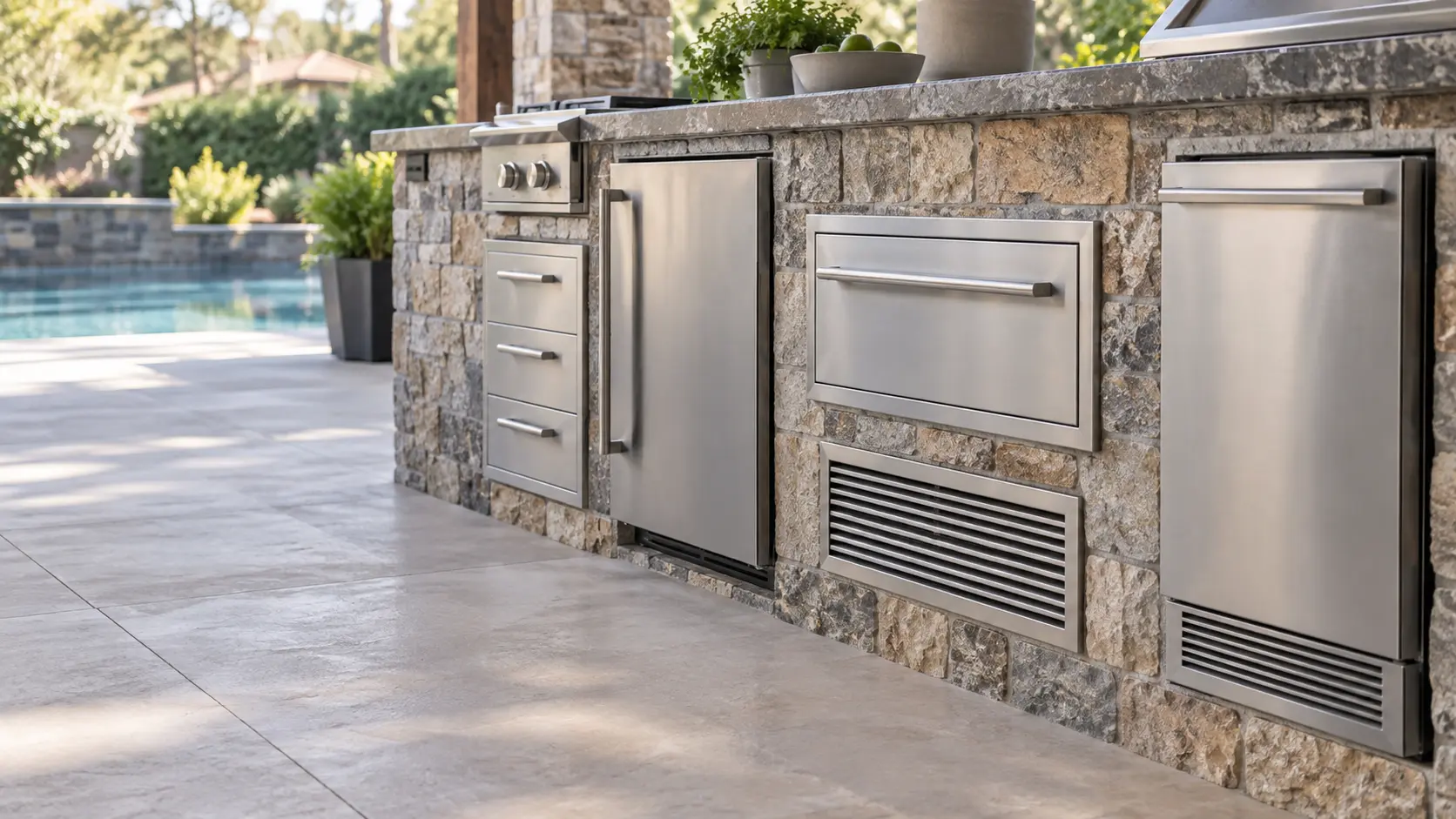
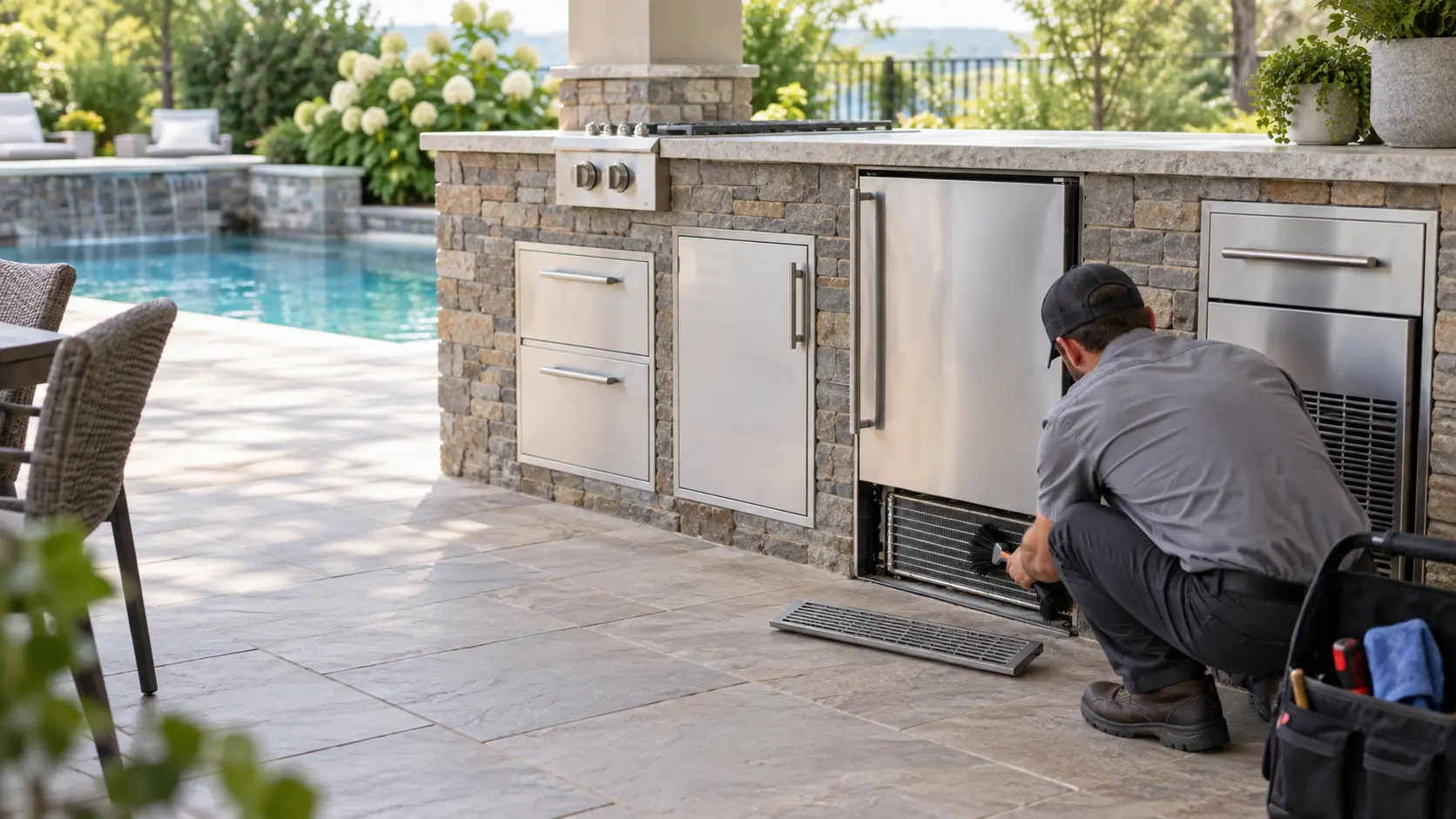
Built-in outdoor coolers take in and push out air at the bottom front, so they can sit tight in an opening. U-Line says its units need no extra space at the top, sides or back when built in, but the front grille must not be obstructed, the grille must be in place when the unit runs, and the unit cannot be installed behind a closed cabinet door. It also asks owners to keep the front grille free of dust and lint.
On a patio the grille gets blocked in ways a kitchen toe-kick never does. The list below is what we find most often when an outdoor cooler runs long.
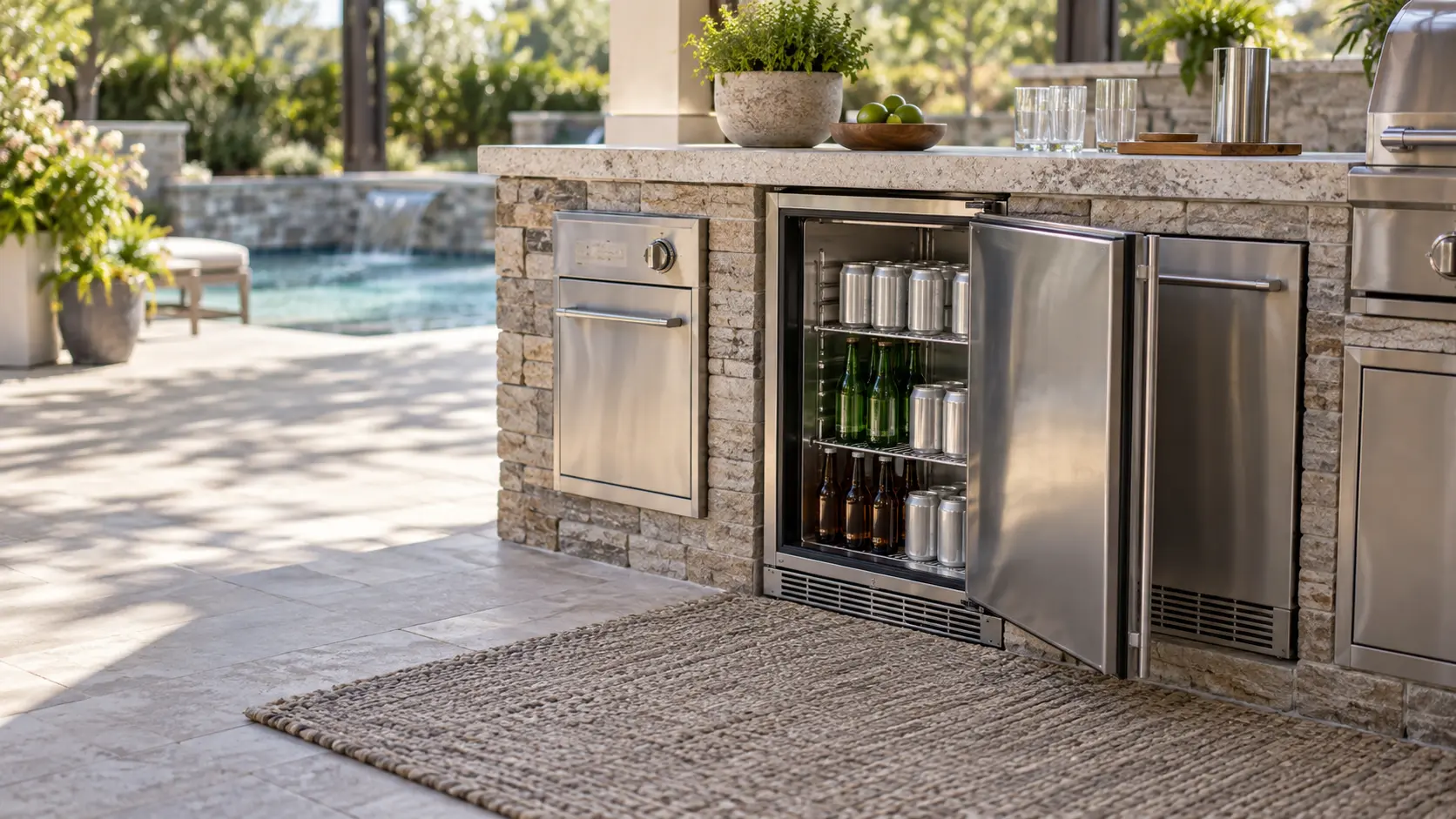
- A doormat, outdoor rug or planter set against the base of the island.
- Leaves, grass clippings and pool-deck grit packed into the louvers.
- A cabinet-style panel or a decorative door added over the unit after installation.
- An island cover pulled down over the front while the cooler is still running.
- Bar stools or a cooler bag parked against the grille during a party.
Source: U-Line — UORE124 Outdoor User Guide and Service Manual — Designed for 50°F to 100°F; higher ambient temperatures reduce the ability to reach low temperatures; damage at 40°F or below not covered; keep out of direct sunlight and away from heat; no extra top, side or rear space when built in but the front grille must not be obstructed and must be installed; not behind a closed cabinet door; keep the grille free of dust and lint; condensation in humid weather is normal; winterization at 40°F or below leaves the door open at least 2 inches
Rain, the countertop edge and the door gasket
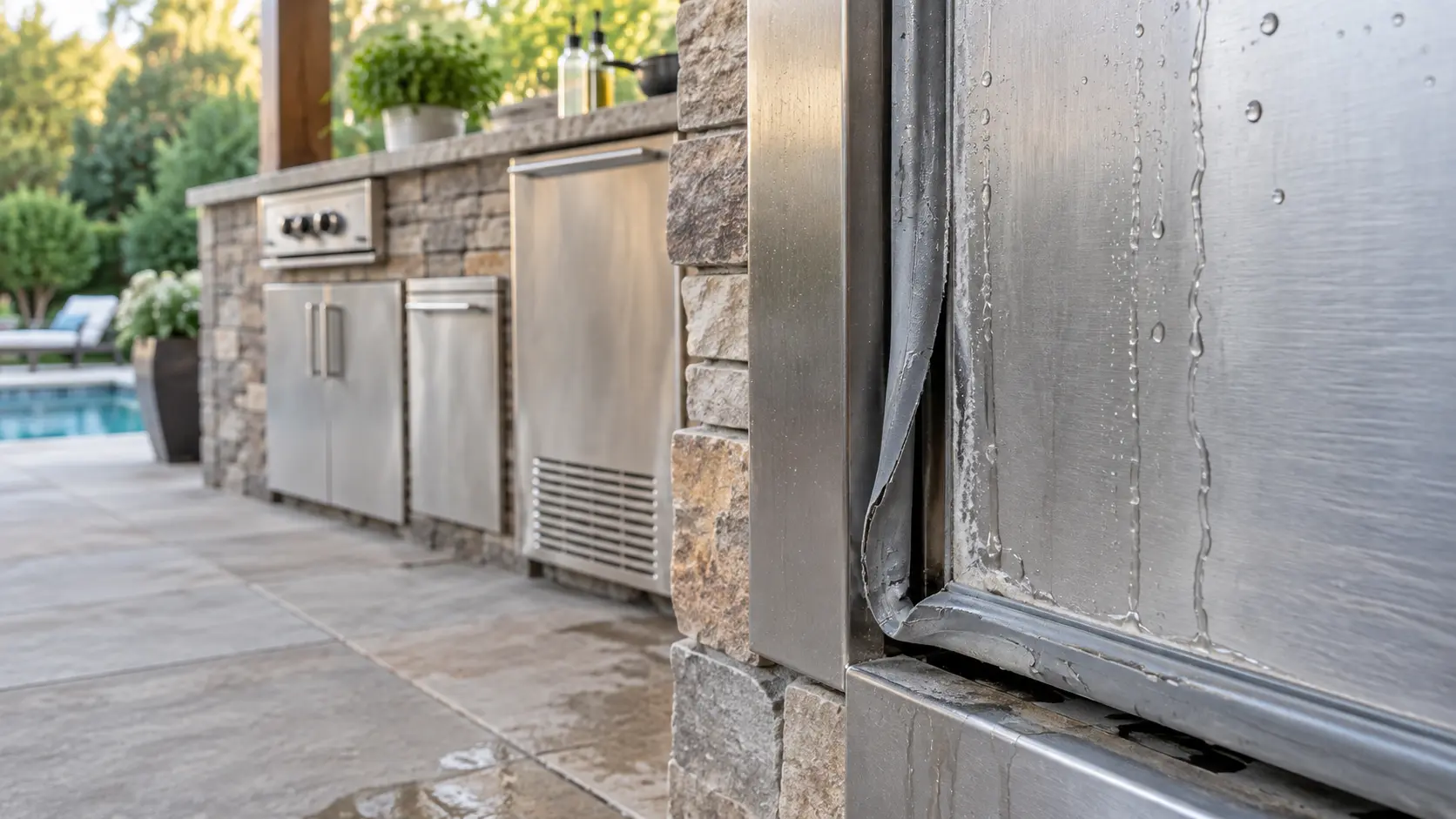
True recommends installing its units flush, with the outdoor kitchen countertop overhanging the door or drawer gasket, in an opening at least 24 inches deep. The reason is printed right beside it: door and drawer gaskets do not provide a watertight seal against the weather. A countertop that stops short of the door lets rain run straight onto the gasket and into the top of the cabinet.
If yours was installed proud of the counter, water and sun both reach the gasket every day. That shows up first as a gasket that stiffens or a door that no longer pulls shut, and it is easier to catch at a seasonal check than after warm food.
Condensation on the door is not a leak
U-Line and True both say that in humid weather some moisture may form on the outside of the cabinet, the glass or around the gaskets, and that it goes away as the humidity drops. True adds that a unit kept stocked full runs best. Beads of water on a humid evening are normal; a steady drip from inside the door is not.
Covers belong on a unit that is switched off
A cover over a running cooler traps the heat it is trying to push out through the grille. True's winter advice is to empty the unit, unplug it or turn it off, and then cover it once temperatures stay at or below 32°F; U-Line's shutdown steps, required at 40°F or below, leave the door open at least 2 inches to keep mold away. Follow the manual for your own unit.
Source: True Residential — 15 and 24 inch Undercounter Install Guide and User's Manual — All undercounter units UL-rated for outdoor use; vent the rear of the rough opening, about 4 by 10 inches, where ambient regularly exceeds 95°F; countertop over the door or drawer gasket in an opening at least 24 inches deep; gaskets are not watertight; condensation in high humidity; keep stocked full; winterize at a steady 32°F or below by emptying, turning off and covering