Can a deck carry an outdoor kitchen?
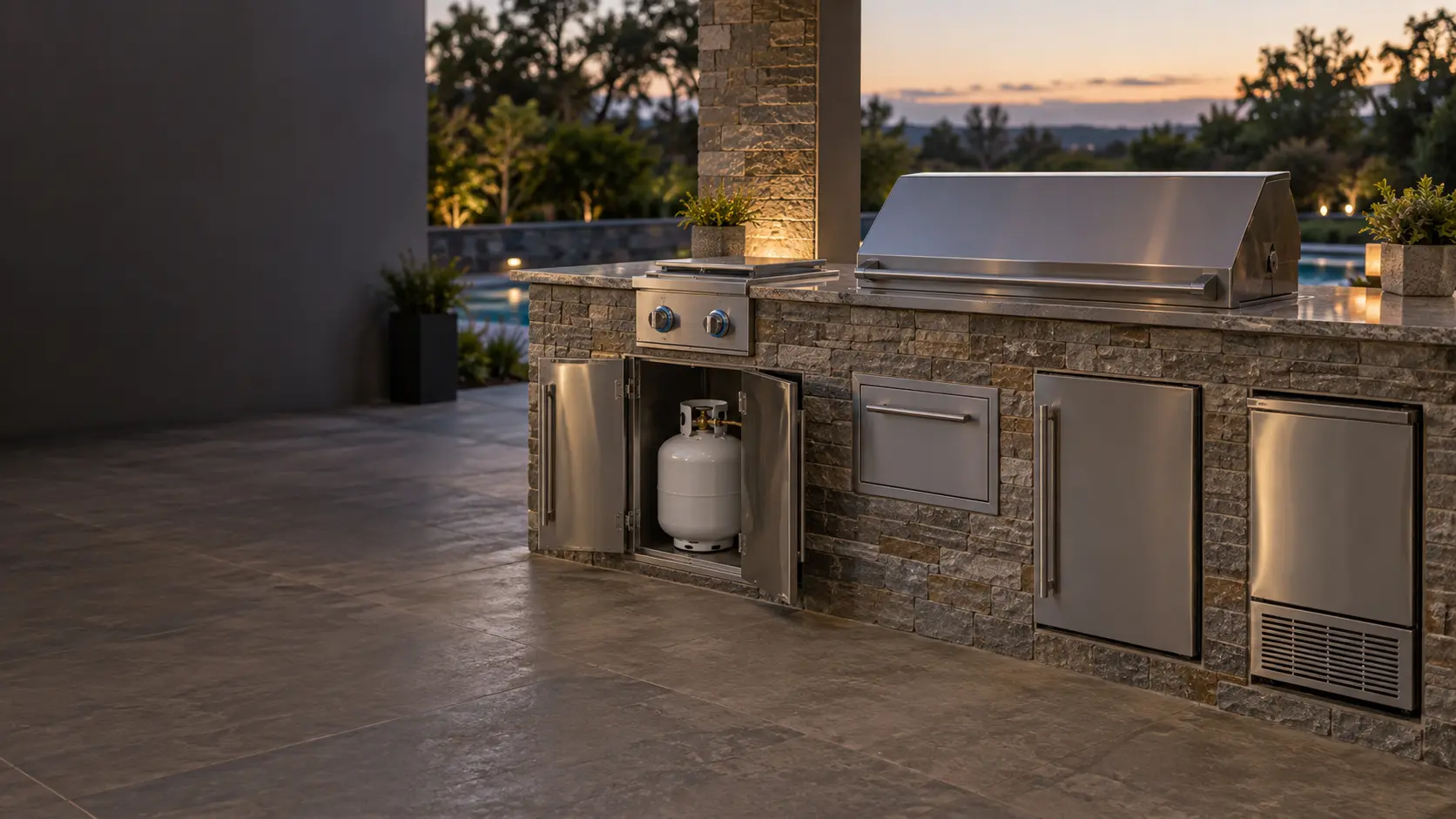
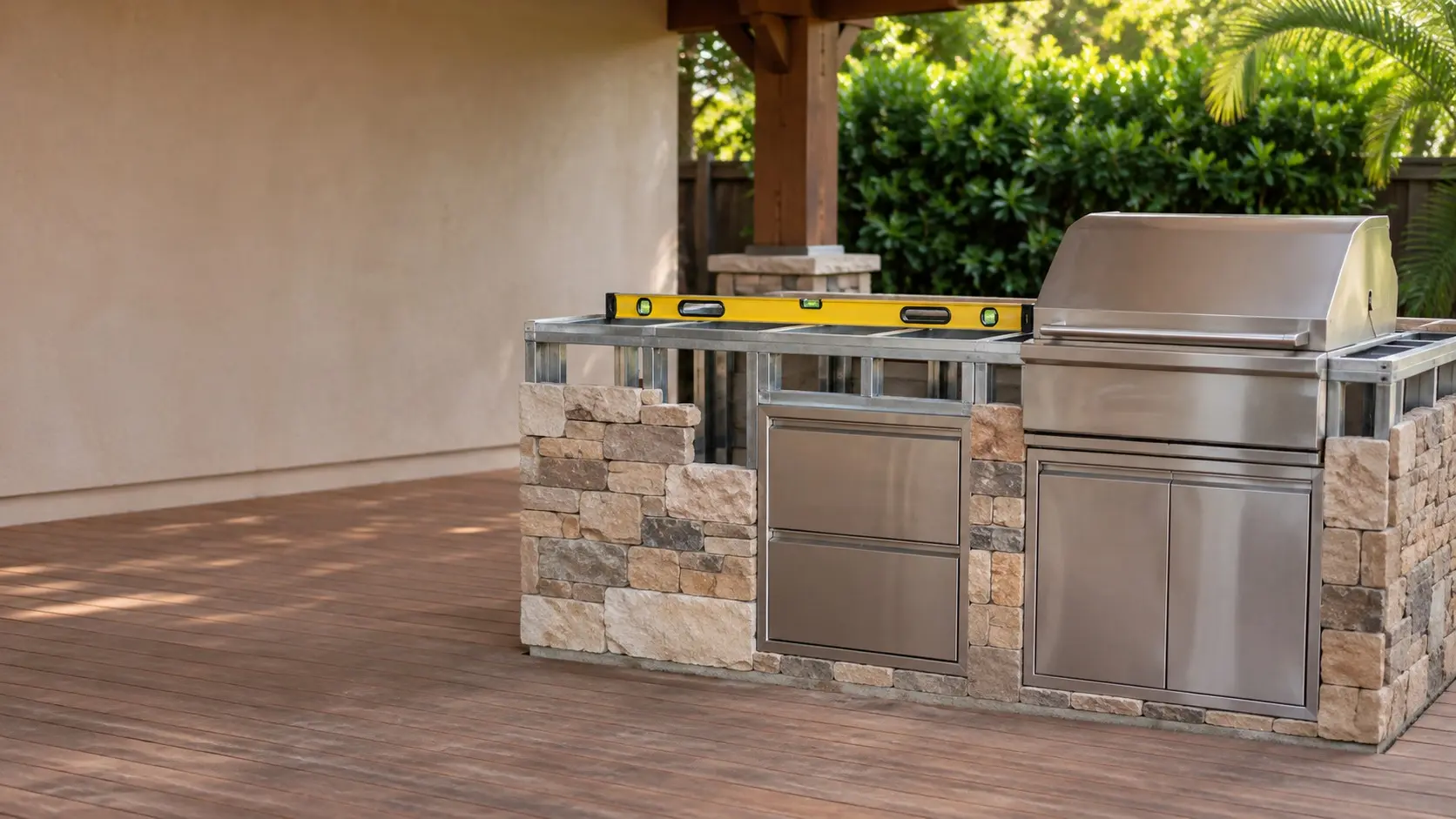
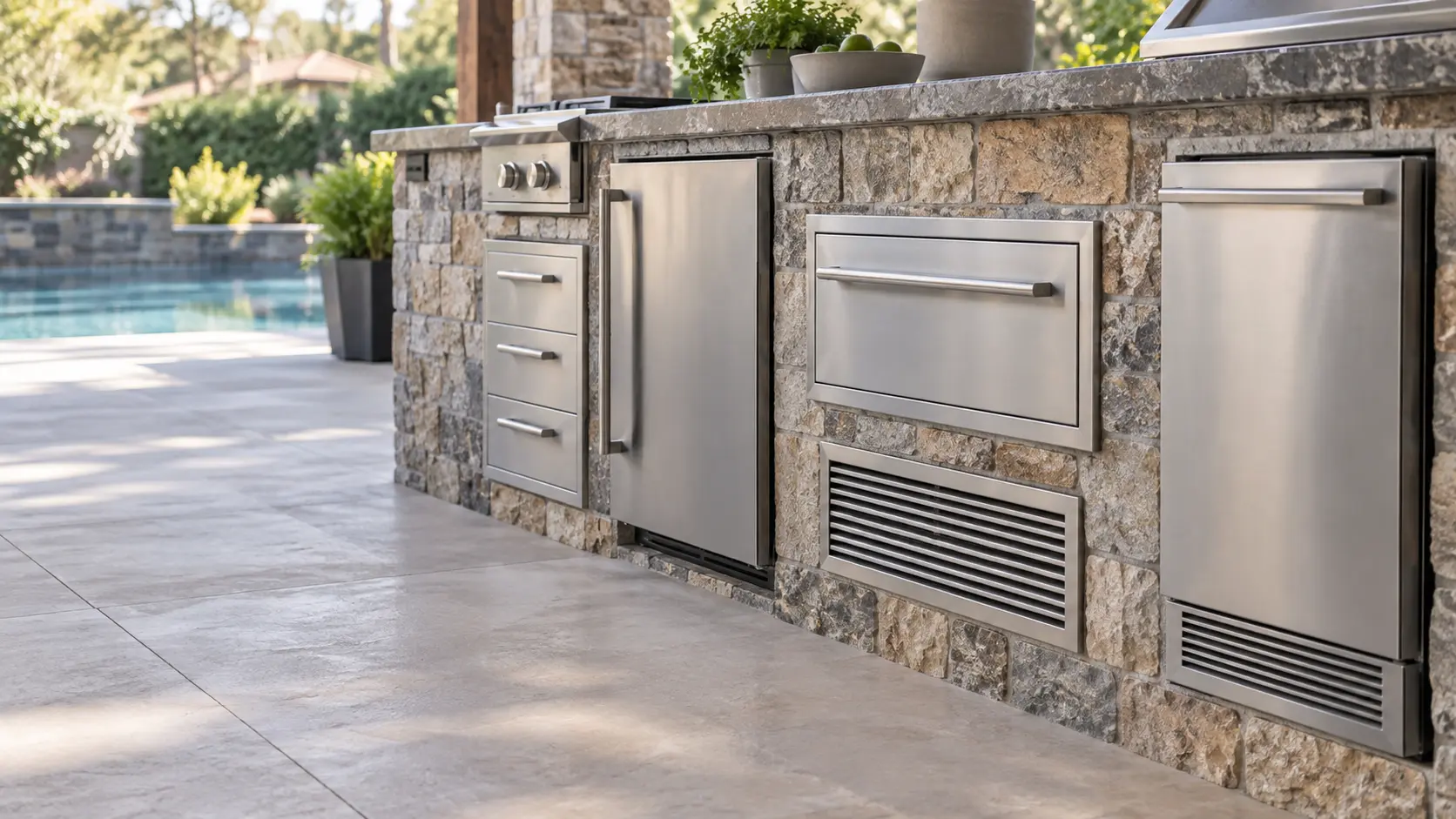
Sometimes, but not on the assumption that it can. A deck is designed for people and furniture, and a masonry or stone island with a countertop, a cooling appliance, a cooking appliance and a full gas bottle can weigh far more than that, in one place.
Nobody should guess the load. The deck's age, joist size and spacing, the footings and the post connections all decide it. Ask a structural engineer or the local building department to look at the framing, and ask before the island is ordered, not after.
Ways to reduce the load
- Choose a lightweight frame with thin veneer instead of solid block
- Place the island over a post and beam line, not mid-span between joists
- Keep the counter material light
- Use a separate footing under the island, if the engineer allows it
- Skip appliances you do not need, since each adds weight
Do not forget the extra people
An island attracts a crowd. The deck carries the island plus the guests standing around it, and a deck that was fine for four chairs may not be fine with a dozen people clustered at the counter.
How do you keep a cooking appliance from heating a wooden deck?
Follow the installation manual's clearance to combustible material, and put a noncombustible base between the cooking appliance and the boards. Heat from a cooking appliance travels down through the island, and wood or composite decking is combustible or can warp.
A noncombustible base
Many manuals for built-in appliances call for the island frame to be noncombustible, such as metal studs or masonry, and for a specific gap and venting. Check the manual for your appliance and for the island kit, and follow the larger clearance if the two differ. Composite boards can soften or discolor under hot spots, so an air gap and a heat shield under the island are cheap protection.
Keep it away from the house
NFPA's grilling safety tip sheet says propane and charcoal grills should only be used outdoors, and that a grill should sit well away from the home, deck railings, eaves and overhanging branches. Apply the same thinking to an island on a deck: leave room between the cooking appliance and siding, railings and anything overhead.
Source: NFPA — Grilling safety tip sheet — propane and charcoal grills are for outdoor use only and belong well away from the home, deck railings, eaves and overhanging branches

How does gas get to a deck island?
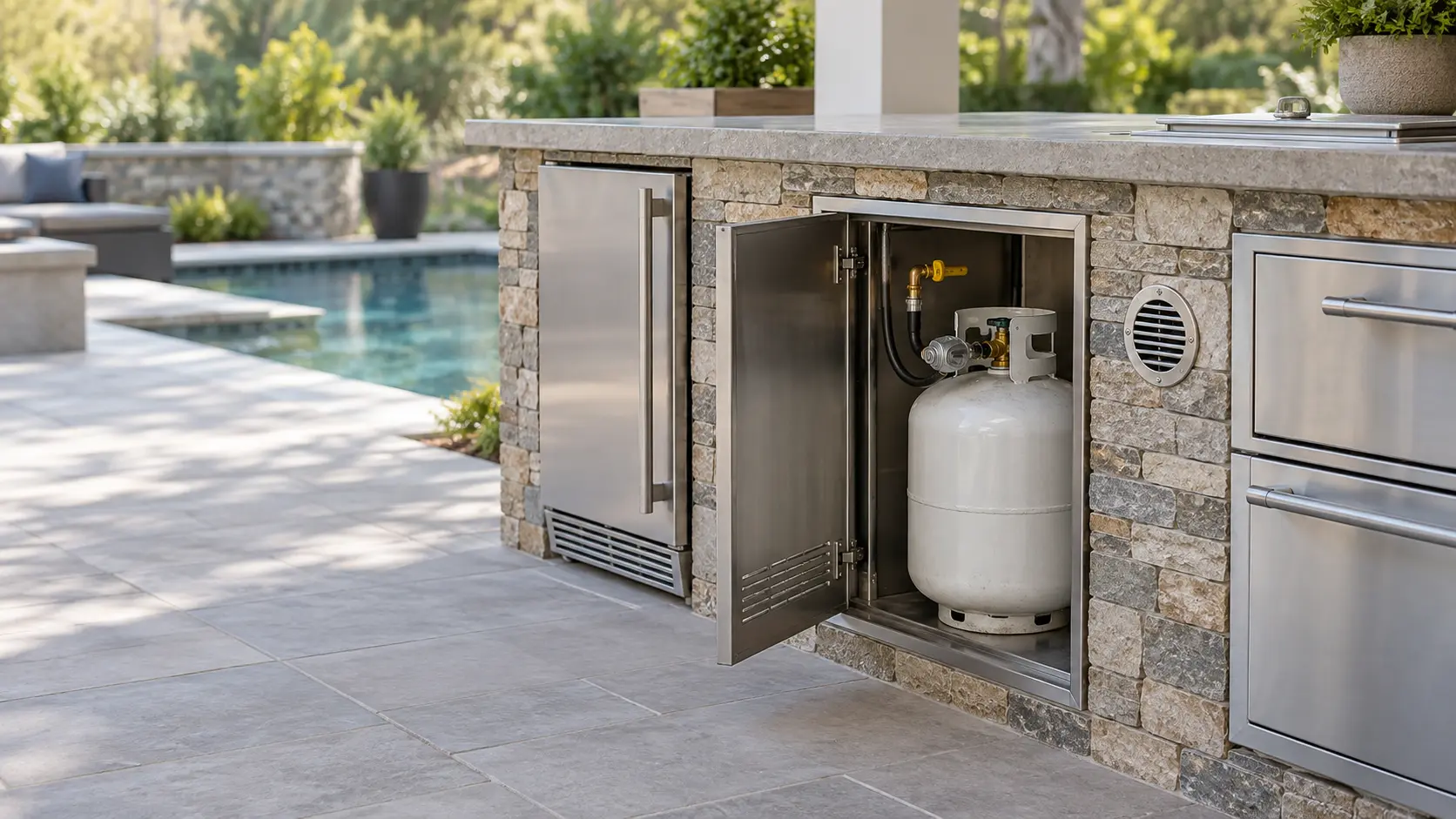
Through a line from the house or from a propane tank, installed by someone qualified to do it. A gas line on a deck has to be routed so it is protected from damage, fitted with a shutoff you can reach and tested for leaks before use.
Leave that work to a qualified gas installer or the gas utility. Do not extend a hose, add a fitting or run a flexible line through a hole you drilled in the deck. The outdoor kitchen gas connection check is the service that inspects the connections of an existing island, and the natural gas or propane guide helps with the fuel choice.
If you ever smell gas
If you smell gas while cooking, get everyone away from the island and call the fire department or the gas utility from a safe distance, as NFPA's grilling tip sheet advises; do not move the appliance. With no flame lit, the sheet says to turn off the gas tank and the grill, and if the smell does not stop, call the fire department. Do not plug in or switch anything near the island. The guide to a gas smell at the island explains the steps.
Source: NFPA — Grilling safety tip sheet — on a gas smell while cooking, get away from the grill, call the fire department and do not move it
Where do water and grease go on a deck?
They run down between the boards and soak the framing, unless you plan for them. Water that sits on the joists rots wood and rusts hardware, and grease stains boards and feeds fires.
Drainage and a sink
A sink needs a drain, and the question is where it empties. Local rules may limit where gray water can go, so check them. A line that drips onto the joists below is a slow rot. Put the drain line somewhere you can inspect, and slope it away from the framing.
Grease
Place a removable pan or a washable mat on the deck under the cooking area, and clean it often. Grease on boards is fuel, and it also attracts animals. Keep the area under the island clear of stored cardboard and cushions.
- Put a removable drip pan under the cooking area
- Slope any drain line away from the framing
- Leave the underside of the deck open so you can see leaks
- Wipe grease spills the same day
Power
An outdoor outlet for lights or a cooler needs GFCI protection and a weatherproof cover. The GFCI and power repair service covers tripping and failed outlets, and power and water to the island shows what a safe supply looks like.
Table: Deck island planning, in order
| Step | Who | Why first |
|---|---|---|
| Check framing and footings | Structural engineer or building department | Decides whether the island can go there at all |
| Plan clearances and base | Installer, with the manuals | Fixes the island's frame |
| Gas line | Qualified gas installer or utility | Routes and tests the supply |
| Power and water | Electrician and plumber | Sets outlets and drains |
What if the deck is not suitable?
Move the island onto a footing or a small slab beside the deck, or choose a smaller freestanding cart. A separate pad takes the weight off the deck and keeps heat away from it.
The general planning is covered in the outdoor kitchen island installation guide, which assumes a slab, and the deck changes only the support, base and drainage parts. A diagnostic visit can look at an existing island for signs of heat or water damage.