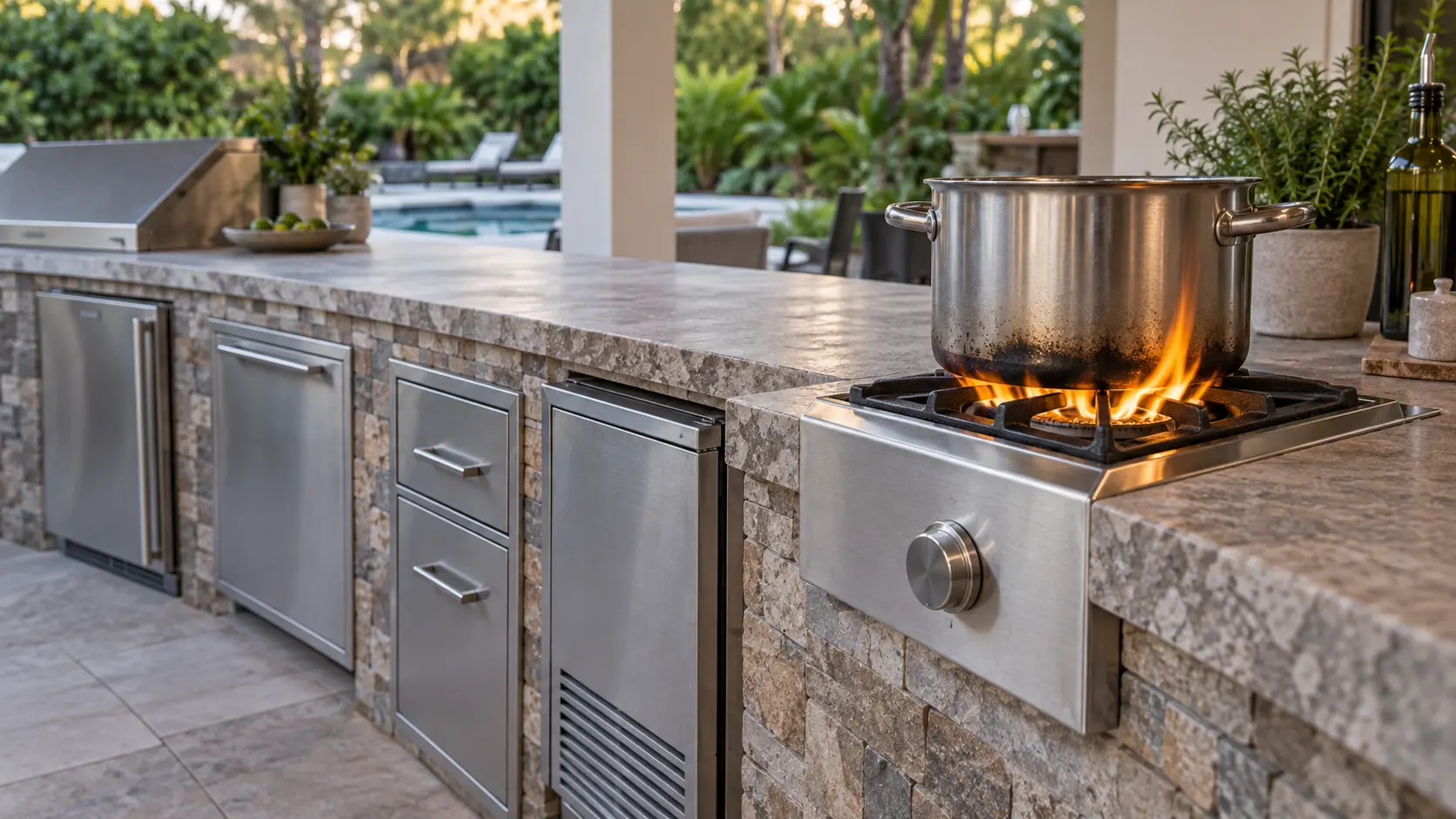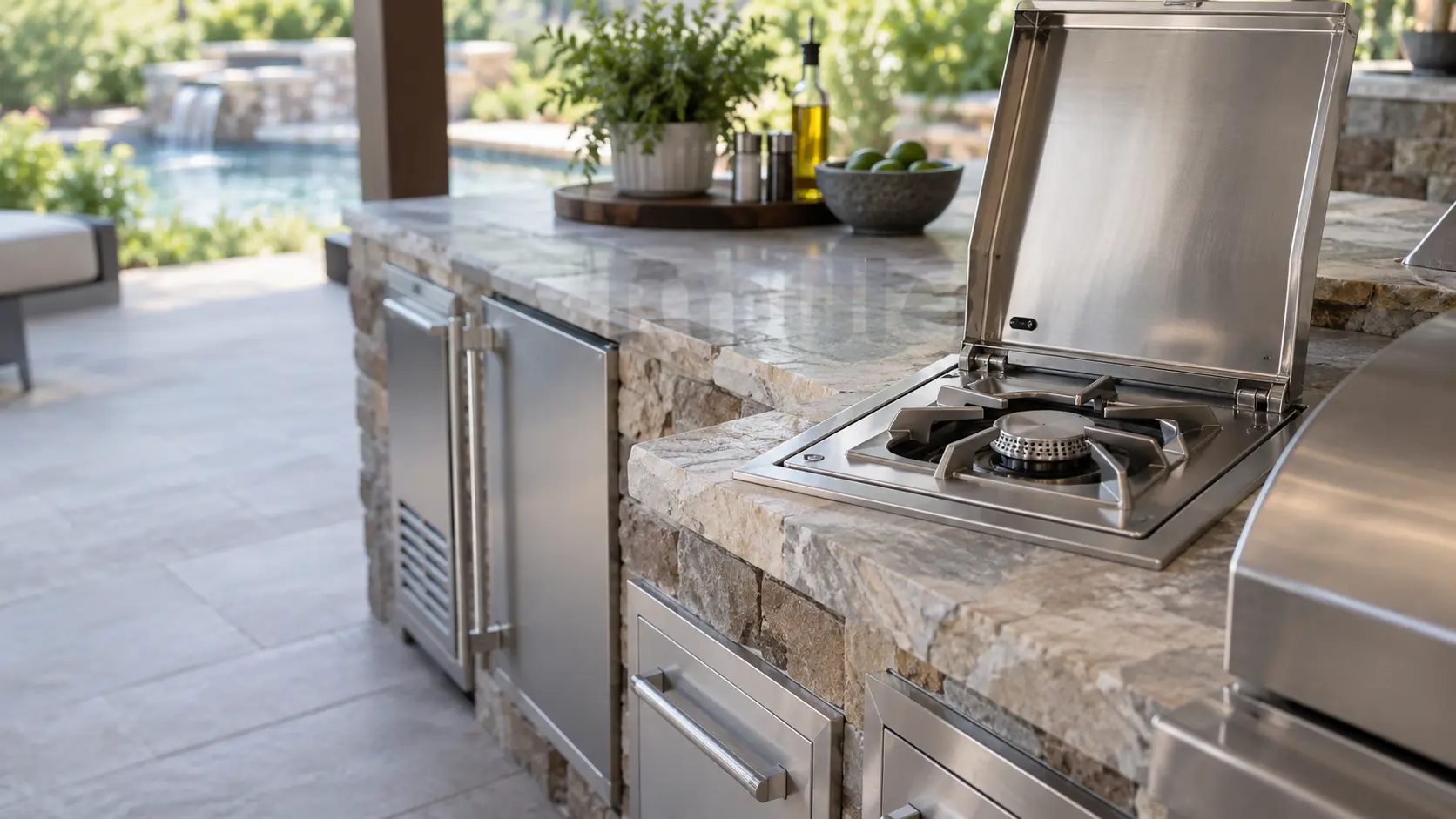
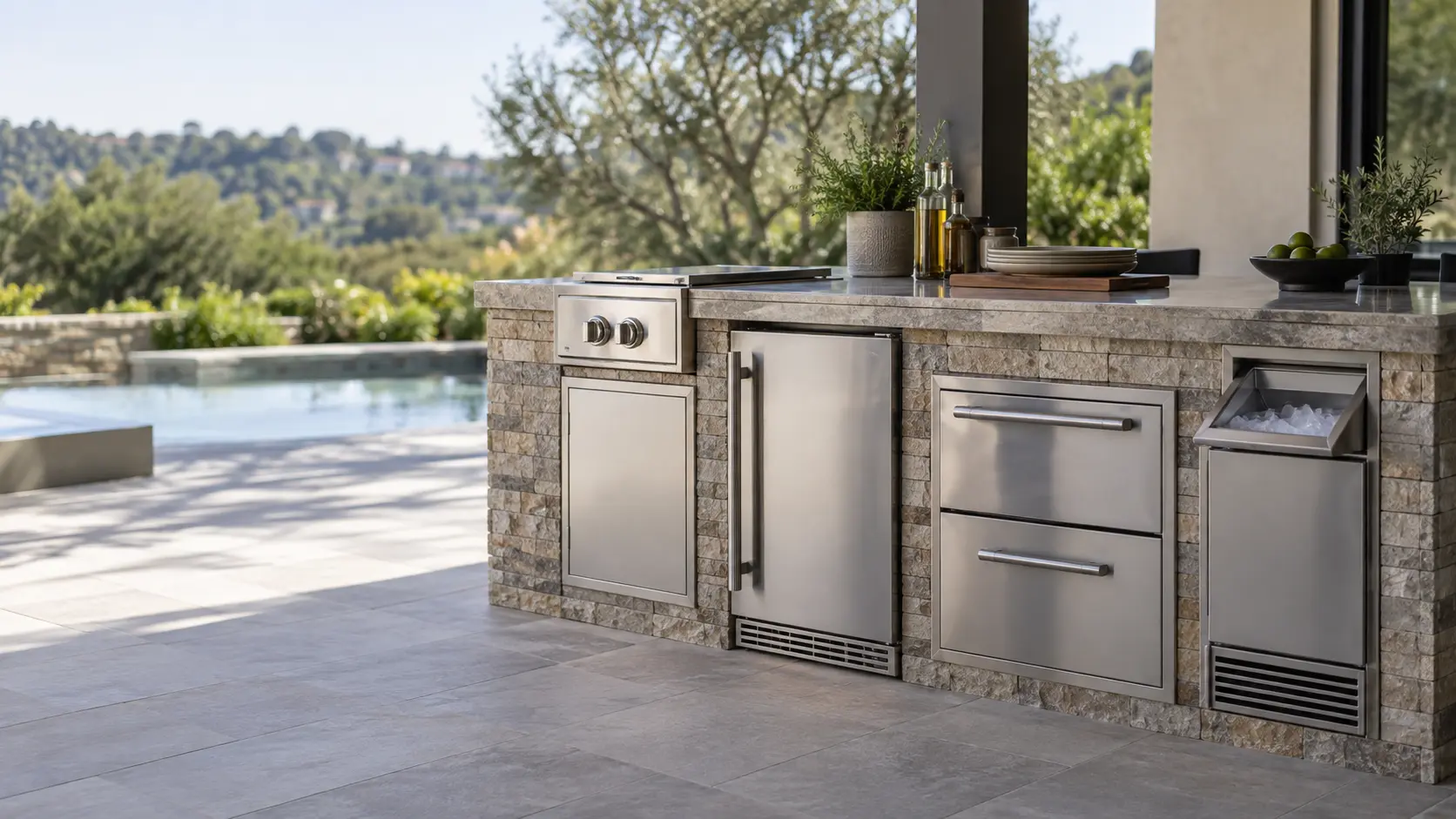
How each fuel reaches the island
Natural gas comes from the utility main through the house meter, and a plumber or gas fitter runs a permanent line out to the island. Once that line is in, the side burner and the power burner simply have fuel whenever the valve is open. The cost of the choice is paid up front, in trenching, pipe sizing and a shutoff valve that stays reachable.
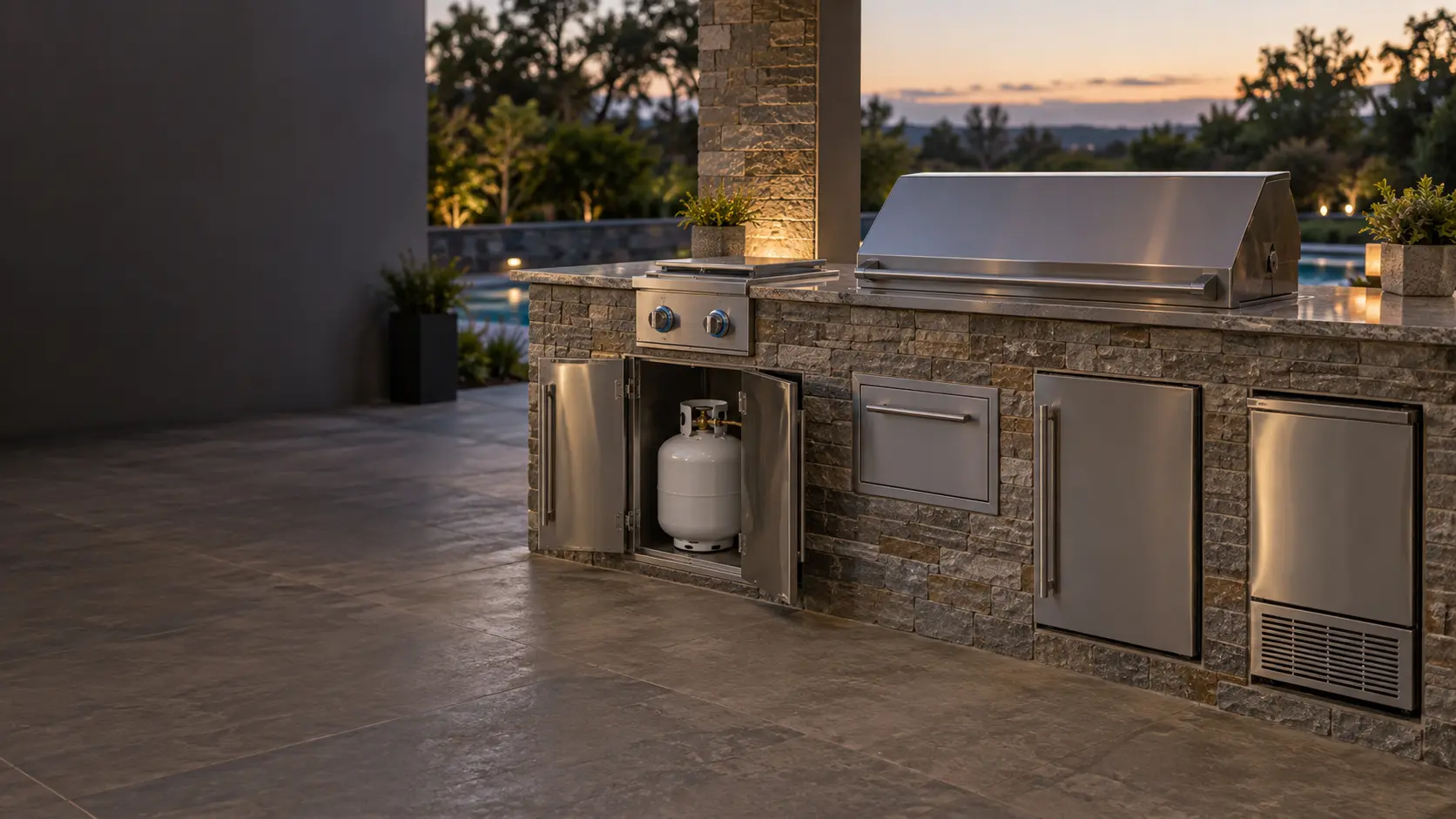
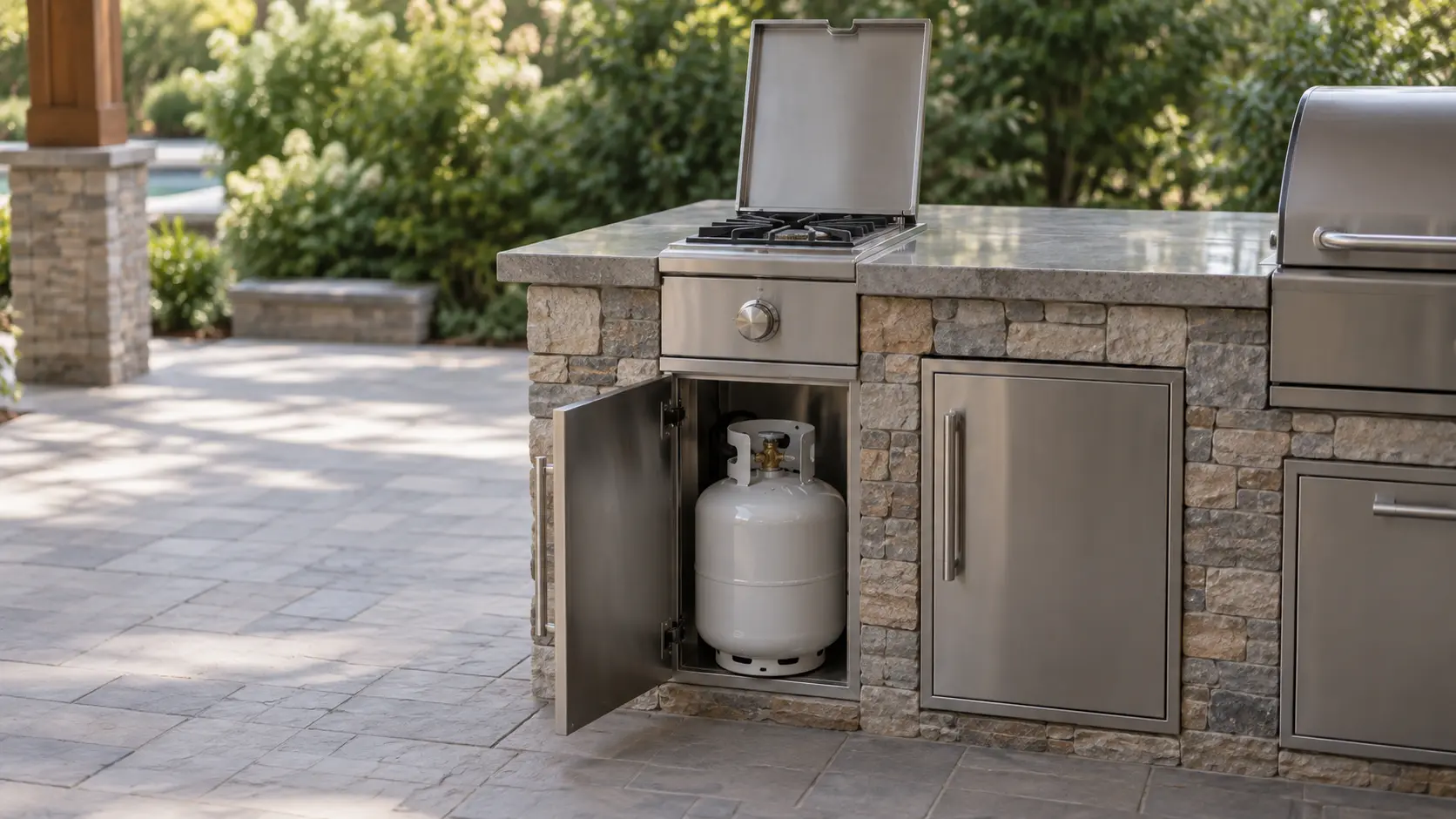
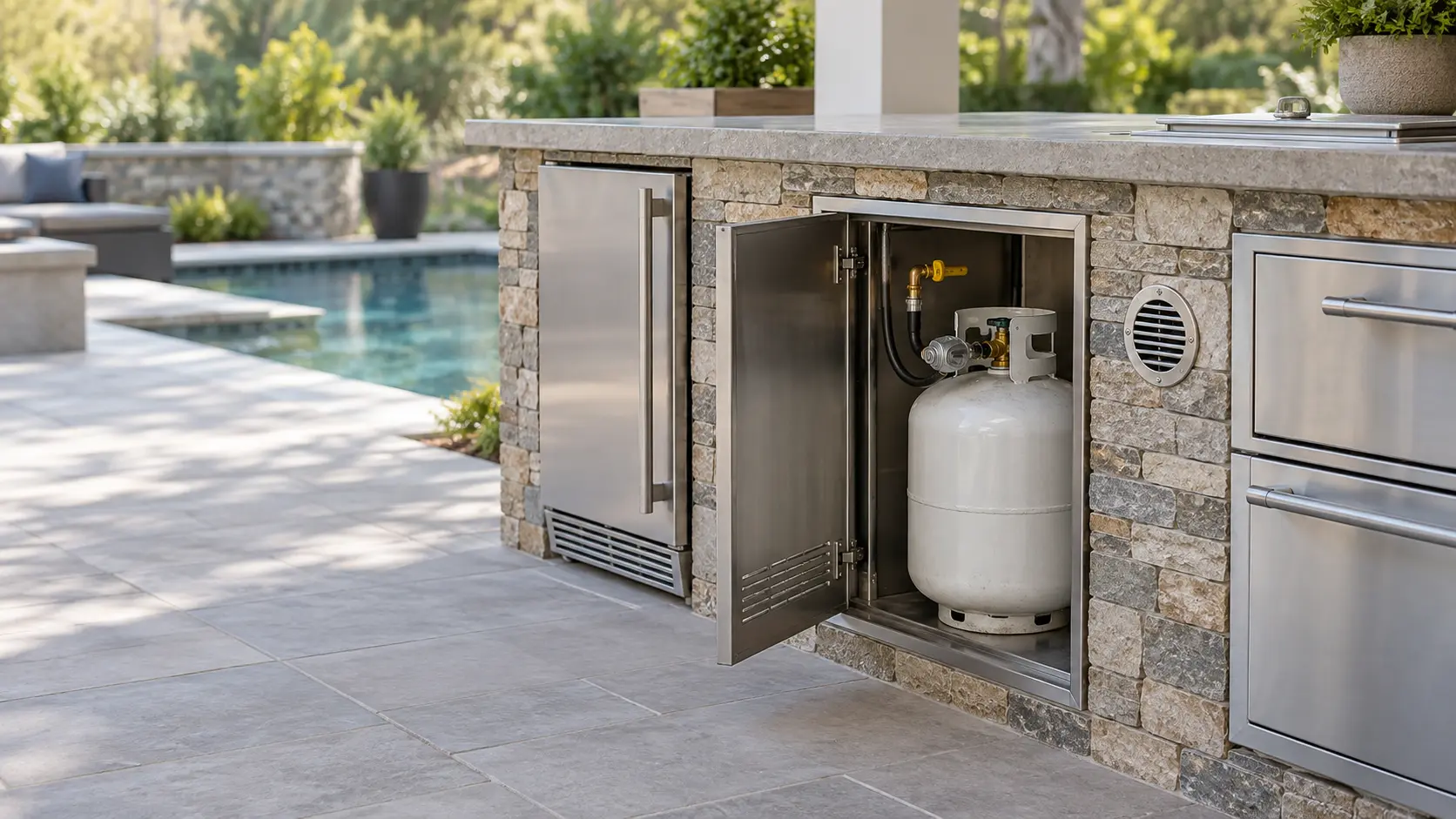
Propane arrives in a container you own or lease. In most islands that means a portable cylinder standing in a ventilated compartment, and in some homes it means a larger tank that already feeds a water heater or a fireplace, piped out to the island the same way natural gas would be.
A portable cylinder in the island
A cylinder is the quickest way to put flame in a new island, and it keeps the gas supply visible and easy to shut. It also runs out at inconvenient moments, and a nearly empty cylinder may not hold enough pressure for a burner on high. Lynx lists a near-empty cylinder among the causes of low heat on its propane units.
A bulk tank piped to the island
When the island runs from a larger propane tank, the supply behaves more like natural gas: no swapping, no running out mid-cook. The line must be properly regulated, and Lynx asks for its 4/11 appliance regulator set to propane on permanently plumbed connections, with only one regulator in the line. That setup belongs to the propane supplier and the installer.
Pressure, orifices and the rating plate
Propane is delivered at a higher pressure than natural gas, so a burner meant for one gas uses a different orifice and regulator setting from one meant for the other. Lynx publishes the figures for its burners in water column inches, a unit your installer measures with a gauge at the inlet:
- Natural gas: 7 inches maximum at the inlet, and not less than 4 inches with every burner on.
- Propane: 14 inches maximum at the inlet, and 11 inches with every burner on.
- Supply pipe for natural gas: never less than 3/4 inch inside diameter, sized for the total heat output of everything on that line.
- A gas shutoff valve in an easily reached place, installed by a qualified plumber.
Reading the gas type on the plate
Every gas appliance carries a rating plate with its model, serial number and gas type. On Lynx units it may be under the drip tray or on the heat shield behind the front panel, and other makers put it inside a door or on the burner box. Check it before a new side burner is ordered for an existing island, since a unit built for the wrong gas will not perform and must not be run.
Source: Lynx — Professional Series Care and Use / Installation Manual — Water column requirements (natural gas 7 in inlet, 4 in under full load; LP 14 in, 11 in); 3/4 in minimum supply pipe; shutoff valve by a qualified plumber; rating plate locations; conversion kit installed by a qualified technician; 4/11 regulator on bulk LP lines; almost-empty cylinders and flow limiting device reset

Switching fuels means a conversion kit
Plenty of owners start on cylinders and move to natural gas once a line is run, or move a propane island to a new home that has only a gas main. Lynx is direct about how that is done: converting to a different gas requires a conversion kit from the maker or dealer, installed by a qualified technician. Most other makers say much the same in their own manuals.
A conversion touches every burner in the island, not only the one in use most. The side burner, the power burner and the cooking head at the end all need their parts changed and their flames checked, because one burner left on the old setting will burn badly or not at all.
What a conversion involves
The technician closes the supply, changes the orifices and the regulator setting to match the new gas, reconnects the line, leak tests every joint with a soap solution and then lights each burner to check the flame. Air shutters may need adjusting afterward. None of it should ever be improvised with a drill or an adapter fitting, and no orifice should be enlarged by hand.
Source: Lynx — Professional Series Care and Use / Installation Manual — Water column requirements (natural gas 7 in inlet, 4 in under full load; LP 14 in, 11 in); 3/4 in minimum supply pipe; shutoff valve by a qualified plumber; rating plate locations; conversion kit installed by a qualified technician; 4/11 regulator on bulk LP lines; almost-empty cylinders and flow limiting device reset
Living with each fuel day to day
Natural gas is the quieter choice once installed. Its weak points are a line undersized for everything on it, which starves burners when they all run together, and a kinked or damaged flexible connector inside the island. Those show up as low heat on every burner at once rather than on just one.
Propane asks more of the owner. Keep a spare cylinder elsewhere, never under or beside the island, and learn how the cylinder's flow limiting device behaves. Lynx notes that opening valves in the wrong order can trip it and cut the heat; its reset is to turn off every burner control, close the cylinder valve, wait about 30 seconds and reopen the valve very slowly before lighting again.
Source: Lynx — Professional Series Care and Use / Installation Manual — Water column requirements (natural gas 7 in inlet, 4 in under full load; LP 14 in, 11 in); 3/4 in minimum supply pipe; shutoff valve by a qualified plumber; rating plate locations; conversion kit installed by a qualified technician; 4/11 regulator on bulk LP lines; almost-empty cylinders and flow limiting device reset
Cylinder rules that apply to every propane island
The Consumer Product Safety Commission's fact sheet on outdoor gas cooking (Publication 467) gives the basic handling rules for liquid propane containers, and they apply to a side burner cylinder exactly as they do to any other:
- Keep containers upright, in use and in storage.
- Never store or use a container indoors, and never keep a spare under or near the cooking area.
- Have containers refilled only by a propane dealer or a qualified station operator; never fill one yourself.
- After connecting, check the joint with a soapy solution of one part water to one part liquid detergent; bubbles mean a leak.
- If tightening does not stop the bubbles, close the container valve and have the unit repaired before it is lit.
Source: U.S. CPSC — Publication 467, safety checks and LP gas container tips — Keep LP containers upright; never store or use indoors or a spare near the appliance; refill only by a dealer; soapy solution leak check at connections; close the valve and have it repaired if tightening does not stop a leak