Separate the weather from a worn part
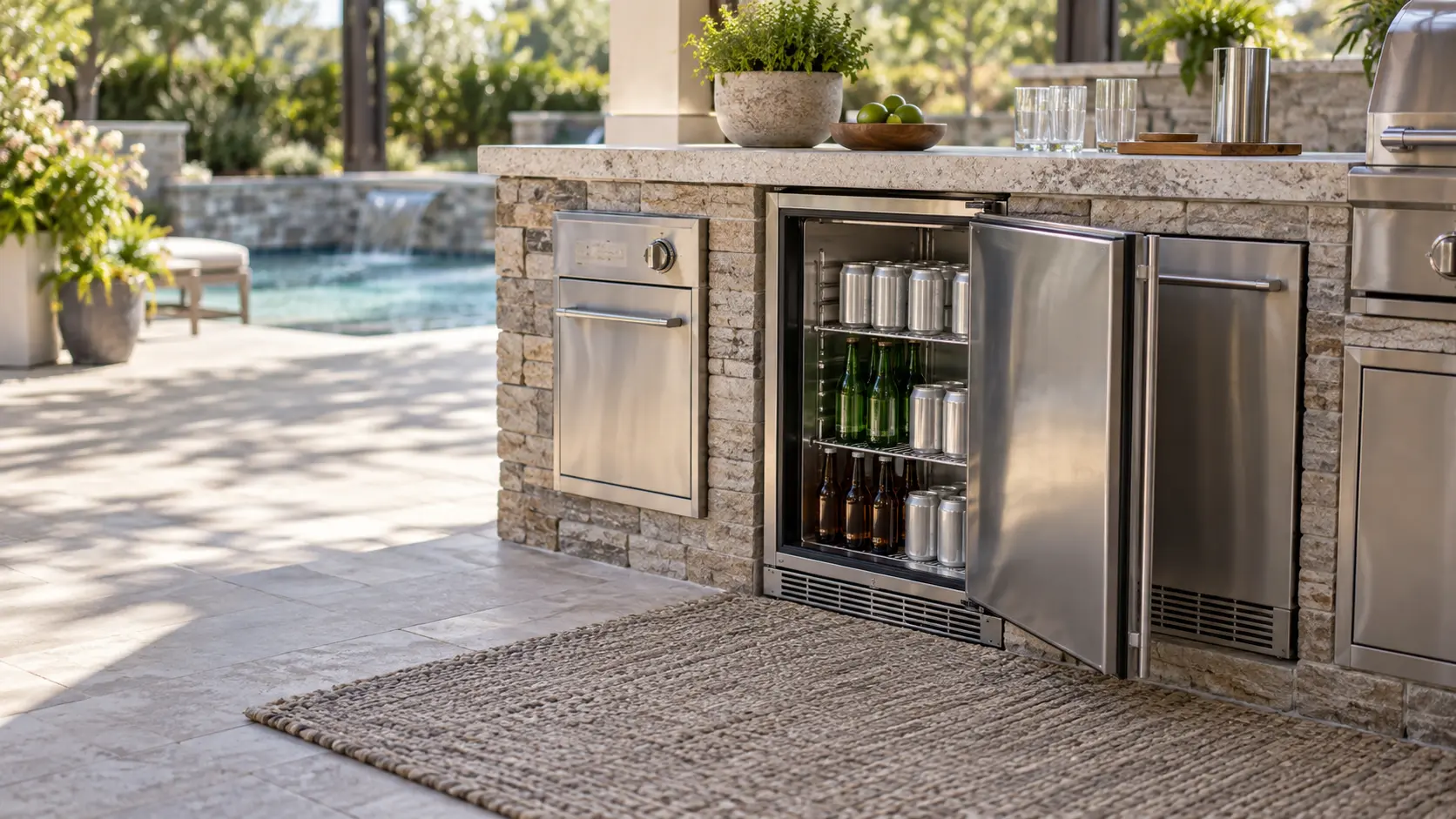
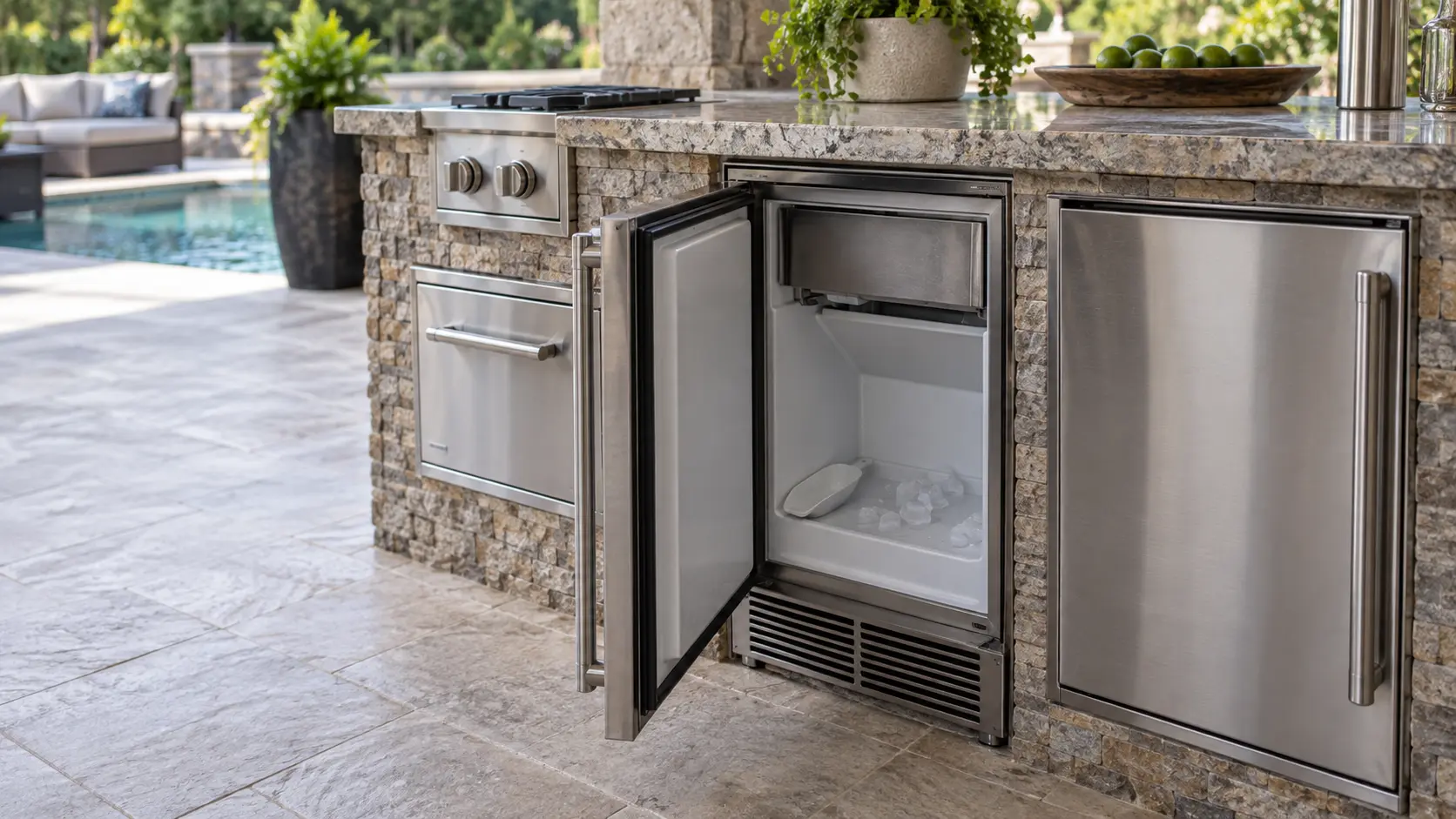
Outdoor units work inside published limits, and a surprising share of calls end with a unit that was simply outside them. Perlick lists 105°F as the highest air temperature for its outdoor cold units, and an afternoon of reflected sun off a stone counter can push the air at the grille past that. Scotsman tells owners of its outdoor ice maker that a low bin is normal whenever the unit runs in air below 65°F.
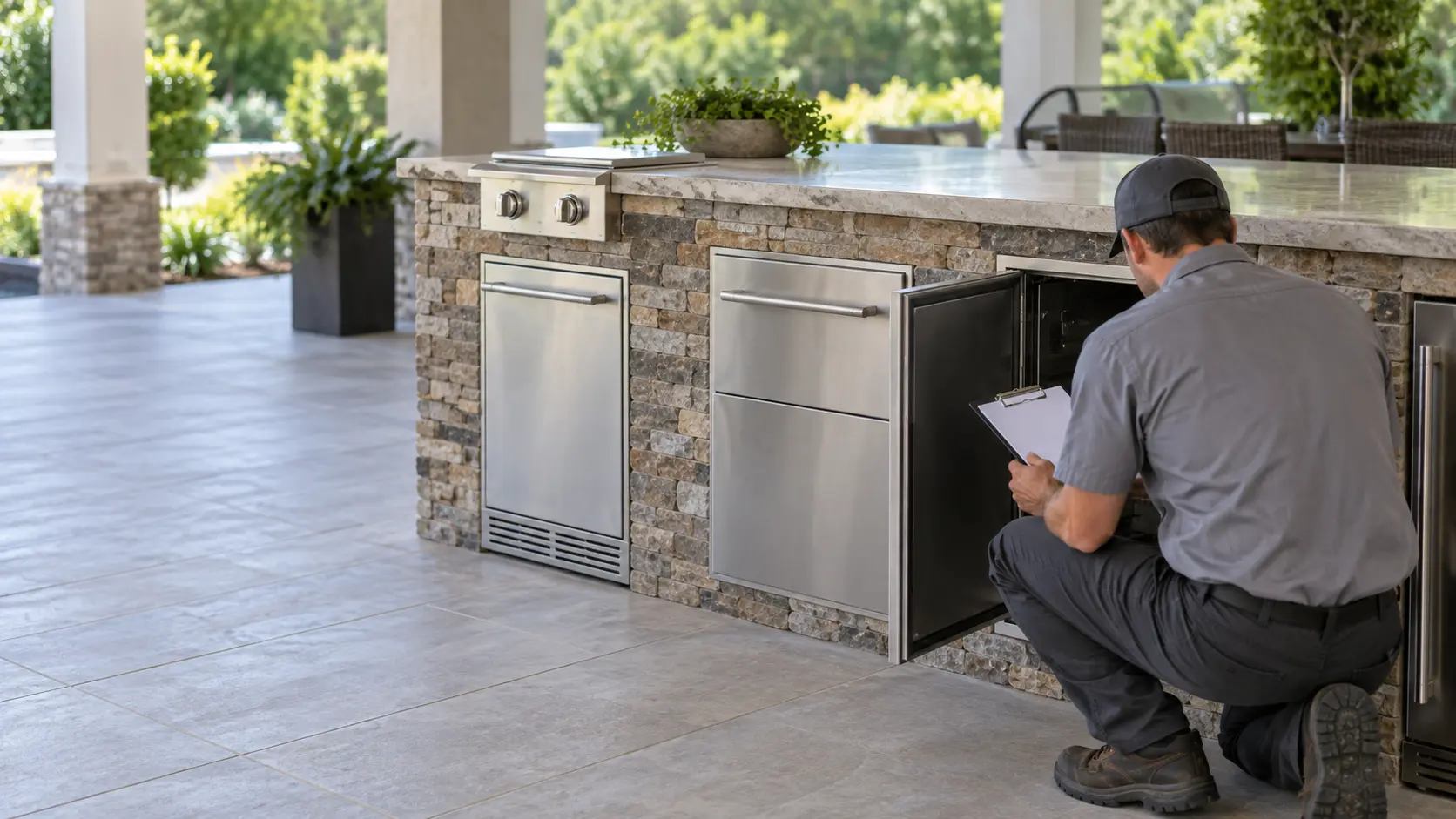
Before any talk of a new unit, we look at where it sits, what the air was doing when it stopped and whether a cover, a planter or leaves are choking the front vents. Those answers cost little and often settle the matter.
Normal behavior that looks like a failure
A few things alarm owners every season, and none of them needs a part:
- Condensation on a glass door or around the gaskets on a humid evening.
- A slow ice harvest on a cool spring day.
- A cold unit that takes most of a day to reach its set point after a restock or a restart.
- Burner flames with a few orange tips when the air around them is dusty.
- A burner that will not stay lit in a strong wind blowing across the island.
Source: Perlick — G5 User Installation and Operation Manual (Form Z3023) — Upper ambient limit 105°F; operating below the recommended temperatures voids the warranty; Scotsman — Installation and User's Manual, SCCG50/SCCP50 Outdoor Model — Low bin level is normal below 65°F; severe damage if left in or operated beyond the limits, not covered by warranty
Repairs that usually pay for themselves
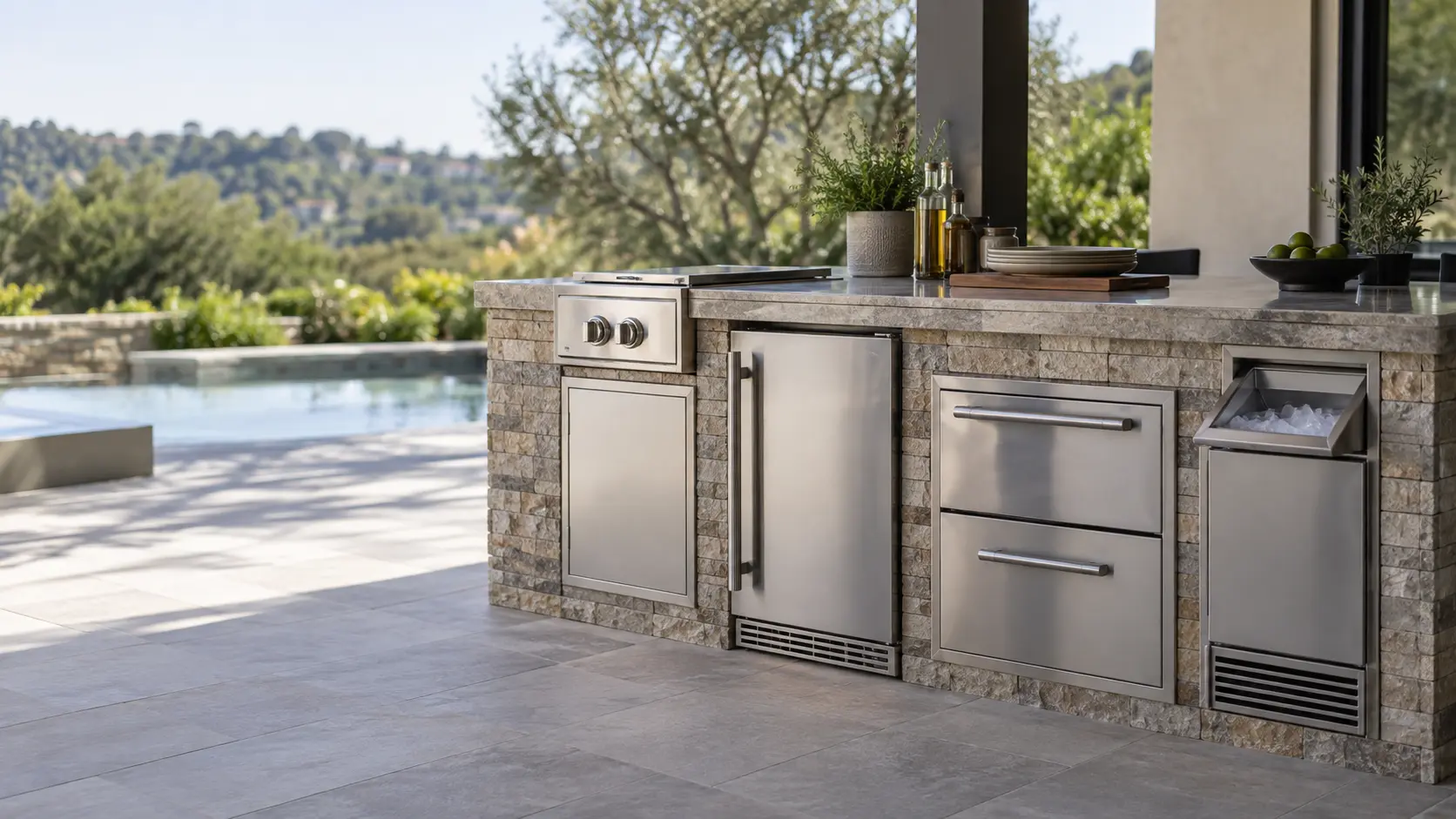
Most parts in an island appliance are reached from the front, through a drawer opening, a kick plate or a burner box, and none of them requires the unit to come out of the stone. On a cabinet that is otherwise sound, replacing one of these is the cheapest kind of repair we do:
- Igniters, electrodes and spark modules on side and power burners.
- Burner valves, orifices and a burner ring rusted or blocked beyond cleaning.
- Door and drawer gaskets that have split or hardened in the sun.
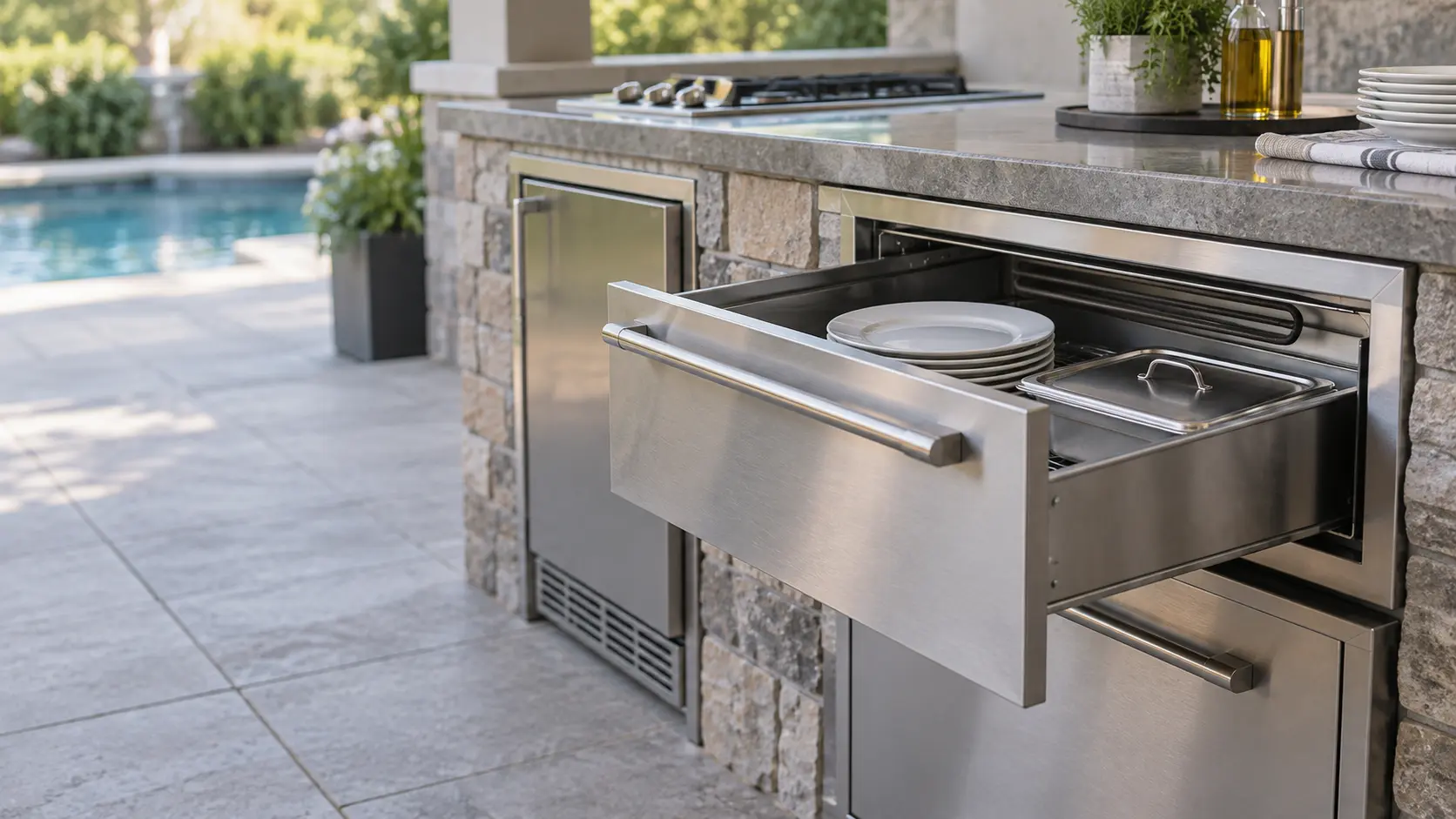
- Heating elements, thermostats and switches in a warming drawer.
- Condenser and evaporator fan motors, sensors and controls in a cooler.
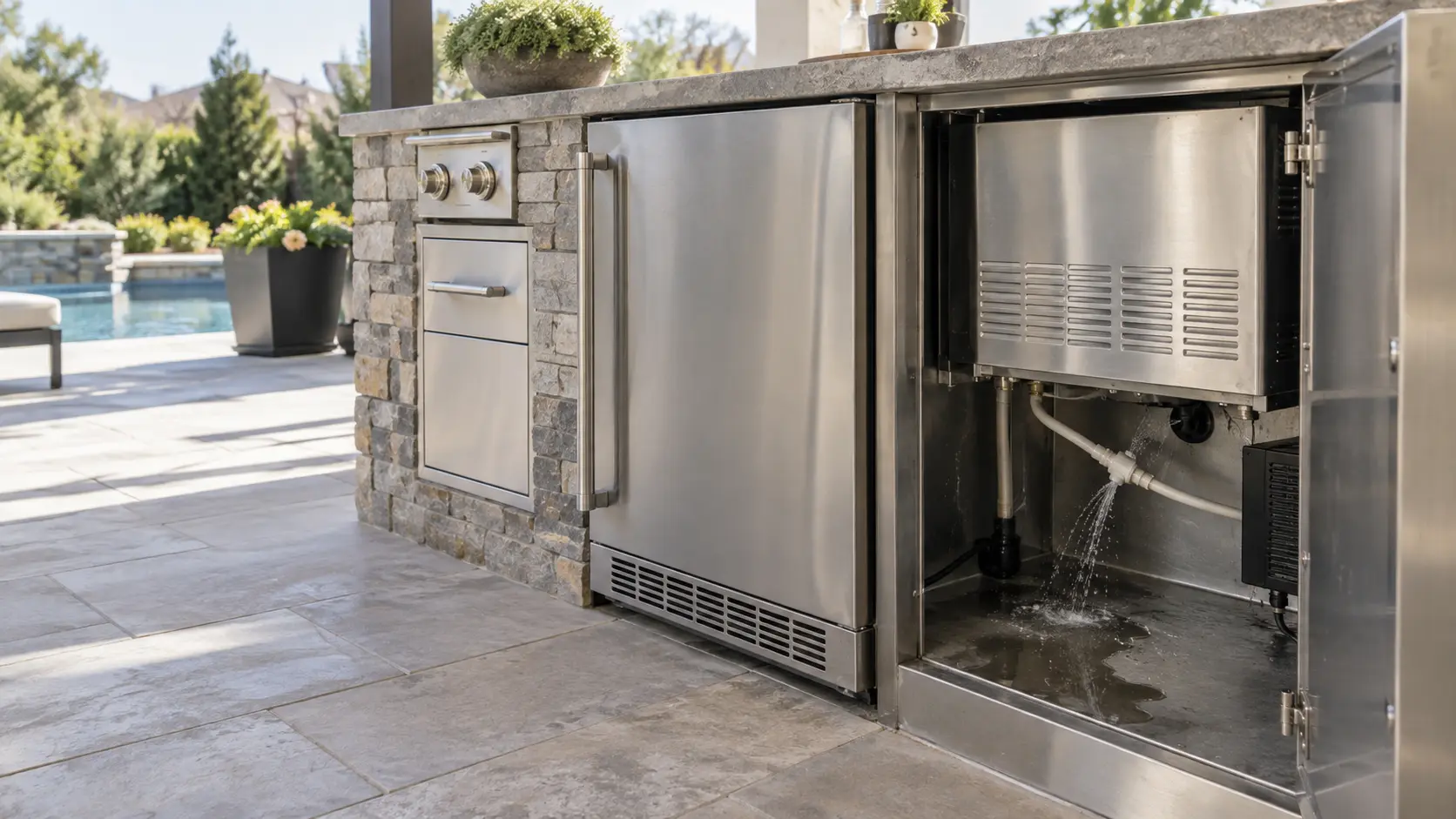
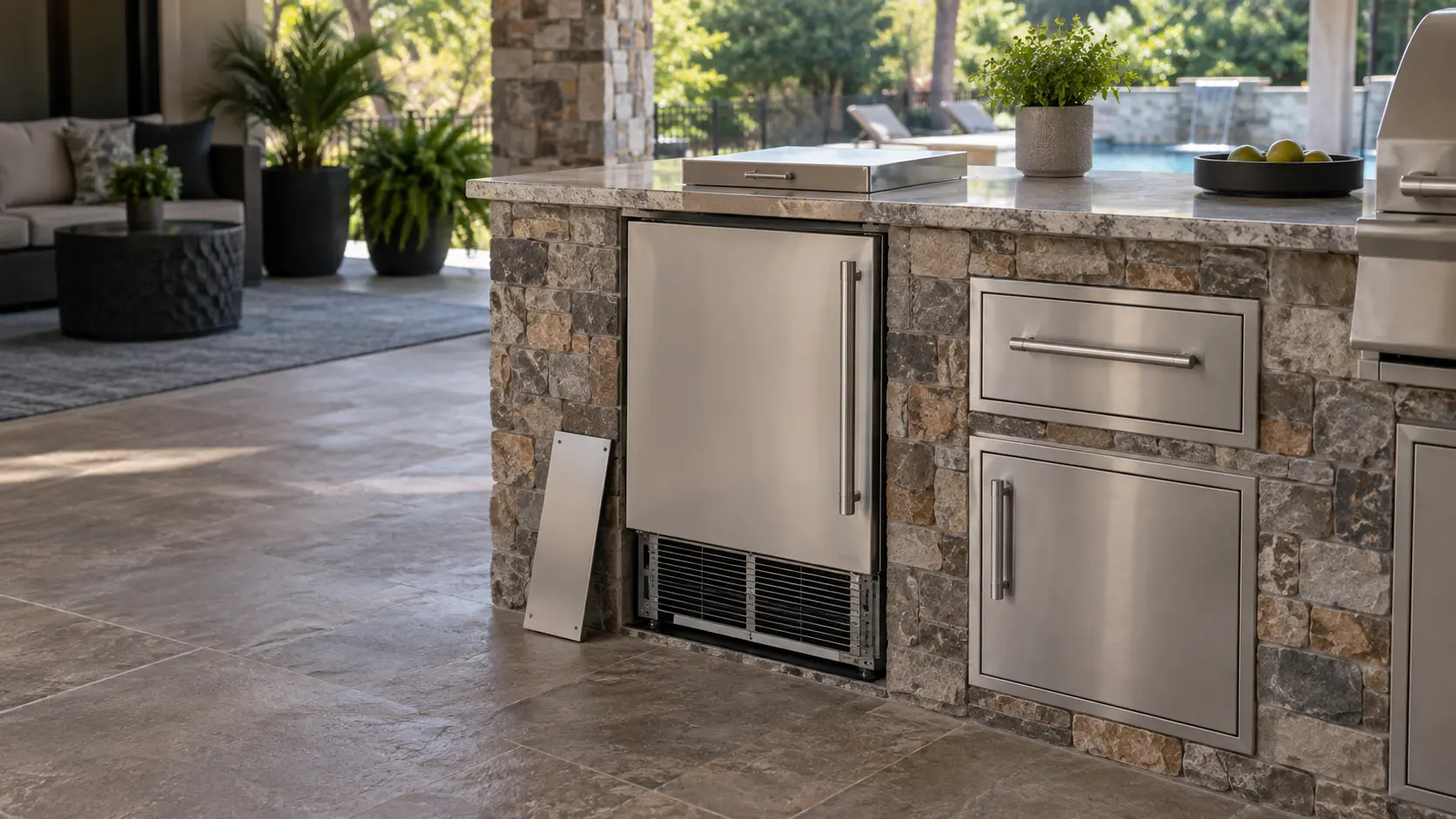
- Water inlet valves, drain pumps and water lines in an outdoor ice maker.

When a new unit is the better spend
The case for replacing builds when damage has spread beyond one part. That usually means a failure in the sealed cooling system of an older cooler, a cabinet that weather has worked on from the inside, or an ice maker that froze full of water. Any one of those on a young unit may still be worth fixing; two together rarely are.
Rust that has gone through, and rust that has not
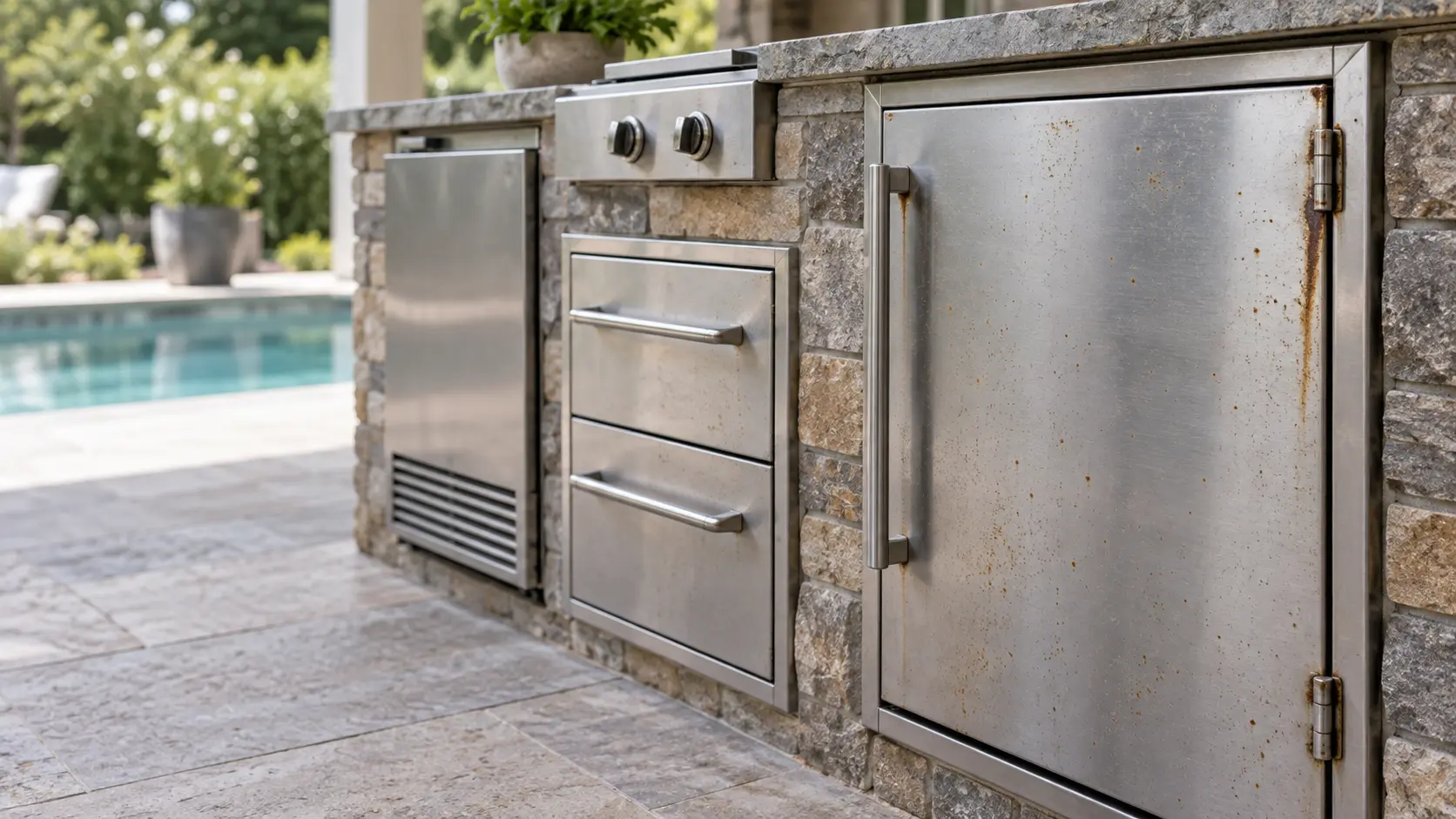
Surface rust and tea-colored staining clean off, and makers treat them as care rather than failure. Lynx draws the line in its warranty: rust-through that stops a part from working is covered, occasional surface rust or staining from the environment is not. A burner box or a drawer frame rusted through at the seams is the kind of damage that tips a decision.
Freeze damage and what makers exclude
Scotsman warns that severe damage will occur if its outdoor ice maker is left in, or run in, temperatures beyond its limits, and that such damage is not covered. Perlick says running its cold units below the recommended temperatures will void the warranty. A split water valve can be replaced; a cracked evaporator or a damaged sealed system on a unit several winters old usually points to a new one.
An indoor unit that gave out on the patio
When the failed unit was never rated for the outdoors, repairing it only resets the clock. In that case we suggest spending on a rated model that fits the cutout rather than on the part.
The island opening decides as much as the part
Indoor appliances are replaced into cabinets that can be trimmed. An island is block, stone or steel, and its openings were cut for one set of dimensions. A new cooler must match the width, height and depth of the old cutout, and many makers ask for a particular depth; True, for example, asks for a rough opening at least 24 inches deep for a flush install.
That makes model availability part of the decision. When the maker still sells a unit with the same footprint, replacement is simple. When it does not, a repair on the existing unit can be worth more than its age suggests, because the alternative includes a mason.
The services behind the opening count too. A replacement warming drawer may want its outlet in a different spot, a new ice maker may need a drain pump where the old one drained by gravity, and a burner from another maker may need its gas connection on the opposite side. Each of those means work inside the island, so we check them against the new unit's installation manual before anyone orders.
Source: True Residential — 15 and 24 Inch Undercounter Install Guide and User's Manual — Condensation on glass and gaskets possible in high humidity; rough opening at least 24 inches deep for a flush install
What to note before the visit
The repair or replace conversation is short when these answers are ready:
- The model, serial number and gas type printed on the unit's plate.
- Roughly when the unit went in and whether it is rated for outdoor use.
- What it is doing now, and what the weather was when it started.
- Whether it was winterized last year, and how.
- Photos of any rust, cracked parts or water in the cabinet.