Which are the must-have outdoor kitchen appliances?
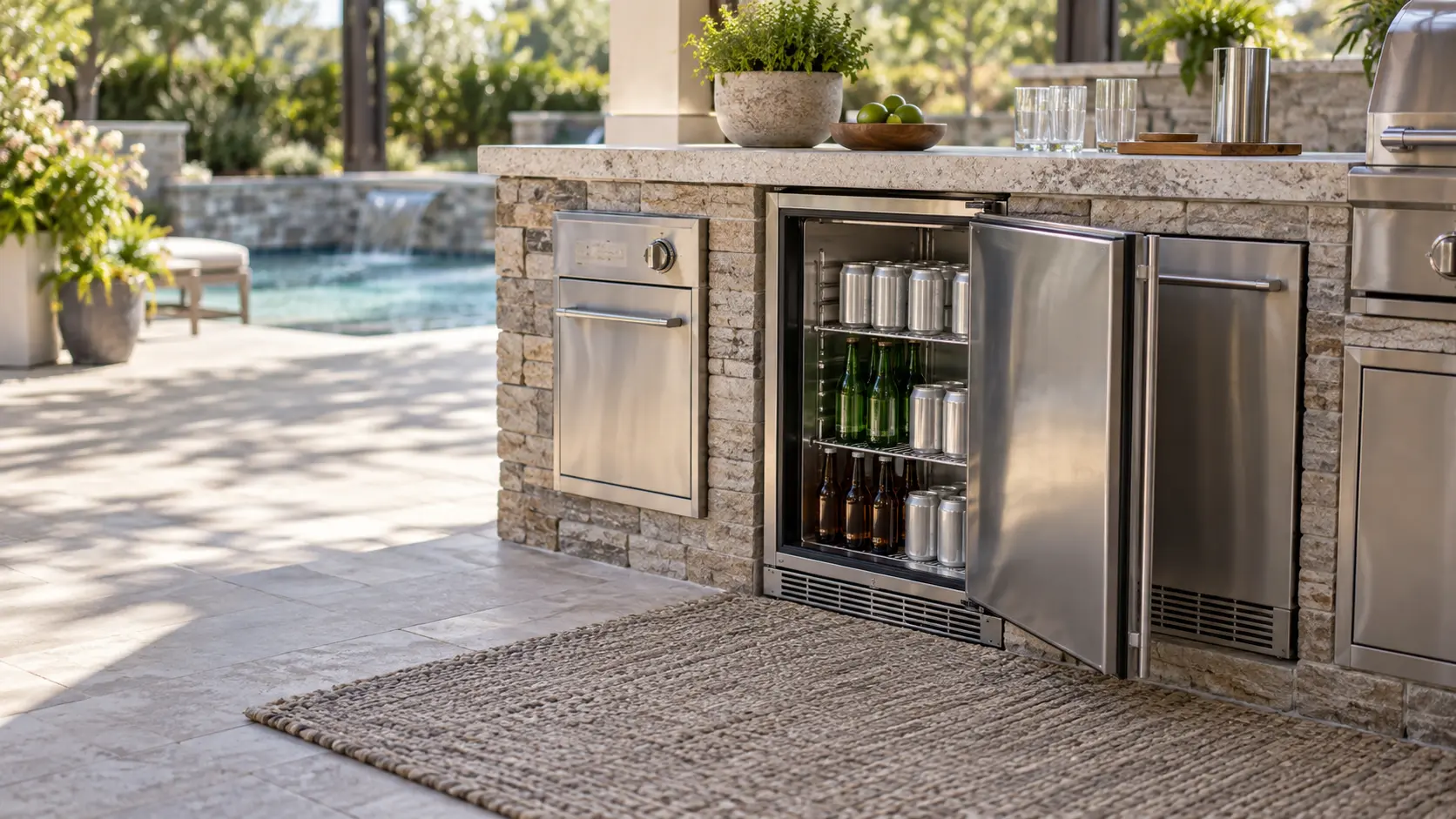
Two for nearly everyone: the main cooking appliance and a cooler. Everything else earns its spot only if you will use it every few weeks. The cooking appliance is why the island exists, and the cooler is what keeps you from walking back inside every ten minutes.
A useful way to rank is to ask three questions of each candidate: how many times a month will it run, what does it need from the house, and how will it feel after a wet winter. An appliance that scores low on all three belongs on the "skip" list, however good it looks in the showroom.
A first-pass ranking
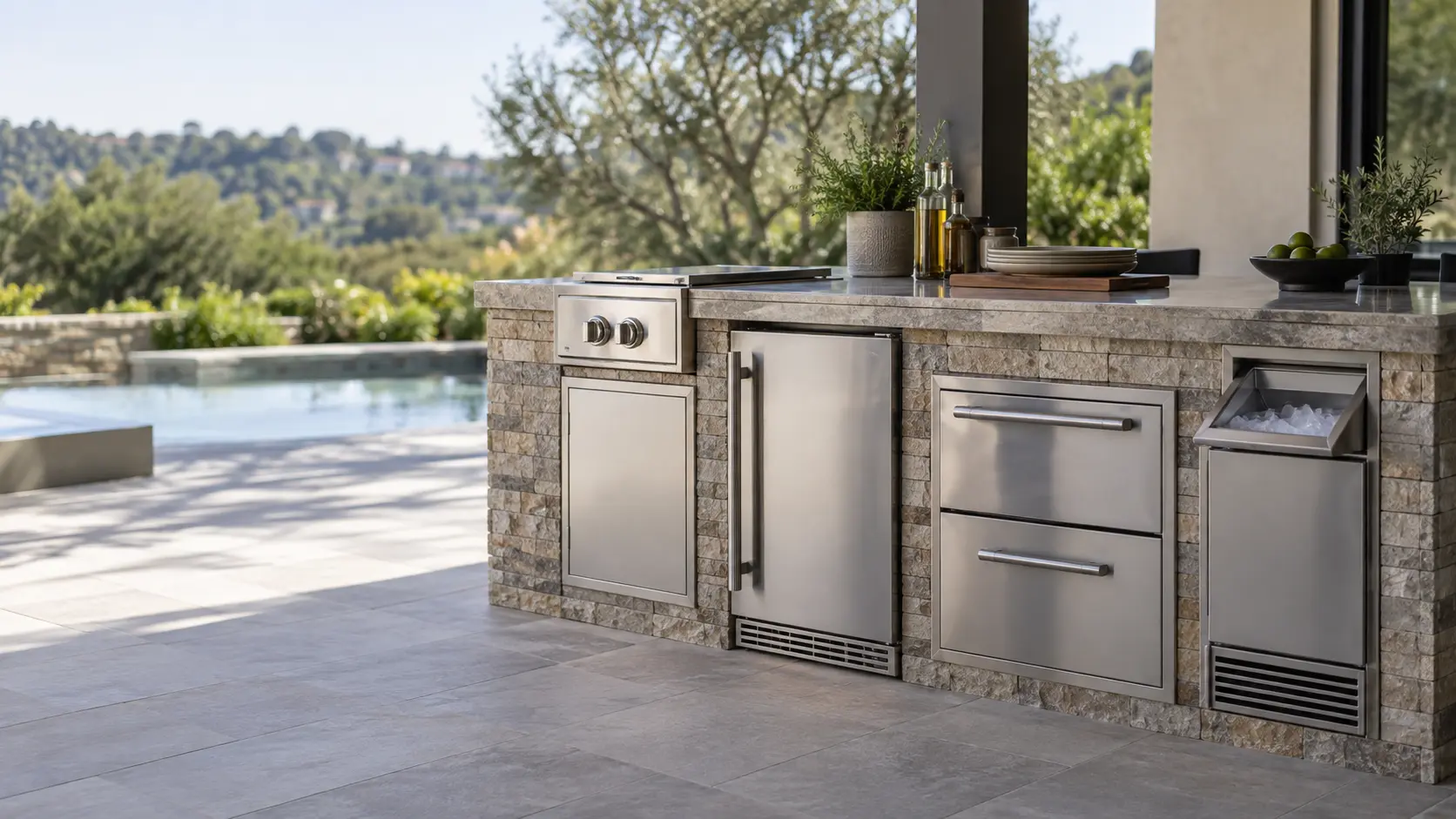
- Main cooking appliance: the center of the island, needed at every meal
- Outdoor-rated cooler or refrigerator: needed at every gathering
- Side burner or power burner: handy for sauces and pots, used less often
- Sink: valuable for cleanup, needs a water line and a drain
- Warming drawer, ice maker, pizza oven and extras: nice, but rarely missed
Which appliances give you the most use for their cost and space?
The ones you use weekly. Counter frontage in an island is short, and every opening takes a slice of it. A side burner that gets used three times a year occupies the space a prep area would use every day.
Use first, features second
Think of the last ten meals you cooked outside. Which appliances did you touch? Those are your must-haves. If the answer is only the cooking appliance and a cold drink, the island needs less than the brochure suggests. If you cook for guests every weekend, a second heat source and a place to wash up pay back sooner.
Be honest about the season
Cold-weather use changes the answer. A cooler is useful all year in mild climates and often sits idle in winter, while a main cooking appliance may be used all winter. The winterizing an outdoor kitchen guide shows what each appliance needs when it goes quiet.
What utilities does each appliance need?
Each one pulls on gas, power, water or a drain, and those four decide how much work the install takes beyond the appliance itself. A cooler and an ice maker need a power outlet, and the ice maker also needs water and a drain; a sink needs water and a drain; a side burner and main cooking appliance need gas or propane.
Gas runs and outlets are not an owner's job. A qualified gas installer or the gas utility connects and tests gas lines, and an electrician installs the outlets, including the GFCI protection that outdoor outlets need. The natural gas or propane guide helps you decide the fuel, and power and water to the island shows what runs to it.
Table: What each appliance asks of the island
| Appliance | Gas | Power | Water and drain |
|---|---|---|---|
| Main cooking appliance | Often yes | Sometimes, for lights or ignition | No |
| Cooler or refrigerator | No | Yes | No |
| Side burner | Yes | Sometimes | No |
| Sink | No | No | Yes |
| Ice maker | No | Yes | Yes |
| Warming drawer | No | Yes | No |
Ask the cheapest question first
Is the utility already close? An island that sits beside a gas line and an outdoor outlet can take almost anything. An island out in the yard with nothing nearby makes every utility a trench and a permit, and the must-have list should shrink to match.
How well will each one stand up to weather?
Outdoor-rated appliances are built for it, and indoor ones are not. Rain, humidity, heat and freezing tests the seals, wiring, drains and finishes in a way a kitchen never does. The outdoor-rated or indoor appliances guide explains why an indoor model in an island is a poor bet.
Coolers and anything cold
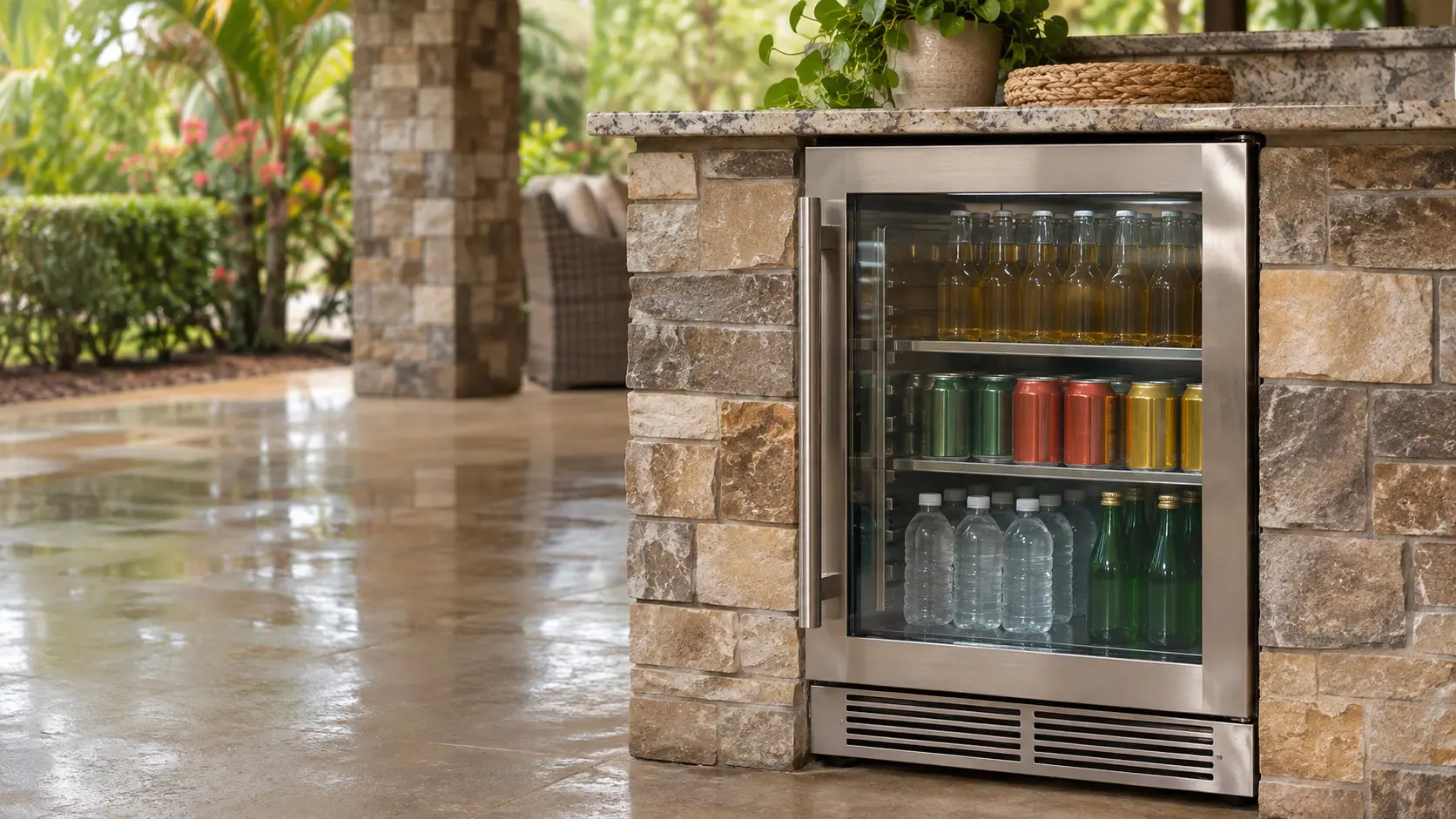
A cooler or ice maker is made of sealed doors, gaskets and a cooling system that must shed heat. Shade and air around it matter a lot. A cooler that sits in full sun with no air gap warms up and wears out, so place it in the shadiest, best-ventilated opening. If it is not holding cold, the outdoor cooler cooling repair service covers what is checked.
Burners and anything that lights
Burners face insects in the tubes, wind in the flame and grease on the parts. A side burner shared with a main cooking appliance may be easier to keep clean than a separate one, and the side burner and power burner repair page lists the problems that show up first.
What should you skip, or buy later?
Skip appliances that duplicate what the kitchen indoors already does well, or that need a utility the island lacks. Buy later anything that can be added without re-cutting the stone, such as a freestanding cart-style cooler or a countertop appliance.
- Skip a second heat source until you have used the first for a season
- Skip a warming drawer unless you serve food in batches
- Skip features you can bring out when needed, such as a portable cooler
- Do not skip the main cooking appliance's quality; it carries the island
Decide before the stone is cut
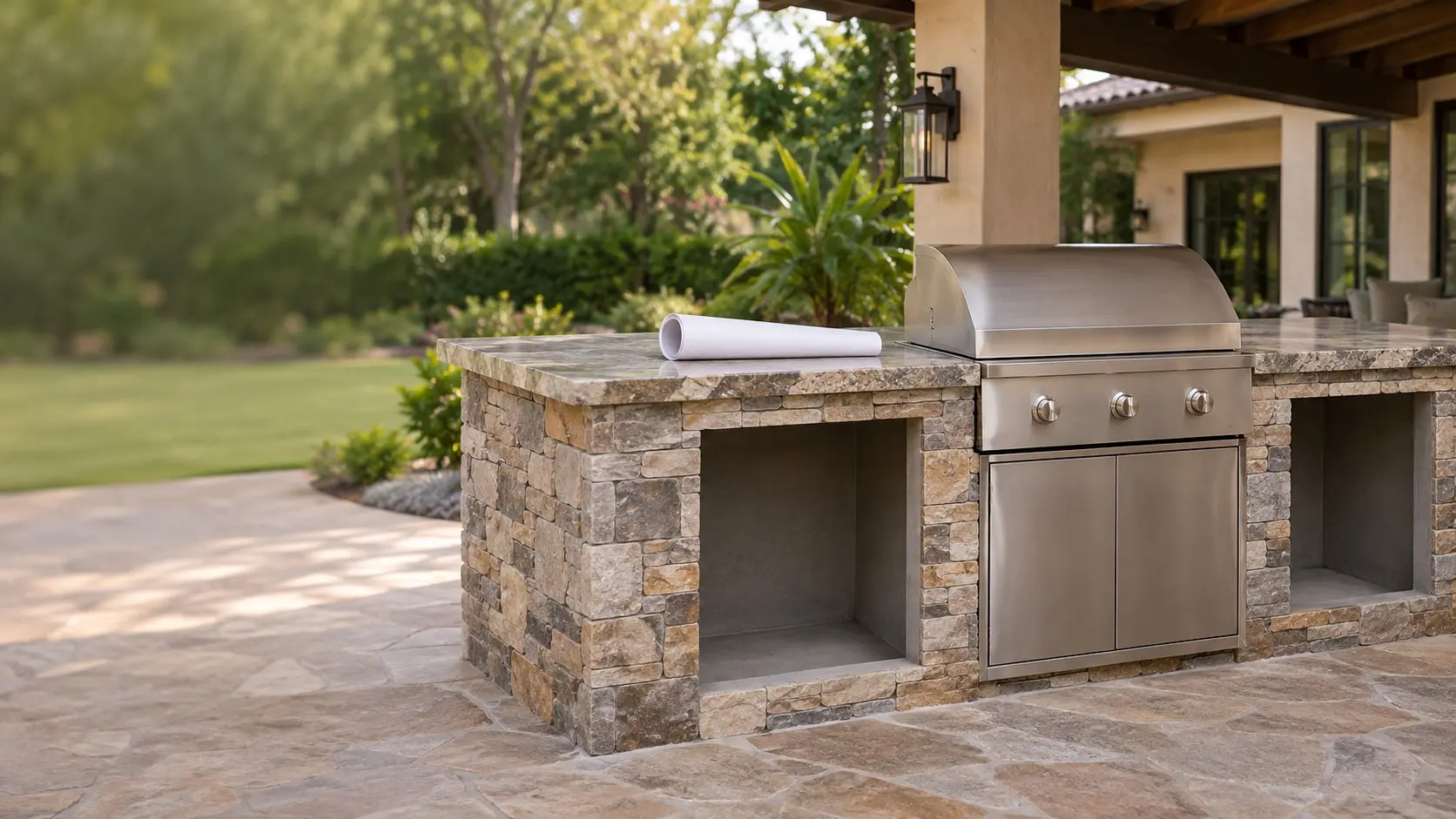
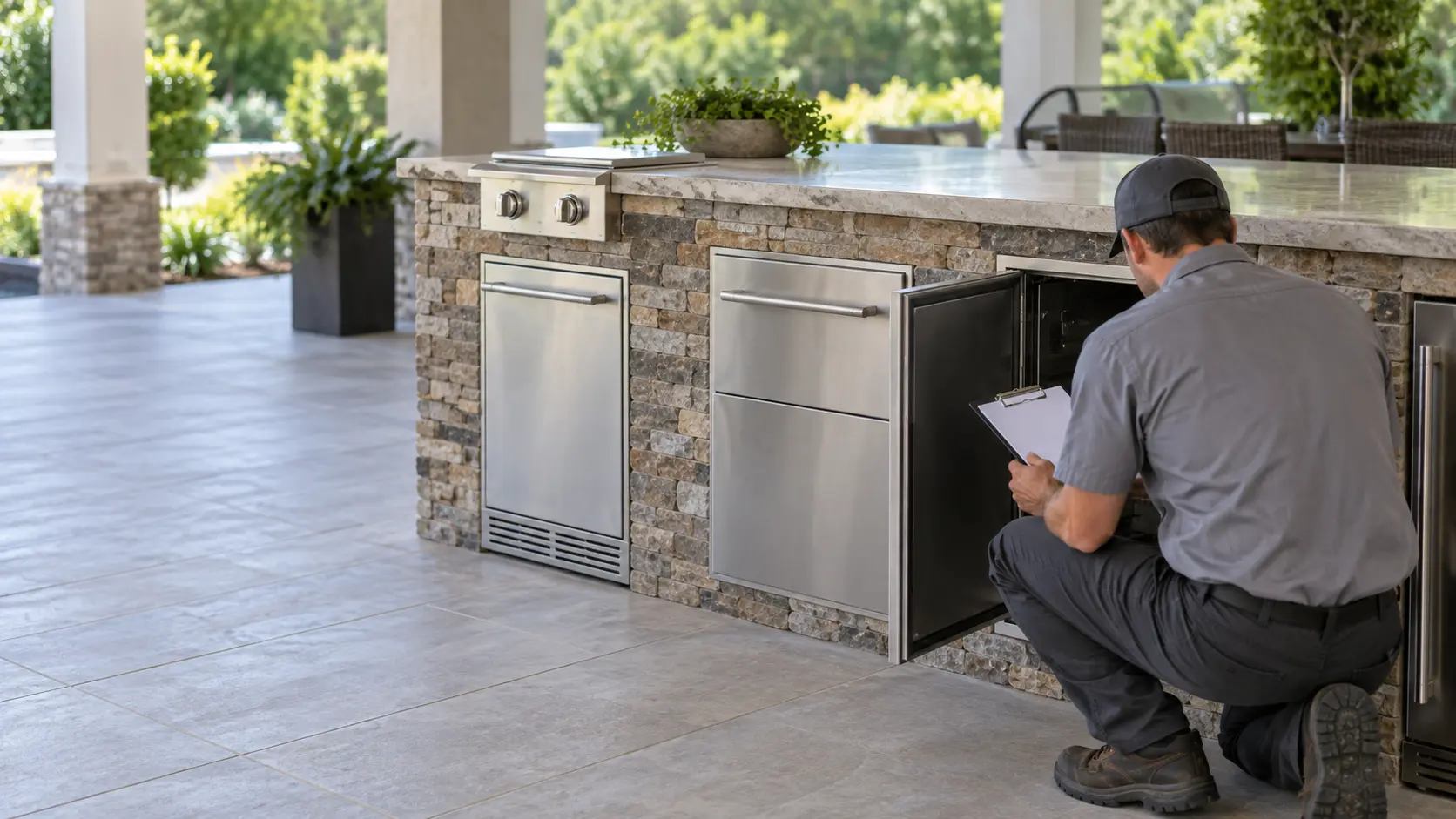
Openings are the expensive part, so list every appliance with its model number and its cutout drawing before the countertop is templated. The outdoor kitchen island installation guide shows the sequence. If you are replacing one appliance in an existing island, the repair or replace guide helps, and a diagnostic visit tells you what the appliance needs.