What do the grades 304, 316 and 430 mean?
The numbers name three different alloys. Type 304 is the common stainless steel, with chromium and nickel. Type 316 is the same with molybdenum added, which helps it stand up to chlorides. Type 430 has chromium but almost no nickel, and it is cheaper and magnetic.
All three get their rust resistance from a thin invisible film that forms on the surface. Chlorides, scratches and dirt attack that film, and once it breaks the steel can stain or pit. The grade decides how quickly that happens.
Where 430 hides
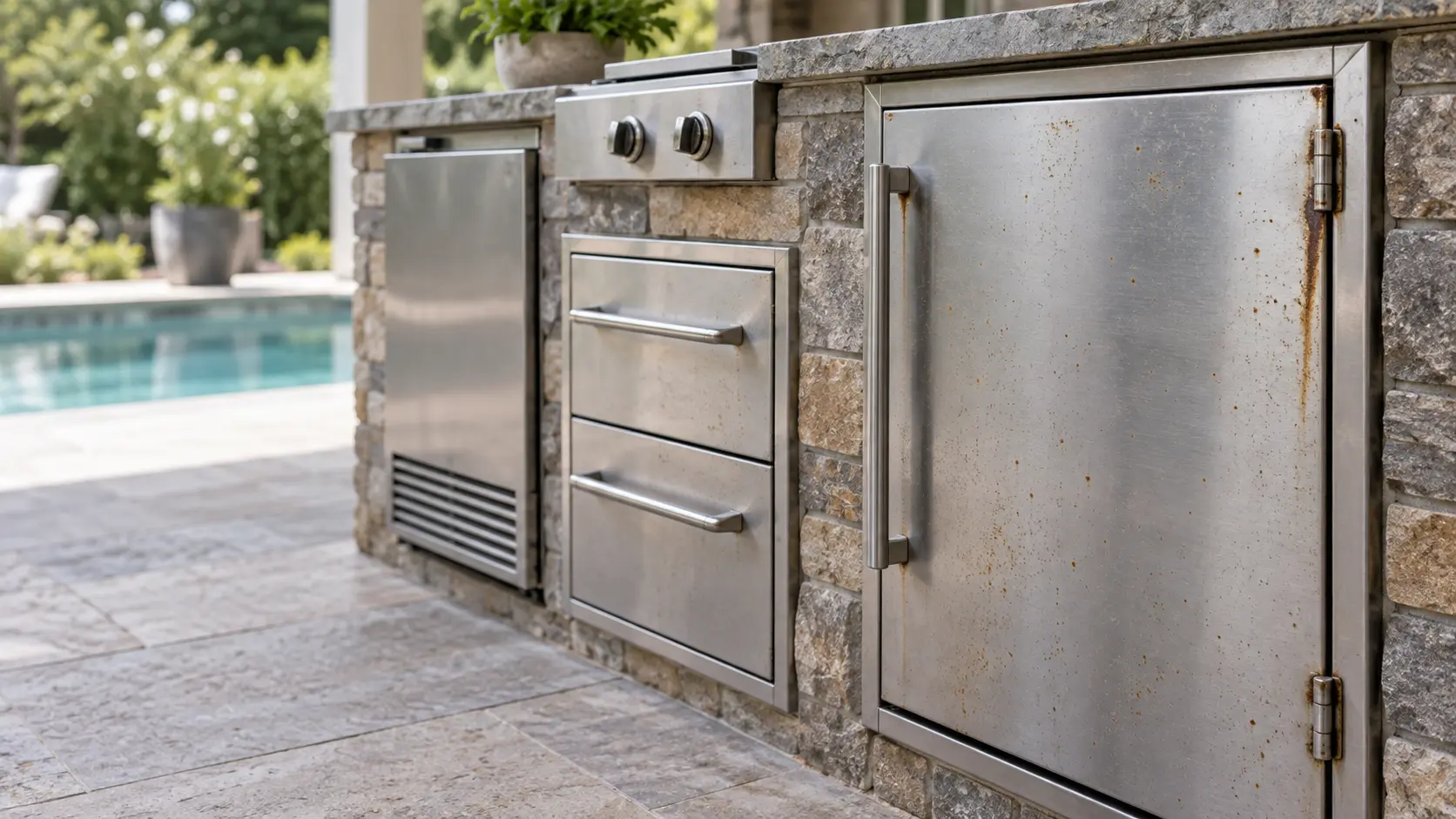
Budget outdoor cabinets, drawer fronts, trim and some appliance panels use 430. It does fine in a dry yard and tends to show rust sooner near the coast or a pool. If a magnet sticks firmly to a panel, it is probably 430.
Quick field guide
- A magnet that sticks hard: likely 430, expect early rust.
- A magnet that barely pulls: 304 or 316, grade still unknown.
- Rust freckles near screws and welds: chlorides at work, rinse and wipe.
- Brown streaks running down from a hinge: the hinge is the weak part.
Why 304 is common
304 is the usual choice for good outdoor appliances, and it holds up well inland. Its weakness is chloride, so it can pit near salt air even when it is clean.
How do salt air and pool chemicals attack each grade?
Chlorides in sea air and pool water break through the protective film and cause pitting. 316 holds out longer, 304 follows, and 430 gives way first.
| Grade | Salt air | Pool chemicals | Typical use |
|---|---|---|---|
| 430 | Stains and rusts first | Stains first | Budget panels, trim |
| 304 | Fine inland, can pit in salt spray | Can pit with splash and spray | Most appliances and doors |
| 316 | Holds out longest of the three | Holds out longest, still needs rinsing | Coastal islands, poolside |
Spray, not distance, is what counts
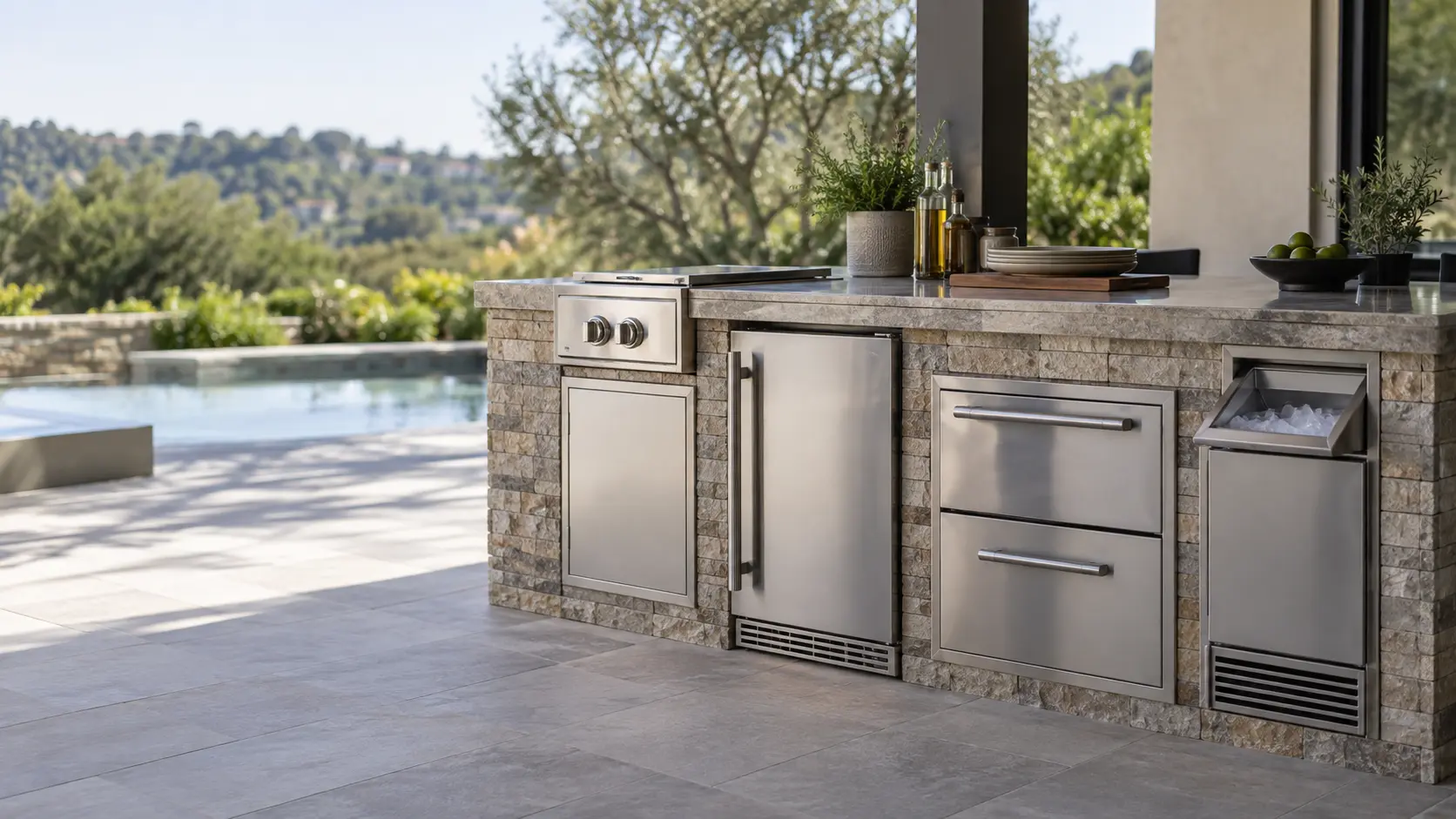
A patio well back from the beach with a pool beside the island can be harsher than a sheltered one closer to the water. Wind-driven spray, pool splash and a patio that is never rinsed all raise the load. Chlorine and salt both stay on the surface until water washes them off.
Heat makes it worse
Burners and warm panels dry salt into a crust, and stainless near a heat source discolors. A side burner housing gets both problems, which is why it is often the first place rust shows.

What does the magnet test show, and what does it miss?
A magnet sticks firmly to 430 and barely, or not at all, to 304 and 316. That makes it a quick way to find 430, and nothing more.
It cannot tell 304 from 316. Bending, welding or forming 304 and 316 can make them slightly magnetic, so a weak pull proves little. A magnet also says nothing about the thickness of a panel or how well it is finished.
A better check
- Look for a stamp or a marking on a model plate or in the spec sheet; the model plate guide shows where it is.
- Ask the dealer for the grade in writing before you buy.
- Treat a claim of "marine grade" with care until a grade is named.
Is 316 worth it for my patio?
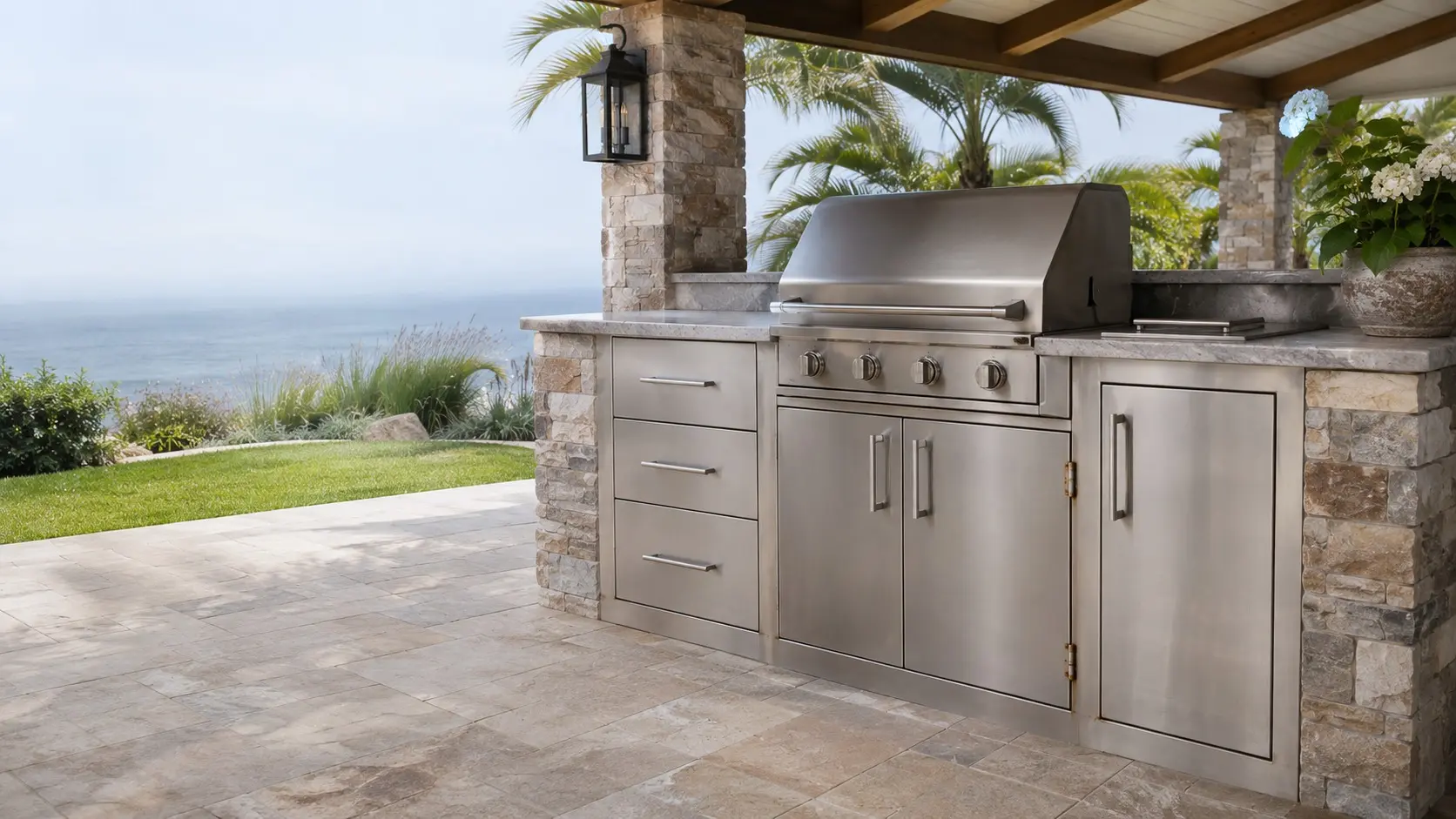
316 is worth the extra cost on exposed surfaces within sight of salt water, beside a pool or in a place with heavy salt-laden wind. Inland and under a roof, 304 is usually enough.
Parts you rarely clean, such as hinges, latches, burner housings and drawer slides, benefit most, because that is where salt sits. If the budget is tight, spend it on those parts and on the door and drawer fronts. The outdoor-rated or indoor appliances guide explains why an indoor unit under a roof still struggles.
What a rinse routine looks like
A regular fresh-water rinse near the coast, and one after any pool party or windy storm, does more than the grade alone. Wipe with the grain of the brushed finish, dry the panel, and keep chlorine tablets and pool shock away from the island, because their fumes and spills attack the film.
Where to spend the money
If a whole island in 316 is out of reach, rank the parts. Doors, drawer fronts and the frame show the most and collect the most spray. Hardware, hinges and fasteners fail first and are cheapest to upgrade. Interior shelves and hidden panels can stay at a lower grade, because they stay dry and unseen. Ask the maker which grade each part uses before you compare quotes.
What 316 does not do
316 is not rustproof. It still stains if it is left dirty, and it can still pit if salt sits on it for months. A rinse and a wipe matter at any grade.
What does the grade mean for repairs later?
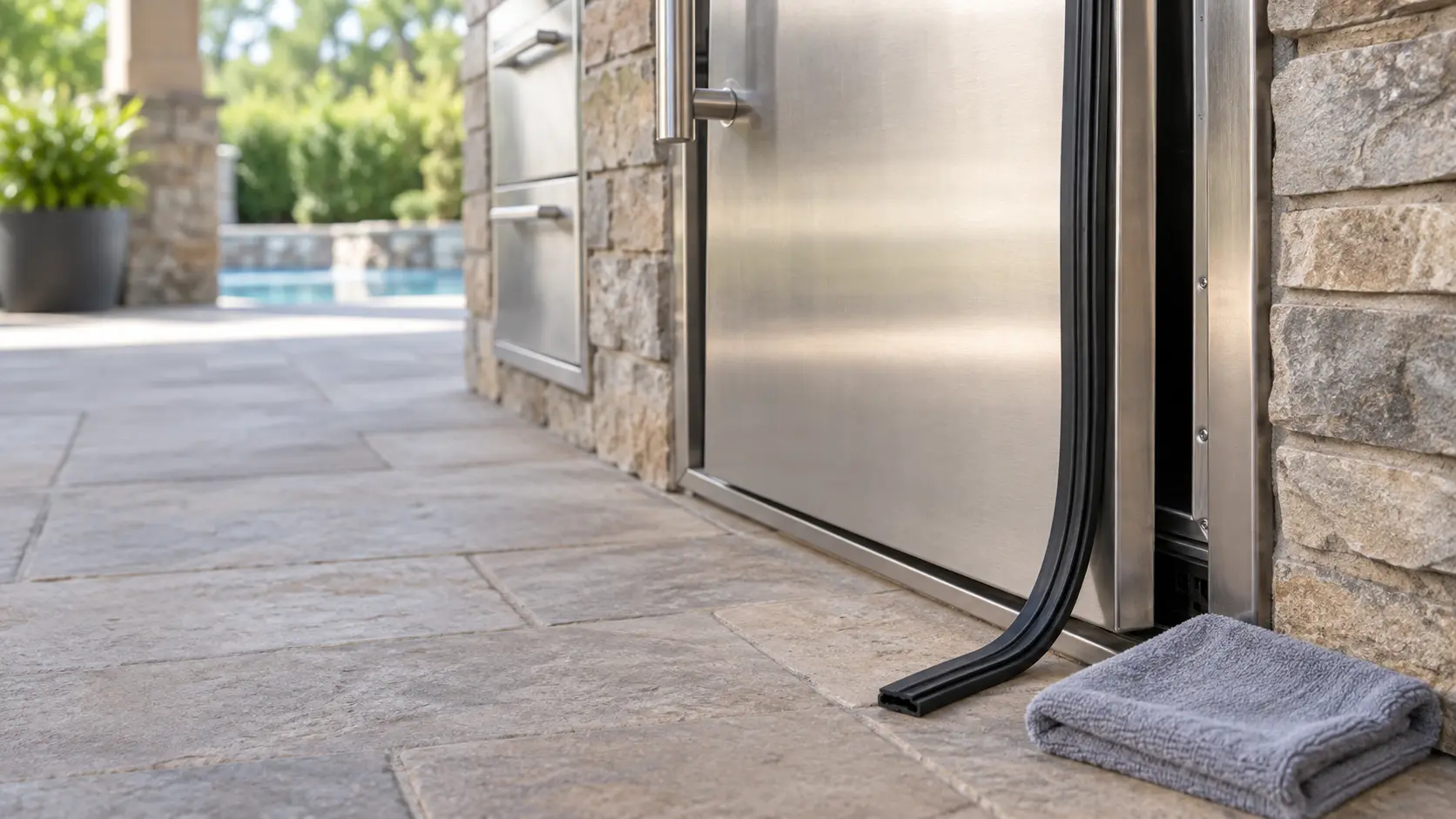
Corrosion is behind many outdoor kitchen repairs: seized hinges, rusted burner housings, damaged door seals and crusted connectors. A better grade slows that. It does not remove the need to clean.
Surface rust can often be cleaned off and the film restored; deep pitting cannot. Rust and seal repair covers the work from cleaning to replacing a corroded part. The rust and pitting problem page lists the signs and the guide to keeping stainless free of rust shows the routine. When a part is past repair, repair or replace helps with the decision, and a diagnostic visit will tell you what you have.