Why stainless steel rusts at all
The chromium in stainless steel forms an invisible oxide layer on the surface, and that layer is what keeps the iron underneath from reacting with air and water. Perlick and True both describe it the same way in their care instructions: while the film is intact the metal stays passive, and once it is broken the steel can start to corrode.
True names three things that break the film: scratches from wire brushes, scrapers and steel pads; deposits left on the surface, including hard water spots; and chlorides, which are in table salt, food and water, with household and industrial cleaners the worst of them. Oxygen helps the film repair itself, which is why makers ask you to let the steel air dry after wiping it down.
Source: True Residential — 15 and 24 Inch Undercounter Install Guide and User's Manual — Three things break the passive layer: abrasion, deposits, chlorides; air drying helps the film; avoid quaternary salts; never hydrochloric acid, even diluted; cover suggested in winter; Perlick — G5 User Installation and Operation Manual (Form Z3023) — Chromium passive film; clean along polish lines; non-chloride cleaners; quaternary salts cause pitting; never muriatic acid; do not place a cover over the unit
What the backyard adds
Indoors, stainless mostly meets fingerprints and cooking splashes. Around an island it meets chlorine drifting from the pool, salt on the breeze near the coast, fertilizer and sprinkler water, and whatever is used to clean the patio. Lynx notes that its 304 stainless is highly rust resistant, but warns that pool chlorine or sea salt allowed to stay on it may leave rust marks and small pits.
Brown specks that are not the stainless itself
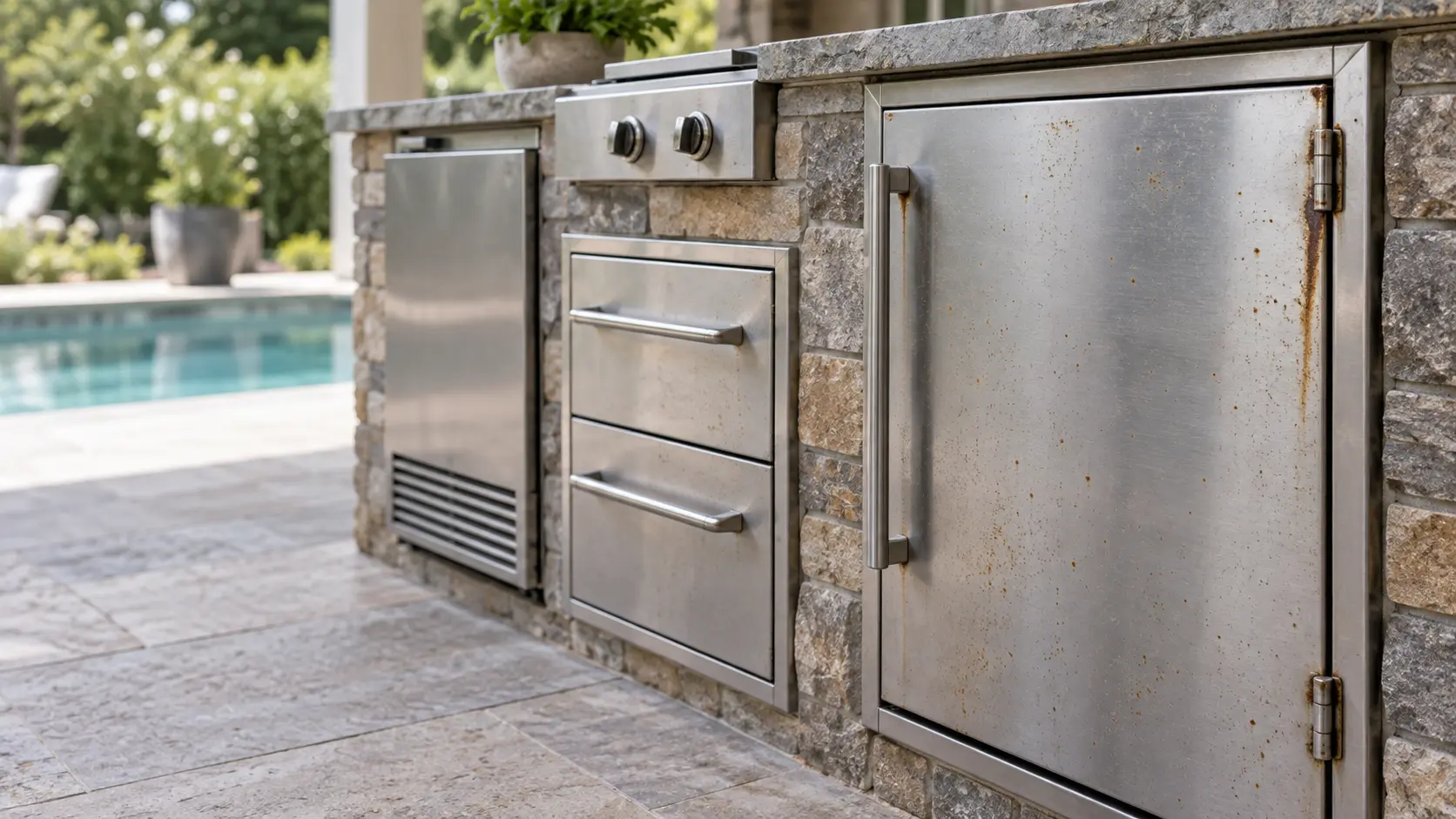
Alfresco points out that rust-brown marks are usually not the stainless steel rusting at all. They are tiny particles of ordinary steel, most often from steel wool pads, carbon steel tools or old iron pipes, that have stuck to the surface and rusted in the damp. They come off with a soft damp cloth and a cream cleanser, and they stop coming back once their source is gone.
Bleach, pool chemicals and pitting
Pitting is the more serious kind of corrosion: small dark pinholes that do not polish out. Alfresco attributes it mainly to bleach and sterilizing solutions containing sodium hypochlorite, which should always be rinsed off with clean water right away. Pool chlorine stored near the island, or splashed from the deck, works on the steel the same way.
Patio and masonry cleaners
Lynx warns that solutions used on concrete and masonry can be very corrosive to stainless, and asks owners to protect the unit before such chemicals are used nearby. Both Perlick and True say never to use hydrochloric acid, also sold as muriatic acid, on stainless steel; True adds that even diluted it can cause pitting and cracking. If the pavers or the stone counter are being acid-washed, cover the steel and rinse it afterward.
Source: Lynx — Professional Series Care and Use / Installation Manual — Pool chlorine or sea salt may cause surface rust and pitting on 304 stainless; masonry cleaners attack stainless; dry before covering; rust inhibitor in extreme environments; warranty covers rust-through, not surface rust or staining

A cleaning routine that protects the film
The makers' care pages come down to a short set of habits. Done often, they take a few minutes and prevent almost every rust call we are booked for:
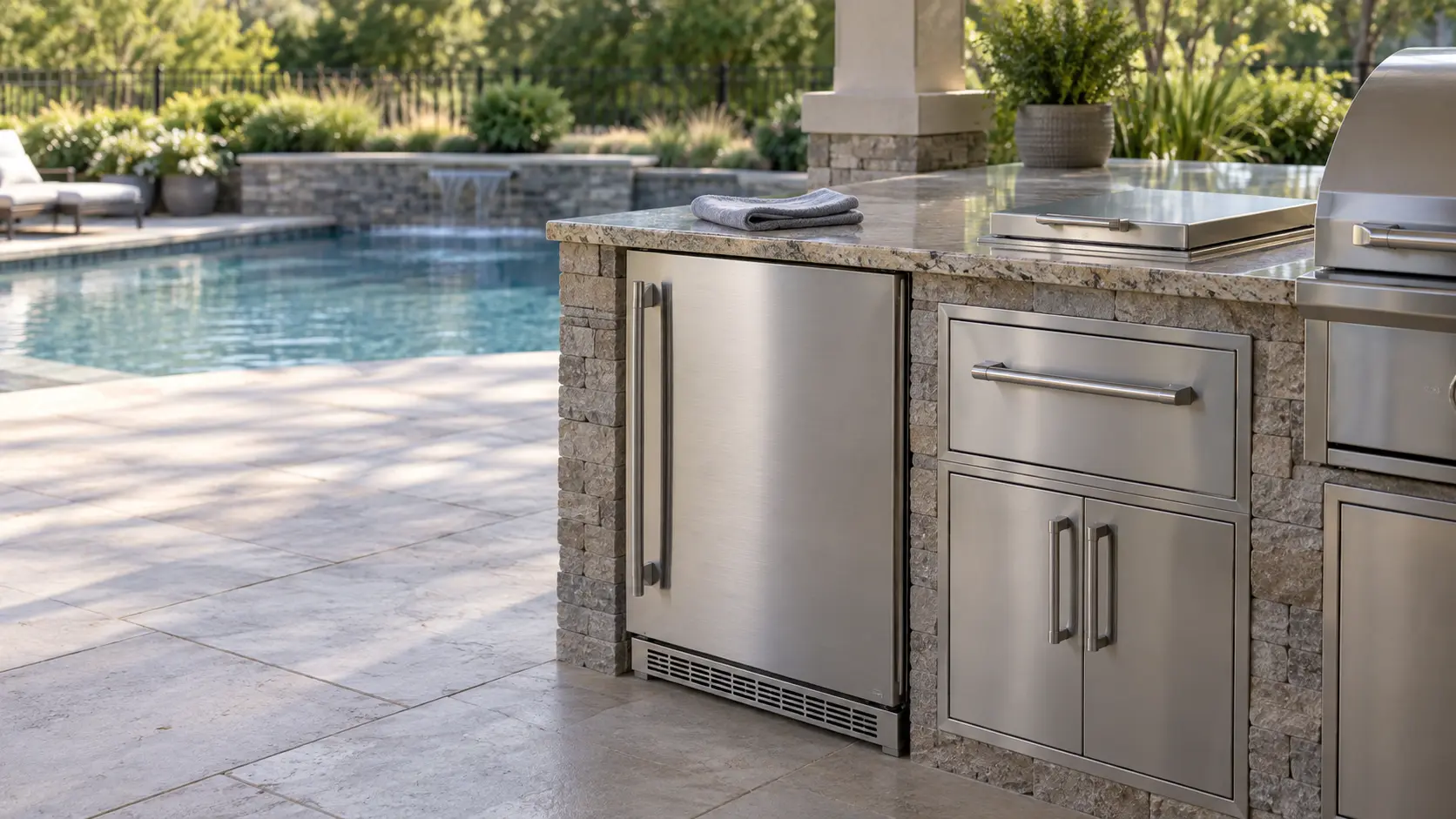
- Wipe the surfaces with a damp soft cloth after each use and whenever salt spray or pool water reaches them.
- Use soft cloths or plastic scouring pads only; never steel wool, wire brushes or metal scrapers on the exterior.
- Scrub along the visible polish lines, and in straight strokes where you cannot see a grain.
- Choose alkaline or non-chloride cleaners, and avoid products with quaternary salts, which Perlick and True both say can cause pitting.
- Rinse any cleaner off with fresh water, wipe away standing water and let the steel air dry.
- Keep pool chemicals, fertilizer and salt for water softeners stored away from the island.
Source: True Residential — 15 and 24 Inch Undercounter Install Guide and User's Manual — Three things break the passive layer: abrasion, deposits, chlorides; air drying helps the film; avoid quaternary salts; never hydrochloric acid, even diluted; cover suggested in winter; Perlick — G5 User Installation and Operation Manual (Form Z3023) — Chromium passive film; clean along polish lines; non-chloride cleaners; quaternary salts cause pitting; never muriatic acid; do not place a cover over the unit
Covers, rust inhibitors and damp steel
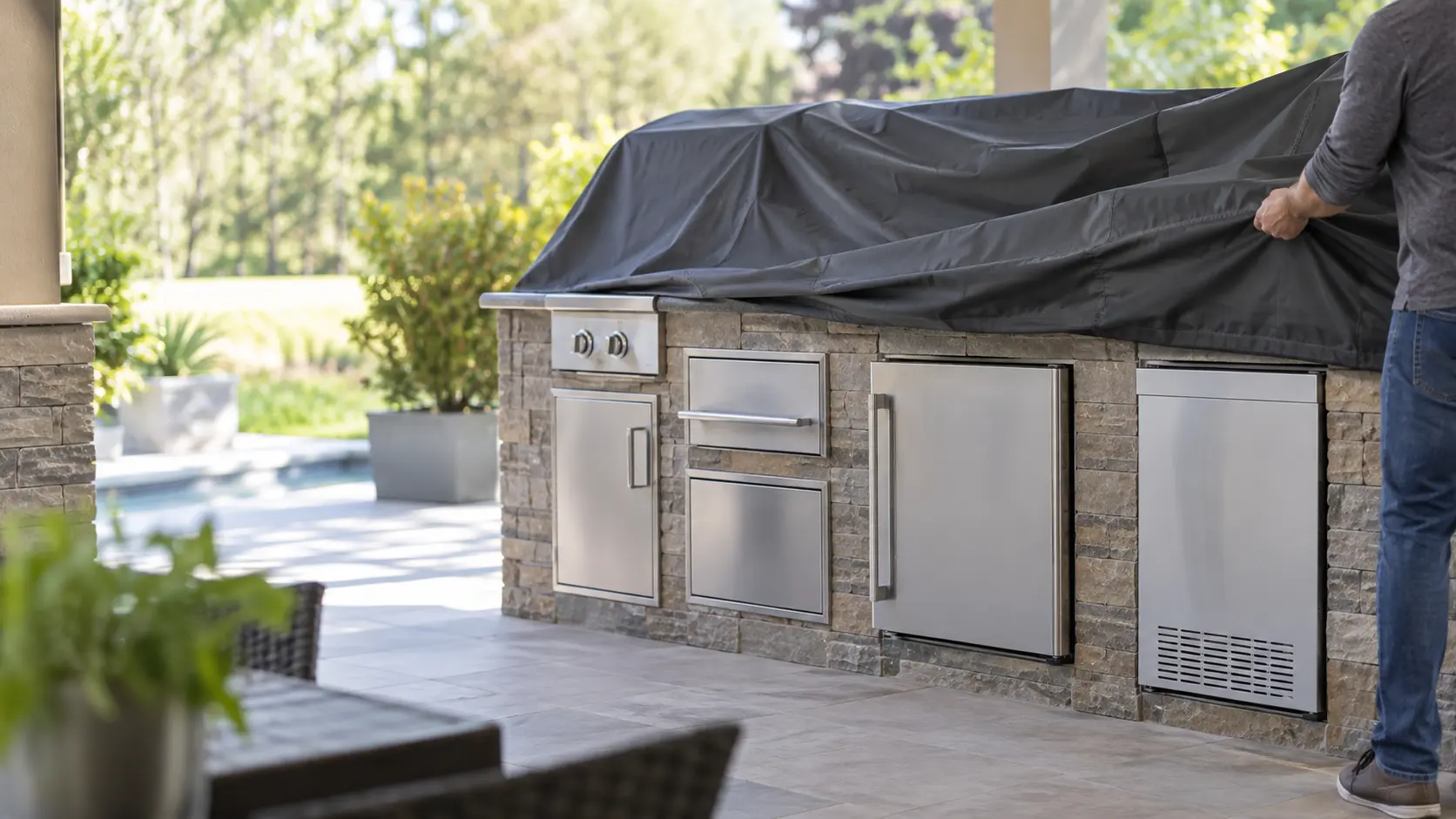
A cover keeps rain and salt off, but a cover pulled over wet steel holds the moisture against it. Lynx asks for the surfaces to be dry before a cover goes on and recommends, in harsh environments, a rust inhibitor that leaves a thin protective layer, such as a vapor corrosion inhibitor product. For seasonal storage it suggests securing the cover so as little damp air as possible reaches the steel.
Cold units are a separate case. Perlick tells owners not to cover its outdoor cold units, while True suggests a cover in winter. Follow the manual for each unit rather than wrapping the whole island the same way.
Source: True Residential — 15 and 24 Inch Undercounter Install Guide and User's Manual — Three things break the passive layer: abrasion, deposits, chlorides; air drying helps the film; avoid quaternary salts; never hydrochloric acid, even diluted; cover suggested in winter; Perlick — G5 User Installation and Operation Manual (Form Z3023) — Chromium passive film; clean along polish lines; non-chloride cleaners; quaternary salts cause pitting; never muriatic acid; do not place a cover over the unit; Lynx — Professional Series Care and Use / Installation Manual — Pool chlorine or sea salt may cause surface rust and pitting on 304 stainless; masonry cleaners attack stainless; dry before covering; rust inhibitor in extreme environments; warranty covers rust-through, not surface rust or staining
When rust means more than a stain
Surface rust is a cleaning job; rust that has eaten through a part is a repair. Lynx's warranty follows the same line, separating a part rusted through until it no longer works from the light surface marks weather leaves behind. Water sits longest in a handful of places, and those are where we look first:
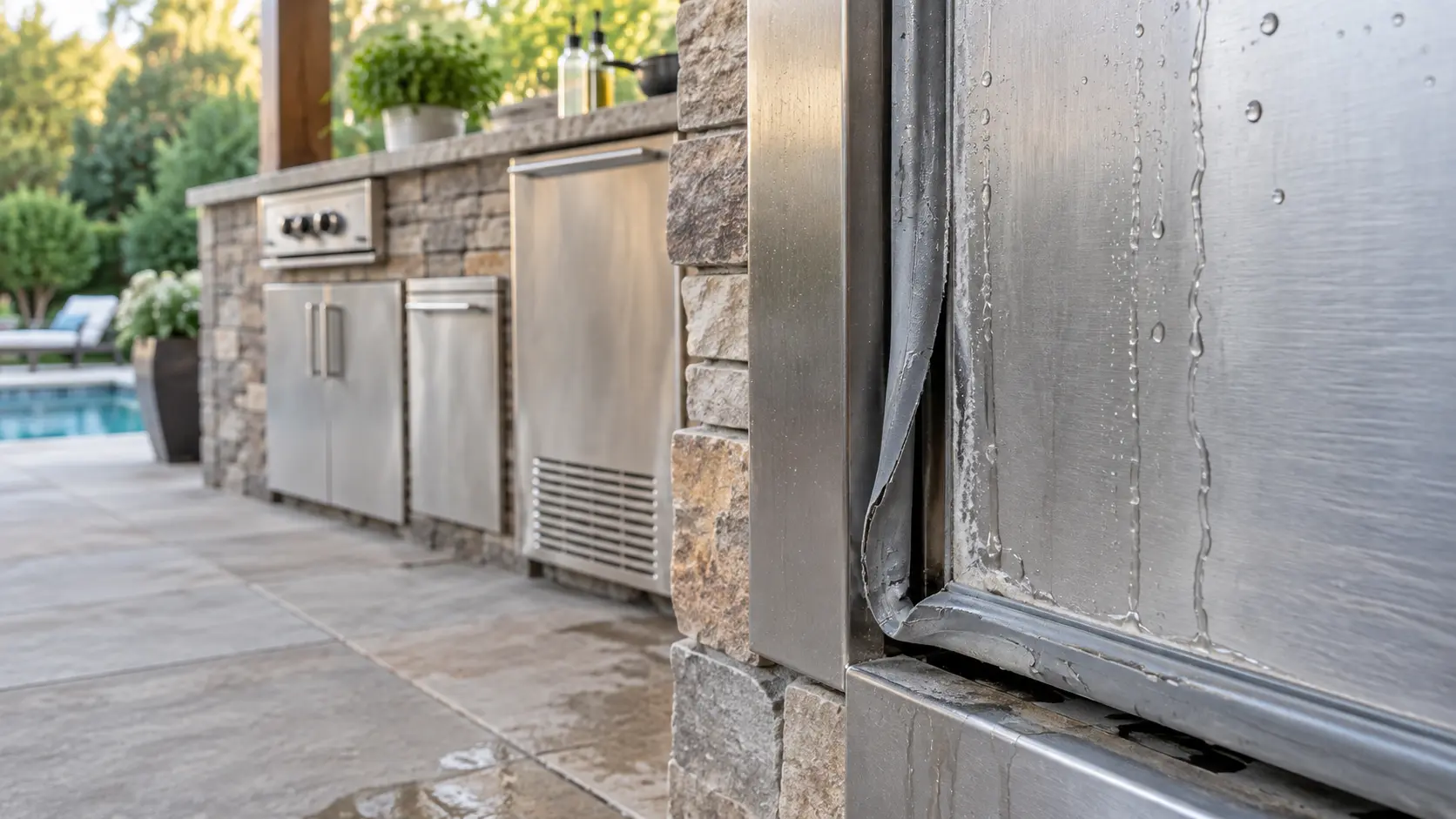
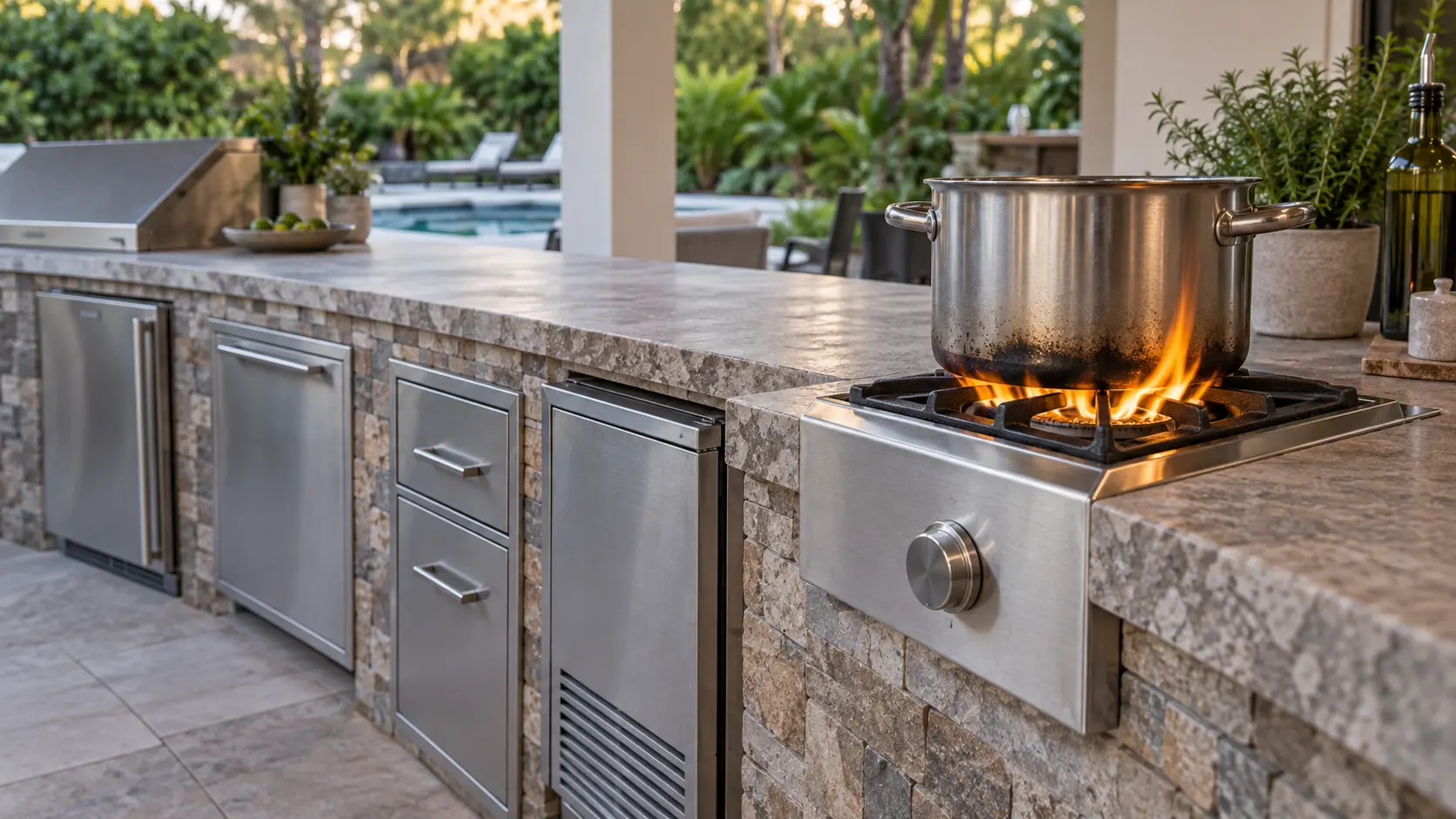
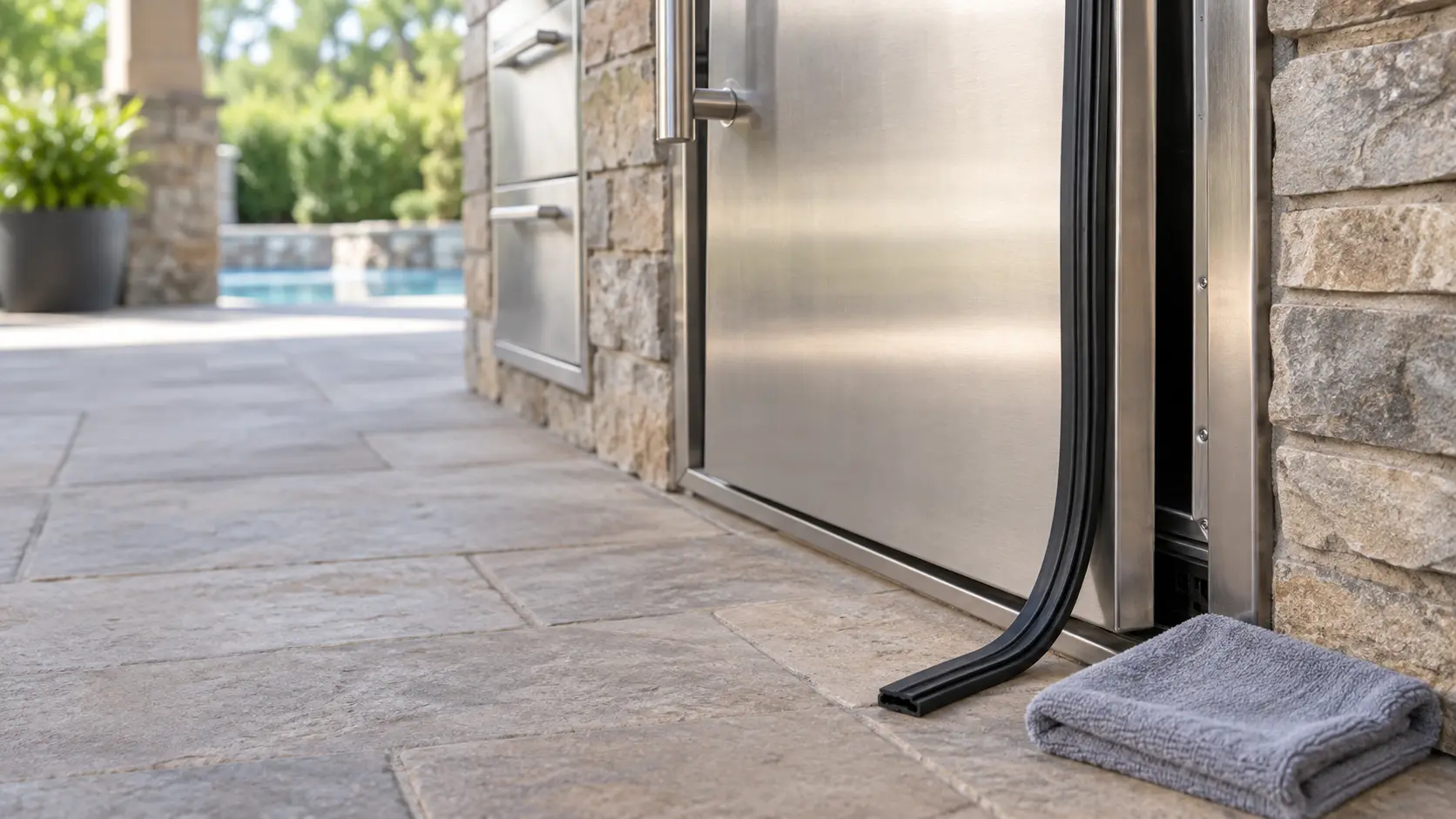
A cooler door that no longer seals because its hinge or gasket channel has corroded, or a burner box with rust flaking into the burner, needs parts. Pitting on a door skin that still seals is usually cosmetic and can be lightened with the cleaners the makers list for stubborn stains.
- Door hinges and the channel that holds the door gasket.
- The burner box and the pan under a side burner.
- Drawer slides and the rails of a warming drawer or cold drawer.
- Screws and fasteners on access panels and kick plates.
- The lower edge of the cabinet where rain runs off the counter.
Source: Lynx — Professional Series Care and Use / Installation Manual — Pool chlorine or sea salt may cause surface rust and pitting on 304 stainless; masonry cleaners attack stainless; dry before covering; rust inhibitor in extreme environments; warranty covers rust-through, not surface rust or staining