Do I need to winterize at all?
You need to winterize wherever the air at the island drops to 32°F or below, even for one night in a year. In a place where a freeze is a rare event, a cold snap forecast is the signal to drain, and in a place with no freezes you can skip it.
The cost of skipping is lopsided. Draining takes under an hour. A split line in an island with stone around it can mean opening the cabinet or the masonry. Use the overnight low, not the daily high, and remember that a sink on an exposed end freezes first. A mild region that gets one hard night every few years is still a region that winterizes.
Signs your area counts as freezing
- Hose bibs on your house are shut off for the winter.
- Pool or irrigation lines get drained locally.
- Frost shows on the lawn a few mornings a year.
If any of those are true, treat the island as freezing country.
What do I shut off and drain first?
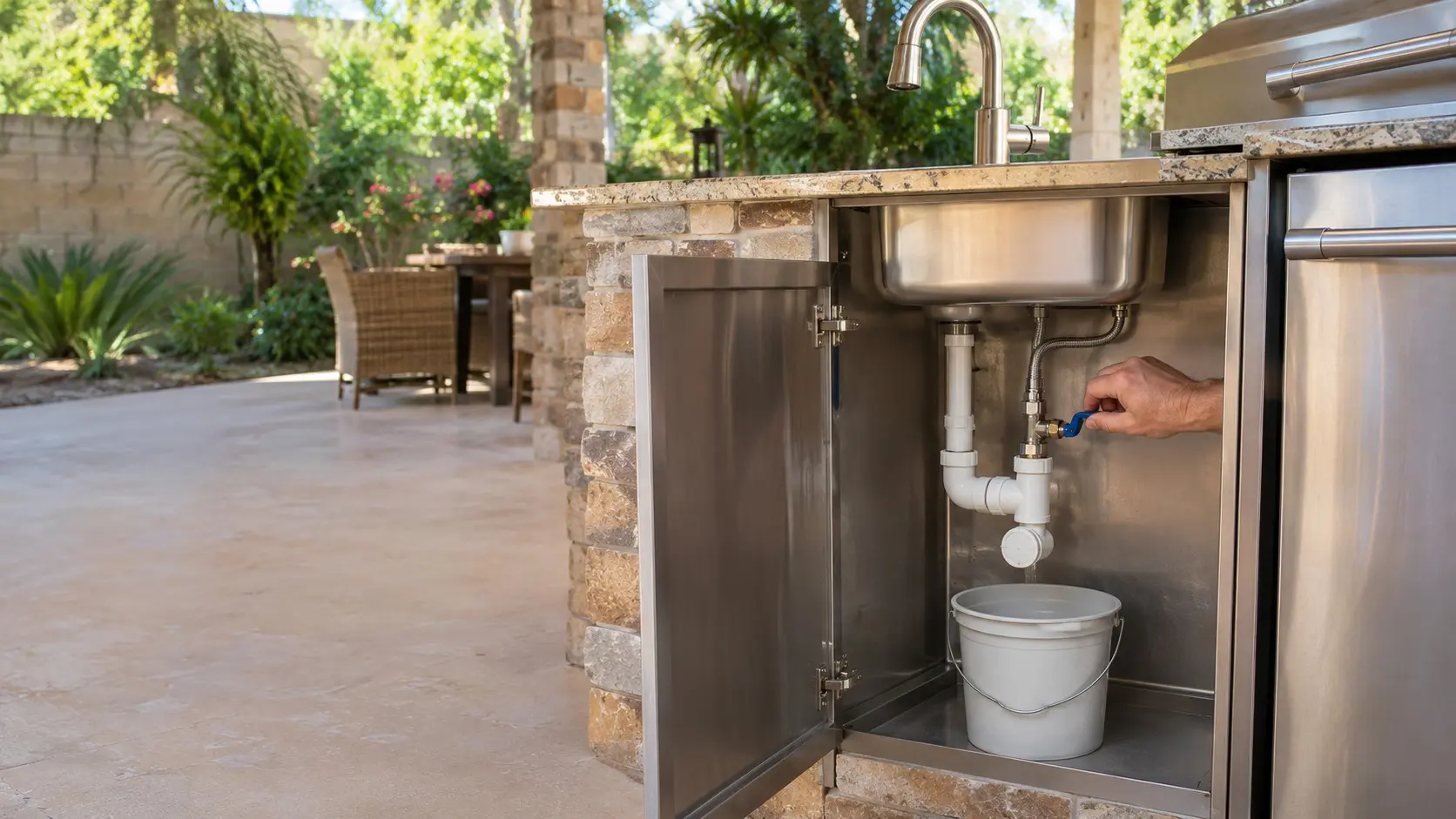
Shut the water off at the supply and drain everything downstream before you touch the sink. The order matters: closing the valve first keeps the line from refilling while you empty it.
- Switch off and unplug the ice maker and any pump or water heater on the same line before you drain anything.
- Find the island's shutoff valve. It may be in the cabinet below the sink, in the house, or in a box near the slab.
- Close it fully with a quarter turn or a few turns, depending on the type.
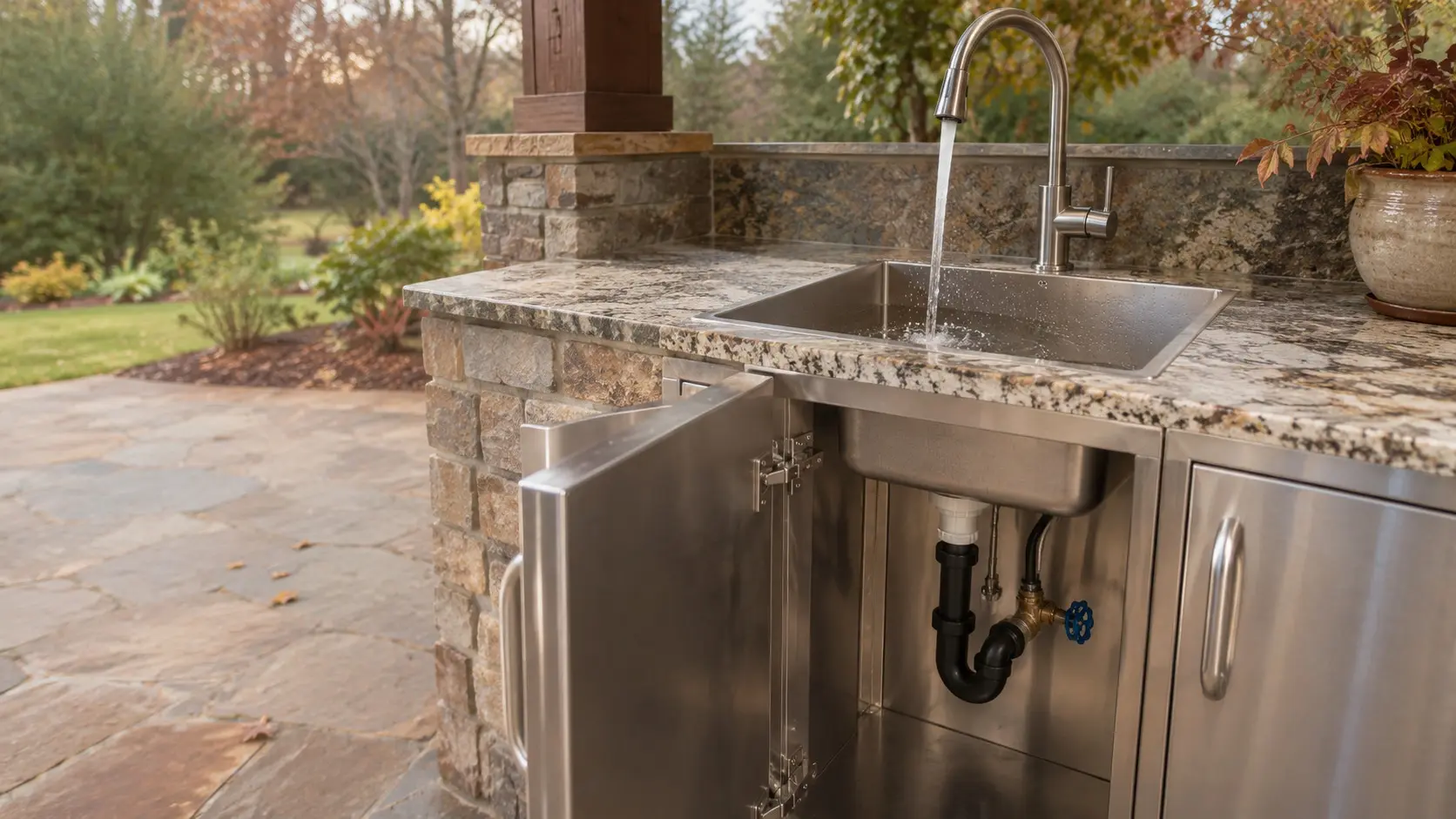
- Open the faucet, both sides if it has hot and cold, and leave it open.
- Open any low point drain or cap on the line, with a bucket below, and let it run dry.
- Leave that drain open for the season if the valve's maker or your plumber allows it.
Faucet, sprayer and hose
A pull-down sprayer hose holds a surprising amount of water. Pull it out and hold it low so it empties, then leave the head out of its dock if the faucet allows. Take off the aerator and set it in a drawer so grit does not clog it in spring.
Trap and drain
A sink drain keeps a plug of water in the P-trap. Loosen the trap's slip nuts over a bucket, empty it, and refit it hand-tight. If the drain runs to the house sewer, do not leave the trap off: the open pipe lets sewer gas and pests into the island. If the sink drains onto the ground or into a dry well, check that the pipe is clear of leaves so the water does not sit and freeze there.
What about the ice maker and other lines?
Any line that feeds an ice maker, a filter or a hot-water tap holds water too, and each has its own drain. Treat them as part of the sink job rather than a separate one.
Line to the ice maker
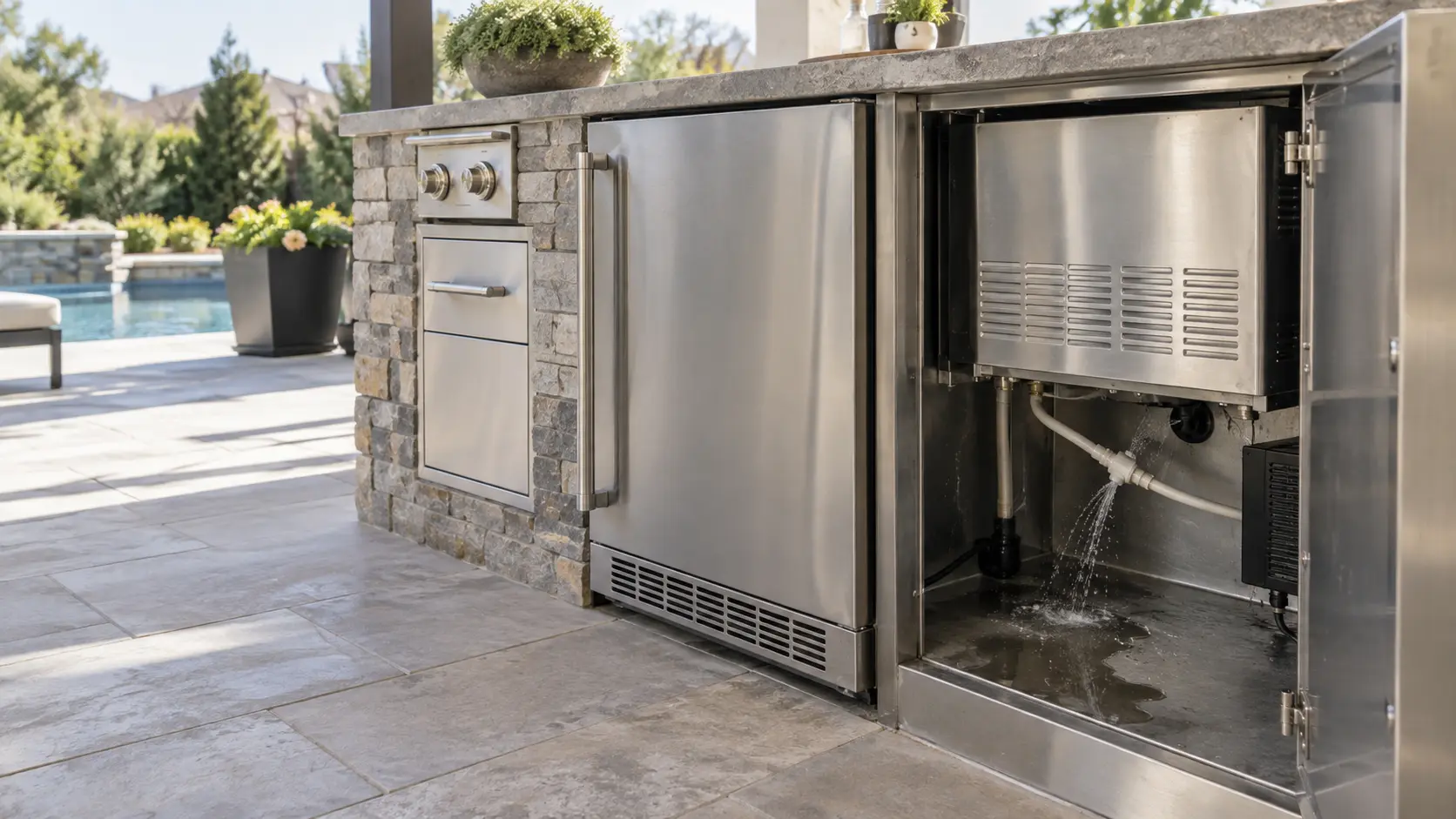
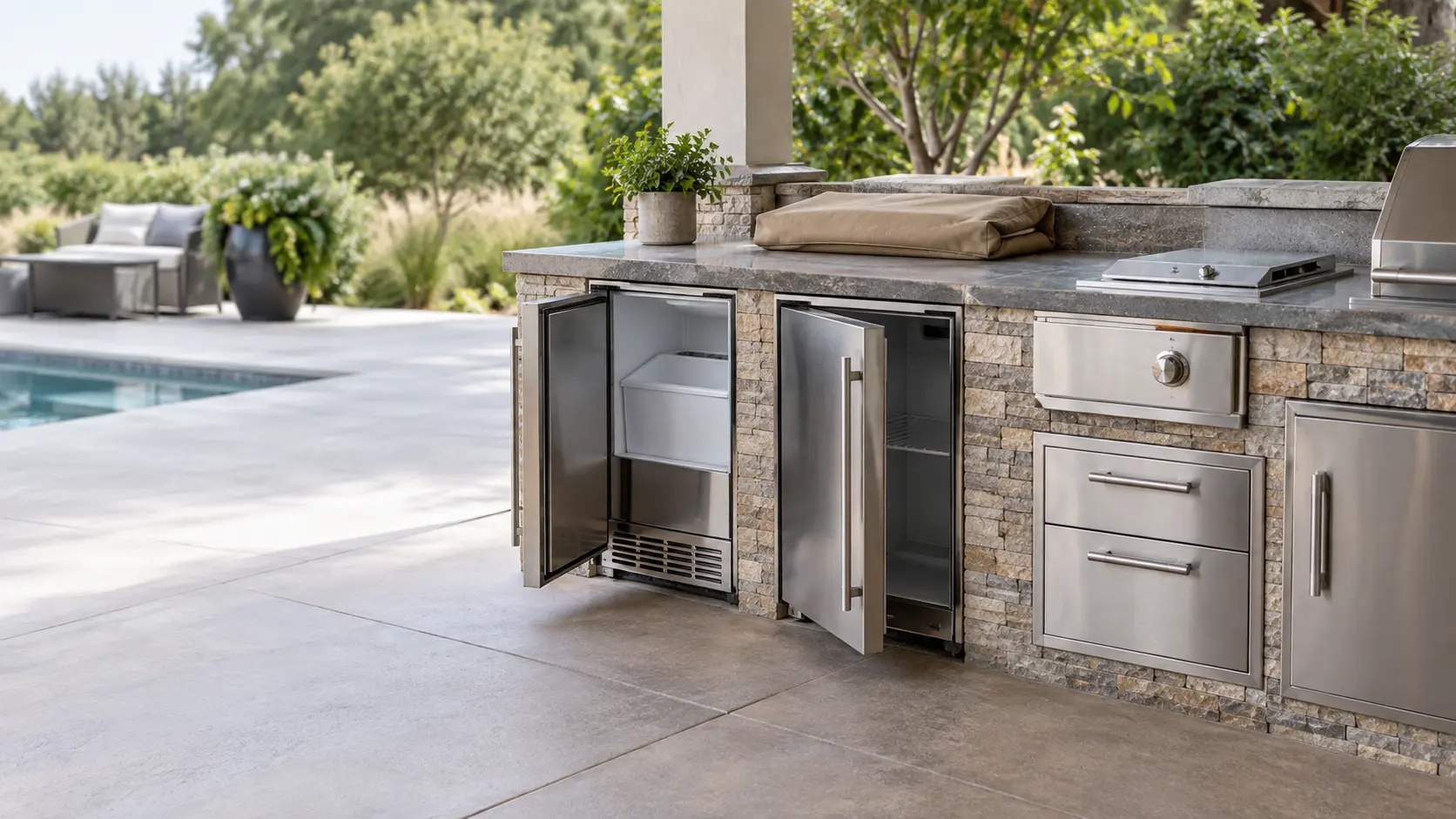
An undercounter ice maker has an inlet valve and a drain pump that hold water. The owner's manual for many models asks you to shut the supply, empty the bin and run or open a drain. Follow your own manual; the freeze damage guide shows what a split valve or pump looks like if one was missed. For a machine you cannot drain, outdoor ice maker service can do it.
Filters and shutoffs
Remove the cartridge from a canister filter, dry the canister and leave the housing unscrewed. A cartridge left in freezing water cracks the shell.
| Part | What to do | Why |
|---|---|---|
| Supply line | Close valve, drain low point | Largest volume of water |
| Faucet and sprayer | Leave open, hold hose low | Splits the body and hose |
| P-trap | Empty and refit | Plug of water freezes |
| Ice maker line | Shut off and drain per manual | Valve and pump hold water |
| Filter canister | Remove cartridge, dry | Shell cracks |
Can I use compressed air or antifreeze?
Compressed air can clear a line that will not drain, but too much pressure splits fittings and can blow a faucet cartridge or a filter housing apart. That is a job for a plumber or a winterizing visit, not a shop compressor.
Do not pour any antifreeze into the supply line of a sink that serves food. Car or engine antifreeze is poisonous and never belongs in a water line or a drain. For most owners, draining is cleaner, easier and enough. If the island has a line you cannot drain, winterizing and spring startup is the visit that covers it.
What if the sink sits far from the shutoff?
Many islands are fed from a line that runs under the patio, and the shutoff may be in the house, a basement or a meter box. Find it before the cold, label it, and confirm it closes by opening the faucet: if water still runs after a minute, the valve is not shutting the line.
Lines that slope the wrong way
A line that dips between the shutoff and the sink holds water at the low point even after you open the faucet. If the run sags, the low drain is the key part. A line with no low drain and a dip in it is the one to hand to a plumber, who can add a drain or clear it safely.
What do I check before turning water back on?
In spring, check the trap is tight, close the low drain, fit the aerator and dock the sprayer. Then open the supply valve slowly with the faucet still open, let it run until the water is clear and steady, and close the faucet last.
Watch each joint for five minutes, and check the cabinet floor an hour later. The spring startup checklist lists the rest of the island, and power and water to the island explains where the shutoffs and circuits usually are. If a drip shows up, switch the water off again and read the freeze damage page.
A short checklist you can keep in the cabinet:
- Valve closed, faucet open, low drain open.
- Sprayer hose emptied, trap emptied.
- Ice maker and filter drained per their manuals.
- Date and your initials on a tag at the shutoff.