
Habits that keep the island working for years
Maintenance and prevention
guides.
The routines that keep an outdoor kitchen off our schedule, from rinsing salt and chlorine off the stainless and clearing burner tubes to a proper winter shutdown and a careful spring startup.
Mon–Sat, 8am–8pm
- Four guides
- Read before you book
- Says where to stop
Book a visit
Three short steps, about a minute.
or call (844) 449-0269
Loading appointment form…
The appointment form couldn’t load. Please try again.
Maintenance and prevention,
guide by guide.
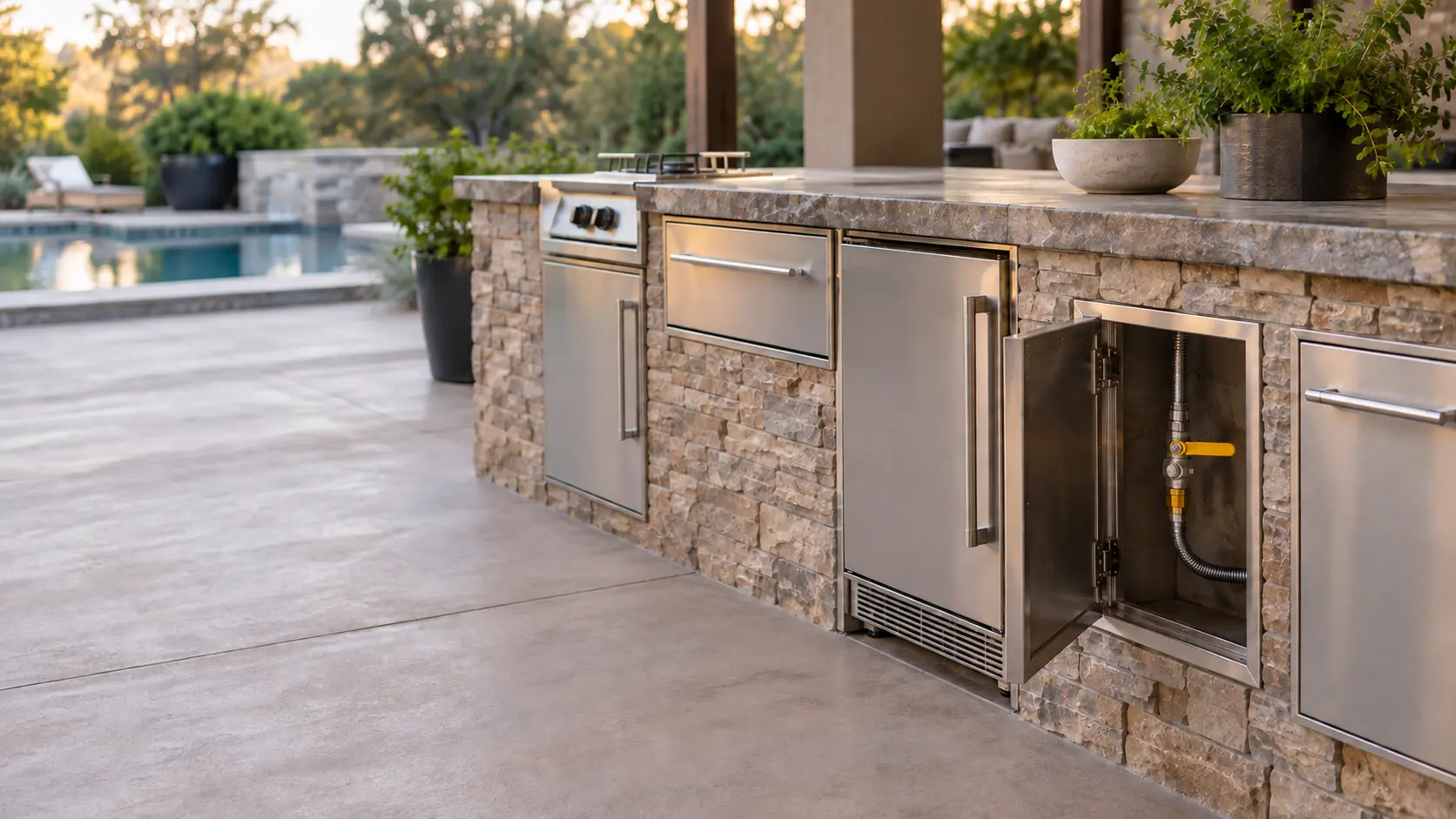
These guides are for owners whose island works today and who want it working next summer too. Most outdoor kitchen repairs we see were set in motion by a season: salt and chlorine left on the steel, webs spun in a burner tube over the quiet months, water left inside an ice maker when the first freeze came.
All 27 guides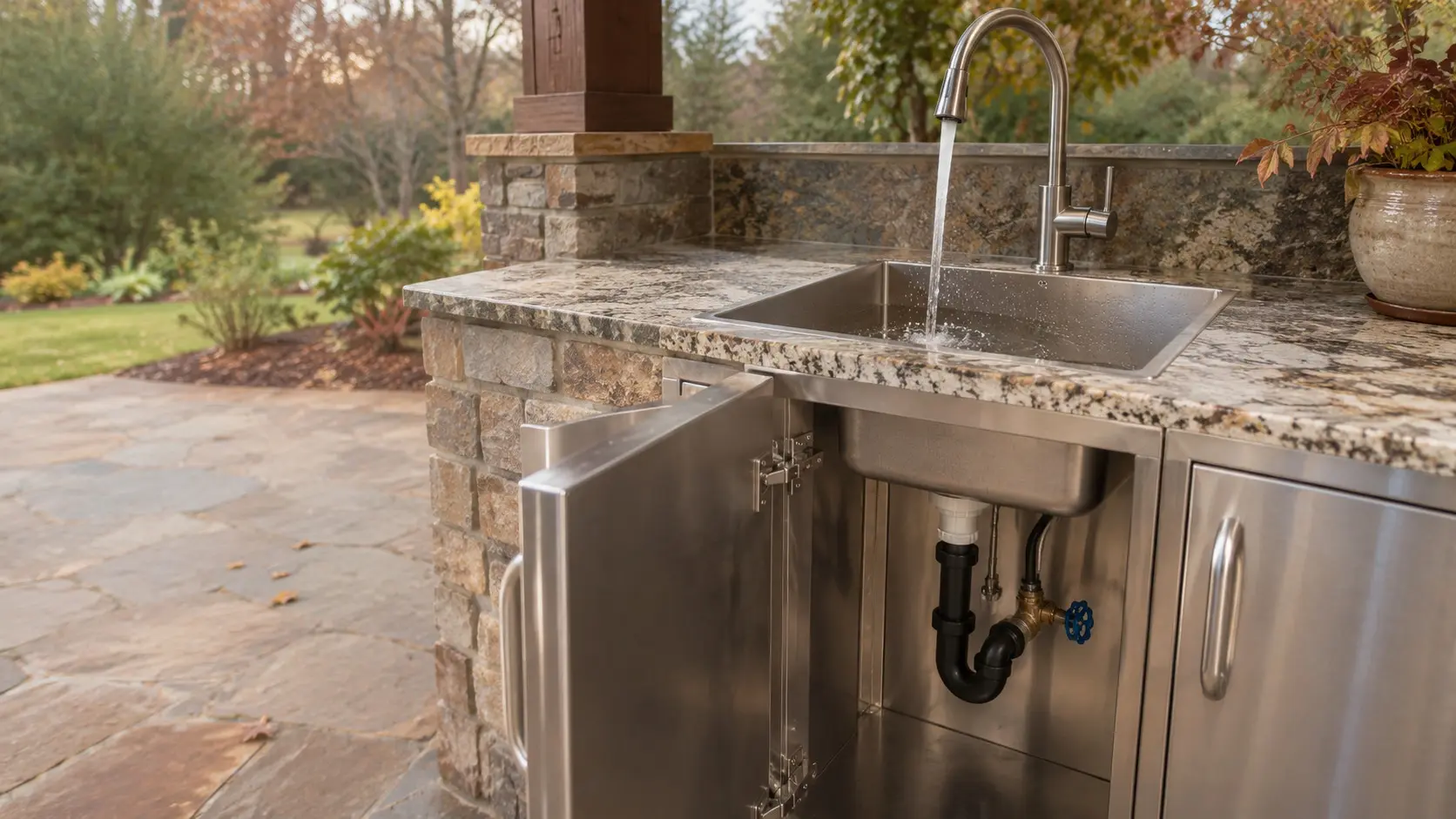
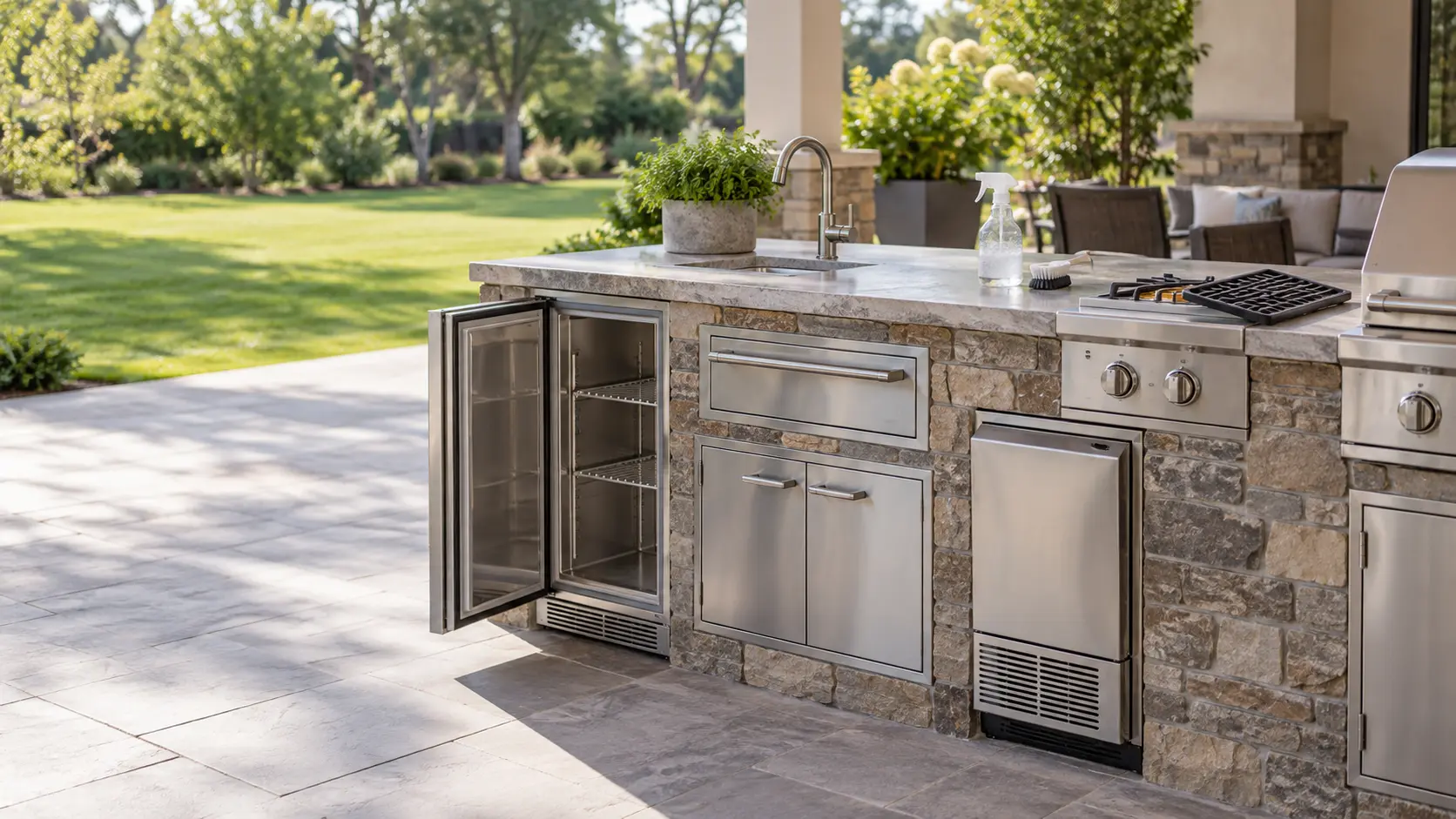
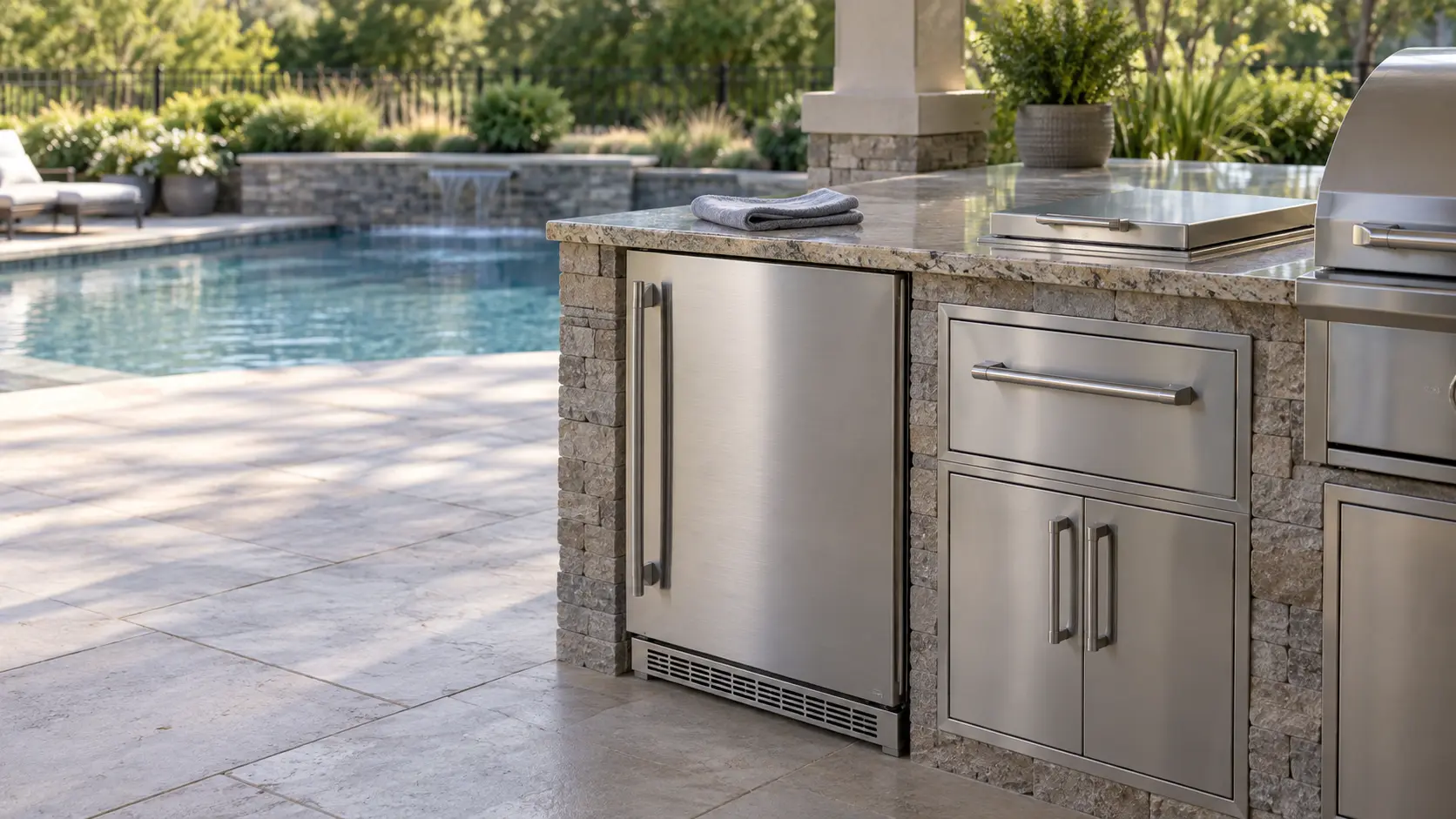
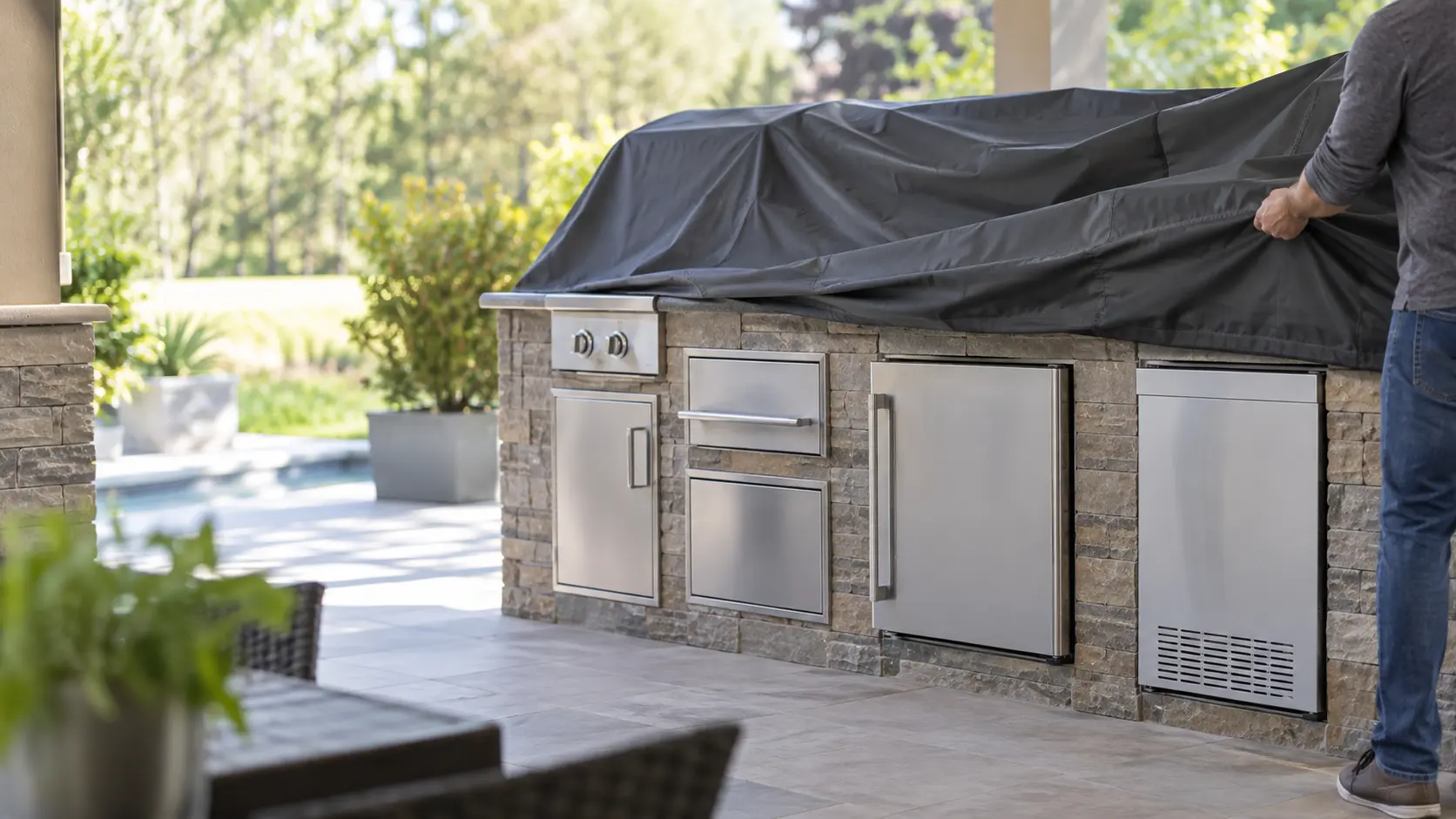
Habits that keep the island working for years.
Three routines prevent most of it. A proper winter shutdown, done unit by unit the way each maker's manual describes. A careful spring startup that clears the gas path and gives the cold units a day to settle before they are stocked. And a simple cleaning habit that keeps the stainless steel's protective film intact through pool season and sea air.
Every step comes from the makers' use-and-care and installation manuals or from federal consumer safety guidance, and each guide cites its sources beside the claims. Where makers disagree, such as whether to cover a cold unit in winter, both positions are shown and the right one is whichever your own model's manual gives.
The guides also say where an owner's part ends. Cleaning, draining, unplugging and closing a cylinder valve are yours; opening gas fittings, removing burner valves, working inside the island wiring or chasing water trapped in hidden lines is a visit, and we would rather do that than repair what a guess left behind.
Not sure where to start?The short answerHow to winterize an outdoor kitchen sink and its water lines
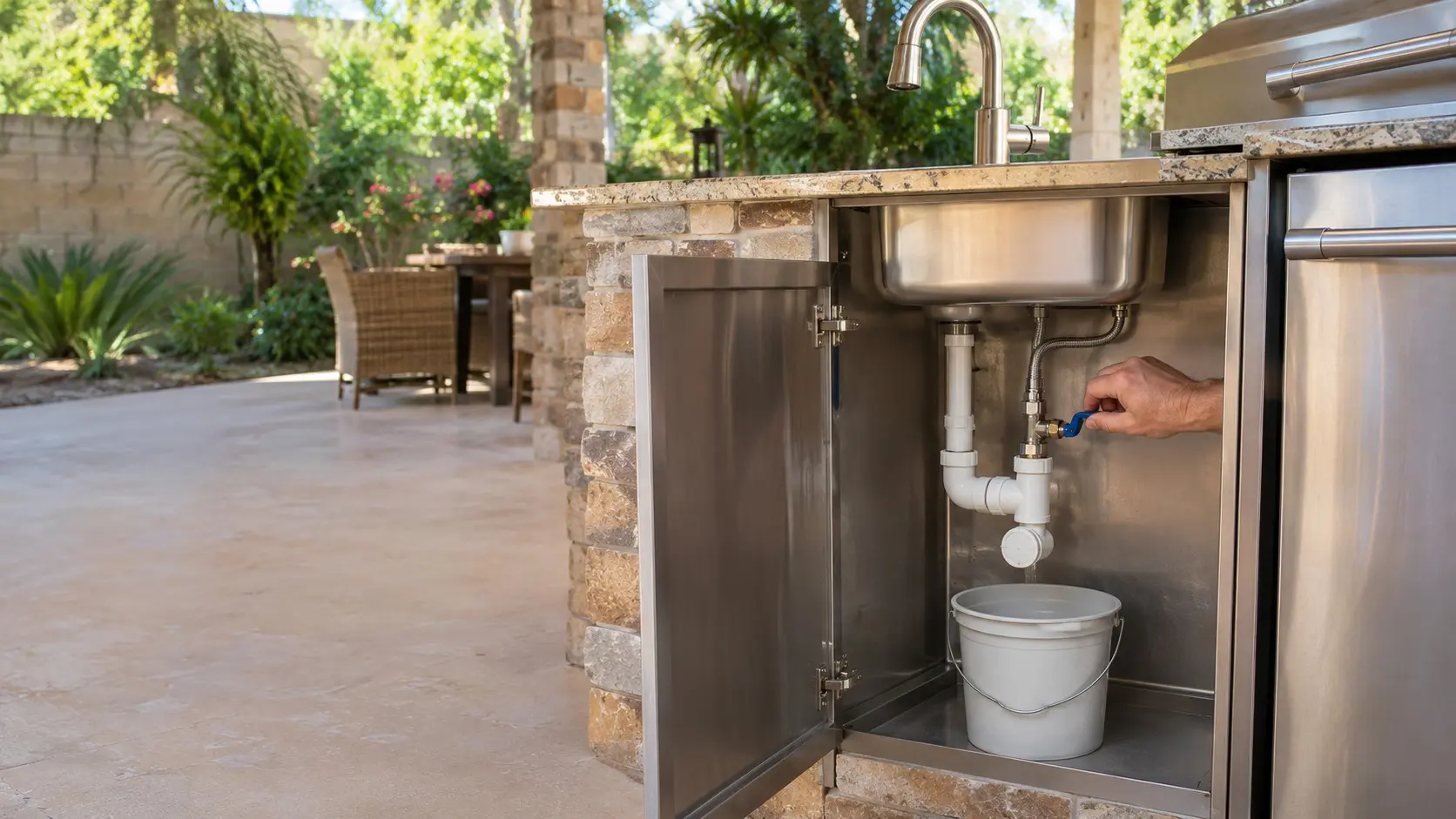
To winterize an outdoor kitchen sink, close the supply valve, open the faucet and any low drain to empty the line, empty the trap and sprayer hose, and leave the faucet open for the season.
The short answerWinterizing an Outdoor Kitchen: Each Maker's Shutdown, Unit by Unit
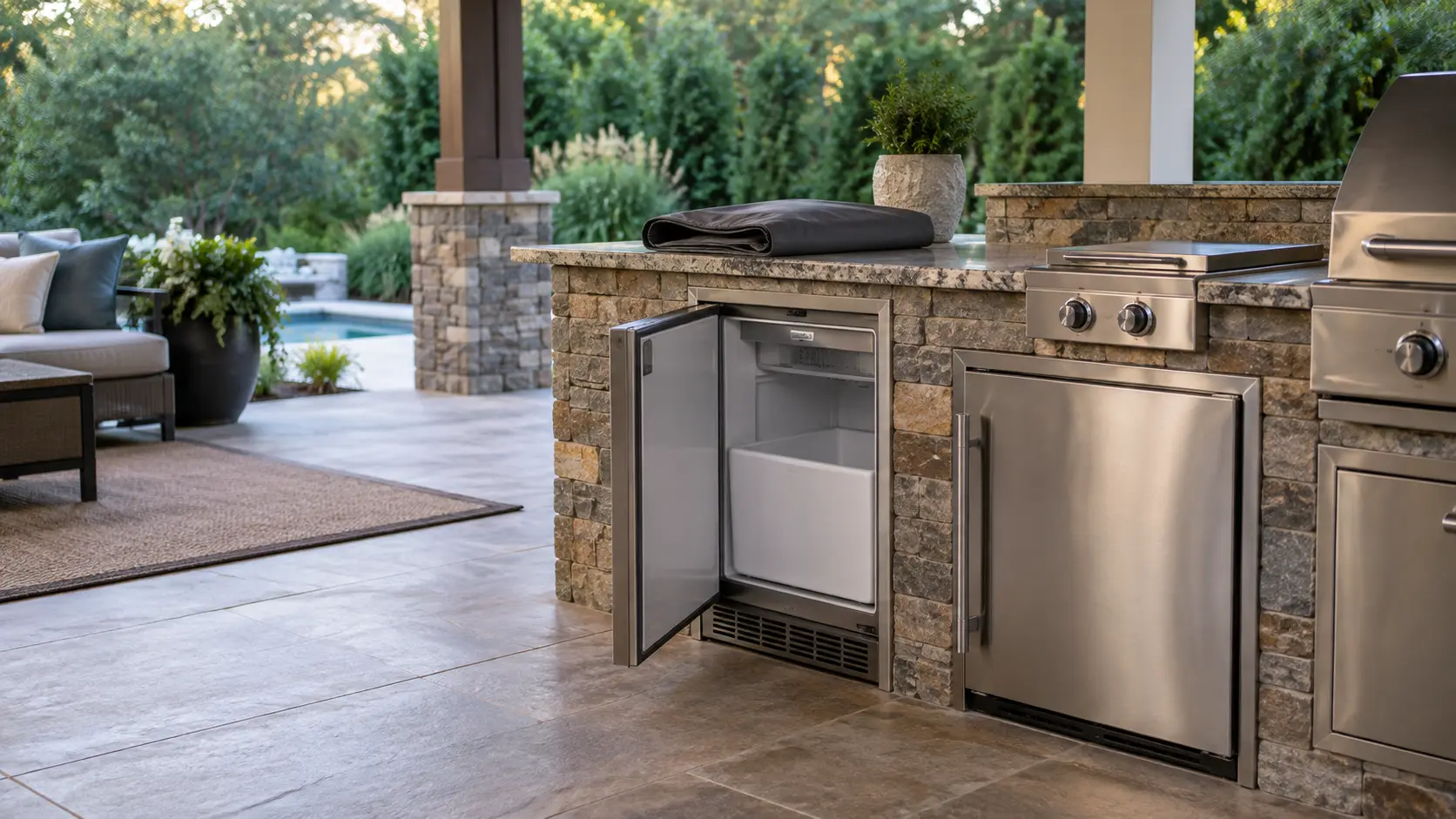
Winterizing an outdoor kitchen means following each unit's own manual: cold units are emptied and switched off once the air reaches the maker's lower limit, the outdoor ice maker is cleaned, drained and its water valve cleared, and burners are cleaned, dried and covered with the gas supply closed.
The short answerOutdoor Kitchen Spring Startup: Burner Tubes, the Soap Test and a Day to Settle
An outdoor kitchen spring startup follows the makers' own order: wait until the air is back above each unit's lower limit, clear spiders and insects from the burner tubes and check hoses and connections with soapy water, clean the cooler's condenser and let it run 24 hours before stocking, and bring the ice maker back on its water line with the first batches checked.
The short answerKeeping Outdoor Kitchen Stainless Free of Rust: Chlorides, the Grain and Dry Covers
Outdoor kitchen stainless steel stays free of rust as long as its thin chromium oxide film is intact.
When reading
is not enough.
If the checks in these guides did not settle it, the visit picks up from there, stop by stop.
What repairs cost- 01The island, looked over first
- 02The reason, then the price
- 03Parts in the van
- 04Running before we leave
The problems
these answer.
Each has a page of its own, with the causes in the order worth checking.
All 17 problems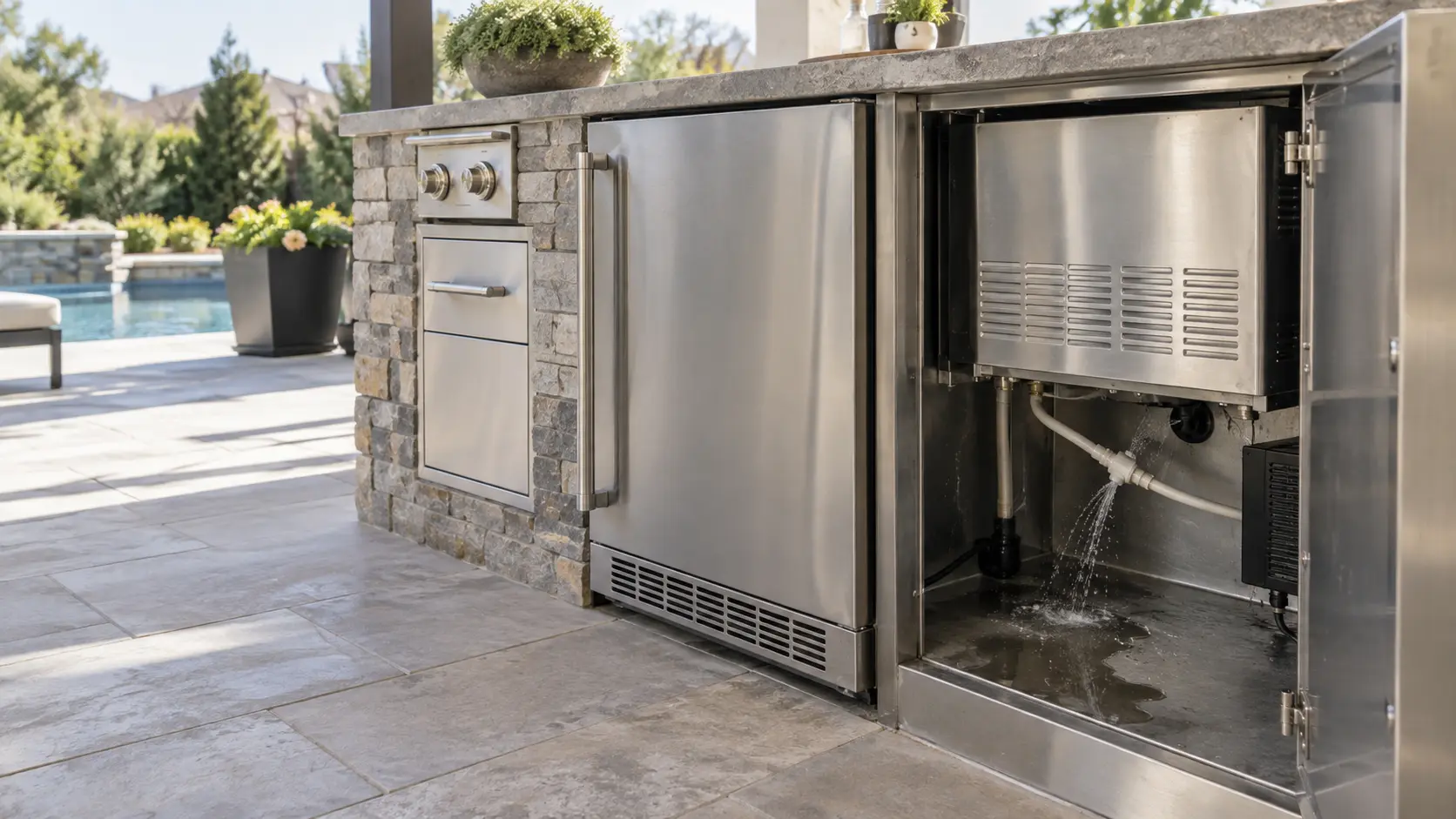
Outdoor Kitchen Freeze Damage Found at Spring Start-Up
5 causes, cheapest first
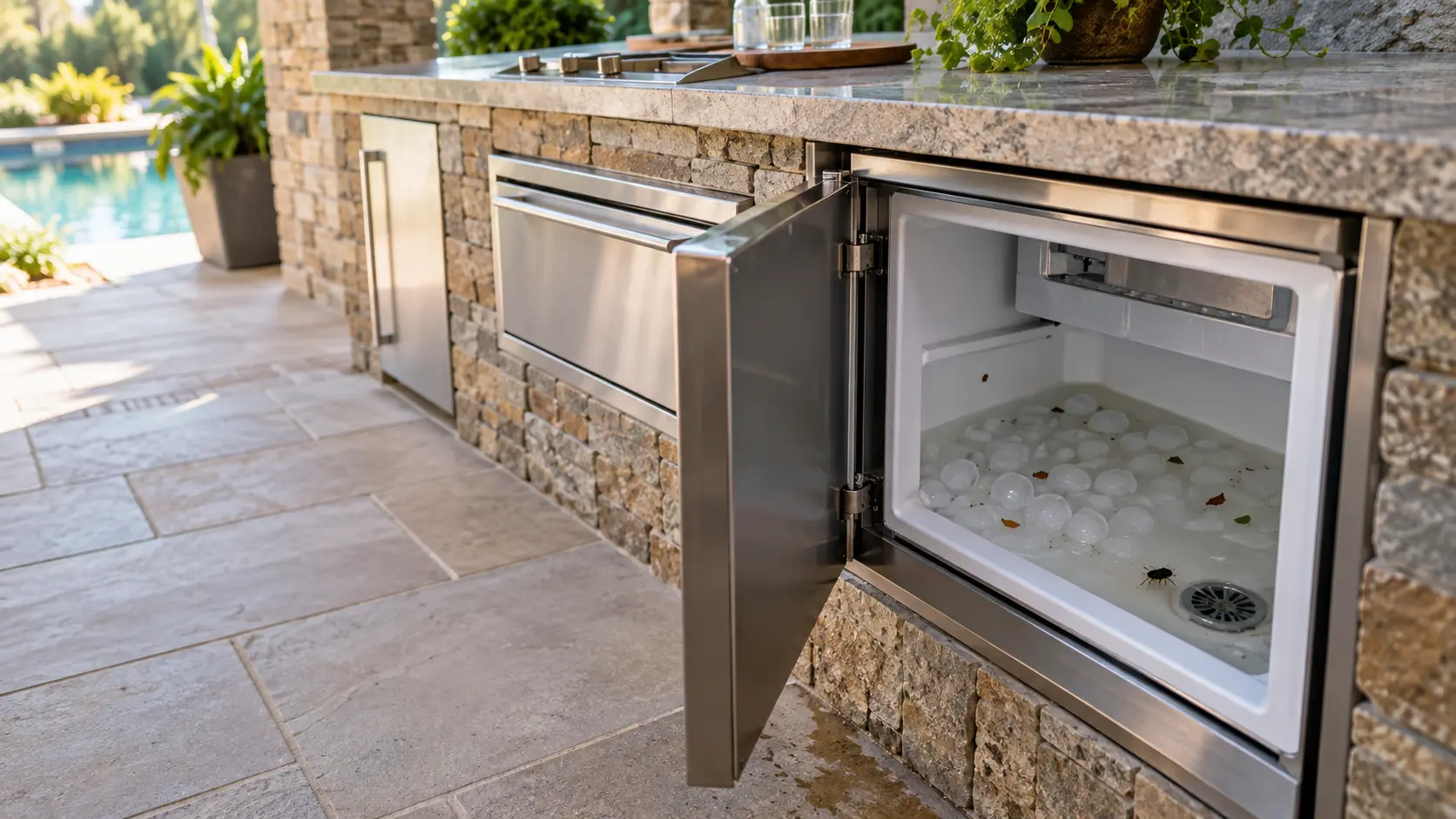
Outdoor Ice Maker Draining Poorly or Holding Water
5 causes, cheapest first
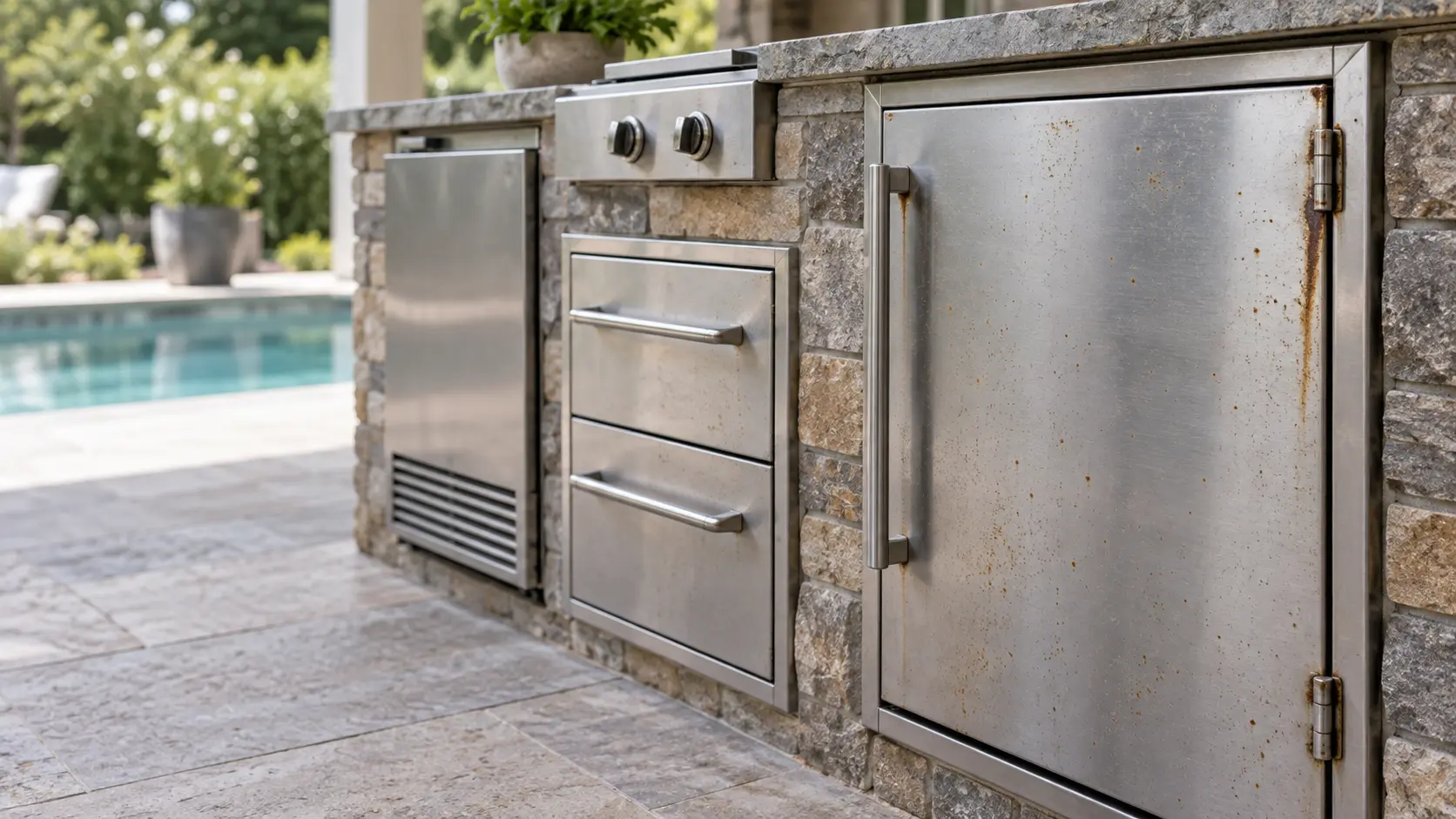
Outdoor Kitchen Stainless Rusting or Pitting Near the Pool
6 causes, cheapest first
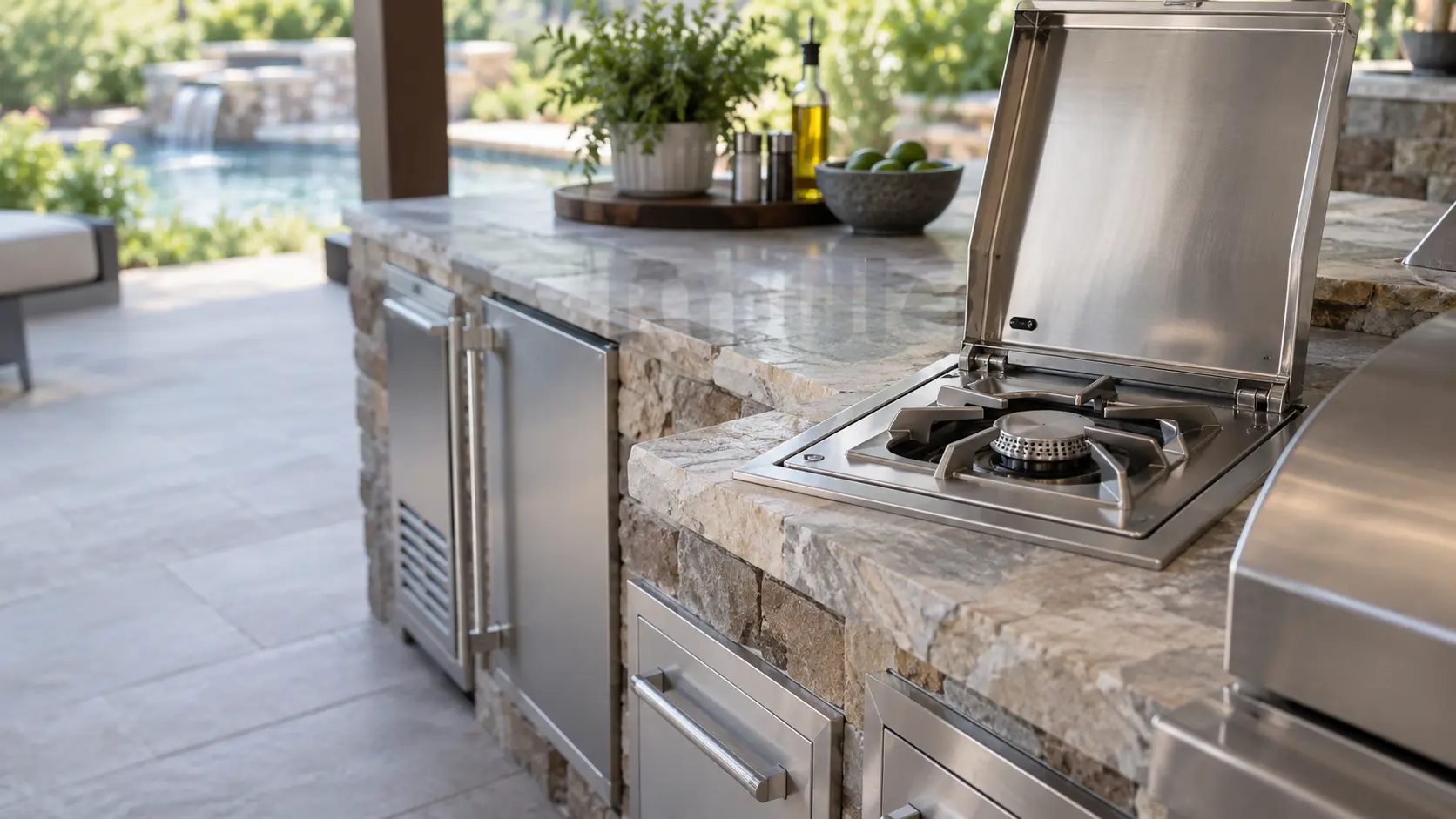
Side Burner Won't Light on the Outdoor Kitchen Island
6 causes, cheapest first

Questions about
maintenance and prevention.
How often should an outdoor kitchen be serviced?
What is the most common avoidable outdoor kitchen repair?
Can a stainless island near the ocean stay rust-free?
Do you do seasonal shutdowns and startups?
The other
sections.
Split by what you are trying to find out rather than by which part of the appliance it concerns.
All guides
Back to your everyday
Let’s get your outdoor kitchen working again.
Three short steps online, or one call. Tell us what you are seeing and pick a window that works.