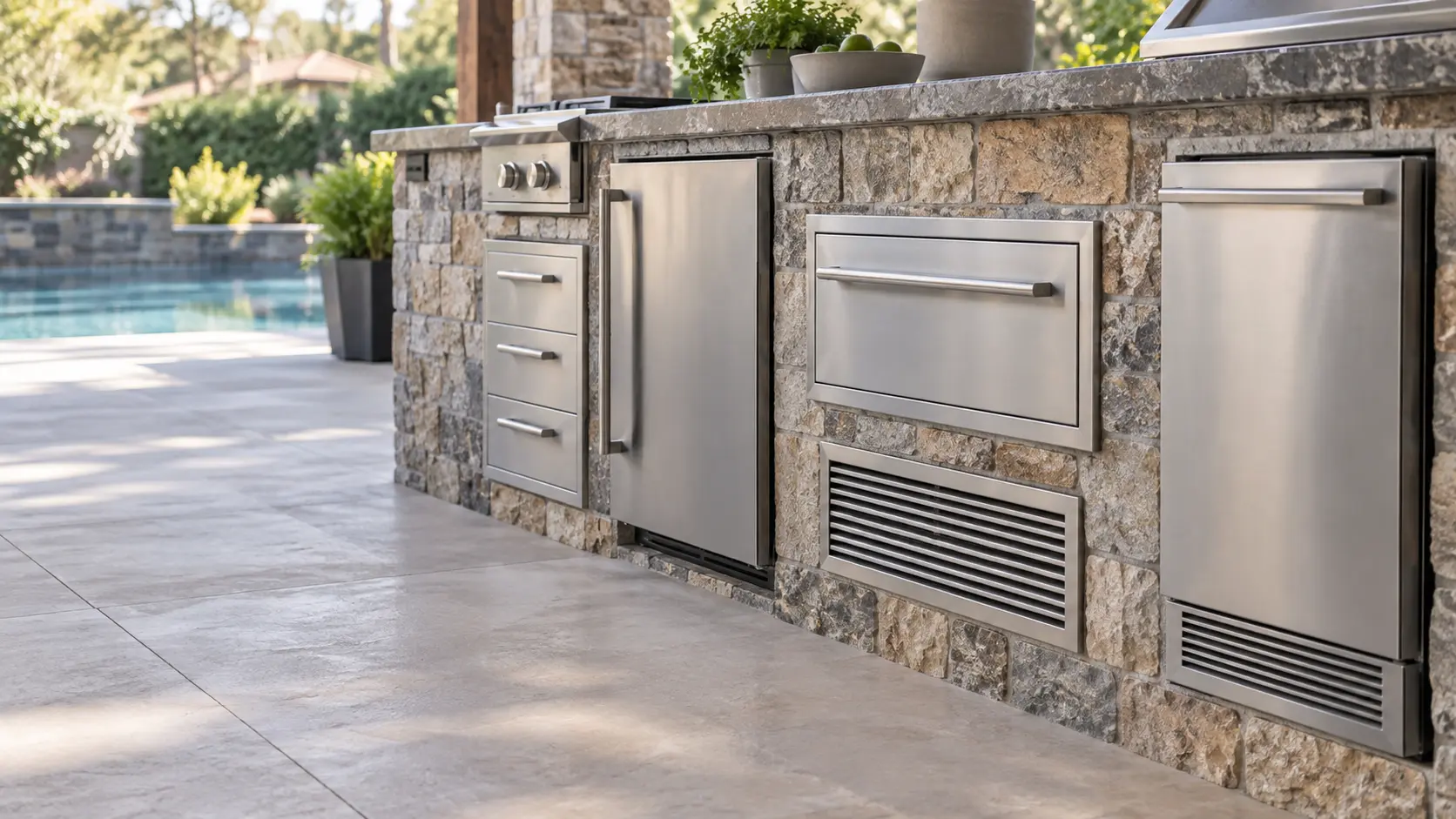

Gas, vents, air and power in the island
Installation and setup
guides.
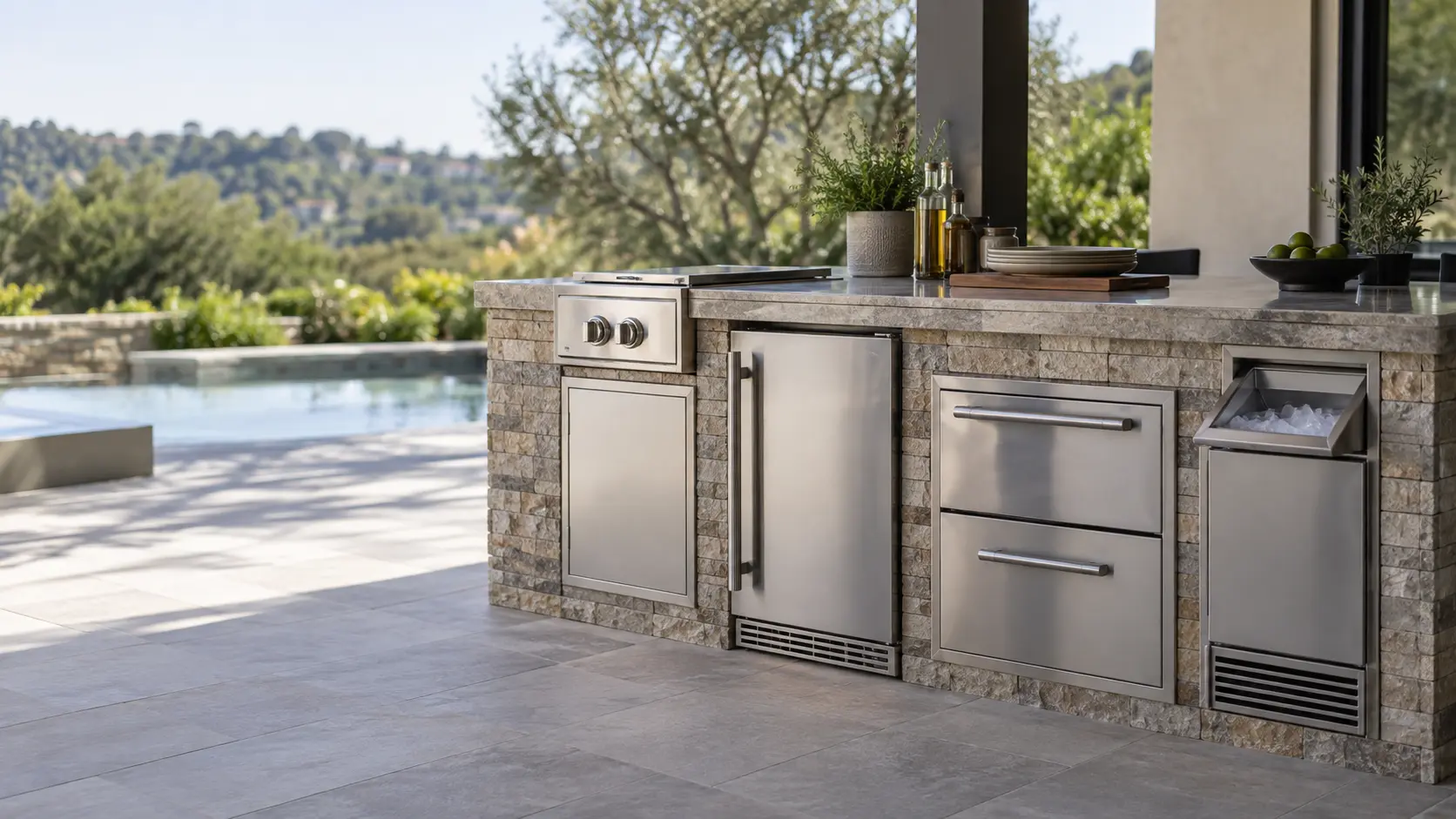
Venting the island so leaked gas cannot collect, giving an outdoor cooler the shade and front airflow it needs, and bringing GFCI power, water and a drain to the island the way the makers ask.
Mon–Sat, 8am–8pm
- Six guides
- Read before you book
- Says where to stop
Book a visit
Three short steps, about a minute.
or call (844) 449-0269
Loading appointment form…
The appointment form couldn’t load. Please try again.
Installation and setup,
guide by guide.
Many of the repairs we make on outdoor kitchens trace back to the week the island was built. A gas bay with no openings for leaked gas to leave, a cooler facing the afternoon sun with its front grille behind a planter, a countertop that stops short of the door gasket, an ice maker with no drain to run to: none of these is a broken part, and replacing a part does not cure them.
All 27 guides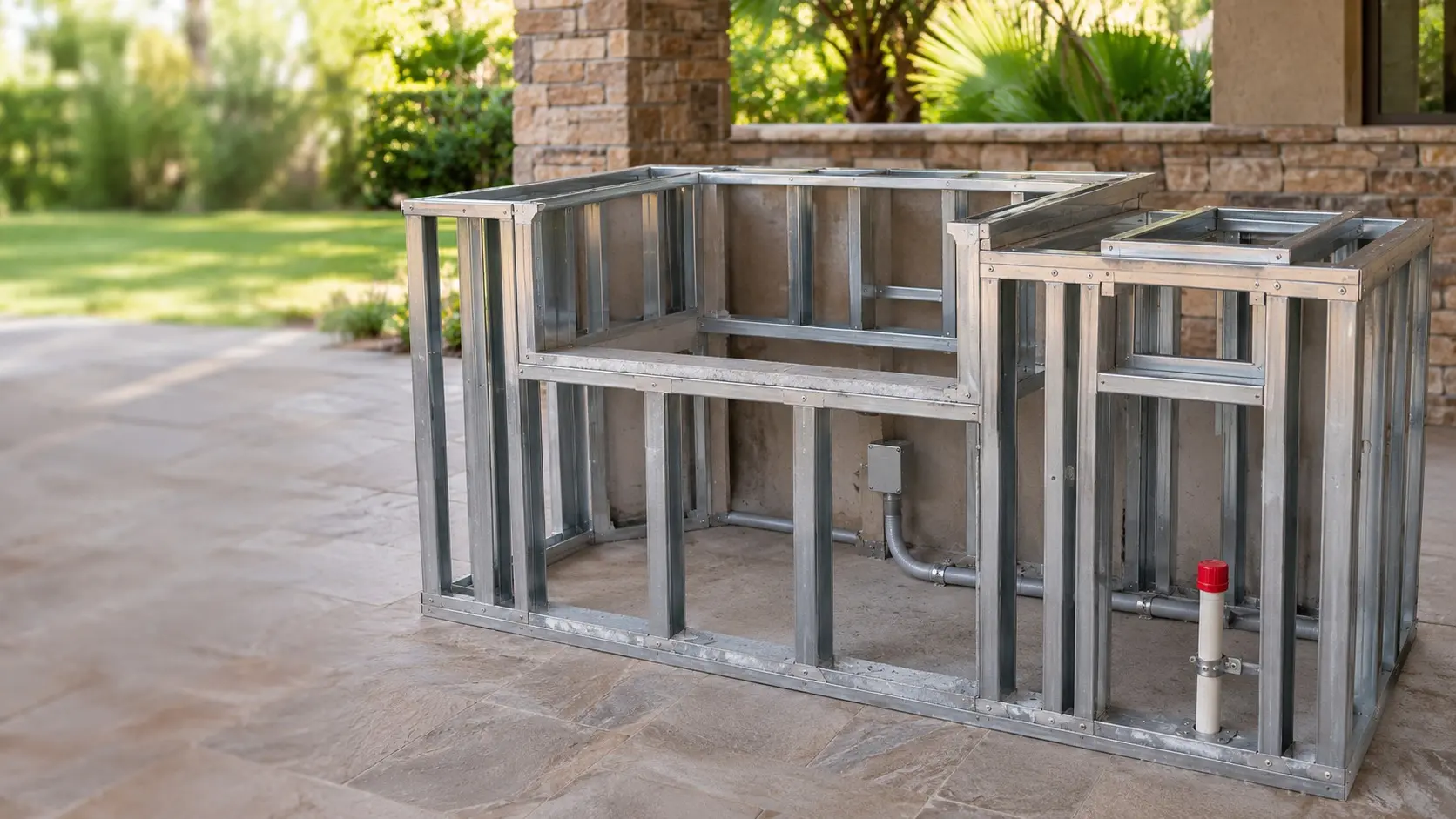
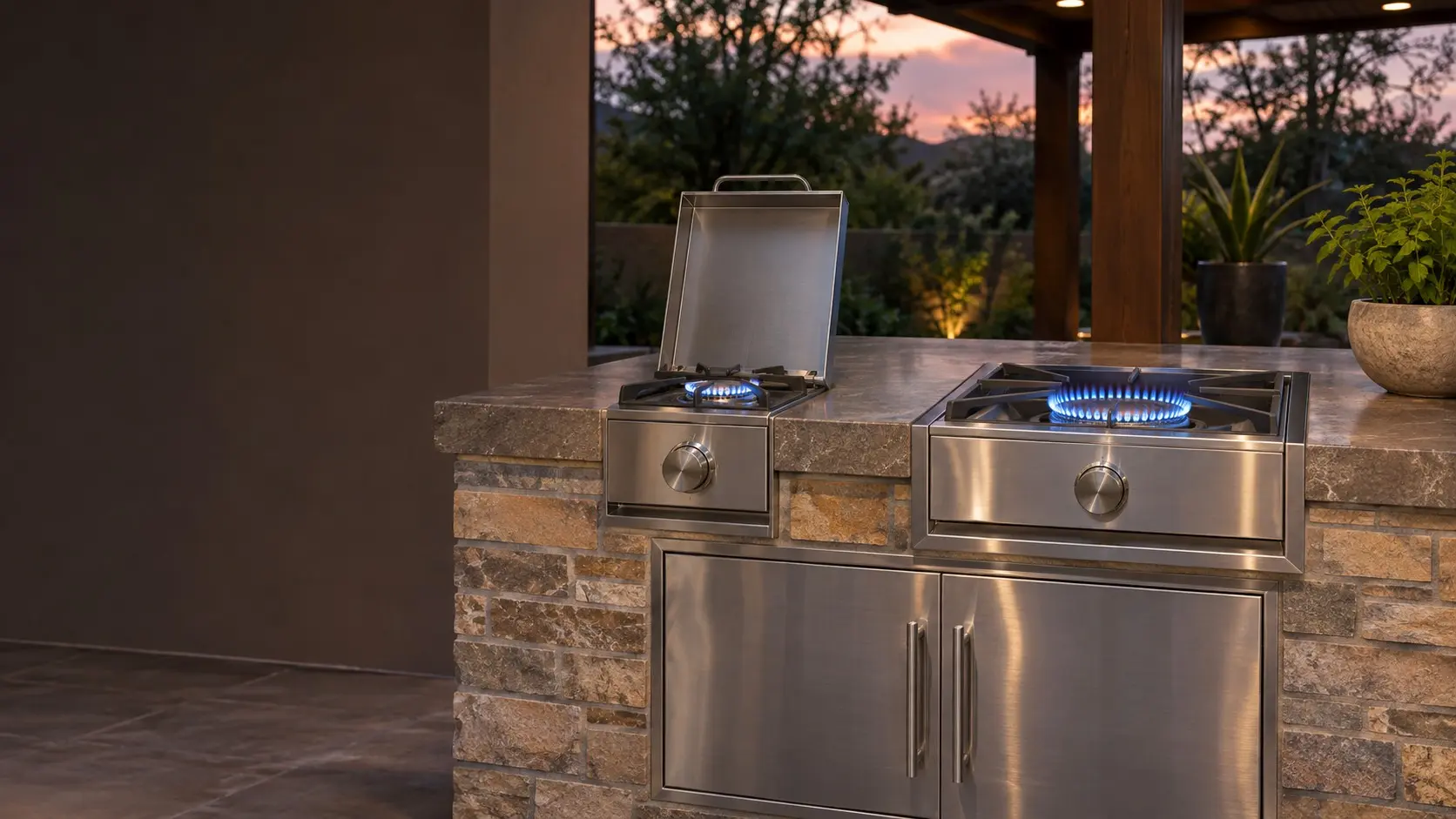
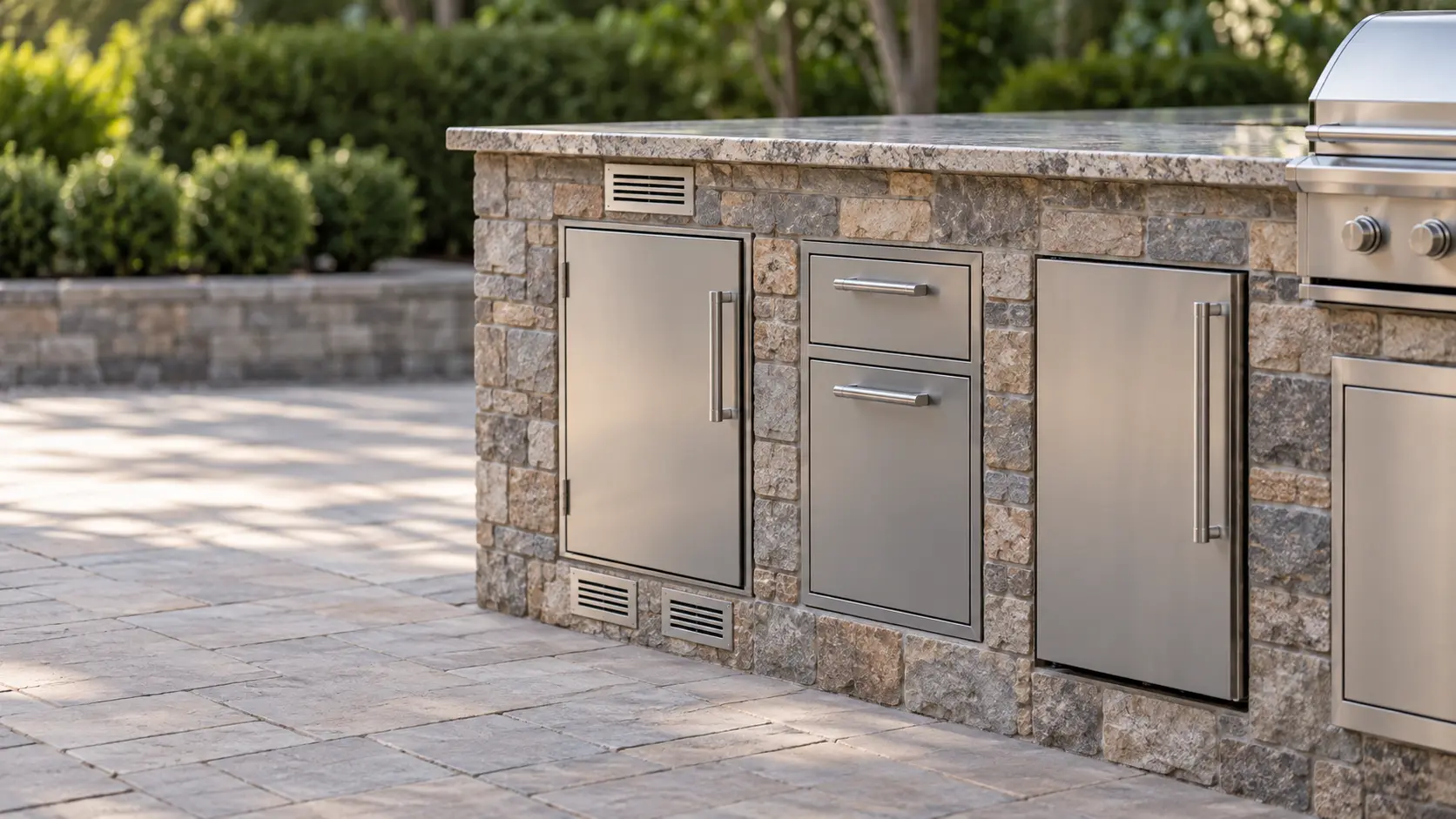
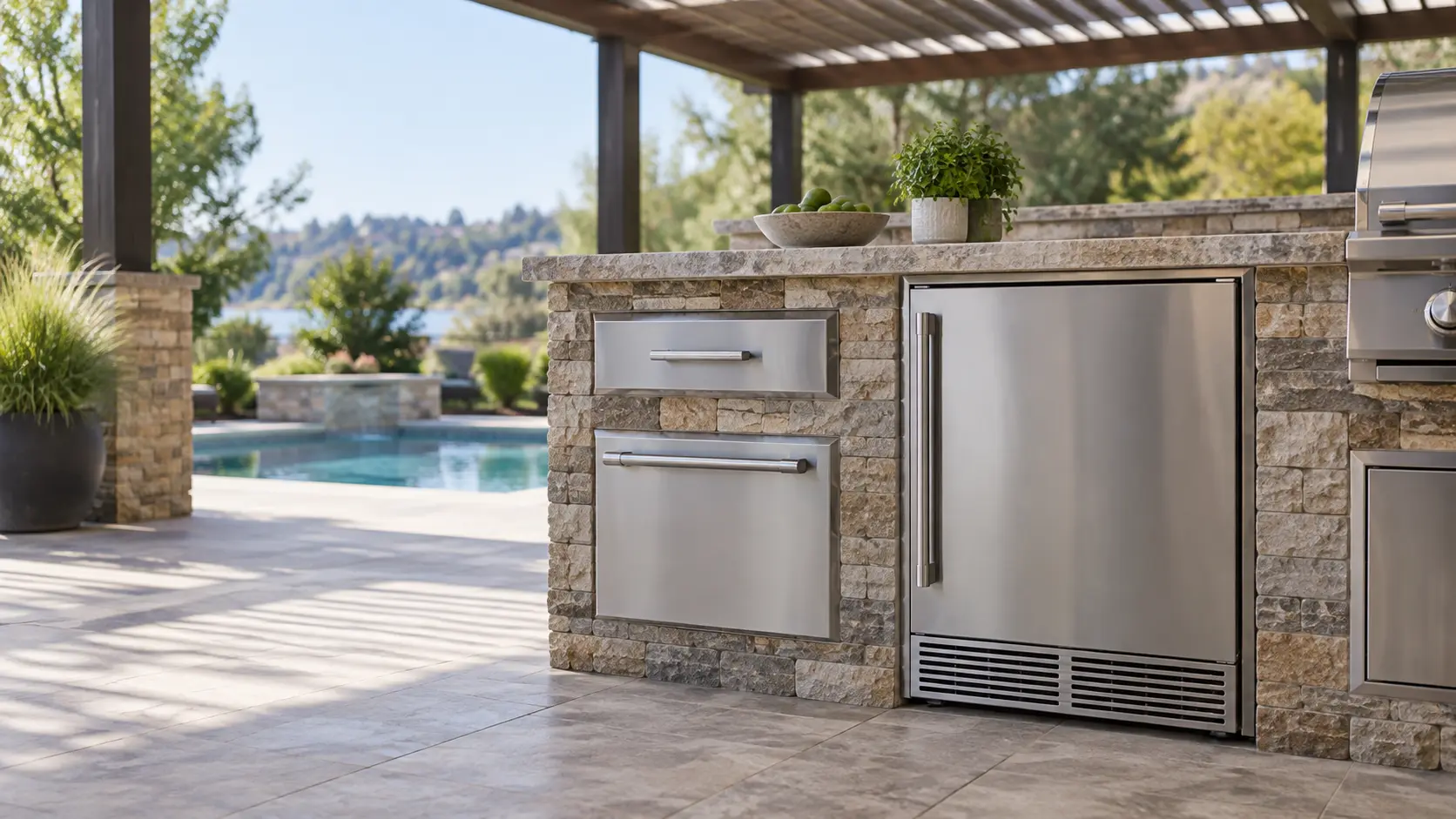
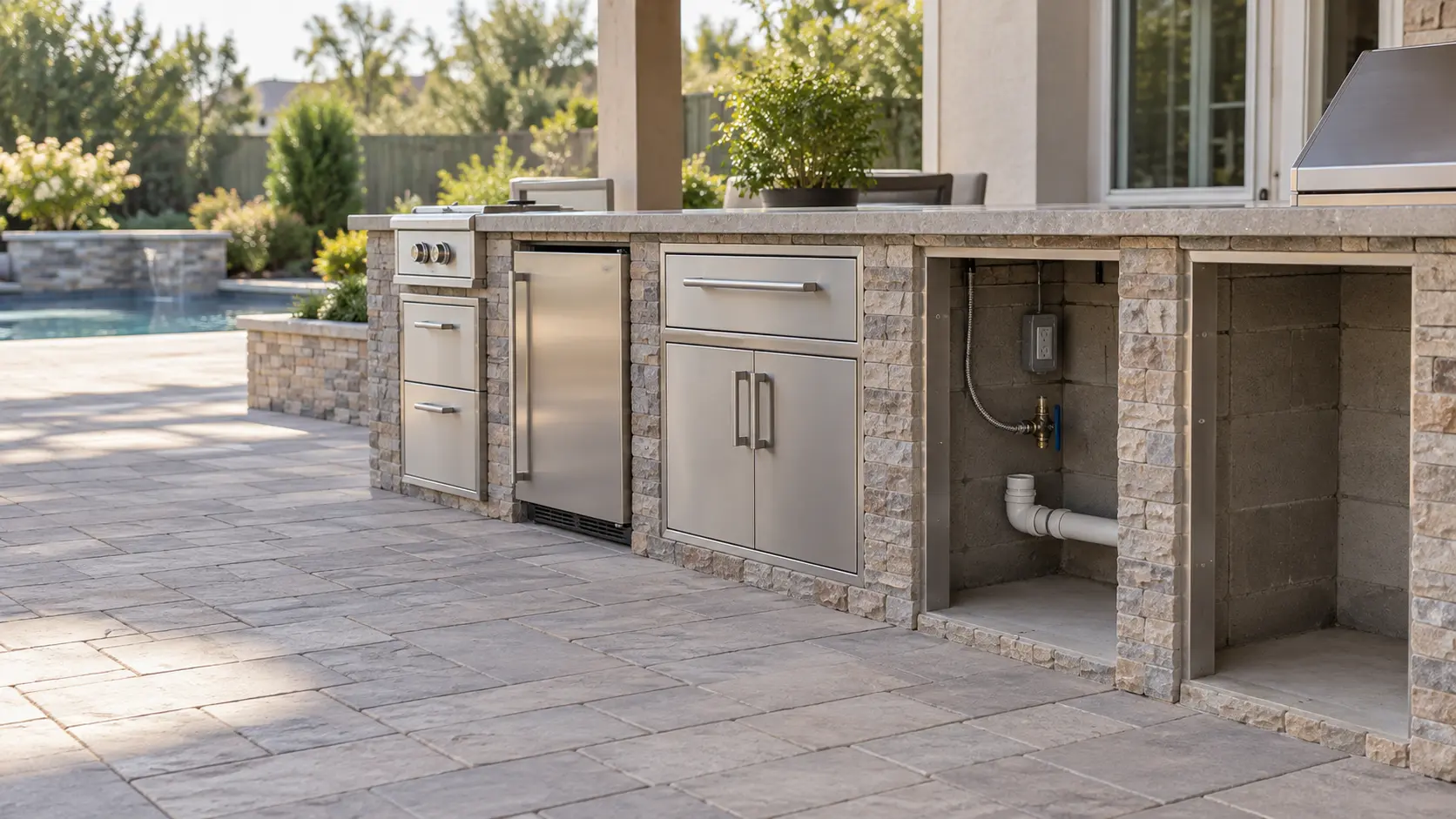
Gas, vents, air and power in the island.
The guides here explain what the makers' installation manuals ask of the people who build and connect the island. That means vents sized and placed for the fuel, low for propane and high for natural gas; shade and front airflow for the cold units; a grounded circuit for each cooler, GFCI protection where local code calls for it, drinking water with its own shutoff, and a drain that falls steadily or a pump that lifts the water away.
They describe the installer's work so an owner can ask the right questions, not so an owner can do it. Running a gas line, opening a fitting, wiring a receptacle and cutting into the plumbing are jobs for a gas fitter, an electrician or a plumber working to local code, and each guide says where that line falls.
Read this section while an island is being planned, after buying a house that already has one, or when a cooler, an ice maker or an outlet on the island behaves differently with the seasons.
Not sure where to start?The short answerOutdoor kitchen island installation: plan before the first block
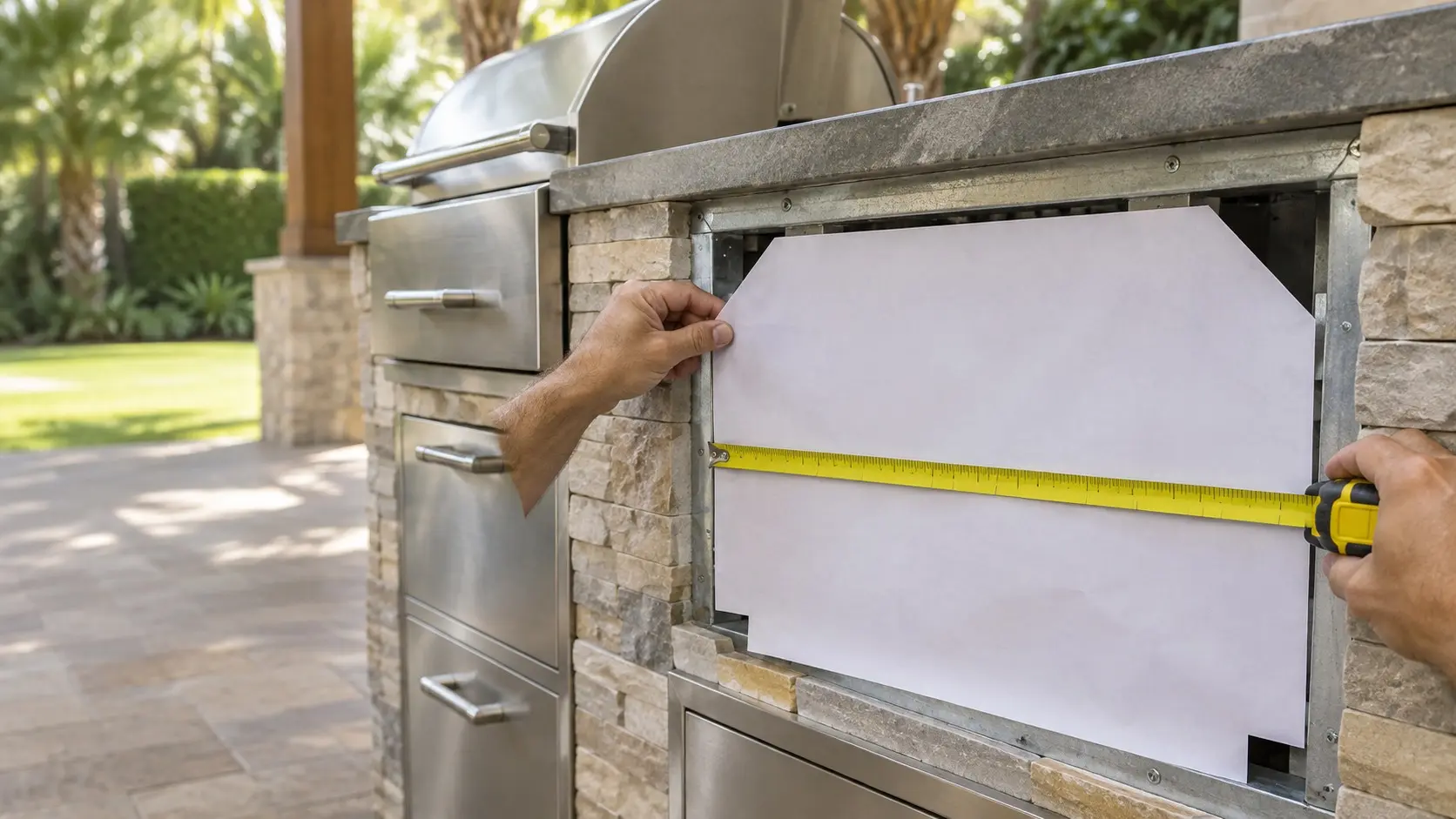
Outdoor kitchen island installation works in a fixed order: choose and buy the appliances, take the cutout and clearance sizes from their installation manuals, rough in gas, power, water and drains, build a non-combustible frame with vents, then set the appliances and test.
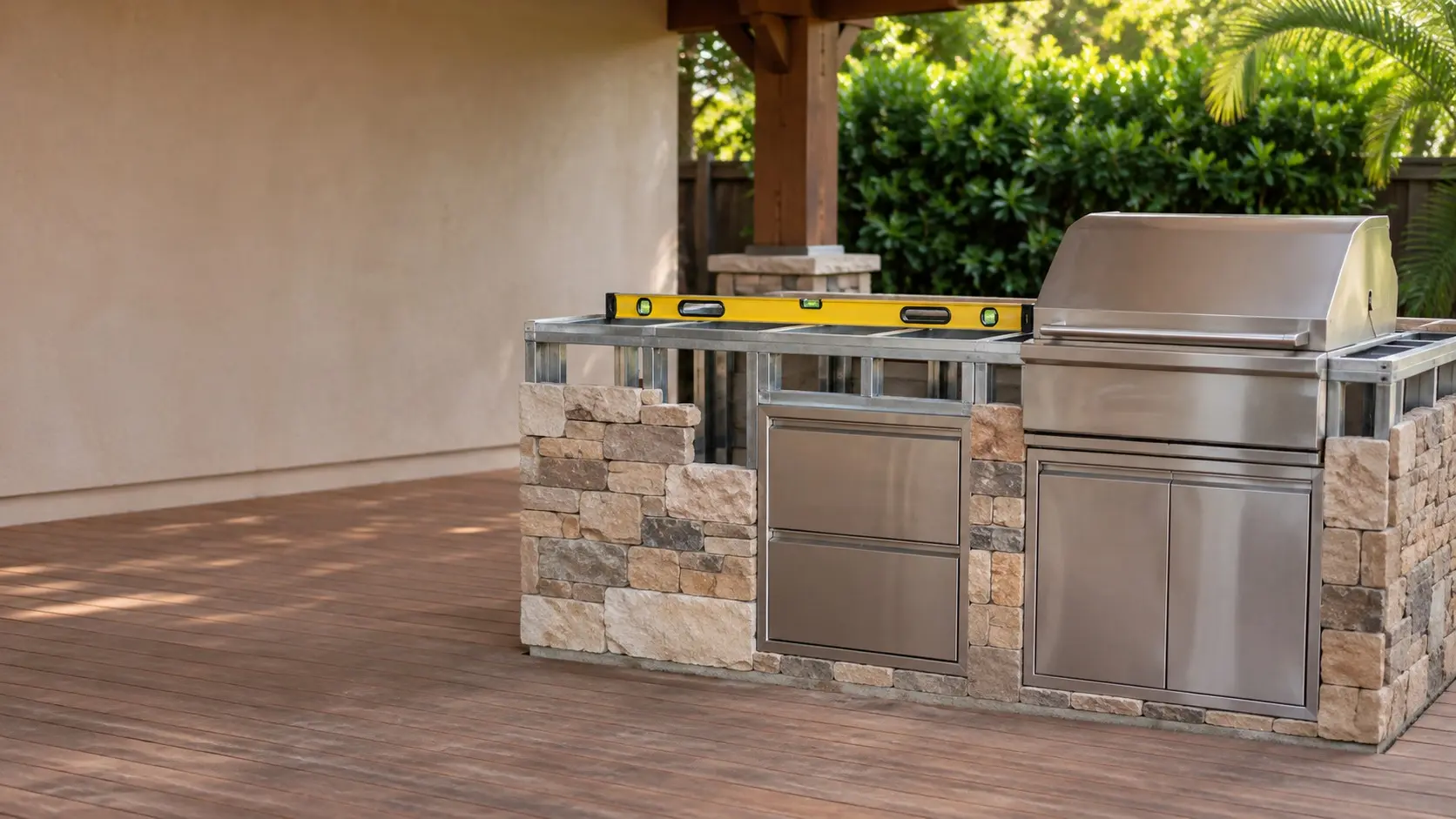
The short answerOutdoor kitchen on a deck: weight, gas line and fire safety
An outdoor kitchen on a deck needs the framing checked for the island's weight, a noncombustible base and clearance under the cooking appliances, a gas line fitted and leak-tested by a qualified installer, and a plan for water, grease and drainage so the deck boards and joists stay dry.
The short answerOutdoor kitchen gas line sizing: BTU load, run length, pressure
An outdoor kitchen gas line is sized by a licensed gas fitter, who adds the BTU rating of every appliance it feeds, measures the run from the meter or regulator to the farthest one, and picks a pipe size that delivers that load at the allowed pressure.
The short answerVenting an Outdoor Kitchen Island: Where Leaked Gas Goes and Why the Openings Matter
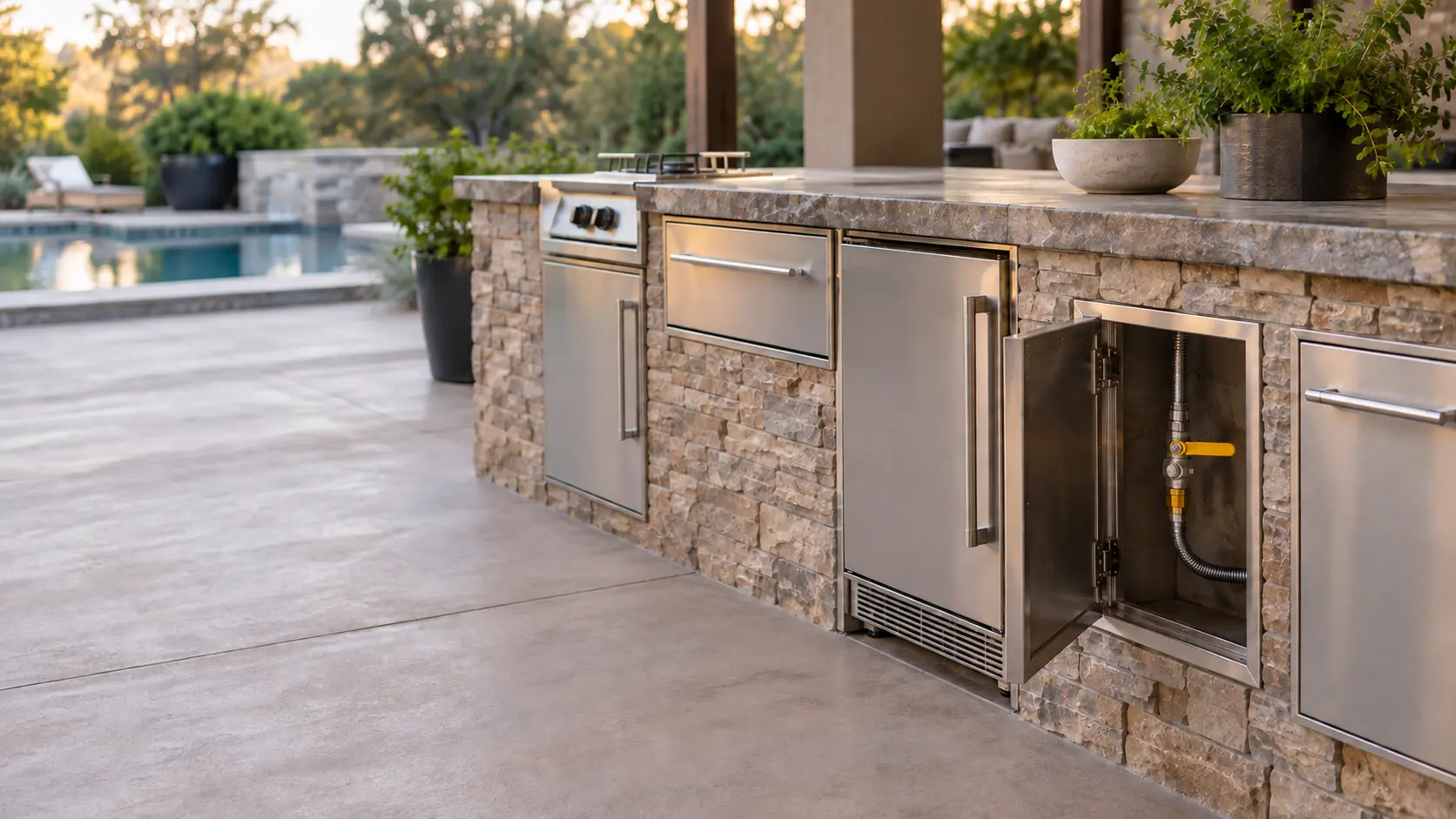
Outdoor kitchen island vents let leaked gas escape from the hollow cabinet under the countertop.
The short answerShade and Airflow for Outdoor Kitchen Coolers: Sun, the Front Grille and the Countertop Edge
An outdoor refrigerator in direct sun works harder than the makers intend: U-Line designs its outdoor units for 50°F to 100°F and asks for them to be kept out of direct sunlight and away from heat.
The short answerPower and Water to the Outdoor Kitchen Island: Circuits, GFCI, Supply and Drain
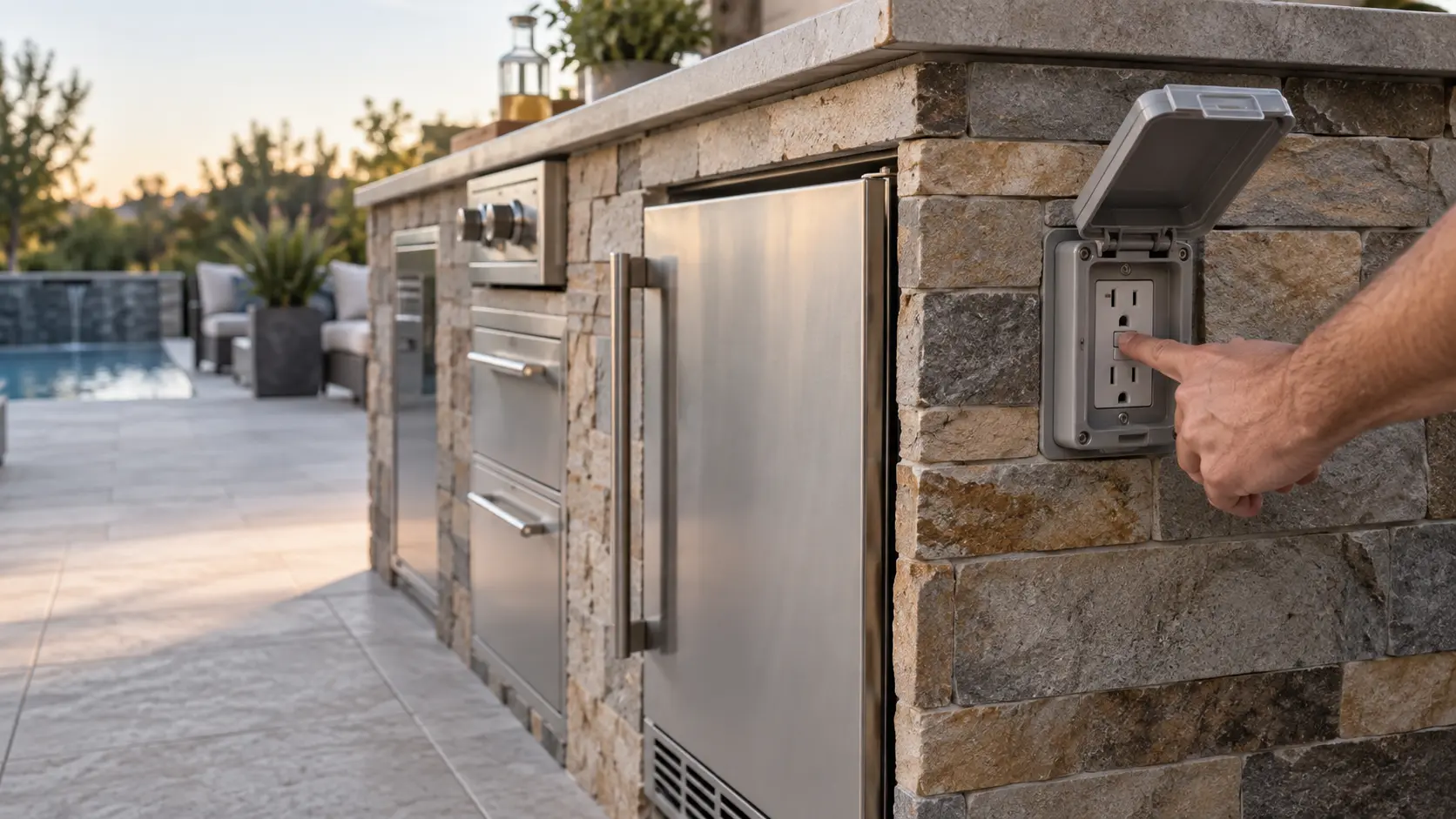
Bringing power and water to an outdoor kitchen is electrician and plumber work done to local code: a grounded 115-volt, 15-amp circuit for each cold unit, GFCI protection where code calls for it, no extension cords, a cold drinking-water supply with its own shutoff for the ice maker, and a drain that falls steadily or a pump that lifts the water away.
When reading
is not enough.
If the checks in these guides did not settle it, the visit picks up from there, stop by stop.
What repairs cost- 01The island, looked over first
- 02The reason, then the price
- 03Parts in the van
- 04Running before we leave
The problems
these answer.
Each has a page of its own, with the causes in the order worth checking.
All 17 problems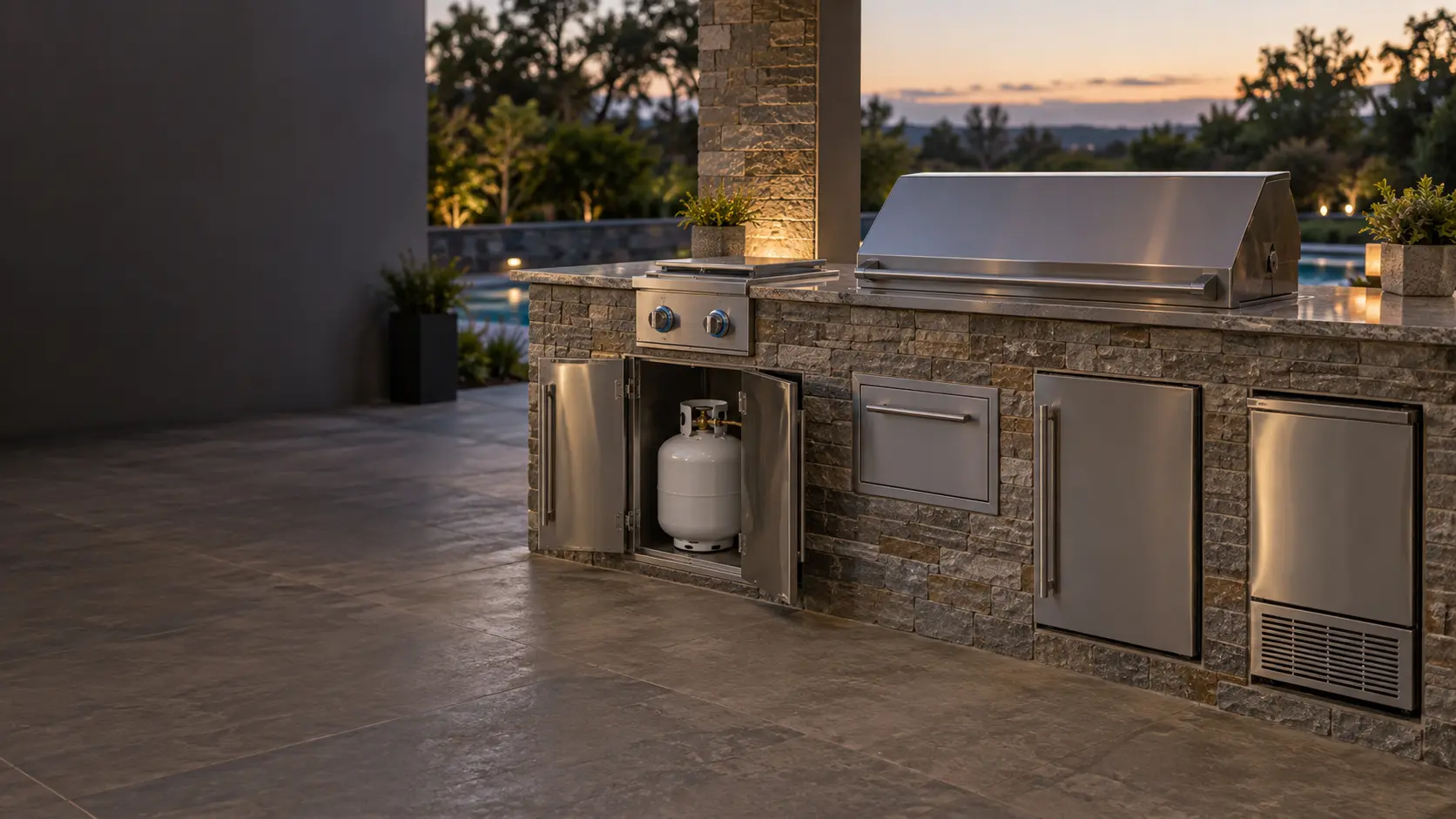
Gas Smell at the Outdoor Kitchen Island: Shut It Down First
6 causes, cheapest first
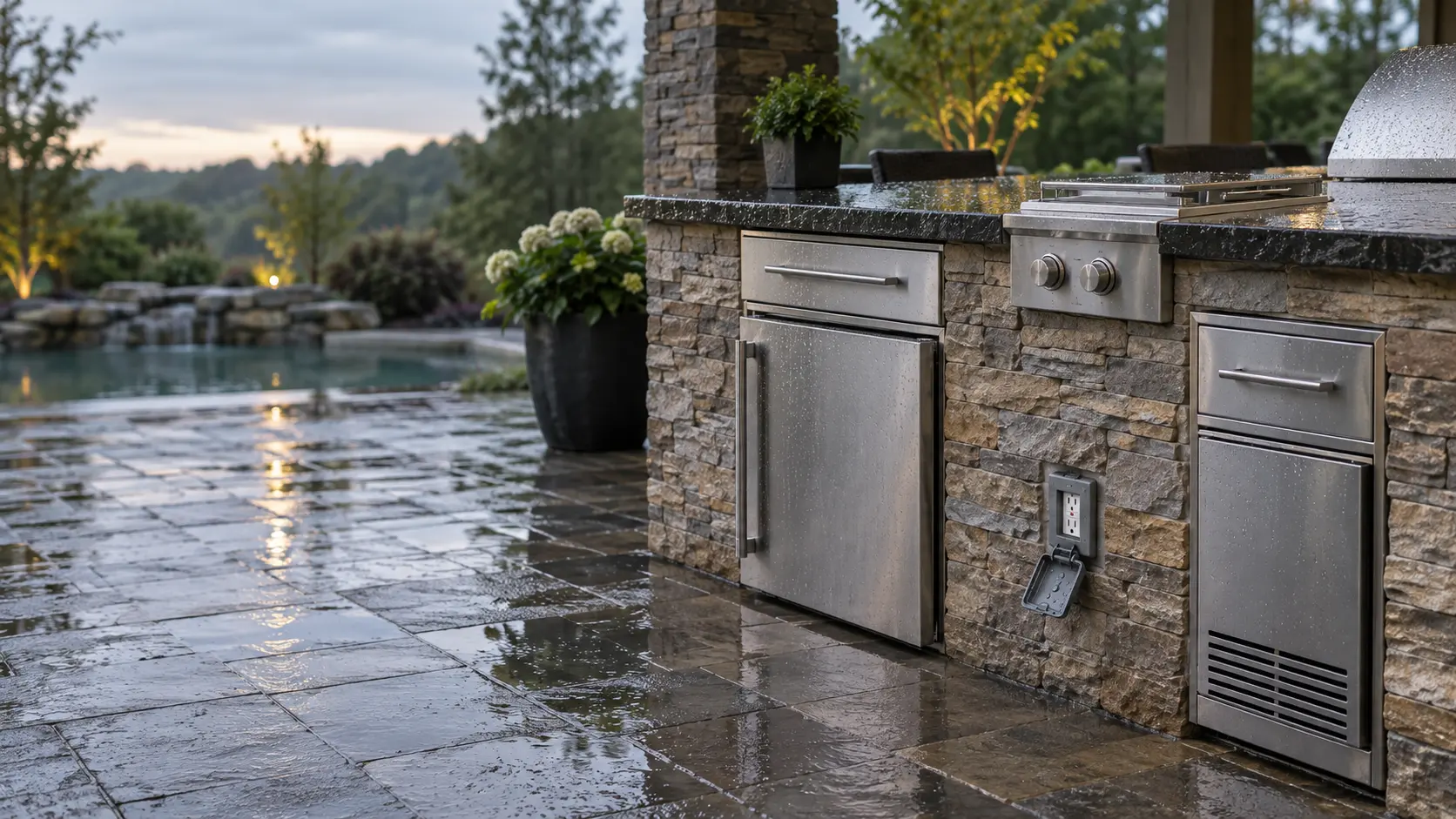
Outdoor Kitchen GFCI Keeps Tripping When It Rains
6 causes, cheapest first
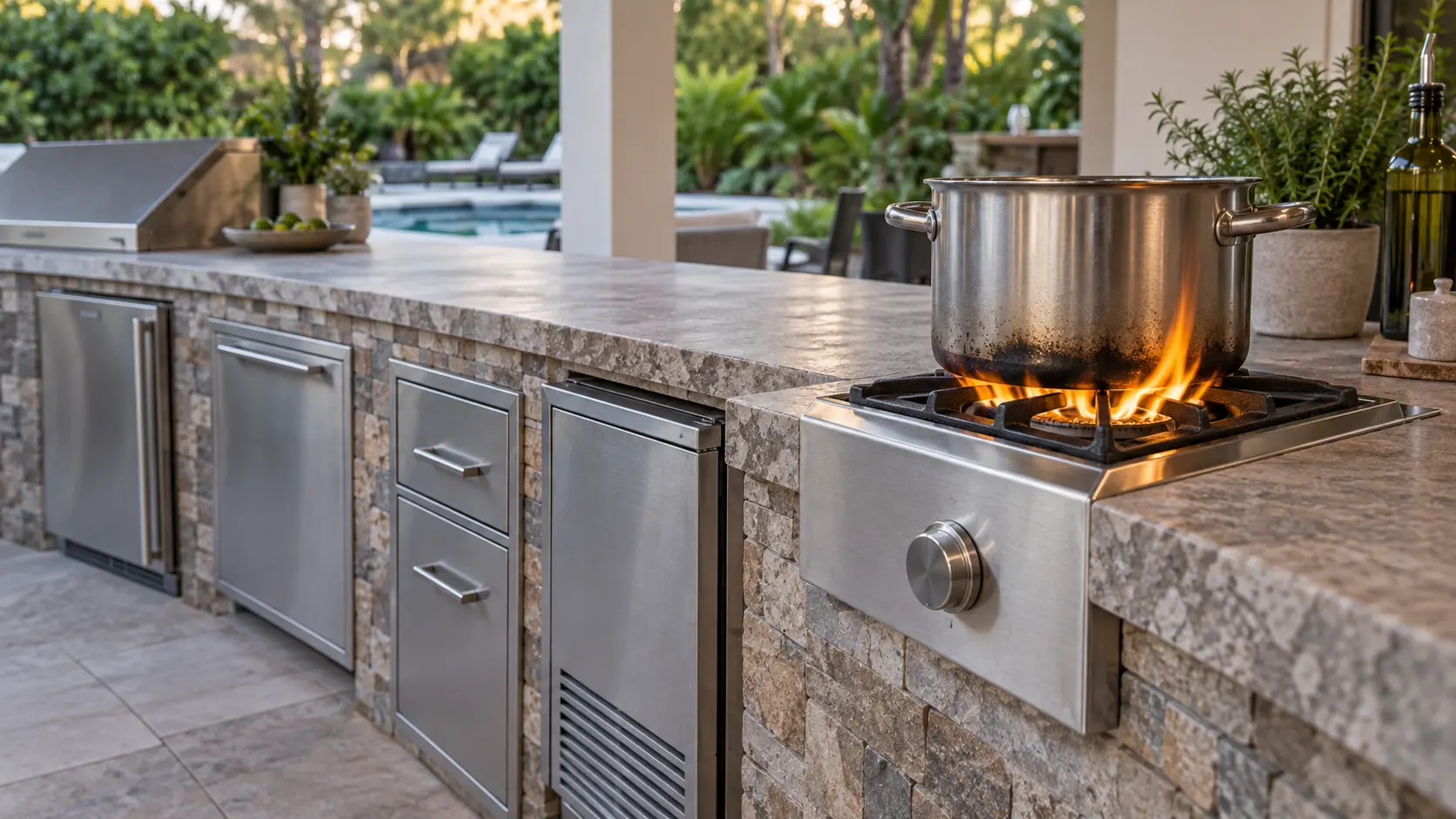
Side Burner Flame Weak, Lazy or Yellow Outdoors
5 causes, cheapest first
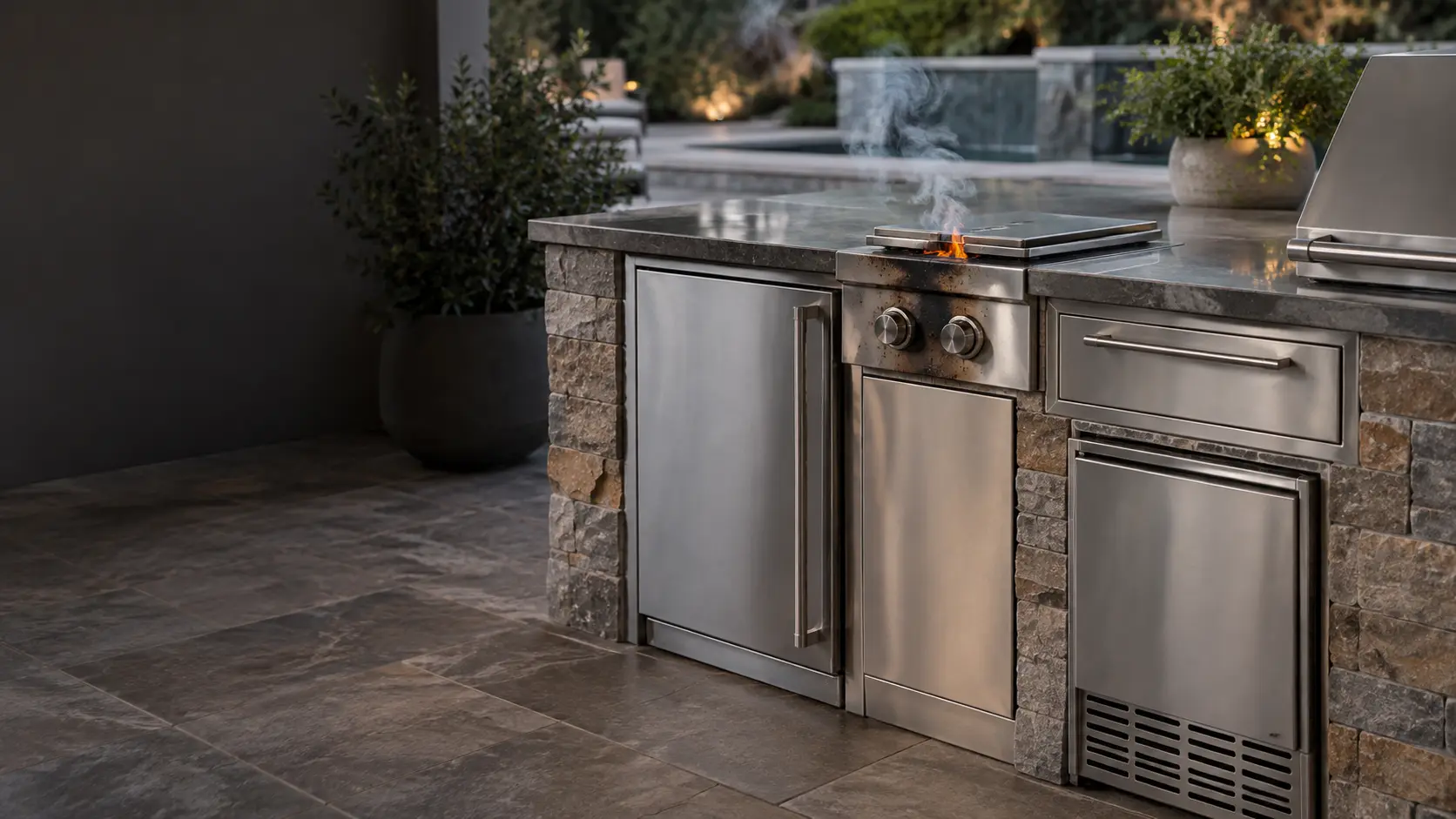
Fire Under the Counter or Inside an Outdoor Kitchen Island
5 causes, cheapest first

Questions about
installation and setup.
Who should read the outdoor kitchen installation guides?
Can an installation problem look like a broken outdoor kitchen appliance?
Which setup checks can an owner make safely?
Does it matter whether the island runs on propane or natural gas?
The other
sections.
Split by what you are trying to find out rather than by which part of the appliance it concerns.
All guides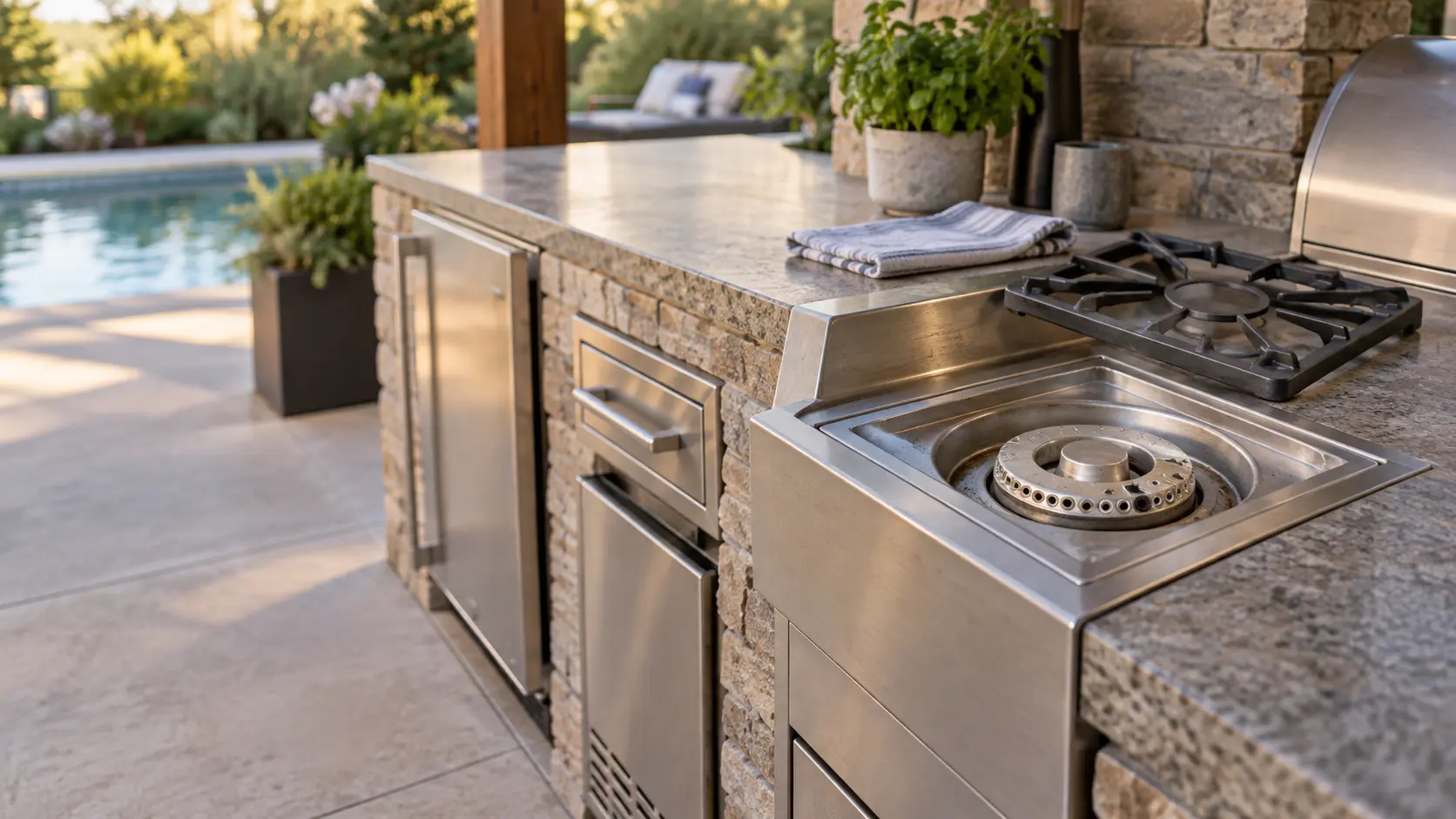
Back to your everyday
Let’s get your outdoor kitchen working again.
Three short steps online, or one call. Tell us what you are seeing and pick a window that works.